The life and campaigns of Major-General J.E.B. Stuart, - Commander of the cavalry of the Army of Northern Virginia is an unchanged, high-quality reprint of the original edition of 1885. Hansebooks is editor of the literature on different topic areas such as research and science, travel and expeditions, cooking and nutrition, medicine, and other genres. As a publisher we focus on the preservation of historical literature. Many works of historical writers and scientists are available today as antiques only. Hansebooks newly publishes these books and contributes to the preservation of literature which has become rare and historical knowledge for the future.
""I Rode With Jeb Stuart: The Life And Campaigns Of Major General J. E. B. Stuart"" is a historical book written by Henry Brainerd McClellan. The book provides a detailed account of the life and military campaigns of Major General J. E. B. Stuart, who was a prominent Confederate cavalry commander during the American Civil War. The author, who served as a member of Stuart's staff during the war, offers a unique perspective on Stuart's leadership style, tactics, and personality. The book covers Stuart's early life, his military education, and his rise to prominence as a cavalry commander. It also provides a detailed account of Stuart's involvement in various battles and campaigns, including the First Battle of Bull Run, the Peninsula Campaign, and the Gettysburg Campaign. The book is a valuable resource for anyone interested in the history of the Civil War, military strategy, and the life of J. E. B. Stuart.This scarce antiquarian book is a facsimile reprint of the old original and may contain some imperfections such as library marks and notations. Because we believe this work is culturally important, we have made it available as part of our commitment for protecting, preserving, and promoting the world's literature in affordable, high quality, modern editions, that are true to their original work.
The 18th century was a wealth of knowledge, exploration and rapidly growing technology and expanding record-keeping made possible by advances in the printing press. In its determination to preserve the century of revolution, Gale initiated a revolution of its own: digitization of epic proportions to preserve these invaluable works in the largest archive of its kind. Now for the first time these high-quality digital copies of original 18th century manuscripts are available in print, making them highly accessible to libraries, undergraduate students, and independent scholars.Medical theory and practice of the 1700s developed rapidly, as is evidenced by the extensive collection, which includes descriptions of diseases, their conditions, and treatments. Books on science and technology, agriculture, military technology, natural philosophy, even cookbooks, are all contained here.++++The below data was compiled from various identification fields in the bibliographic record of this title. This data is provided as an additional tool in helping to insure edition identification: ++++Cambridge University LibraryT199591With a half-title.London: printed for T. Egerton; and Carpenter and Co., 1799. 4],60p.; 8
The 18th century was a wealth of knowledge, exploration and rapidly growing technology and expanding record-keeping made possible by advances in the printing press. In its determination to preserve the century of revolution, Gale initiated a revolution of its own: digitization of epic proportions to preserve these invaluable works in the largest archive of its kind. Now for the first time these high-quality digital copies of original 18th century manuscripts are available in print, making them highly accessible to libraries, undergraduate students, and independent scholars.Delve into what it was like to live during the eighteenth century by reading the first-hand accounts of everyday people, including city dwellers and farmers, businessmen and bankers, artisans and merchants, artists and their patrons, politicians and their constituents. Original texts make the American, French, and Industrial revolutions vividly contemporary.++++The below data was compiled from various identification fields in the bibliographic record of this title. This data is provided as an additional tool in helping to insure edition identification: ++++Cambridge University LibraryT169670With a half-title.Norwich: printed by Stevenson & Matchett, 1800. 4],103, 1]p.; 8
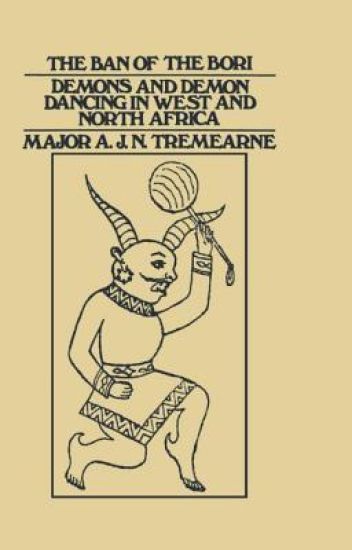
First Published in 1968. This book looks at the 'Bori' of the natives in West and North Africa The Bori (like spirits) are believed to be responsible for the various illnesses suffered by mankind are propitiated accordingly by offerings and sacrifices, with designated temple rooms, and being honoured with dances or rather rites during which worshippers (the sect of the Masu-Bori) become temporarily possess or ridden by the spirits.
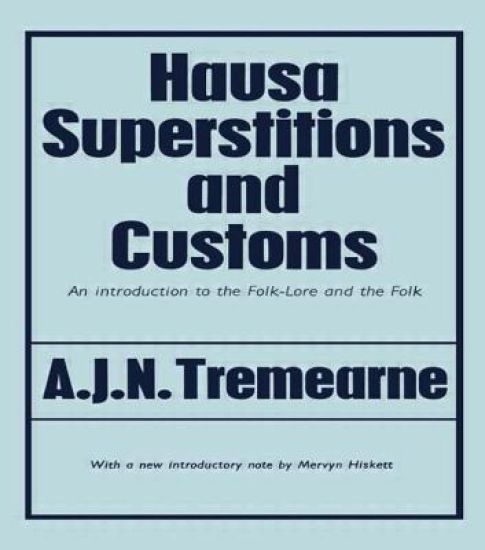
First Published in 1970. This an important addition to the understanding of African Islamic studies. Hausa folklore is rich i the world-wide motifs found in one form or another in such widely differing cultures as India, Scandinavia, American, Ireland and so on. There are familiar characters that can be identified from European folklore, but more often than not a number of motifs are clearly Indian. The publication of this second impression of Tremeane's work, is particularly welcome at a time when there is a growing interest among students in the background of ideas that inform African cultures as well as in the phenomena of African languages and the structures of African societies. But this material should not be seen as exclusively African. It is also part of the general Islamic heritage and contains a wealth of evidence to enable us to explain and understand the nature of the Islamic presence in Africa. Includes forty-one illustrations, over two hundred figures in the text, and a map.
First Published in 1968. This book looks at the 'Bori' of the natives in West and North Africa The Bori (like spirits) are believed to be responsible for the various illnesses suffered by mankind are propitiated accordingly by offerings and sacrifices, with designated temple rooms, and being honoured with dances or rather rites during which worshippers (the sect of the Masu-Bori) become temporarily possess or ridden by the spirits.
First Published in 1970. This an important addition to the understanding of African Islamic studies. Hausa folklore is rich i the world-wide motifs found in one form or another in such widely differing cultures as India, Scandinavia, American, Ireland and so on. There are familiar characters that can be identified from European folklore, but more often than not a number of motifs are clearly Indian. The publication of this second impression of Tremeane's work, is particularly welcome at a time when there is a growing interest among students in the background of ideas that inform African cultures as well as in the phenomena of African languages and the structures of African societies. But this material should not be seen as exclusively African. It is also part of the general Islamic heritage and contains a wealth of evidence to enable us to explain and understand the nature of the Islamic presence in Africa. Includes forty-one illustrations, over two hundred figures in the text, and a map.