Kirjojen hintavertailu. Mukana 11 342 296 kirjaa ja 12 kauppaa.

Kirjahaku

Etsi kirjoja tekijän nimen, kirjan nimen tai ISBN:n perusteella.

91 tulosta hakusanalla Manabu Moritsu

Flow Visualization in Materials Processing

Flow Visualization in Materials Processing

Tomomasa Uemura; Manabu Iguchi; Yoshiaki Ueda

Springer Verlag, Japan
2017
sidottu
This book presents a comprehensive review of particle image velocimetry (PIV) and particle tracking velocimetry (PTV) as tools for experimental fluid dynamics (EFD). It shares practical techniques for high-speed photography to accurately analyze multi-phase flows; in particular, it addresses the practical know-how involved in high-speed photography, including e.g. the proper setup for lights and illumination; optical systems to remove perspective distortion; and the density of tracer particles and their fluorescence in the context of PIV and PTV. In this regard, using the correct photographic technique plays a key role in the accurate analysis of the respective flow. Practical applications include bubble and liquid flow dynamics in materials processes agitated by gas injection at high temperatures, mixing phenomena due to jet-induced rotary sloshing, and wettability effects on the efficiency of the processes.
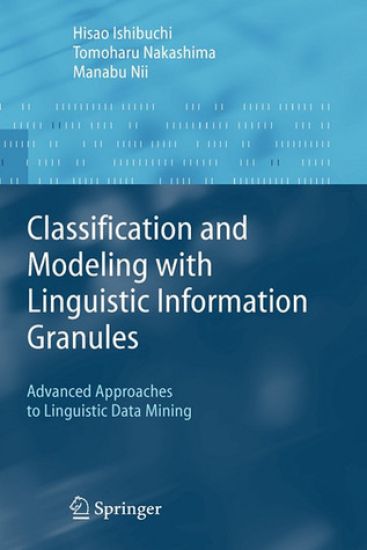
Classification and Modeling with Linguistic Information Granules

Classification and Modeling with Linguistic Information Granules

Hisao Ishibuchi; Tomoharu Nakashima; Manabu Nii

Springer-Verlag Berlin and Heidelberg GmbH Co. K
2004
sidottu
Many approaches have already been proposed for classification and modeling in the literature. These approaches are usually based on mathematical mod­ els. Computer systems can easily handle mathematical models even when they are complicated and nonlinear (e.g., neural networks). On the other hand, it is not always easy for human users to intuitively understand mathe­ matical models even when they are simple and linear. This is because human information processing is based mainly on linguistic knowledge while com­ puter systems are designed to handle symbolic and numerical information. A large part of our daily communication is based on words. We learn from various media such as books, newspapers, magazines, TV, and the Inter­ net through words. We also communicate with others through words. While words play a central role in human information processing, linguistic models are not often used in the fields of classification and modeling. If there is no goal other than the maximization of accuracy in classification and model­ ing, mathematical models may always be preferred to linguistic models. On the other hand, linguistic models may be chosen if emphasis is placed on interpretability.
Classification and Modeling with Linguistic Information Granules

Classification and Modeling with Linguistic Information Granules

Hisao Ishibuchi; Tomoharu Nakashima; Manabu Nii

Springer-Verlag Berlin and Heidelberg GmbH Co. K
2010
nidottu
Many approaches have already been proposed for classification and modeling in the literature. These approaches are usually based on mathematical mod­ els. Computer systems can easily handle mathematical models even when they are complicated and nonlinear (e.g., neural networks). On the other hand, it is not always easy for human users to intuitively understand mathe­ matical models even when they are simple and linear. This is because human information processing is based mainly on linguistic knowledge while com­ puter systems are designed to handle symbolic and numerical information. A large part of our daily communication is based on words. We learn from various media such as books, newspapers, magazines, TV, and the Inter­ net through words. We also communicate with others through words. While words play a central role in human information processing, linguistic models are not often used in the fields of classification and modeling. If there is no goal other than the maximization of accuracy in classification and model­ ing, mathematical models may always be preferred to linguistic models. On the other hand, linguistic models may be chosen if emphasis is placed on interpretability.
Flow Visualization in Materials Processing

Flow Visualization in Materials Processing

Tomomasa Uemura; Yoshiaki Ueda; Manabu Iguchi

Springer Verlag, Japan
2018
nidottu
This book presents a comprehensive review of particle image velocimetry (PIV) and particle tracking velocimetry (PTV) as tools for experimental fluid dynamics (EFD). It shares practical techniques for high-speed photography to accurately analyze multi-phase flows; in particular, it addresses the practical know-how involved in high-speed photography, including e.g. the proper setup for lights and illumination; optical systems to remove perspective distortion; and the density of tracer particles and their fluorescence in the context of PIV and PTV. In this regard, using the correct photographic technique plays a key role in the accurate analysis of the respective flow. Practical applications include bubble and liquid flow dynamics in materials processes agitated by gas injection at high temperatures, mixing phenomena due to jet-induced rotary sloshing, and wettability effects on the efficiency of the processes.
What Annually Laminated Sediments Reveal About the History of Environment and Civilization

What Annually Laminated Sediments Reveal About the History of Environment and Civilization

Yoshinori Yasuda; Hiroyuki Kitagawa; Kazuyoshi Yamada; Mitsuru Okuno; Manabu Takahashi

Springer Verlag, Japan
2025
nidottu
This monograph presents a proposal for interdisciplinary and international research that uses varve as an essential tool. The discovery and subsequent palaeoenvironmental studies of the annually laminated sediments of Lake Suigetsu (Japan) revealed the directionality of a new discipline in the traditional field of historical science. The historical evidence of environmental changes and natural disasters provided by annually laminated sediments promote an integration of human and natural histories on a common time scale. To explore the impact of climatic changes and natural disasters on civilized society in the present and past, we simply open this door and enter a new phase in world history. The high resolution data about environmental history like climate, sea level, vegetation changes and natural disasters under the most reliable varve chronology will be discussed in relation to the development of human history and the rise and fall of civilizations. The book shows the direction of anew world history and new cosmology of the future civilization in relation to the environmental changes.
Manabi and Japanese Schooling

Manabi and Japanese Schooling

Masamichi Ueno; Yasunori Kashiwagi; Kayo Fujii; Tomoya Saito; Taku Murayama

CRC Press Inc
2020
sidottu
Manabi and Japanese Schooling: Beyond Learning in the Era of Globalisation considers the theory and practices behind the Japanese concept of Manabi, particularly as the progressive concept of learning in the globalised world. It seeks to provide educational visions of Manabi as an alternative concept of learning in the era of post-globalisation. The authors derive different perspectives in Manabi from Eastern philosophy, clarifying and comparing with learning and Bildung to give alternative educational discourses. It considers the idea of Confucius and Taoism and studies the practice of minna, characterising it as a cooperative and peaceful problem-solving method. Addressing the trend of ‘learnification’ and its contribution to educational reform, it explores the impacts, conflicts and difficulties of introducing learner-centred education into East Asian educational settings as well as the potential of Manabi as an effective tool for all types of learning. Expertly written and researched, this book includes a foreword by Gert Biesta and is a valuable resource for researchers, academics and postgraduate students in the field of educational philosophy, educational theory and Eastern philosophy.
Manabi and Japanese Schooling

Manabi and Japanese Schooling

Masamichi Ueno; Yasunori Kashiwagi; Kayo Fujii; Tomoya Saito; Taku Murayama

TAYLOR FRANCIS LTD
2021
nidottu
Manabi and Japanese Schooling: Beyond Learning in the Era of Globalisation considers the theory and practices behind the Japanese concept of Manabi, particularly as the progressive concept of learning in the globalised world. It seeks to provide educational visions of Manabi as an alternative concept of learning in the era of post-globalisation. The authors derive different perspectives in Manabi from Eastern philosophy, clarifying and comparing with learning and Bildung to give alternative educational discourses. It considers the idea of Confucius and Taoism and studies the practice of minna, characterising it as a cooperative and peaceful problem-solving method. Addressing the trend of ‘learnification’ and its contribution to educational reform, it explores the impacts, conflicts and difficulties of introducing learner-centred education into East Asian educational settings as well as the potential of Manabi as an effective tool for all types of learning. Expertly written and researched, this book includes a foreword by Gert Biesta and is a valuable resource for researchers, academics and postgraduate students in the field of educational philosophy, educational theory and Eastern philosophy.
Marabú

Marabú

José Ramón Sánchez

Createspace Independent Publishing Platform
2016
nidottu
Acostumbrados a los vicios oportunistas y cansinos de la poes a cubana, que sublima sin cesar un imaginario infantil donde lo "correcto" y "hermoso" es elevado a categor as superiores de valor, parece dif cil permanecer c modo ante la aridez de un libro, donde el baluarte de lo bello ha sido tomado (o m s exactamente: violado) por la amargura de un estilo y su paisaje. Alejados de cualquier zona de compromiso y bienestar en s mismos, los textos reunidos en este cuaderno no pretenden complacer o edulcorar la miseria de un entorno sin rumbo ni destino; antes bien, han sido escritos bajo el peso de la irreverencia, bajo el sentido -dif cil, por cuanto m s aut ntico- de una responsabilidad c vico-moral, que convierten a esta poes a en relatora de lo mismo que condena: la ruina f sica y civil como vivencia fundamental del hombre moderno. Javier L. Mora
Manasu Palike Kadhalu

Manasu Palike Kadhalu

Sri Krishna

OrangeBooks Publication
2025
pokkari
Once, my mind was filled with endless questions, but now, I have found the answers within myself-these answers are my experiences today. Time has painted my heart with many colors, each carrying a lesson. Life has given me relationships, attractions, victories, defeats, smiles, worries, darkness, and light. Yet, it is through these moments that I have gathered wisdom. Experiences come and go, leaving behind their imprints. This book, "Manasu Palike Kathalu" (Stories Spoken by the Heart), is a reflection of my journey-stories shaped by time, emotions, and the lessons that life has gifted me along the way.
Manasu Enna Daivam

Manasu Enna Daivam

Chintha Publishers
2022
pokkari
Manasu Enna Daivam by Dr. M S Nair, published by Chintha Publishers, stands as a beacon of knowledge and inspiration. With its insightful content and engaging narrative style, this book transcends genres, offering something valuable for every reader.
The Manambu Language of East Sepik, Papua New Guinea

The Manambu Language of East Sepik, Papua New Guinea

Alexandra Aikhenvald

Oxford University Press
2008
sidottu
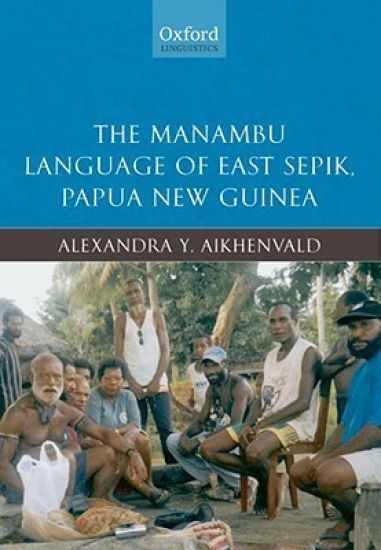
This book presents the first comprehensive description of the Manambu language of Papua New Guinea. Manambu belongs to the Ndu language family, and is spoken by about 2,500 people in five villages: Avatip, Yawabak, Malu, Apa:n, and Yambon (Yuanab) in East Sepik Province, Ambunti district. About 200-400 speakers live in the cities of Port Moresby, Wewak, Lae, and Madang; and a few live in Kokopo and Mount Hagen. The book is based entirely on the author's fieldwork. After an introductory account of the language and its speakers, Professor Aikhenvald devotes chapters to phonology, grammatical relations, word classes, gender, semantics, number, case, possession, derivation and compounding, pronouns, morphology, verbs, mood and modality, negation, clauses, pragmatics, discourse, semantics, the lexicon, current directions of change, and genetic relationship to other languages. The description is presented in a clear style in a framework that will be comprehensible to all linguists and linguistic anthropologists.
The Manambu Language of East Sepik, Papua New Guinea

The Manambu Language of East Sepik, Papua New Guinea

Alexandra Aikhenvald

Oxford University Press
2010
nidottu
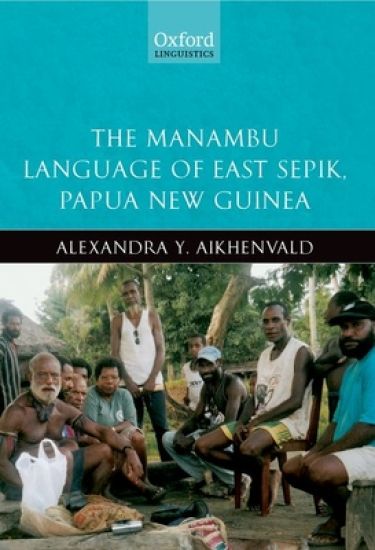
This book is the first comprehensive description of the Manambu language of Papua New Guinea and is based entirely on the author's immersion fieldwork. Manambu belongs to the Ndu language family, and is spoken by about 2,500 people in five villages: Avatip, Yawabak, Malu, Apa:n, and Yambon (Yuanab) in East Sepik Province, Ambunti district. Manambu can be considered an endangered language. The Manambu language has many unusual properties. Every noun is considered masculine or feminine. Feminine gender - which is unmarked - is associated with small size and round shape, and masculine gender with elongated shape, large size, and importance. The Manambu culture is centered on ownership of personal names, and is similar to that of the Iatmul, described by Gregory Bateson. After an introductory account of the language and its speakers, Professor Aikhenvald devotes chapters to phonology, grammatical relations, word classes, gender, semantics, number, case, possession, derivation and compounding, pronouns, morphohology, verbs, mood and modality, negation, clause structure, pragmatics, discourse, semantics, the lexicon, current directions of change, and genetic relationship to other languages. The description is presented in a clear style in a framework that will be comprehensible to all linguists and linguistically oriented anthropologists.
Rendu Manasu

Rendu Manasu

Notion Press Media Pvt Ltd
2021
pokkari
The life is one and Thoughts are countless As long as a human lives thoughts also arises till death. Is there any good mind or bad mind? Only the circumstances and the situations make a man to change his mind to think alternatively. No one can have the mind as pure as a drop of rain. The rain water, when falls down gets spoiled. That is the circumstance and the situation. Life also goes on like that. Life is felt satisfied while dyeing happily. This does not happen to all. The poor will not be poor always as well the rich. For a good journey of a life, the grace of God is always needed.
Paati Sonna Ilangayin Marabu Kadhaigal: Grandma's Sri Lanka's Legendary Stories

Paati Sonna Ilangayin Marabu Kadhaigal: Grandma's Sri Lanka's Legendary Stories

Mr Pon Kulendiran

Createspace Independent Publishing Platform
2018
nidottu
Sri Lankan legendary stories are many, but many of them are here say stories some have recorded in stone inscriptions and books such as Mahavamsa and Sri Lankan heritage. The story of Poothathambi occurred during Dutch rule in Sri Lanka. The two stories Nonagama and Love of Lavine occurred during British period in Sri Lanka. The Story of Sigiriya is well known on the island. The story of Robin hood Saradiel happened during the British period. Many temples have a legendary story behind it Tourists to Sri Lanka love to visits places such as Sigiriya Rock, Bhairava Kanda, and Kalatawa Tank and love to hear the story from the locals. Many of you may not have the opportunity to visit the places where the story happens, please read this book and enjoy.