Kirjojen hintavertailu. Mukana 11 244 527 kirjaa ja 12 kauppaa.

Kirjahaku

Etsi kirjoja tekijän nimen, kirjan nimen tai ISBN:n perusteella.

1000 tulosta hakusanalla Manning Marable

Beyond Boundaries

Beyond Boundaries

Manning Marable; Russell Rickford

Paradigm
2011
sidottu
Manning Marable, historian and political scientist at Columbia University, has been a consistent voice challenging inequality and injustice in the social sciences for decades. Beyond Boundaries brings together Marable's best writing from the last two decades and will prove invaluable to anyone seeking to challenge race, class and gender inequalities today. A pioneering intellectual in the field of black studies and the founder of Columbia's Institute for Research in African-American Studies, Marable blends the disciplines of history, political science and sociology to address contemporary concerns and social issues.
Beyond Boundaries

Beyond Boundaries

Manning Marable; Russell Rickford

Paradigm
2011
nidottu
Manning Marable, historian and political scientist at Columbia University, has been a consistent voice challenging inequality and injustice in the social sciences for decades. Beyond Boundaries brings together Marable's best writing from the last two decades and will prove invaluable to anyone seeking to challenge race, class and gender inequalities today. A pioneering intellectual in the field of black studies and the founder of Columbia's Institute for Research in African-American Studies, Marable blends the disciplines of history, political science and sociology to address contemporary concerns and social issues.
How Capitalism Underdeveloped Black America

How Capitalism Underdeveloped Black America

Manning Marable; Leith Mullings

Haymarket Books
2015
nidottu
How Capitalism Underdeveloped Black America is a classic study of the intersection of racism and class in the United States. It has become a standard text for courses in American politics and history, and has been central to the education of thousands of political activists since the 1980s. This edition is presented with a new foreword by Leith Mullings.
How Capitalism Underdeveloped Black America

How Capitalism Underdeveloped Black America

Manning Marable; Leith Mullings

Haymarket Books
2019
sidottu
"How Capitalism Underdeveloped Black America is one of those paradigm-shifting, life-changing texts that has not lost its currency or relevance?even after three decades. Its provocative treatise on the ravages of late capitalism, state violence, incarceration, and patriarchy on the life chances and struggles of black working-class men and women shaped an entire generation, directing our energies to the terrain of the prison-industrial complex, anti-racist work, labor organizing, alternatives to racial capitalism, and challenging patriarchy?personally and politically."?Robin D. G. Kelley"In this new edition of his classic text . . . Marable can challenge a new generation to find solutions to the problems that constrain the present but not our potential to seek and define a better future."?Henry Louis Gates, Jr."[A] prescient analysis."?Michael Eric DysonHow Capitalism Underdeveloped Black America is a classic study of the intersection of racism and class in the United States. It has become a standard text for courses in American politics and history, and has been central to the education of thousands of political activists since the 1980s. This edition is prsented with a new foreword by Leith Mullings.
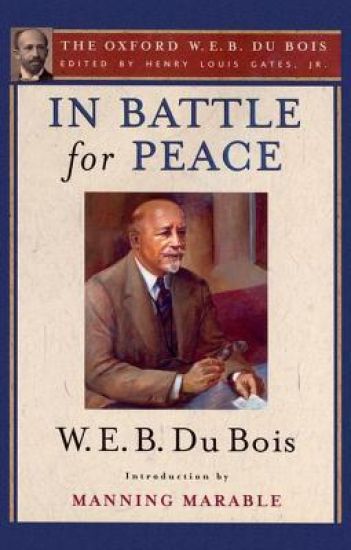
In Battle for Peace (The Oxford W. E. B. Du Bois)

In Battle for Peace (The Oxford W. E. B. Du Bois)

W. E. B. Du Bois; Manning Marable

Oxford University Press Inc
2014
nidottu
W. E. B. Du Bois was a public intellectual, sociologist, and activist on behalf of the African American community. He profoundly shaped black political culture in the United States through his founding role in the NAACP, as well as internationally through the Pan-African movement. Du Bois's sociological and historical research on African-American communities and culture broke ground in many areas, including the history of the post-Civil War Reconstruction period. Du Bois was also a prolific author of novels, autobiographical accounts, innumerable editorials and journalistic pieces, and several works of history. One of the most neglected and obscure books by W. E. B. Du Bois, In Battle for Peace frankly documents Du Bois's experiences following his attempts to mobilize Americans against the emerging conflict between the United States and the Soviet Union. A victim of McCarthyism, Du Bois endured a humiliating trial-he was later acquitted-and faced political persecution for over a decade. Part autobiography and part political statement, In Battle for Peace remains today a powerful analysis of race in America. With a series introduction by editor Henry Louis Gates, Jr., and an introduction by Manning Marable, this edition is essential for anyone interested in African American history.
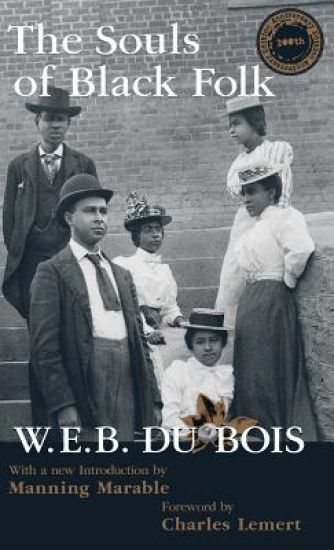
Souls of Black Folk

Souls of Black Folk

W. E. B. Du Bois; Manning Marable

Paradigm
2004
sidottu
This 100th Anniversary edition of Du Bois's most widely read book offers significant updates and advantages over all other editions of this classic of African American history. A new Introduction by Manning Marable, Du Bois biographer and eminent historian, puts The Souls of Black Folk into context for 21st Century readers and recounts Du Bois's life-long relationship with his text, which Du Bois continued to rework over many decades. A rarely seen 1953 Re-Introduction by Du Bois is included in this edition, as are the many corrections and changes Du Bois made to the original text during this era. Finally, an explication of the Du Bois text in the new Foreword by Charles Lemert helps the reader better understand the book's historical and current relevance, as does the afterword by Cheryl Townsend Gilkes reflecting on Du Bois's influence on feminism.
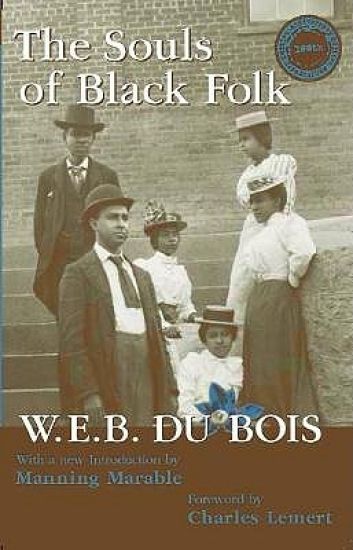
Souls of Black Folk

Souls of Black Folk

W. E. B. Du Bois; Manning Marable

Paradigm
2004
nidottu
This 100th Anniversary edition of Du Bois's most widely read book offers significant updates and advantages over all other editions of this classic of African American history. A new Introduction by Manning Marable, Du Bois biographer and eminent historian, puts The Souls of Black Folk into context for 21st Century readers and recounts Du Bois's life-long relationship with his text, which Du Bois continued to rework over many decades. A rarely seen 1953 Re-Introduction by Du Bois is included in this edition, as are the many corrections and changes Du Bois made to the original text during this era. Finally, an explication of the Du Bois text in the new Foreword by Charles Lemert helps the reader better understand the book's historical and current relevance, as does the afterword by Cheryl Townsend Gilkes reflecting on Du Bois's influence on feminism.
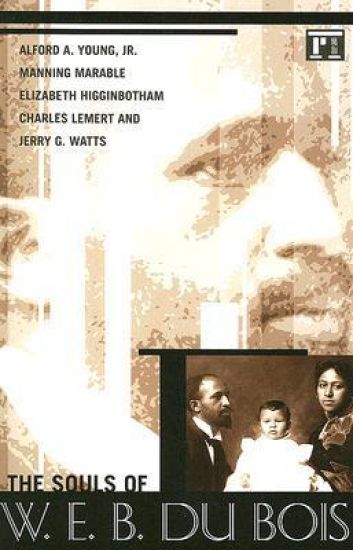
Souls of W.E.B. Du Bois

Souls of W.E.B. Du Bois

Alford A. Young; Jerry Gafio Watts; Manning Marable; Charles C. Lemert; Elizabeth Higginbotham

Paradigm
2006
sidottu
This work marks the recent passing of the 100th Anniversary of Du Bois' classic of African American literature. More than fifty events and celebrations were held in cities and universities around the country. It poignantly explores the relationship of Du Bois, the man, to his writings. It is written by expert team of authors including the prominent Manning Marable. "The Souls of W. E. B. Du Bois" explores the relationship of W. E. B. Du Bois' seminal book, "The Souls of Black Folk", to other works in his scholarly portfolio and to his larger project concerning race, racial identity, and the social objectives of scholarly engagement. Prominent authors consider why the classic book remains so relevant today.
Souls of W.E.B. Du Bois

Souls of W.E.B. Du Bois

Alford A. Young; Jerry Gafio Watts; Manning Marable; Charles C. Lemert; Elizabeth Higginbotham

Paradigm
2006
nidottu
This work marks the recent passing of the 100th Anniversary of Du Bois' classic of African American literature. More than fifty events and celebrations were held in cities and universities around the country. It poignantly explores the relationship of Du Bois, the man, to his writings. It is written by expert team of authors including the prominent Manning Marable. "The Souls of W. E. B. Du Bois" explores the relationship of W. E. B. Du Bois' seminal book, "The Souls of Black Folk", to other works in his scholarly portfolio and to his larger project concerning race, racial identity, and the social objectives of scholarly engagement. Prominent authors consider why the classic book remains so relevant today.
Freedom on My Mind

Freedom on My Mind

Manning (EDT) Marable; John Campbell (EDT) McMillian; Nishani (EDT) Frazier

Columbia University Press
2003
sidottu
Freedom on My Mind reveals the richly diverse and complex experience of black people in America in their own words, from the Colonial era of Benjamin Banneker to the present world of Kweisi Mfume and Clarence Thomas. Personal correspondence, excerpts from slave narratives and autobiographies, leaflets, significant addresses and speeches, oral histories and interviews, political manifestos, and important statements of black institutions and organizations are brought together to form a volume that testifies to the boundless creative potential of black Americans in indefatigable pursuit of the dream of freedom. Arranged thematically, the selections illustrate the politics of resistance-as reflected through gender and sexuality, kinship and community, work and leisure, faith and spirituality. They also highlight the contributions of women to black identity, history, and consciousness, and offer excerpts from the work of some of the finest stylists in the African American canon. A general introduction as well as short introductions and bibliographies for each document further enhance the usefulness of the book for students and researchers.
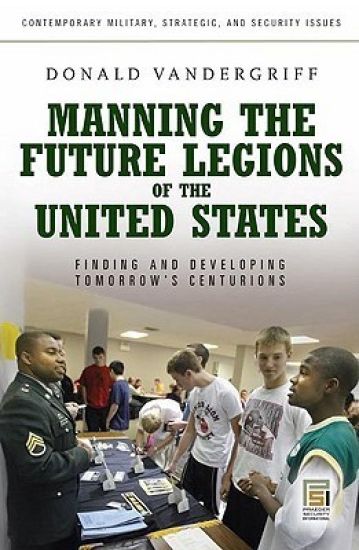
Manning the Future Legions of the United States

Manning the Future Legions of the United States

Donald Vandergriff

Praeger Publishers Inc
2008
sidottu
An Industrial Age model continues to shape the way the Army approaches its recruiting, personnel management, training, and education. This outdated personnel management paradigm—designed for an earlier era—has been so intimately tied to the maintenance of Army culture that a self-perpetuating cycle has formed, diminishing the Army's attempts to develop adaptive leaders and institutions.This cycle can be broken only if the Army accepts rapid evolutionary change as the norm of the new era. Recruiting the right people, then having them step into an antiquated organization, means that many of them will not stay as they find their ability to contribute and develop limited by a centralized, hierarchical organization. Recruiting and retention data bear this out.Several factors have combined to force the Army to think about the way it develops and nurtures its leaders. Yet, Vandergriff maintains, mere modifications to today's paradigm may not be enough. Today's Army has to do more than post rhetoric about adaptability on briefing slides and in literature. One cannot divorce the way the Army accesses, promotes, and selects its leaders from its leadership-development model. The Army cannot expect to maintain leaders who grasp and practice adaptability if these officers encounter an organization that is neither adaptive nor innovative. Instead, Army culture must become adaptive, and the personnel system must evolve into one that nurtures adaptability in its policies, practices, and beliefs. Only a detailed, comprehensive plan where nothing is sacred will pave the way to cultural evolution.
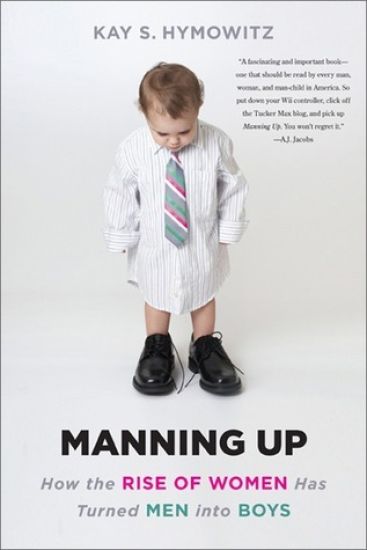
Manning Up

Manning Up

Kay Hymowitz

Basic Books
2012
pokkari
Women complain there are no good men left,that men are immature, unreliable, and adrift. No wonder. Masculine role models have become increasingly juvenile and inarticulate: think of stars like Adam Sandler and Will Ferrell, or the dudes of the popular Judd Apatow movies. There are no rules for dating and mating. Guys are unsure how to treat a woman. Most importantly, dating in the pre-adult years is no longer a means to an end,marriage,as it was in the past. Many young men today suspect they are no longer essential to family life, and without the old scripts to follow, they find themselves stuck between adolescence and real" adulthood. In Manning Up , Kay Hymowitz sets these problems in a socioeconomic context: today's knowledge economy is female friendly, and many of the highest profile areas of that economy,communications, design, the arts, and health care,are dominated by women. Men are increasingly left on the outskirts of this new, service economy, and take much longer to find a financial foothold. With no biological clock telling them it's time to grow up, without the financial resources to settle down, and with the accepted age of marriage rising into the late 30s or even 40s, men are holding onto adolescence at the very time that women are achieving professional success and looking to find a mate to share it with. A provocative account of the modern sexual economy, Hymowitz deftly charts a gender mismatch that threatens the future of the American family and makes no one happy in the long run.
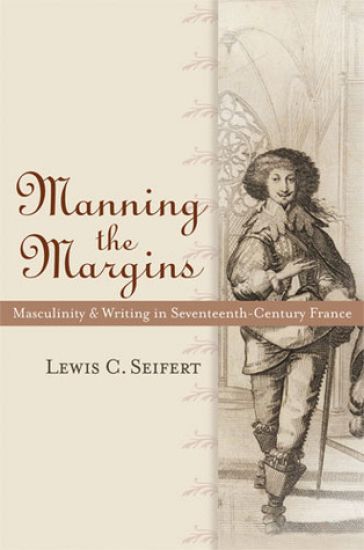
Manning the Margins

Manning the Margins

Lewis C. Seifert

The University of Michigan Press
2009
nidottu
"Manning the Margins is provocative, timely, and very original and makes a significant contribution to a variety of fields, including French literary studies, early modern history of ideas, women's and gender studies, and masculinity studies. There is no other work that explores these questions in such depth and is so wide-ranging in its implications for a reevaluation of the period as a whole. Seifert's work is groundbreaking."---Faith Beasley, Dartmouth College"Manning the Margins innovatively synthesizes gender studies and early modern French texts, challenging absolutist assumptions of hierarchy and harmony."---Todd Reeser, University of Pittsburgh"This is a critical and most significant contribution to masculinity studies both because of its thorough review and synthesis of primary and secondary sources on the subject, as well as the critical and theoretical frames, and because of the original and important direction Seifert takes in his analysis."---Kathleen Perry Long, Cornell UniversityOver the past three decades, a rich body of scholarship has uncovered the crucial roles women played in seventeenth-century France, a period often reduced to "classical" male authors and "absolutist" kings. But the clearer perspective we now have of women has exposed the need to take a fresh look at men and masculinity. Through his reading of a wide range of canonical and minor texts, Lewis C. Seifert charts a course toward a more complex understanding of gender during this seminal period.Examining ideals of polite masculine conduct, the figure of the salon man, representations of male same-sex desire, and the case of a male cross-dresser, Manning the Margins shows how elite men defined themselves in relation to women and other men and argues that dominant masculinity cannot always eclipse marginalized masculinities. The theoretical material and historical questions Seifert addresses will appeal not only to scholars and students in French studies and early modern studies, but also to historians as well as those interested in gender studies, sexuality studies, and transgender studies.Lewis C. Seifert is Associate Professor of French Studies at Brown University. He is also the author of Fairy Tales, Sexuality, and Gender in France, 1690-1715: Nostalgic Utopias and the coeditor (with Todd Reeser) of Entre Hommes: French and Francophone Masculinities in Culture and Theory. Visit the author's website: http://research.brown.edu/myresearch/Lewis_C._Seifert.
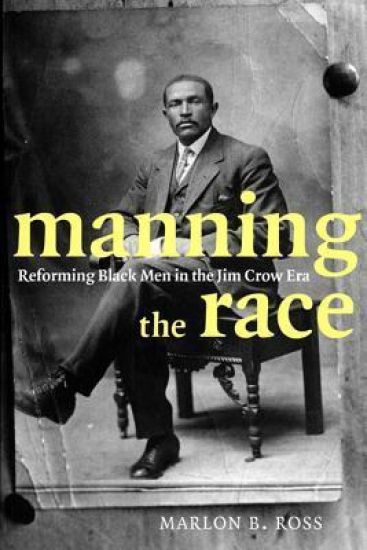
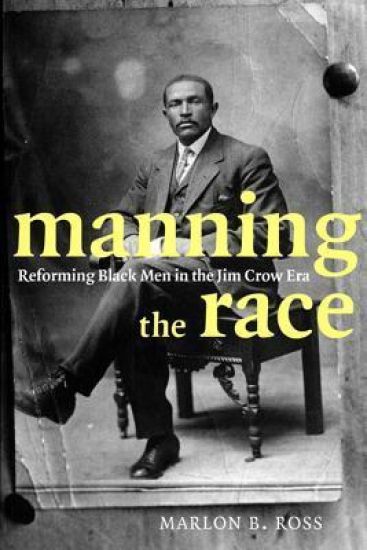
Manning the Race

Manning the Race

Marlon B. Ross

New York University Press
2004
sidottu
Manning the Race explores how African American men have been marketed, embodied, and imaged for the purposes of racial advancement during the early decades of the twentieth century. Marlon Ross provides an intellectual history of both famous and lesser-known men who have served?controversially?as models and foils for black masculine competence. Ross examines a host of early twentieth-century cultural sites where black masculinity struggles against Jim Crow: the mobilization of the New Negro; the sexual politics of autobiography in the post-emancipation generation; the emergence of black male sociology; sexual rivalry and networking in biracial uplift institutions; Negro Renaissance arts patronage; and the sexual construction of the black urban folk novel. Focusing on the overlooked dynamics of symbolic fraternity, intimate friendship, and erotic bonding within and across gender, Manning the Race is the first book to integrate same-sexuality into the cultural history of black manhood. By approaching black manhood as a culturally contested arena, this important new work reveals the changing meanings and enactments of race, gender, nation, and sexuality in modern America. Manning the Race opens new approaches to the study of black manhood in relation to U.S. culture. Where previous books tended to emphasize how individual black men's identities have been reactively informed by the U.S. regime of race and sexuality, Manning the Race makes the case for understanding how black men themselves have been primary agents and subjects in formulating the identity and practices of black manhood.
Manning the Race

Manning the Race

Marlon B. Ross

New York University Press
2004
pokkari
Manning the Race explores how African American men have been marketed, embodied, and imaged for the purposes of racial advancement during the early decades of the twentieth century. Marlon Ross provides an intellectual history of both famous and lesser-known men who have served?controversially?as models and foils for black masculine competence. Ross examines a host of early twentieth-century cultural sites where black masculinity struggles against Jim Crow: the mobilization of the New Negro; the sexual politics of autobiography in the post-emancipation generation; the emergence of black male sociology; sexual rivalry and networking in biracial uplift institutions; Negro Renaissance arts patronage; and the sexual construction of the black urban folk novel. Focusing on the overlooked dynamics of symbolic fraternity, intimate friendship, and erotic bonding within and across gender, Manning the Race is the first book to integrate same-sexuality into the cultural history of black manhood. By approaching black manhood as a culturally contested arena, this important new work reveals the changing meanings and enactments of race, gender, nation, and sexuality in modern America. Manning the Race opens new approaches to the study of black manhood in relation to U.S. culture. Where previous books tended to emphasize how individual black men's identities have been reactively informed by the U.S. regime of race and sexuality, Manning the Race makes the case for understanding how black men themselves have been primary agents and subjects in formulating the identity and practices of black manhood.
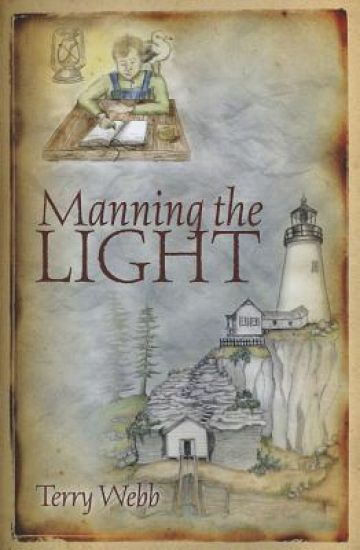
Manning the Light

Manning the Light

Terry Webb

Historical Fiction Resources
2022
pokkari
During the turn of the twentieth century, lighthouses dotted the New England coast to provide security for ship-going traffic. When 13-year-old Louie and his mother are hired to be keepers of the light at Two Tree Island in the summer of 1903, his year-long adventures with his newfound friends - human as well as feathered - help him move from grief over the loss of his father and teenage uncertainty to maturity and stability.After his father dies, 13-year-old Louie Hollander and his mother must move away from their old home and find a way to make a living. They are hired as keepers of Two Tree Island Lighthouse on Windlass Bay - temporarily. In order to keep the job, Louie and his ma must prove that they can handle the hard work. Tending to the urgent task of protecting sea-going vessels from storm and fog keeps Louie scrambling, especially when equipment breaks down. And even with visits from mainland friends, island living is lonely. An injured sea gull becomes an unexpected pet and a visiting preacher becomes a new fishing buddy. But Louie grieves for his father and misses his best friend, Charlie. Then Louie receives wonderful news. Charlie plans to spend the month of August on Two Tree Island. August can't come quickly enough. But Louie finds that Charlie has changed a lot. Suddenly Louie must face difficult choices, especially when Charlie's behavior endangers the operation of the lighthouse."Manning the Light maintains family values and spiritual foundations that are important in my family's life today. As a homeschooling mom, I recommend this book as part of a literature based American history curriculum." Elizabeth Giles Griner