Kirjojen hintavertailu. Mukana 11 244 527 kirjaa ja 12 kauppaa.

Kirjahaku

Etsi kirjoja tekijän nimen, kirjan nimen tai ISBN:n perusteella.

1000 tulosta hakusanalla Manuel Cubas

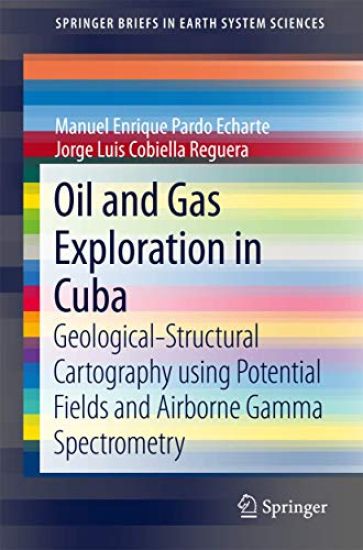
Oil and Gas Exploration in Cuba

Oil and Gas Exploration in Cuba

Manuel Enrique Pardo Echarte; Jorge Luis Cobiella Reguera

Springer International Publishing AG
2017
nidottu
A summary of the results achieved in the geological-structural mapping, by potential fields and airborne gamma spectrometry data, of the units of igneous and metamorphic rocks in the western regions (Havana-Matanzas), central (Cienfuegos, Villa Clara-Sancti Spiritus) and central-eastern (Camagüey-Las Tunas-Holguín) of Cuba is presented. In addition, the structural- tectonic regionalization with hydrocarbon exploration purposes, focusing mapping of possible new oil-gas targets in the regions of Land Blocks 9, 23 and 17-18 are detailed in this volume. In certain case study locations (Majaguillar, North Motembo, Guamutas and Maniabón) reconnaissance work by a profile of Redox Complex (complex of unconventional geophysical-geochemical exploration techniques) was performed with positive results. In an attempt to contribute to the geological-structural mapping of the metamorphic massif Isla de la Juventud, with emphasis on acid magmatism, the gravi-magnetometric data is used. According to the results, the presumed post metamorphic granitic bodies of low density are located, mainly, in the central and southwestern part of the massif. The granitic bodies apparently were introduced through the system of longitudinal faults (syn metamorphic) and transverse (post metamorphic) at the end of the process multyfolding and metamorphism of the massif sequences, taking a leading role the deep longitudinal fracture zones of sublatitudinal direction in the central and southern part of the massif. On the map of the magnetic field vertical derivative the anomalies, basically, reflected the direction and limits of the folded tectonic structure, the development area of ?? volcanogenic rocks, the presumed development zones of migmatitic rocks and tectonised rocks in North and center of the massif, respectively, and the prevailing direction of the main tectonic dislocations.
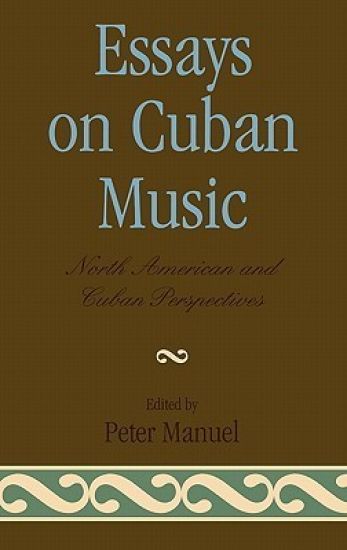
Essays on Cuban Music

Essays on Cuban Music

Peter Manuel

University Press of America
1991
sidottu
The first book-length study on Cuban music in the English language. This volume consists of thirteen articles written by nine authors, including four Cuban scholars and five North American ethnomusicologists. The articles by Cuban scholars, translated from largely out-of-print publications, constitute a selection of some of the best Cuban research on their island's music, and present a set of perspectives which complement those of the North American authors. The articles cover such areas as descriptions of the Afro-Haitian derived tumba francesa, the traditional Afro-Cuban rumba, and the rural punto, as cultivated by peasants of Hispanic descent; aspects of the music bureaucracy in contemporary Cuba; the American music industry's dissemination of Cuban-derived salsa in New York City; Afro-Cuban cult music; the history and current status of charanga dance bands; and more.
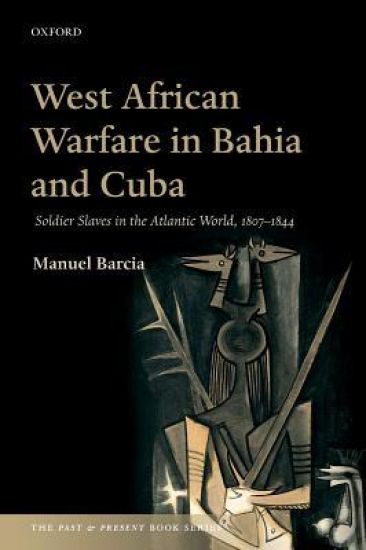
West African Warfare in Bahia and Cuba

West African Warfare in Bahia and Cuba

Manuel Barcia

Oxford University Press
2014
sidottu
West African Warfare in Bahia and Cuba seeks to explain how a series of historical events that occurred in West Africa from the mid-1790s - including Afonja's rebellion, the Owu wars, the Fulani-led jihad, and the migrations to Egbaland - had an impact upon life in cities and plantations in western Cuba and Bahia. Manuel Barcia examines the extent to which a series of African-led plots and armed movements that took place in western Cuba and Bahia between 1807 and 1844 were the result - or a continuation - of events that had occurred in and around the Yoruba and Hausa kingdoms in the same period. Why did these two geographical areas serve as the theatre for the uprising of the Nagôs, the Lucumís, and other West African men and women? The answer, Barcia argues, relates to the fact that plantation economies supported by unusually large numbers of African-born slaves from the same - or close - geographical and ethnic heritage, transformed the rural and urban landscape in western Cuba and Bahia. To understand why these two areas followed such similar social patterns it is essential to look across the Atlantic - it is not enough to repeat the significance of the African background of Bahian and Cuban slaves. By establishing connections between people and events, with a special emphasis on their warfare experiences, Barcia presents a coherent narrative which spans more than three decades and opens a wealth of archival research for future study.
West African Warfare in Bahia and Cuba

West African Warfare in Bahia and Cuba

Manuel Barcia

Oxford University Press
2016
nidottu
West African Warfare in Bahia and Cuba seeks to explain how a series of historical events that occurred in West Africa from the mid-1790s - including Afonja's rebellion, the Owu wars, the Fulani-led jihad, and the migrations to Egbaland - had an impact upon life in cities and plantations in western Cuba and Bahia. Manuel Barcia examines the extent to which a series of African-led plots and armed movements that took place in western Cuba and Bahia between 1807 and 1844 were the result - or a continuation - of events that had occurred in and around the Yoruba and Hausa kingdoms in the same period. Why did these two geographical areas serve as the theatre for the uprising of the Nagôs, the Lucumís, and other West African men and women? The answer, Barcia argues, relates to the fact that plantation economies supported by unusually large numbers of African-born slaves from the same - or close - geographical and ethnic heritage, which transformed the rural and urban landscape in western Cuba and Bahia. To understand why these two areas followed such similar social patterns it is essential to look across the Atlantic - it is not enough to repeat the significance of the African background of Bahian and Cuban slaves. By establishing connections between people and events, with a special emphasis on their warfare experiences, Barcia presents a coherent narrative which spans more than three decades and opens a wealth of archival research for future study.
Unconventional Methods for Oil & Gas Exploration in Cuba

Unconventional Methods for Oil & Gas Exploration in Cuba

Manuel E. Pardo Echarte; Osvaldo Rodríguez Morán

Springer International Publishing AG
2015
nidottu
This book studies the “Redox Complex”, a complex of unconventional geophysical-geochemical exploration techniques used for the indirect detection, characterization and evaluation of various metal targets, while also illustrating selected applications of unconventional geophysical-geochemical methods for oil exploration in Cuba. This complex is successfully applied in various fields: oil & gas and metal ores exploration; studies of oil and metal contaminants in soils; and the search for metallic archaeological burials. The use of these techniques is intended to complement the conventional prospecting complex by reducing areas and/or facilitating the selection of the most favorable targets, improving the economical-geological effectiveness of investigations in the process. Further, the Redox Complex can be implemented without physical or chemical damage to the environment. The book’s primary goals are to: 1) outline the general features characterizing the processes of metal mobilization, transport and accumulation on surficial media; 2) outline the methodology, data interpretation and mathematical apparatus that support quantitative estimates of the Redox Complex; and 3) design a database and applications system (the Redox System) to address storage processes, reports, graphics and the corresponding interpretations of the Redox Complex in a quick and reliable way. To do so, it examines the regions of Havana-Matanzas (Varadero Oil Field, Cantel Oil Field and Madruga Prospect) and Ciego de Ávila (Pina Oil Field, Cristales Oil Field, Jatibonico Oil Field, Jatibonico Oeste Prospect and Cacahual Prospect). The methods covered include, in some cases, airborne gamma spectrometry (K/eTh ratio) beside ORP and, in others, the Redox Complex with reduced or standard attributes. In all cases, the anomalous complex of interest corresponds to the correlation of the minimum K/eTh ratio with minimum ORP and, in the case of the Redox Complex, Magnetic Susceptibility highs with ORP lows, Spectral Reflectance lows and maximum Content of Chemical Elements (V, Ni, Pb, Zn, Fe).
Offshore Exploration of Oil and Gas in Cuba using Digital Elevation Models (DEMs)

Offshore Exploration of Oil and Gas in Cuba using Digital Elevation Models (DEMs)

Manuel Enrique Pardo Echarte; Odalys Reyes Paredes; Valia Suárez Leyva

Springer International Publishing AG
2018
nidottu
This book provides an overview of the major changes induced by hydrocarbons (HCs) affecting rocks and surface sediments and their implications for non-seismic exploration methods, particularly for marine territories near Cuba. It examines the use of a digital elevation model (DEM) at 90x90m resolution for the detection of subtle, positive geomorphic anomalies related to hydrocarbon microseepage (vertical migration) on possible oil and gas targets. The results support the conclusion that the DEM data provides a low cost and fast offshore oil and gas preliminary exploration strategy. This data is useful serving to focus prospective areas with supplementary unconventional methods such as magnetic-induced polarization (MIP), useful to propose more expensive volumes for detailed 2D–3D seismic surveys.
Reflections on Non-agricultural Cooperativism in Cuba

Reflections on Non-agricultural Cooperativism in Cuba

Manuel Martín E Valladares

Our Knowledge Publishing
2023
pokkari
The lack of a culture and a doctrinal-theoretical basis in Cuba to promote an ascending and penetrating cooperativism in its society, has given rise to these reflections, whose objective is to promote, at least, an instrument where people can consult concepts and definitions to gain practical knowledge from a legal, administrative, economic and social perspective, established in the regulations of its current legislation, which will facilitate their efforts to start, create and manage their own cooperative, or simply collaborate as an advisor.We reflect on a number of essential and obligatory subjects where concepts and criteria are delimited in order to achieve a reasoned identity that does not distort these types of solidarity and democratic societies from their formation, constitution and the social responsibility that they have to fulfil both internally and externally, pillars that we must know how to harmonise ingeniously in their Statutes in order to consolidate their future in our economy as a variant in the positive resizing of the Cuban economic model.
Réflexions sur le coopérativisme non agricole à Cuba

Réflexions sur le coopérativisme non agricole à Cuba

Manuel Martín E Valladares

Editions Notre Savoir
2023
pokkari
Le manque de culture et de base doctrinale et th orique Cuba pour promouvoir un coop rativisme ascendant et p n trant dans sa soci t , a donn lieu ces r flexions, dont l'objectif est de promouvoir, au moins, un instrument o les gens peuvent consulter des concepts et des d finitions pour acqu rir des connaissances pratiques d'un point de vue juridique, administratif, conomique et social, tabli dans les r glements de sa l gislation actuelle, ce qui facilitera leurs efforts pour d marrer, cr er et g rer leur propre coop rative, ou simplement collaborer en tant que conseiller.Nous r fl chissons sur un certain nombre de sujets essentiels et obligatoires o sont d limit s des concepts et des crit res afin de parvenir une identit raisonn e qui ne d tourne pas ces types de soci t s solidaires et d mocratiques de leur formation, de leur constitution et de la responsabilit sociale qu'elles doivent assumer tant l'int rieur qu' l'ext rieur, piliers qu'il faut savoir harmoniser ing nieusement dans leurs statuts afin de consolider leur avenir dans notre conomie en tant que variante dans le redimensionnement positif du mod le conomique cubain.
Riflessioni sul cooperativismo non agricolo a Cuba

Riflessioni sul cooperativismo non agricolo a Cuba

Manuel Martín E Valladares

Edizioni Sapienza
2023
pokkari
La mancanza a Cuba di una cultura e di una base dottrinale-teorica per promuovere un cooperativismo ascendente e penetrante nella sua societ , ha dato origine a queste riflessioni, il cui obiettivo quello di promuovere, almeno, uno strumento in cui le persone possano consultare concetti e definizioni per acquisire conoscenze pratiche dal punto di vista giuridico, amministrativo, economico e sociale, stabilite nelle norme della legislazione vigente, che facilitino i loro sforzi per avviare, creare e gestire la propria cooperativa, o semplicemente collaborare come consulente.Riflettiamo su una serie di argomenti essenziali e obbligatori in cui si delimitano concetti e criteri per raggiungere un'identit ragionata che non snaturi questi tipi di societ solidali e democratiche dalla loro formazione, costituzione e dalla responsabilit sociale che devono assolvere sia all'interno che all'esterno, pilastri che dobbiamo saper armonizzare ingegnosamente nei loro Statuti per consolidare il loro futuro nella nostra economia come variante nel ridimensionamento positivo del modello economico cubano.
Reflexões sobre o cooperativismo não-agrícola em Cuba

Reflexões sobre o cooperativismo não-agrícola em Cuba

Manuel Martín E Valladares

Edicoes Nosso Conhecimento
2023
pokkari
A falta de uma cultura e de uma base te rico-doutrin ria em Cuba para promover um cooperativismo ascendente e penetrante na sua sociedade, deu origem a estas reflex es, cujo objetivo promover, pelo menos, um instrumento onde as pessoas possam consultar conceitos e defini es para obter conhecimentos pr ticos numa perspetiva jur dica, administrativa, econ mica e social, estabelecidos nos regulamentos da sua legisla o atual, que facilitar o os seus esfor os para iniciar, criar e gerir a sua pr pria cooperativa, ou simplesmente colaborar como consultor.Reflectimos sobre uma s rie de temas essenciais e obrigat rios onde se delimitam conceitos e crit rios para conseguir uma identidade fundamentada que n o desvirtue este tipo de sociedades solid rias e democr ticas da sua forma o, constitui o e responsabilidade social que devem cumprir tanto interna como externamente, pilares que devemos saber harmonizar engenhosamente nos seus Estatutos para consolidar o seu futuro na nossa economia como uma variante no redimensionamento positivo do modelo econ mico cubano.
The Tribe: Portraits of Cuba

The Tribe: Portraits of Cuba

Carlos Manuel Álvarez

GRAYWOLF PRESS
2022
nidottu
Teeming with life and compulsively readable, the pieces gathered in The Tribe aggregate into an extraordinary mosaic of Cuba today. Carlos Manuel lvarez, one of the most exciting young writers in Latin America, employs the cr nica form--a genre unique to Latin American writing that blends reportage, narrative nonfiction, and novelistic techniques--to illuminate a particularly turbulent period in Cuban history, from the reestablishment of diplomatic relations with the United States, to the death of Fidel Castro, to the convulsions of the San Isidro Movement. Unique, edgy, and stylishly written, The Tribe shows a society in flux, featuring athletes in exile, artists, nurses, underground musicians and household names, dissident poets, the hidden underclass at a landfill, migrants attempting to make their way across Central America, fugitives escaping the FBI, and dealers in the black market, as well as revelers and policemen in the noisy Havana night. It is a major work of reportage by one of Granta's Best of Young Spanish-Language Novelists.