

Kirjahaku
Etsi kirjoja tekijän nimen, kirjan nimen tai ISBN:n perusteella.
1000 tulosta hakusanalla Marc Torra

Nach Helmuts Tod findet Stefan nur langsam zur ck ins Leben. Dabei trifft er auf Marc und eine turbulente Irrfahrt der Gef hle beginnt. Die Dorfgemeinde entfacht einen Skandal. Die Familie ist emp rt und Stefan verliert den Boden unter den F en. Davon, wie leidenschaftlich aber auch zerst rerisch eine Liebe sein kann, erz hlt dieser Roman. Und von der Erkenntnis, dass die vermeintlich un berwindbaren H rden des Lebens jene sind, die man selbst aufstellt.

Printmaker, landscape painter, and cofounder of Der Blaue Reiter (“The Blue Rider”), Franz Marc (1880–1916) left an exceptional legacy in German Expressionism. His work absorbed influences including Paul Gauguin, van Gogh, Picasso, Henri Matisse, and Robert Delaunay to galvanize a new vocabulary of form and color.Especially keen on depictions of animals, Marc’s work began emphasizing cubist, semiabstracted shapes; frenetic, whirling compositions; and in his paintings, a new vocabulary of color. Marc located spiritual values in different shades. Blue was spirituality and masculinity. Yellow depicted femininity and joy. Red hues correlated to anger and violence.It was with his friend and peer Wassily Kandinsky that Marc founded Der Blaue Reiter, a loose band of artists connected by a shared interest in woodcuts and prints, the symbolic values of color, and spontaneous approaches to painting. The group was short-lived, dissolving with the onset of the First World War—which would also claim Marc’s life in 1916—but it set an Expressionist standard that would flourish for decades.In this new edition in TASCHEN’s popular Basic Art series, we meet this pivotal figure of German art and explore his short but hugely accomplished career, which at once defined an era and set an enduring point of Expressionist reference.About the seriesBorn back in 1985, the Basic Art Series has evolved into the best-selling art book collection ever published. Each book in TASCHEN’s Basic Art series features:a detailed chronological summary of the life and oeuvre of the artist, covering his or her cultural and historical importancea concise biographyapproximately 100 illustrations with explanatory captions

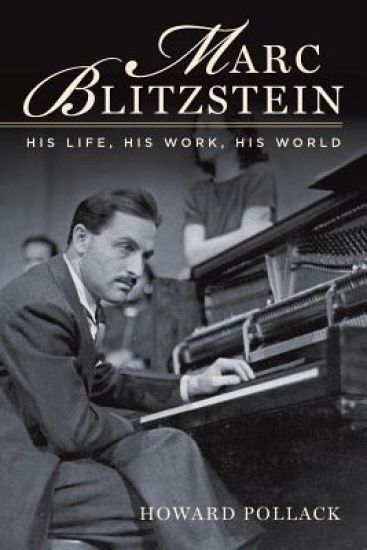
A composer and lyricist of enormous innovation and influence, Marc Blitzstein remains one of the most versatile and fascinating figures in the history of American music, his creative output running the gamut from films scores and Broadway operas to art songs and chamber pieces. A prominent leftist and social maverick, Blitzstein constantly pushed the boundaries of convention in mid-century America in both his work and his life. Award-winning music historian Howard Pollack's new biography covers Blitzstein's life in full, from his childhood in Philadelphia to his violent death in Martinique at age 58. The author describes how this student of contemporary luminaries Nadia Boulanger and Arnold Schoenberg became swept up in the stormy political atmosphere of the 1920s and 1930s and throughout his career walked the fine line between his formal training and his populist principles. Indeed, Blitzstein developed a unique sound that drew on everything contemporary, from the high modernism of Stravinsky and Hindemith to jazz and Broadway show tunes. Pollack captures the astonishing breadth of Blitzstein's work—from provocative operas like The Cradle Will Rock, No for an Answer, and Regina, to the wartime Airborne Symphony composed during his years in service, to lesser known ballets, film scores, and stage works. A courageous artist, Blitzstein translated Bertolt Brecht and Kurt Weill's The Threepenny Opera during the heyday of McCarthyism and the red scare, and turned it into an off-Broadway sensation, its "Mack the Knife" becoming one of the era's biggest hits. Beautifully written, drawing on new interviews with friends and family of the composer, and making extensive use of new archival and secondary sources, Marc Blitzstein presents the most complete biography of this important American artist.
A composer of enormous musical innovation and influence, Marc Blitzstein remains one of the most versatile and fascinating figures in the history of American music, his creative works running the gamut from Broadway musicals and film scores to concert and chamber pieces. As an open homosexual and a prominent leftist, Blitzstein constantly pushed the boundaries of acceptability in mid-century America in both his music and his life. Award-winning music historian Howard Pollack's new biography is the first to put Blitzstein's music on equal footing with his politics, theatrical innovation, and other aspects of the composer's life. Pollack covers Blitzstein's life in full, from his childhood in Philadelphia to his violent death in Martinique at age 58. The author describes how this student of contemporary luminaries Arnold Schoenberg and Nadia Boulanger became swept up in the stormy political atmosphere of the 1920s and 1930s and throughout his career walked the fine line between his formal training and his populist principles in his composition. Indeed, Blitzstein developed a unique sound that drew on everything contemporary, from the high modernism of Schoenberg to swing and jazz. Pollack captures the astonishing breadth of Blitzstein's musical language—?from politically scandalous Broadway musicals like The Cradle Will Rock and No for an Answer, to the patriotic Airborne Symphony, to lesser known early pieces, film scores, and chamber works. A fearless artist, Blitzstein translated Bertolt Brecht and Kurt Weill's The Threepenny Opera during the heyday of McCarthyism and the red scare, and, with Leonard Bernstein and Lotte Lenya, turned it into an off-Broadway sensation. Beautifully written, drawing on new interviews with friends and family of the composer, and making extensive use of new archival and secondary sources, Marc Blitzstein presents the most complete biography of this quintessentially American composer.
Marc Blitzstein was one of the 20th century's most important American composers, lyricists, and critics, often credited with having virtually invented opera in the American vernacular. Called the father of American opera in the vernacular by luminaries Aaron Copland and Leonard Bernstein, Blitzstein was a masterful pianist, coach, and accompanist, though, ironically, he made more money on the lyrics to one song—Mack the Knife—than on everything else he ever did. Blitzstein's brilliant career was cut short in 1964 when he died at the age of 58. This book catalogs Blitzstein's own writings and writings about him, followed by detailed listings (chronological, alphabetical, and genre), analysis, a comprehensive performance history, and summaries of all known critiques of his 128 original musical works and 18 texts set to the music of others. Shown in detail are the ways in which Blitzstein took music from his earlier works and developed it in later works, a process that Lehrman utilized in completing (with Bernstein's and the Estate's approval) 20 Blitzstein works for performance, including The Cradle Will Rock, I've Got the Tune, No for an Answer, Idiots First, and Sacco and Vanzetti, which Blitzstein believed would be his magnum opus. The book provides a unique and full perspective on the works of one of America's greatest composers—one who deserves to be better known.

This book follows Chagall’s life through his art and his understanding of the role of the artist as a political being. It takes the reader through the different milieus of the nineteenth and twentieth centuries – including the World Wars and the Holocaust – to present a unique understanding of Chagall’s artistic vision of peace in an age of extremes. At a time when all identities are being subsumed into a “national” identity, this book makes the case for a larger understanding of art as a way of transcending materiality. The volume explores how Platonic notions of truth, goodness, and beauty are linked and mutually illuminating in Chagall’s work. A “spiritual-humanist” interpretation of his life and work renders Chagall’s opus more transparent and accessible to the general reader.It will be essential reading for students of art and art history, political philosophy, political science, and peace studies.

This book follows Chagall’s life through his art and his understanding of the role of the artist as a political being. It takes the reader through the different milieus of the nineteenth and twentieth centuries – including the World Wars and the Holocaust – to present a unique understanding of Chagall’s artistic vision of peace in an age of extremes. At a time when all identities are being subsumed into a “national” identity, this book makes the case for a larger understanding of art as a way of transcending materiality. The volume explores how Platonic notions of truth, goodness, and beauty are linked and mutually illuminating in Chagall’s work. A “spiritual-humanist” interpretation of his life and work renders Chagall’s opus more transparent and accessible to the general reader.It will be essential reading for students of art and art history, political philosophy, political science, and peace studies.

The first publication dedicated to Marc Jacobsâ??s highly influential creations â?? the epitome of downtown New York cool â?? captured behind the scenes by American Vogue photographer Robert Fairer in inspiring, never-before-seen images.

A member of Magnum, Marc Riboud has travelled the world, from Europe to the Middle East and from Vietnam to the United States. Repelled by violence, indifferent to the pursuit of ‘events’, yet irresistibly drawn by the desire to see, he is a reporter under the spell of life itself. Whether covering the Cultural Revolution or the Soviet Union before perestroika, he waits for the inner truth to ‘rise to the surface of things’. These photographs reveal his intense awareness of the innate power of each image.
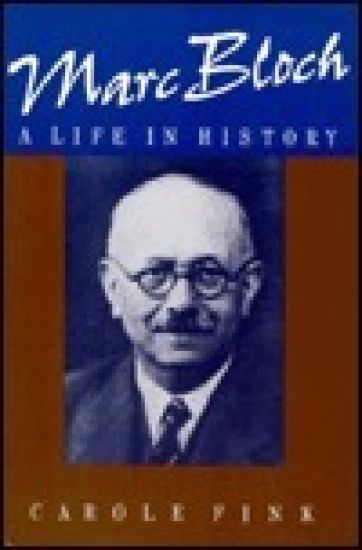
This is the first biography of Marc Bloch (1886–1944), historian, soldier in both world wars, and leader of the Resistance, who was captured, tortured, and died a heroic death. Based largely on Bloch's private letters, diaries and papers, as well as on other unpublished documents, it traces the remarkable life of this French-Jewish patriot under the Third Republic. As an historian, Bloch is perhaps best known for The Historian's Craft, an inspiring set of meditations on his life's work, and as co-founder of the now legendary journal Annales, which gave rise to a major school of historical writing. Profoundly influenced by the dark events that shaped his era - world wars, anti-semitism, and totalitarianism - Bloch has become something of an intellectual hero of our century, his life an epitome of the endeavour to uphold, in the face of such events, the spirit of unfettered critical enquiry.

This is the first biography of Marc Bloch (1886–1944), historian, soldier in both world wars, and leader of the Resistance, who was captured, tortured, and died a heroic death. Based largely on Bloch's private letters, diaries and papers, as well as on other unpublished documents, it traces the remarkable life of this French-Jewish patriot under the Third Republic. As an historian, Bloch is perhaps best known for The Historian’s Craft, an inspiring set of meditations on his life’s work, and as co-founder of the now legendary journal Annales, which gave rise to a major school of historical writing. Profoundly influenced by the dark events that shaped his era - world wars, anti-semitism, and totalitarianism - Bloch has become something of an intellectual hero of our century, his life an epitome of the endeavour to uphold, in the face of such events, the spirit of unfettered critical enquiry.

Marc Bloch has been very influential in the development of both history and social science. Comparative historians, historical geographers, and historical sociologists have all pointed to his work as a model. This book is the first detailed examination of the relationship of his work to both Durkheimian sociology and Vidalian geography. Through a careful examination of the debates in which he was involved and the institutional circumstances in which he worked, it places Bloch’s work within its intellectual context, and assesses the nature of his contribution. Professor Friedman argues that, despite the frequent claims of scholars in history, sociology and geography, Bloch did not adopt either the Durkheimian or Vidalian approach. Both disciplines were central to his intellectual development, but Bloch’s relationships to the two disciplines were interdependent, and the result was his own highly acclaimed and unique approach.
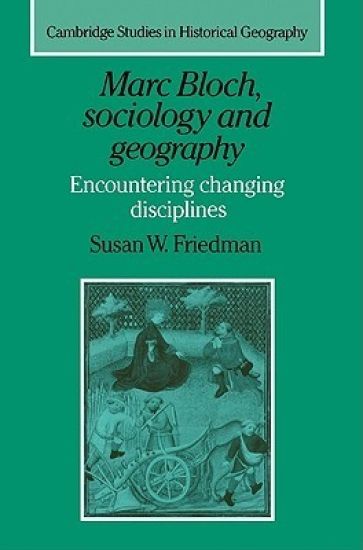
Marc Bloch has been very influential in the development of both history and social science. Comparative historians, historical geographers, and historical sociologists have all pointed to his work as a model. This book is the first detailed examination of the relationship of his work to both Durkheimian sociology and Vidalian geography. Through a careful examination of the debates in which he was involved and the institutional circumstances in which he worked, it places Bloch’s work within its intellectual context, and assesses the nature of his contribution. Professor Friedman argues that, despite the frequent claims of scholars in history, sociology and geography, Bloch did not adopt either the Durkheimian or Vidalian approach. Both disciplines were central to his intellectual development, but Bloch’s relationships to the two disciplines were interdependent, and the result was his own highly acclaimed and unique approach.

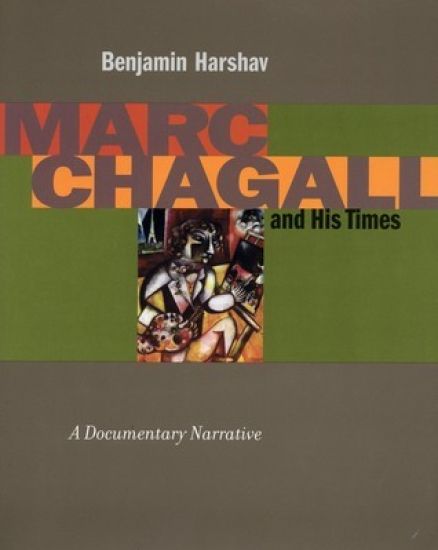
This book presents a new and comprehensive biography of one of the most prominent artists of the twentieth century in dialogue with the events and ideologies of his time. It encompasses the 98 years of Chagall's life (1887-1985) in Russia, France, the US, as well as Germany and Israel, his deep roots in folk culture, his personal relationships and loves, his involvement with the art of the Russian Revolution, with Surrealism, Communism, Zionism, Yiddish literature and the state of Israel. The book exposes the complex relationships between Chagall's three cultural identities: Jewish-Russian-French. Indeed, it is a biography of the turbulent times of the twentieth century and the transformations of a Jew in it, his meteoric rise from the "ghetto" of the Russian Pale of Settlement to the centers of modern culture. The book reveals Chagall's endless curiosity, his forays in many directions beyond painting and drawing: public art, theater and ballet, stained glass windows in churches and synagogues, lithographs, etchings, and illustrations of literature and the Bible. We observe the intricate relations between Chagall's life and consciousness and the impact of his life on the iconography of his art. Thus, the book provides an indispensable key to the understanding of Chagall's often enigmatic art. Indeed, it is a contribution to the understanding of some of the central problems of Modern art, such as the question of originality, the interaction between the formal discoveries of the avant-garde and cultural or multi-cultural representation, and the relations between an artist's art and his personal biography. Renowned Israeli-American scholar Benjamin Harshav presents the first comprehensive investigation of Marc Chagall's life and consciousness after the classic 1961 biography by Chagall's son-in-law Franz Meyer. Harshav's narrative includes hundreds of private letters and documents written by Chagall and his contemporaries in Russian, Yiddish, French, English and other languages, translated by Benjamin and Barbara Harshav into English, and placed in their personal and historical context.
Marc Chagall (1887-1985) traversed a long route from a boy in the Jewish Pale of Settlement, to a commissar of art in revolutionary Russia, to the position of a world-famous French artist. This book presents for the first time a comprehensive collection of Chagall's public statements on art and culture. The documents and interviews shed light on his rich, versatile, and enigmatic art from within his own mental world. The book raises the problems of a multi-cultural artist with several intersecting identities and the tensions between modernist form and cultural representation in twentieth-century art. It reveals the travails and achievements of his life as a Jew in the twentieth century and his perennial concerns with Jewish identity and destiny, Yiddish literature, and the state of Israel. This collection includes annotations and introductions of the Chagall texts by the renowned scholar Benjamin Harshav that elucidate the texts and convey the changing cultural contexts of Chagall's life. Also featured is the translation by Benjamin and Barbara Harshav of the first book about Chagall's work, the 1918 Russian The Art of Marc Chagall.

Marc Chagall (1887-1985) traversed a long route from a boy in the Jewish Pale of Settlement, to a commissar of art in revolutionary Russia, to the position of a world-famous French artist. This book presents for the first time a comprehensive collection of Chagall's public statements on art and culture. The documents and interviews shed light on his rich, versatile, and enigmatic art from within his own mental world. The book raises the problems of a multi-cultural artist with several intersecting identities and the tensions between modernist form and cultural representation in twentieth-century art. It reveals the travails and achievements of his life as a Jew in the twentieth century and his perennial concerns with Jewish identity and destiny, Yiddish literature, and the state of Israel. This collection includes annotations and introductions of the Chagall texts by the renowned scholar Benjamin Harshav that elucidate the texts and convey the changing cultural contexts of Chagall's life. Also featured is the translation by Benjamin and Barbara Harshav of the first book about Chagall's work, the 1918 Russian The Art of Marc Chagall.
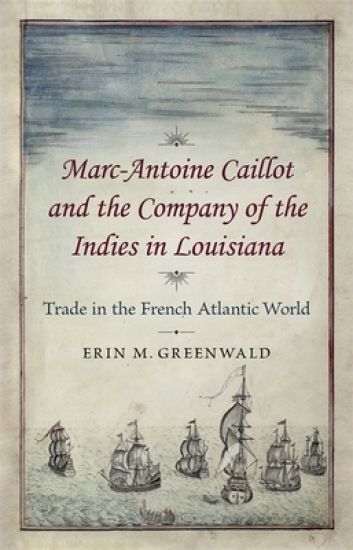
Marc-Antoine Caillot and the Company of the Indies in Louisiana
Erin M. Greenwald
Louisiana State University Press
2016
sidottu
Between 1717 and 1731, the French Company of the Indies (Compagnie des Indes) held a virtual monopoly over Louisiana culture and trade. Among numerous controls, its administrators oversaw the slave trade, the immigration of free and indentured whites, negotiations with Native American peoples, and the purchase and exportation of Louisiana-grown tobacco. In Marc-Antoine Caillot and the Company of the Indies in Louisiana, Erin M. Greenwald situates the colony within a French Atlantic circuit stretching from Paris and the Brittany coast to Africa's Senegambian region to the West Indies to Louisiana and back. Focusing on the travels and travails of Marc-Antoine Caillot, a company clerk who set sail for Louisiana in 1729, Greenwald deftly examines the company's role as colonizer, developer, slaveholder, commercial entity, and deal maker.As the company's focus shifted away from agriculture with the reversion of Louisiana to the French crown in 1731, so too did the lives of the individuals whose fortunes were bound up in the company's trade, colonization, and agricultural mission in the Americas. Greenwald's micro historical focus on Caillot provides an engaging narrative for readers interested in the culture and society of early Louisiana and its place in the larger French Atlantic world.