

Kirjahaku
Etsi kirjoja tekijän nimen, kirjan nimen tai ISBN:n perusteella.
1000 tulosta hakusanalla Margit Resch
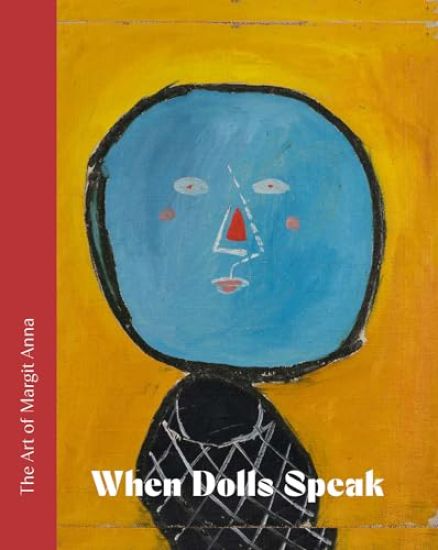
The Art of Margit Anna (1913 1991)
Szepmuveszeti Muzeum
2024
sidottu
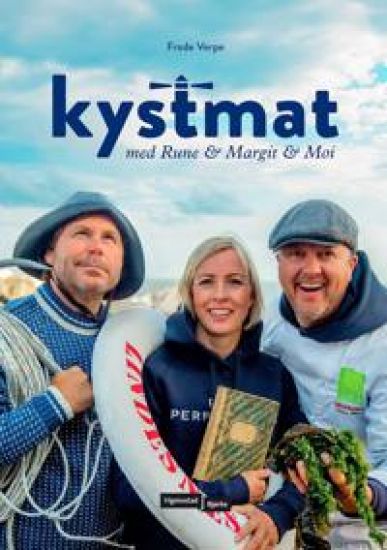
Kystmat med Rune & Margit & Moi
Frode Verpe; Trond Moi; Margit Dale; Rune Andersen
Vigmostad Bjørke
2020
sidottu
I Kystmat med Rune & Margit & Moi møter vi Rune Andersen, Margit Dale og Trond Moi. Trioen består av en matglad komiker, en tradisjonsmatguru fra Setesdal og en kreativ mesterkokk, og de skal på kulinarisk skattejakt langs kysten! Våren 2020 sender TV2 en ny sesong av det kjente og kjære programmet. Samtidig kommer boken med alle de herlige oppskriftene! TV-serien er en sjangersprengende merkverdighet, der historie, tradisjon, kulinariske saltoer og humor omfavnes. I boken vil du finne mest oppskrifter – de beste fra to sesonger av Kystmat. Konseptet Rune & Margit & Moi har festet seg og har en stor følgerskare, og de tre programlederne har hver for seg et betydelig popularitetsoppsving de siste årene. Trond Moi kommer fra Kvinesdal og er en av landets mest kjente kokker. Han er bokens gourmet. Margit Dale er fra Valle og er både gårdbruker, sykepleier og lærer. Hun er bokens tradisjonsbærer. Rune Andersen kommer fra Kristiansand og er kjent standupkomiker og fantastisk imitator. Han er bokens moromann.
Målblomar til Margit
Novus
2013
nidottu
Vår gode kollega, fyrsteamanuensis Margit Harsson, fyllte 70 år den 9. juni 2013. Det skulle ein ikkje tru, men slik er det. I det høvet.fikk ho eit veneskrift med artiklar om stad- og personnamn og andre språklege emne. Margit har vore tilsett ved Institutt/Avdeling/Seksjon for namnegransking, no Institutt for lingvistiske og nordiske studium, sidan 1984.Sjølv om det her fyrst og fremst er namnegranskaren Margit me vil heidra, skal det nemnast at ho også har engasjert seg sterkt i lokalhistorisk arbeid på Ringerike, m.a. med ei bok om storgarden Stein, eit hefte om Halvdanshaugen og t.d. tekster og bilete til kalenderen som Hole historielag gjev ut. Nokre av desse sidene ved Margit Harsson vert reflekterte i artiklane i veneskriftet, men interessene hennar er vidare enn som så, og forfattarane har i det heile stått fritt til å velja emne.
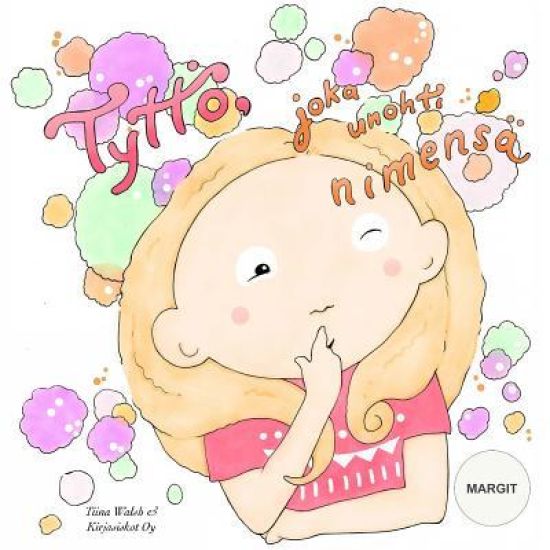
Tyttö, joka unohti nimensä MARGIT
Tiina Walsh
Createspace Independent Publishing Platform
2017
pokkari
Yksil ity satukirja MARGIT-nimisille tyt ille Tytt her , eik muista nime n. Hikka-Hiiri osaa ratkaista pulman. H n vie tyt n taikabussillaan j nnitt v lle seikkailulle. Seikkailun m r lapsen oma nimi Tytt , joka unohti nimens - Taianomainen yksil ity satukirja Kirjasiskot Oy: lt www.kirjasiskot.fi


A View of the Lancashire Dialect; by way of Dialogue; Between Tummus o' Williams, o'f Margit O'Roafs, an Meary O'Dicks, O'Tummy O'Peggy's. Containing the Adventures & Misfortunes of a Lancashire Clown
Tim Bobbin
Gale Ecco, Print Editions
2018
sidottu
The 18th century was a wealth of knowledge, exploration and rapidly growing technology and expanding record-keeping made possible by advances in the printing press. In its determination to preserve the century of revolution, Gale initiated a revolution of its own: digitization of epic proportions to preserve these invaluable works in the largest archive of its kind. Now for the first time these high-quality digital copies of original 18th century manuscripts are available in print, making them highly accessible to libraries, undergraduate students, and independent scholars.Western literary study flows out of eighteenth-century works by Alexander Pope, Daniel Defoe, Henry Fielding, Frances Burney, Denis Diderot, Johann Gottfried Herder, Johann Wolfgang von Goethe, and others. Experience the birth of the modern novel, or compare the development of language using dictionaries and grammar discourses. ++++The below data was compiled from various identification fields in the bibliographic record of this title. This data is provided as an additional tool in helping to insure edition identification: ++++Bodleian Library (Oxford)T197369Anonymous. By Tim Bobbin, ie. John Collier. With a glossary which is separately paginated.London: printed for, and sold by the booksellers in town and country, 1800?]. 26, 22]p.; 12
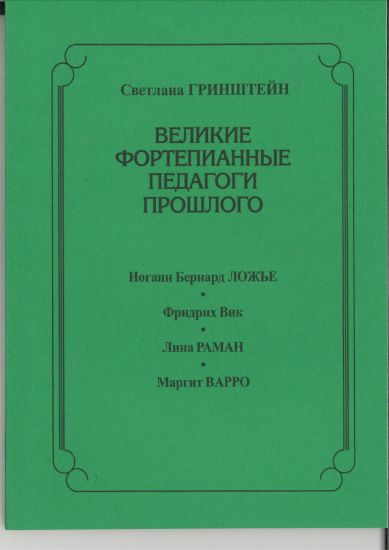
Velikie fortepiannye pedagogi proshlogo. Iogann Bernard Lozhe. Fridrikh Vik. Lina Raman. Margit Varro
S. Grinshtejn
Compozitor (SPb.)
2004
muu
Great Piano Teachers of the Past. Johann Bernhard Logier. Friedrich Wieck. Lina Raman. Marguitte VarroThe book is in Russian

Blott Sverige svenska kvinnor har? : Birgit Th. Sparre, Margit Söderholm och det nationella projektet
Maria Nilson
Makadam förlag
2019
nidottu
Birgit Th. Sparre och Margit Söderholm är två av Sveriges allra mest lästa författare. Sparres och Söderholms romaner var oerhört populära under 1930-, 40- och 50-talen och har under de senaste åren blivit tillgängliga igen som e-böcker. Deras verk, som gärna utspelade sig i historiska miljöer, har ofta setts som romantiska och melodramatiska, men dessa etiketter säger inte hela sanningen. I Blott Sverige svenska kvinnor har? undersöker litteraturvetaren Maria Nilson de föreställningar om det svenska och de idealbilder av maskulinitet och femininitet som lyfts fram i romanerna. Nilson ser verken som på en gång traditionella och visionära. Hos dessa två författare samsas tidstypiskt rasistiska föreställningar med drömmar om ett framtida jämställt samhälle; här finns ett konservativt tillbakablickande samtidigt som romanerna på många sätt är kritiska till den dåtid de skildrar. Studien diskuterar genus och etnicitetskonstruktioner, men också olika former av nostalgi. Sparres och Söderholms författarskap, som hittills varit relativt outforskade, berättar en egen, intressant historia om svenska föreställningsvärldar under 1900-talet. Maria Nilson är lektor i litteraturvetenskap vid Linnéuniversitetet. Hon disputerade 2003 med avhandlingen Att förhålla sig till moderniteten. En studie i Gertrud Liljas författarskap och har sedan dess främst forskat om populärlitteratur och ungdomsromaner.

The executive branch in Western democracies has been granted a virtually impossible task: expected to 'imperially' direct the life of the nation through thick and thin, it is concurrently required to be subservient to legislation meted out by a sovereign parliament. Drawing on a general argument from constitutional theory that prioritizes dispersal of power over concepts of hierarchy, this book argues that the tension between dominance and submission in the executive branch is maintained by the adoption of various forms of fuzziness, under which a guise of legality masks the absence of substantive limitation of power. Under this 'internal tension' vision of constitutionalism, the executive branch is simultaneously submissive to law and dominant over it, while concepts of substantive legality are compromised. Building on legal and political science research, this volume classifies and analyses thirteen forms of fuzziness, ranging from open-ended or semi-written constitutions to unapplied legislation. The study of this unavoidable yet problematic feature of the public sphere is addressed descriptively and normatively. Adding detailed examples from two fields of law - emergency law and air-pollution law - in two systems (the UK and the US), the book ends with a call for raising the threshold of judicial review, grounded in theories of participatory and deliberative democracy. This book addresses an area that is surprisingly under-researched. Despite the increase in executive power across democratic polities and increasing public interest in the executive branch and executive powers, this much-needed book offers a theoretical foundation that should ground all analysis of arguably the most powerful branch of modern government.

This book is about presidents in parliamentary systems. One commonly recurring political debate within parliamentary systems is over whether or not the public should directly elect the head of state. Despite the importance of this topic in practical politics, political scientists have offered little empirical evidence, yet made bold assumptions about the consequences of popular elections for heads of state. A common argument is that direct elections enhance presidents' legitimacy thereby increasing their activism and encouraging authoritarian tendencies. Another popular assumption is that direct presidential elections are more heavily contested and partisan, polarizing and dividing political elites and the electorate. Proponents of direct elections argue that such elections will help decrease voter alienation and apathy. This book challenges the conventional wisdom. Using both quantitative and qualitative empirical evidence from democratic systems across the world, this book demonstrates that compared to indirect selection methods, direct elections do not yield more active and contentious presidents, do not polarize political elites or society, and do not remedy political apathy. Rather, presidential activism in both "semi-presidential" and "pure parliamentary" systems is shaped by political opportunity framework - the institutional strength and partisan composition of both parliament and government. Further, because holding the presidency provides parties with an electoral asset, direct and indirect presidential elections can be equally contentious and polarizing. Last, but not least, rather than decreasing apathy, direct election is associated with increased voter fatigue and decreased turnout in parliamentary elections by about seven percentage points.
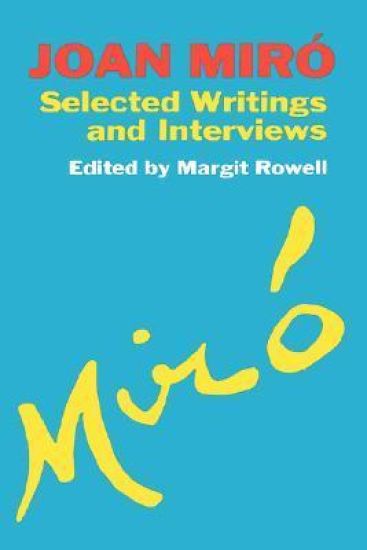
For nearly seven decades the ebullient art of Joan Miro (1893-1983), Spanish painter, sculptor, ceramist and mythmaker, has intrigued and enchanted art lovers worldwide. This collection of his writings presents a portrait of the artist in his own words. Miro's notebooks, letters, and interviews reveal the work and life of a brilliant artist revered for his uncanny expression of the subconscious. "Joan Miro" centres on Paris during the vibrant era between the wars, when Miro became the intimate of almost everyone in that scene - boxing with young Hemingway, working with Max Ernst on the Ballets Russes, drinking, painting and arguing with Picasso, Braque, Dubuffet, Matisse, Breton and many others. Miro engagingly recounts all of this, as well as stories of his exile during World War II. Miro's virtuosity encompassed drawing, painting, sculpture, ceramics, poetry, stage sets, costumes, murals and tapestries; he vividly describes the creation of these artworks in these pages.

Mobile Citizenship addresses the crucial question of how mobility reconfigures citizenship. Engaging with debates on transnationalism, citizenship, and lifestyle migration, the book draws on ethnographic research and interview material collected among retired lifestyle migrants moving south from Germany to Turkey to explore the practices and narratives of these privileged migrants. Revealing the ways in which these migrants relate to their old homes and to their new places, the author examines the social, political, and spatial dimensions of citizenship and belonging and argues that citizenship is key to understanding the privileges of transnational lifestyles. By taking up discussions emanating from studies on other privileged lifestyle migrations—around social welfare and well-being, social participation, and affective belonging, as well as class and racialized privileges—the book exposes particular comparative value and showcases similarities and differences across this emerging type of migration. Mobile Citizenship thus shows how citizenship allows for mobility, resources, and privilege yet is also replete with limitations and ambivalences. The book brings together perspectives on citizenship, space, and privilege and will appeal to social scientists with interests in lifestyle migration and citizenship and their interconnections with global and social inequalities.


Celebrating the centennial of Saul Leiter’s birth, the official retrospective of a revolutionary figure in twentieth-century photography. Saul Leiter photographed and painted nearly every day for over sixty years, amassing an enormous archive, most of which remained unseen during his lifetime. Finding inspiration within a few blocks of his apartment in Lower Manhattan, he was a master at discovering beauty in the most ordinary places. Celebrated today for his evocative colour photographs of New York in the 1950s and 1960s, which were unknown in their day, Leiter also found success as a fashion photographer for Harper’s Bazaar. All the while he was shooting black-and-white street scenes on his daily walks, and nudes and intimate portraits back home, while continuing his painting explorations with abstract watercolours, whimsical sketchbooks and painted photographs. Created in collaboration with the Saul Leiter Foundation, this definitive monograph brings together these diverse yet interconnected bodies of work – including much that was previously unpublished – to reveal the complete artist for the first time.
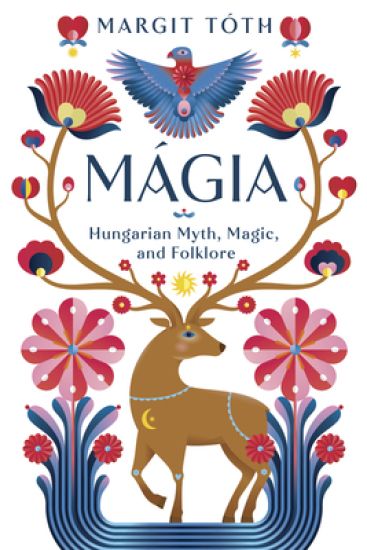
Explore the world of Hungarian Paganism with this book's impressive collection of history, lore, and traditions from the Carpathian basin. The Hungarian people, also known as the Magyars, fused pre-Christian and Christian beliefs into their identity, and that fusion remains today. Exploring mythology, daily life, magic, the Wheel of the Year, and life passages, this book reveals this book reveals Hungarian folk religion and beliefs, both past and present. Margit Toth introduces you to many aspects of the Magyar cosmos, from the creation story to homestead practices. Among many other topics, you will learn how restless spirits were aided, what magical properties the Summer Solstice bonfire had, and why clothes were never washed on a Tuesday. This book provides insight on ancestors, nature spirits, sacred foods, healing magic, divination, and death and burial customs.

In Personal Property, Margit Stange analyzes white slavery literature in relation to other key American writings of the time by Charlotte Perkins Gilman, Edith Wharton, Jane Addams, and Kate Chopin. The anthropological theory of the exchange of women developed by nineteenth-century anthropologists-in whose view, as Thorstein Veblen put it, woman is the original private property-informs white slavery depictions of racialized, enslaved female bodies. Similarly, Stange argues, this theory is reflected in literature, in journalism, and in the feminist and Progressivist reform rhetoric of the early twentieth century, when social relations were transformed by capitalist expansion. She explores Progressive Era nativist and anti-business reactions, anxieties about the seductive pull of consumerism, the "social housekeeping" movement, and women's struggle for identity and professional stature in the U.S. marketplace economy of the early twentieth century.

Victim of history," "a martyr from behind the Iron Curtain," "the Hungarian Gandhi" – these are just some of the epithets which people used to describe Cardinal Mindszenty, archbishop of Esztergom, who was the last Hungarian prelate to use the title of prince primate. Today, Mindszenty has been forgotten in most countries except for Hungary, but when he died in 1975, he was known all over the world as a symbol of the struggle of the Catholic Church against communism.Cardinal Mindszenty held the post of archbishop of Esztergom from 1945 until 1974, but during this period of almost three decades he served barely four years in office. The political police arrested him on December 26, 1948, and the Budapest People's Court subsequently sentenced him to life imprisonment. Based on the Stalinist practice of show trials, one of the accusations against Mindszenty, referring to his legitimist leanings, was his alleged attempt to re-establish Habsburg rule in Hungary. He regained freedom during the 1956 revolution but only for a few days. He was granted refuge by the US Embassy in Budapest between November 4, 1956 –September 28, 1971. In the fifteen years he spent at the American embassy enormous changes took place in the world while his personality remained frozen into the past. When in 1971 Pope Paul VI received the Hungarian foreign minister, he called Mindszenty "the victim of history". His last years were spent free at last, but far away from his homeland. In Hungary, the Catholic believers eagerly await his beatification.

They're Off to School, Now What?: A Mother's Guide to Rediscovering Herself
Margit L. Cruice
Margit Cruice
2013
nidottu