

Kirjahaku
Etsi kirjoja tekijän nimen, kirjan nimen tai ISBN:n perusteella.
1000 tulosta hakusanalla Mari P. Ziolkowski

Reproduction of the original: Mari by Mary Hazelton Wade

Reproduction of the original: Mari by Mary Hazelton Wade

Den unga snickardottern Mari är full av glädje och förväntan när hon anländer till marknaden. I dimman mellan karuseller och gnällande positiv möter hon den spännande Johan Tång. Hon blir hänförd och inleder en klassresa i livet som många andra arbetarkvinnor gjort före henne. Vid giftermålet möter hon helt nya seder i hennes nya släkt och hon börjar fundera på om det verkligen är samma Johan hon har gift sig med. Han är så annorlunda. Mitt i besvikelsen är Mari stark och beslutar sig för att skapa sig ett eget liv. Resultatet blir ett oerhört starkt porträtt av en arbetarkvinnas liv och villkor. -

Tämä on Marin ja hänen perheensä tarina. Kirja kertoo hyväksikäytöstä ja siitä mitä se saa aikaan. Kannen kuvassa pääkallon sisältä tuleva käärme kuvaa sitä kuinka uhri ei pääse irti. Käärme on vielä kuoleman takaakin elävä ja voimallinen. Se luo mörköjä uniin ja vaikuttaa tiedostamattoman kautta uhrin elämään. Hänen ylitseen saa kävellä.Kirjailija on julkaissut aiemmin satukirjoja. Tämä on ensimmäinen aikuisille suunnattu teos.

From Pura Belpr Honor-winning author Adrianna Cuevas comes Mari and the Curse of El Cocodrilo, a new middle grade novel about a young Cuban American girl who must fight to break a curse of bad luck set upon her by El Cocodrilo when she rejects her family's traditions.If Mari Feijoo could, she would turn her family's Peak Cubanity down a notch, just enough so that her snooping neighbor and classmate Mykenzye wouldn't have anything to tease her about. That's why this year, there's no way that Mari's joining in on one of the big-gest Feijoo family traditions--burning the New Year's Eve effigy her abuela makes.Only Mari never suspects that failing to toss her effigy in the fire would bring something much worse than sneering words at school: a curse of bad luck from El Cocodrilo. At first, it's just possessed violins and grade sabotaging pencils, but once El Cocodrilo learns that he becomes more powerful with each new misery, her luck goes from bad to nightmarish as the curse spreads to her friend Keisha.Instead of focusing on Mari's mariachi band tryout and Keisha's fencing tournament, the pair, along with their friend Juan Carlos, are racing against the clock to break the curse. But when Mari discovers her family's gift to call upon their ancestors, she and her friends will have to find a way to work with the unexpected help that arrives from the far corners of Mari's family tree. Only will it be enough to defeat El Cocodrilo before he makes their last year of elementary school the worst ever and tears their friendship apart?

The broad spectrum of the Mari documents provides innumerable opportunities for comparative research into Early Israel, the Bible and Biblical Hebrew. The present volume utilizes these possibilities to obtain a new perspective on Early Israelite times. In 1936, a French archaeological expedition to Mari, the capital of a kingdom on the Middle Euphrates in Syria, began uncovering a vast archive of some 25,000 cuneiform tablets. This huge corpus of Old Babylonian documents, mostly from the Mari palace - a unique royal complex of the eighteenth century BC - is slowly revealing a vivid picture of Mesopotamia at the time when the Israelites were in their earliest formative stage. One most fascinating facet of the archives is the light they shed on the early phases of Israelite socio-history. Indeed, the Mari archives now comprise the prime extra-Biblical source for this period, for they reflect a West Semitic population analogous to the so-called `Patriarchs'. The broad spectrum of the Mari documents, from exotic prophecies to political intrigue, provides innumerable opportunities for comparative research into Early Israel, the Bible, and Biblical Hebrew. The present volume utilizes these possibilities to obtain a new perspective on Early Israelite times.
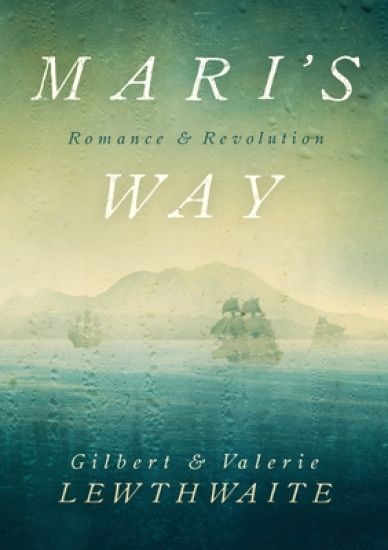
Mari Westin, an irrepressible, well-bred 18th century English girl, rebels against the restraints of her times. She seizes opportunity wherever life leads her and whatever it throws at her:From gentrified upbringing, to forced labor in the colonies; From heroic rescue, to arranged marriage in the Caribbean; From early widowhood, to romantic fulfilment in the new United States, thanks to what literally was the sweetest deal of the American Revolution."Mari's Way - Romance and Revolution" is an intriguing trans-Atlantic mix of truth and legend, characters real and imagined, time and place, firmly based on historic fact.


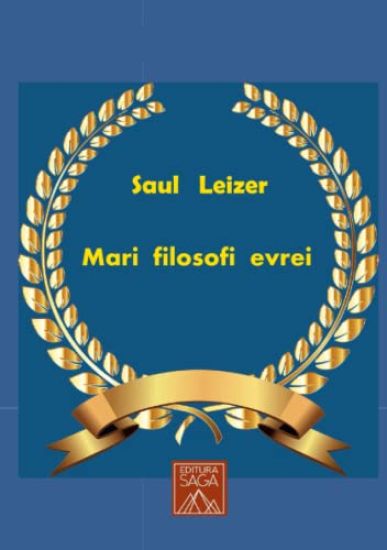
Cu cartea de față "Mari filosofi evrei", autorul israelian Saul Leizer nchide o importantă trilogie - o revizie a stării de spirit a poporului evreu, din negura timpurilor și p nă azi, n epoca modernă. Citind despre destinele și viața unor mari g nditori, filosofi, oameni politici, teologi sau oameni de știință, cititorul descoperă o magnifică istorie a unui neam care și-a clădit DNA-ul plec nd de la alfabet, scris, cultură, credință monoteistă... toate bazate pe o organizare socio-morală fără egal. Au precedat volumele "Minți evreiești sclipitoare", urmat de "Despre mari politicieni evrei" produse la Editura SAGA, ntr-un relativ scurt interval de timp. Din recenta carte despre filosofie și cei care au plantat pietrele de hotar ale acestei ndeletniciri ale minții, se desprinde o concluzie inevitabilă filosofia este un studiu care pleacă de la capacitatea de mirare a omului, care n final caută să răspundă ntrebărilor care l frăm ntă, cu un mesaj creator și inovativ. Editura SAGA 2019.

Mari Sandoz's Native Nebraska: The Plains Indian Country
Clark Laverne Harrell
Arcadia Publishing (SC)
2000
nidottu
When the Mari Sandoz High Plains Center opens in Chadron, Nebraska in 2001, it will be one of three centers at which Nebraska honors its outstanding writers. Through the compilation of over 200 images in this new book, taken from historical collections and her own work, author and photographer LaVerne Harrell Clark contributes to that same purpose. In it, she recreates the frontier life of settlers and the neighboring Sioux and Cheyenne Indians of the sandhills region of northwestern Nebraska. Accompanied by in-depth captions detailing Mari Sandoz's life and works, these images illustrate how she came to hold an outstanding place as an American writer until her death in 1966. Born in 1896, in the free-land region of the Nebraska Panhandle, Sandoz was greatly influenced in her writing by the people who called at her homestead. Her acquaintances included Bad Arm, a Sioux Indian who fought at the Little Bighorn and was present at Wounded Knee, Old Cheyenne Woman, a survivor of both the Oklahoma and Fort Robinson conflicts, and William Buffalo Bill Cody, the legend of the Old West.
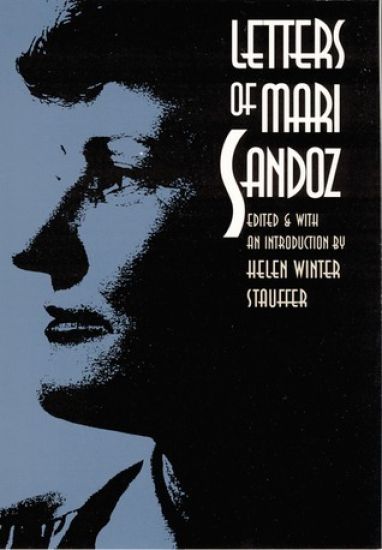
Mari Sandoz came out of the Sandhills of Nebraska to write at least three enduring books: Old Jules, Cheyenne Autumn, and Crazy Horse, the Strange Man of the Oglalas. She was a tireless researcher, a true storyteller, an artist passionately dedicated to a place little known and a people largely misunderstood. Blasted by some critics, revered by others for her vivid detail and depth of feeling, Sandoz has achieved a secure place in American literature. Her letters, edited by Helen Winter Stauffer, reveal extraordinary courage and zest for life. Included here are letters written by Sandoz over nearly forty years-from 1928, the year of her father's death and a critical one for her creative development, to 1966, the year of her own death. They allow memorable glimpses of the professional and private person: her struggles to learn her craft in spite of an unsupportive family and hard-won formal education, her experiences in gathering material, her relationships with editors and publishers, her work with fledgling writers, and her commitment to art and to various social concerns.
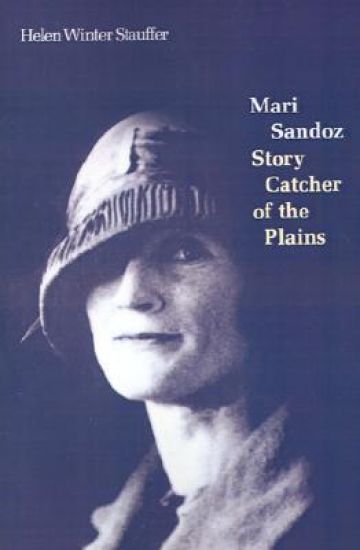
As a historian and as a novelist Mari Sandoz (1896–1966) stands in the front rank of western writers: in the words of John K. Hutchens, "no one in our time wrote better than the late Mari Sandoz did, or with more authority and grace, about as many aspects of the old West." This first full-length biography is particularly concerned to show the relationship between Sandoz's life and experiences and her writing. Drawing heavily on materials in the Mari Sandoz Collection at the University of Nebraska-Lincoln—correspondence to and from Sandoz, her research notes, and manuscripts—and on interviews with dozens of Sandoz's friends and acquaintances, the author not only establishes the facts of Sandoz's life but confirms her standing as a writer and historian.

Mari in Retrospect: Fifty Years of Mari and Mari Studies
EISENBRAUNS
1992
sidottu
Excavations in the Middle Euphrates Valley over the past fifty years have profoundly altered our understanding of the history of Mesopotamia, Syria, and Palestine. The discovery of Mari (Tell Hariri), with its extensive cuneiform library, is at the center of these developments. Originally presented at a joint annual meeting of the Middle West Branch of the American Oriental Society and the Midwest Region of the Society of Biblical Literature (held at the Oriental Institute of the University of Chicago), the essays included in this book survey fifty years of Mari studies. Thirty-seven pages of indexes provide ready access to the wealth of information contained in these essays. Illustrated with photos and maps.

Mari, Why I Needed to Return from the Future
Dr Winfried Sedhoff Medical
2019
pokkari

Mari, Our Little Norwegian Cousin
Mary Hazelton Blanchard Wade; L J (Lewis Jesse) Bridgman
Anson Street Press
2025
pokkari

In this illuminating book, Clint Burnham invites the reader to consider humanity's relationship with the world around us, using a unique blend of Lacanian psychoanalysis, literary criticism, and visual art to hold a mirror up to our own implications in the mounting climate crisis. Drawing upon the pioneering work of philosopher Mari Ruti, Burnham deftly interweaves examples from climate fiction – including works from Richard Power, Eleanor Catton, and Jenni Fagan – 'trash art', and classic films from Alfred Hitchcock to help the reader explore the idea of and better understand what is now called climate grief. Focusing on sublimation and creativity, Burnham weighs up perspectives on both climate activism and climate denialism and uses these ideas to offer a form of respite from trauma or grief surrounding the climate crisis, providing both comfort and a bracing call to action. Mari Ruti and Climate Change offers a novel and approachable perspective to both students and scholars interested in psychology, environmental studies, psychoanalysis, and climate politics, as well as practitioners of the psychological and therapeutic professions who are encountering patients experiencing climate anxiety or other affects in their practice.