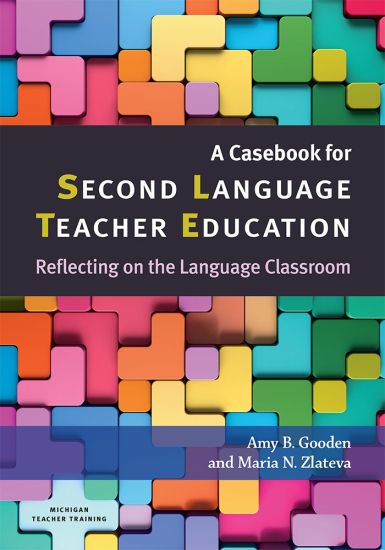
This volume offers a series of actual dilemmas within language classrooms that are designed to promote reflection and discussion. It applies the case-based pedagogy often used in business and other fields to that of second language teacher education to encourage pre- and in-service teachers to grapple with the types of dilemmas and decisions teachers confront every day. Case-based pedagogy resists simple resolutions and easy answers; the activities that precede and follow each case are designed to stimulate analysis and discussion and allow users to draw on theoretical foundations while making critical practical connections. The cases represent a range of classroom contexts: K–12 ESL/sheltered English immersion, modern foreign language, and post-secondary EAP; private, charter, and public schools; and urban and suburban settings. The book is ideally suited to College/School of Education and MA TESOL courses but will also be useful in professional development workshops for all types of language teachers.

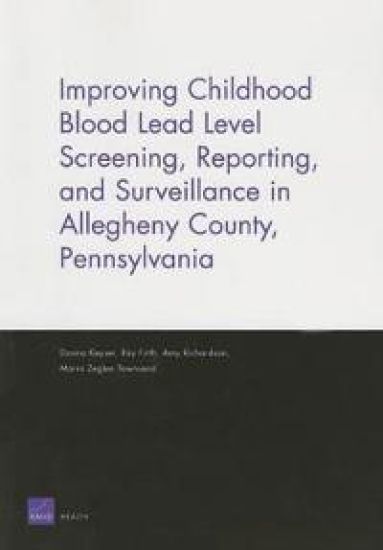
Lead poisoning remains a serious, preventable environmental health threat to young children, and its elimination is a key goal of U.S. public health policy. This report focuses on screening, reporting, and surveillance of childhood blood lead levels in Allegheny County, Pennsylvania, through a review of relevant literature, state and county reporting and surveillance databases, and interviews and focus groups.
Klas Eklund; Lars Calmfors; Maria Wetterstrand; Amy Loutfi; Oskar Nordström Skans; Susanne Ackum; Tor Borg; Lars Hultkrantz; Pontus Braunerhjelm; Åsa Hansson; Cecilia Malmström
Coronapandemin har vållat lidande över hela världen. Den har tagit liv, slagit ut företag och gjort miljontals människor arbetslösa. Efter krisen måste det svenska samhället och ekonomin byggas upp igen. Tillfälliga krisåtgärder behöver växlas över till långsiktiga insatser till en ekonomisk och politisk nystart som gör det möjligt för Sverige att komma starkare ur krisen. Mitt under pandemin tillsattes Omstartskommissionen, en grupp bestående av landets ledande experter inom sina respektive fält. Uppdraget var att fristående analysera svåra utmaningar och lämna konkreta rekommendationer till reformer. Syftet är att rusta vårt land genom att främja teknikutvecklingen, jämna ut människors livschanser, ta ledartröjan i den gröna omställningen, vässa svenska företags konkurrenskraft och stärka Sveriges roll i EU och världen. I den här boken presenteras kommissionens idéer för ett starkare Sverige. I boken medverkar:Klas Eklund (red), Senior Economist, Mannheimer Swartling. Oskar Nordström Skans, föreståndare för Uppsala Universitets centrum för arbetslivsforskning. Tor Borg, analytiker Boverket. Pontus Braunerhjelm, professor vid Institutet för industriell ekonomi och organisation, KTH. Cecilia Malmström, gästprofessor. Lars Calmfors, professor emeritus vid Institutet för internationell ekonomi, StockholmsUniversitet. Maria Wetterstrand, vd Miltton Purpose och Miltton Europé. Lars Hultkrantz, professor emeritus, Handelshögskolan vid Örebro universitet. Amy Loutfi, vicerektor och professor i informationsteknologi, Örebro Universitet. Åsa Hansson, docent, Institutet för Näringslivsforskning, Lunds universitet. Susanne Ackum, ordförande för Forum för omställning.
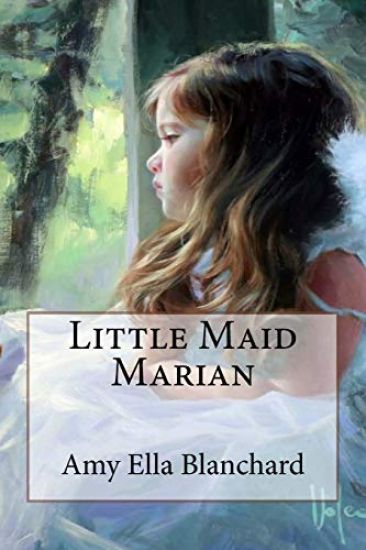
The cat and kitten were both eating supper and Marian was watching them. Her own supper of bread and milk she had finished, and had taken the remains of it to Tippy and Dippy. Marian did not care very much for bread and milk, but the cat and kitten did, as was plainly shown by the way they hunched themselves down in front of the tin pan into which Marian had poured their supper. In the next room Grandpa and Grandma Otway were sitting and little bits of their talk came to Marian's ears once in a while when her thoughts ceased to wander in other directions. "If only one could have faith to believe implicitly," Grandma Otway said.
Examines the domestic and international use of phenoxy herbicides by the United States in the mid-twentieth century.In The Defoliation of America: Agent Orange Chemicals, Citizens, and Protests, Amy M. Hay profiles the attitudes, understandings, and motivations of grassroots activists who rose to fight the use of phenoxy herbicides, or Agent Orange chemicals as they are commonly known, in various aspects of American life during the post-WWII era. Hay focuses her analysis on citizen responses to illuminate how regulatory policies were understood, challenged, and negotiated, contributing to a growing body of research on chemical regulatory policies, risk society, and hazardous chemicals. This volume uncovers new understandings about the authority of the state and its obligation to society, the role of scientific authority and expertise, and the protests made by various groups of citizens.First introduced in 1946, phenoxy herbicides mimic hormones in broadleaf plants, causing them to “grow to death” while grass, grains, and other monocots remain unaffected. By the 1950s, millions of pounds of these chemicals were produced annually for use in brush control, weed eradication, forest management, and other agricultural applications. Pockets of skepticism and resistance began to appear by the late 1950s, and the trend intensified after 1962 when Rachel Carson’s Silent Spring directed mainstream attention to the harm modern chemicals were causing in the natural world. It wasn’t until the Vietnam War, however, when nearly 19 million gallons of Agent Orange and related herbicides were sprayed to clear the canopy and destroy crops in Southeast Asia, that the long-term damage associated with this group of chemicals began to attract widespread attention and alarm.Using a wide array of sources and an interdisciplinary approach, Hay contributes to the robust fields of chemical toxicity, regulation, environmental management, and public health. This study of the scientists, health and environmental activists, and veterans who fought US chemical regulatory policies and practices reveals the mechanisms, obligations, and constraints of state and scientific authority in mid-twentieth-century America. Hay also shows how these disparate and mostly forgotten citizen groups challenged the political consensus and contested government and industry narratives of chemical safety.
Effective, realistic strategies for moms with ADHD to manage their homes and lives With the tips and strategies offered in Master The Mundane, moms with ADHD can take control of their lives and make real changes for immediate impacts in their homes, both for themselves and if raising neurodivergent kids. This book shows readers how to understand the impact of ADHD on their lives, implement strategies for parenting and organization, manage their time effectively, and end the daily overwhelm, helping to make life less stressful, isolating, and difficult. Written by Amy Marie Hann, a popular advocate in the ADHD community and a neurodivergent mother who practices what she preaches, this book explores topics including: How and why motherhood exacerbates ADHD symptomsThree types of women with ADHD: the unrealistic perfectionist, the passionate procrastinator, and the overthinkerPractical strategies like chunking, simplifying, and body doubling to create lasting rhythms and routinesEnergy management tips and tricks to avoid burnout, even during busy daysEssential aspects of raising children with ADHD and how to create an ADHD-friendly family culture With a relatable, authentic voice that makes readers feel immediately heard and understood, Master The Mundane is your go-to resource for transforming chaos into calm and thriving as a mom with ADHD, no matter whether you're newly diagnosed or have been managing ADHD for years.
****Warning: This book is intended for readers 18 and Up. Strong language and explicit sexual scenes**** Innocence. We're all born with it. Navigating through life as though power, privilege, and money don't rule the world. I'm guilty of it. I walked around, ignorantly thinking that the PITCREW, the most popular guys in high school, was where you wanted to be or who you wanted to date. They could have any girl they wanted, but they needed a challenge. They needed something to do to make their miserable existence exciting. That's where I came in. How was I to know that the one night I willingly gave away my innocence would set off a chain of events, turning my world upside down? Now, ten years later, it's my turn to use sex, money, and lies to take from them all that they took from me . . . and more. But the road to retribution has its twists and turns and I don't want to make the innocent mistake of crashing.
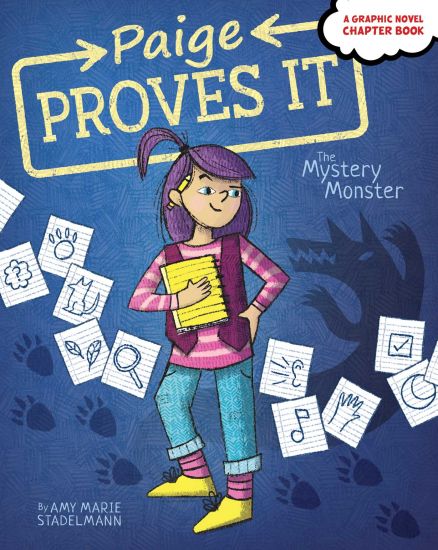
Fact-loving Paige sets out to prove imaginative Penn wrong about a neighborhood monster in this first book in the mystery graphic novel chapter book series Paige Proves It Paige loves facts She records interesting information in her facts journal and shares it with anyone who will listen. Wombats' poop is cube-shaped Her street's buildings have seventy-three windows. And a boy named Penn lives next door. The two couldn't be more different. The craziest thing Paige believes is that bananas are actually berries (scientifically proven ), but Penn thinks there's a monster in the neighborhood Paige will prove Penn wrong and that monsters aren't real, one fact at a time.
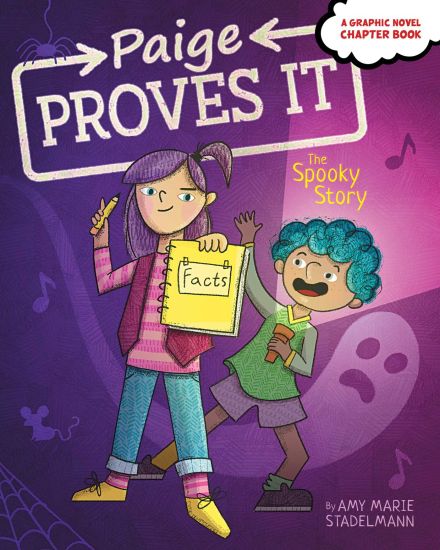
Fact-loving Paige sets out to prove imaginative Penn wrong about a school haunting in this second book in the mystery graphic novel chapter book series Paige Proves It Paige loves facts She is constantly spouting information about everything and anything to anyone who will listen. A group of zebras is called a dazzle. Her street's buildings have seventy-three windows. And the boy named Penn who lives next door is her friend. This unlikely pair couldn't be more different...Paige might know that the ancient Egyptians invented toothpaste, but Penn is sure the Evergreen Music School is haunted And now Paige sets out to prove Penn is wrong, one fact at a time.
Fact-loving Paige sets out to prove imaginative Penn wrong about mermaids in this third book in the mystery graphic novel chapter book series Paige Proves It!Paige loves facts! She is constantly spouting information about everything and anything to anyone who will listen. Hot dogs were first sold at baseball games in the 1800s! Termites are insects with strong jaws made for eating and burrowing into wood. And the boy named Penn who lives next door to her is her friend. On a visit to their local seaside park, Penn is convinced there has been a mermaid sighting, and Paige is determined—once again—to prove him wrong, one fact at a time.
Fact-loving Paige sets out to prove imaginative Penn wrong about mermaids in this third book in the mystery graphic novel chapter book series Paige Proves It Paige loves facts She is constantly spouting information about everything and anything to anyone who will listen. Hot dogs were first sold at baseball games in the 1800s Termites are insects with strong jaws made for eating and burrowing into wood. And the boy named Penn who lives next door to her is her friend. On a visit to their local seaside park, Penn is convinced there has been a mermaid sighting, and Paige is determined--once again--to prove him wrong, one fact at a time.
Fact-loving Paige sets out to prove imaginative Penn wrong about aliens in this fourth and final book in the mystery graphic novel chapter book series Paige Proves It Paige loves facts She is constantly spouting information about everything and anything to anyone who will listen. Unicycles are like bicycles but with only one wheel. One of the Morse code systems was named for Samuel F.B. Morse in the 1830s. And a boy named Penn who lives next door to her is her friend. Penn is convinced a spaceship with aliens is about to land in their neighborhood and Paige is determined--once again--to prove him wrong one fact at a time.