Kirjojen hintavertailu. Mukana 11 627 373 kirjaa ja 12 kauppaa.

Kirjahaku

Etsi kirjoja tekijän nimen, kirjan nimen tai ISBN:n perusteella.

1000 tulosta hakusanalla Maria Lei Antonio

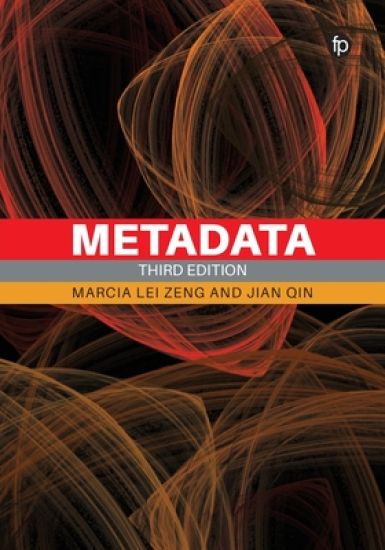
Metadata

Metadata

Marcia Lei Zeng; Jian Qin

NEAL-SCHUMAN PUBLISHERS
2022
nidottu
This benchmark text is back in a new edition thoroughly updated to incorporate developments and changes in metadata and related domains. Zeng and Qin provide a solid grounding in the variety and interrelationships among different metadata types, offering a comprehensive look at the metadata schemas that exist in the world of library and information science and beyond. Readers will gain knowledge and an understanding of key topics such asthe fundamentals of metadata, including principles of metadata, structures of metadata vocabularies, and metadata descriptions;metadata building blocks, from modeling to defining properties, from designing application profiles to implementing value vocabularies, and from specification generating to schema encoding, illustrated with new examples;best practices for metadata as linked data, the new functionality brought by implementing the linked data principles, and the importance of knowledge organization systems;resource metadata services, quality measurement, and interoperability approaches; research data management concepts like the FAIR principles, metadata publishing on the web and the recommendations by the W3C in 2017, related Open Science metadata standards such as Data Catalog Vocabulary (DCAT) version 2, and metadata-enabled reproducibility and replicability of research data;standards used in libraries, archives, museums, and other information institutions, plus existing metadata standards' new versions, such as the EAD 3, LIDO 1.1, MODS 3.7, DC Terms 2020 release coordinating its ISO 15396-2:2019, and Schema.org's update in responding to the pandemic; andnewer, trending forces that are impacting the metadata domain, including entity management, semantic enrichment for the existing metadata, mashup culture such as enhanced Wikimedia contents, knowledge graphs and related processes, semantic annotations and analysis for unstructured data, and supporting digital humanities (DH) through smart data.
FRSAD

FRSAD

Marcia Lei Zeng; Athena Salaba; Maja Žumer

Libraries Unlimited Inc
2012
nidottu
The first comprehensive exploration of the development and use of the International Federation of Library Associations and Institutions' (IFLA) newly released model for subject authority data, covering everything from the rationale for creating the model to practical steps for implementing it.FRSAD: Conceptual Modeling of Aboutness explores the full dimensions of the IFLA's Functional Requirements for Subject Authority Data model, showing how putting the model to work can ease information sharing across systems, domains, and environments.Written by three leading members of the IFLA working group that developed the model, FRSAD moves from the theoretical foundations of knowledge organization to a complete conceptual overview of the model, to specific working guidelines for its implementation. The book is filled with insights into the factors driving the model's development, as well as numerous illustrative examples of its practical applications in real-world settings. It also focuses on the benefits of using the model when developing knowledge organization systems (KOS) within the library domain and beyond.
Metadata

Metadata

Marcia Lei Zeng; Jian Qin

FACET PUBLISHING
2022
nidottu
The third edition of this landmark textbook has been thoroughly updated to incorporate the many developments and changes in metadata and related domains. Authors Marcia Lei Zeng and Jian Qin provide a solid grounding in the variety and interrelationships among different metadata types, offering a comprehensive look at the metadata schemas that exist in the world of library and information science and beyond. Readers will gain knowledge and an understanding of key topics such as:metadata building blocks, from modeling to defining properties, from designing application profiles to implementing value vocabularies, and from specification generating to schema encoding, illustrated with new examplesbest practices for metadata as linked data, the new functionality brought by implementing the linked data principles, and the importance of knowledge organization systemsresource metadata services, quality measurement, and interoperability approachesresearch data management concepts like the FAIR principles, metadata publishing on the web and the recommendations by the W3C in 2017, related Open Science metadata standards such as Data Catalog Vocabulary (DCAT) version 2, and metadata-enabled reproducibility and replicability of research datastandards used in libraries, archives, museums, and other information institutions, plus existing metadata standards’ new versions, such as the EAD 3, LIDO 1.1, MODS 3.7, DC Terms 2020 release coordinating its ISO 15396-2:2019, and Schema.org’s update in responding to the pandemicnewer, trending forces that are impacting the metadata domain, including entity management, semantic enrichment for the existing metadata, mashup culture such as enhanced Wikimedia contents, knowledge graphs and related processes, semantic annotations and analysis for unstructured data, and supporting digital humanities (DH) through smart data.Featuring new developments driven by semantic technologies and digital data and information, with an accompanying website and supplementary learning materials, this remains the definitive primer on metadata for students, instructors, faculty, and professionals at all levels of experience.
Real Recognition

Real Recognition

MARIE-ELISABETH LEI PIHL

TAYLOR FRANCIS LTD
2022
sidottu
Real Recognition investigates the complexities of literary and social recognition with the aim of putting a fresh, cross-disciplinary spin on reader identification and social acknowledgment. Engaging with contemporary Danish and Anglophone works on racialization, disability, and gender, Marie-Elisabeth Lei Pihl argues in favor of a close relation between aesthetic appeals to recognition and the political dimensions of literary texts. Moreover, she proposes a framework bent on experience and relations, as opposed to identity and status, for articulating new fruitful understandings of how literary texts call for aesthetic and social recognition. Based on this, she argues that literary texts can make readers get what social validation is about – and thereby help us redefine a key concept in the social sciences.Marie-Elisabeth Lei Pihl earned her PhD in literature and sociology from the University of Southern Denmark in 2020. Currently, she works as a postdoctoral researcher within narrative medicine and literature-based social interventions at the University of Southern Denmark in collaboration with the National Institute of Public Health in Copenhagen.Chapter 3 of this book is available for free in PDF format as Open Access from the individual product page at www.routledge.com. It has been made available under a Creative Commons Attribution-Non Commercial-No Derivatives 4.0 license.
Real Recognition

Real Recognition

Marie-Elisabeth Lei Pihl

TAYLOR FRANCIS LTD
2024
nidottu
Real Recognition investigates the complexities of literary and social recognition with the aim of putting a fresh, cross-disciplinary spin on reader identification and social acknowledgment. Engaging with contemporary Danish and Anglophone works on racialization, disability, and gender, Marie-Elisabeth Lei Pihl argues in favor of a close relation between aesthetic appeals to recognition and the political dimensions of literary texts. Moreover, she proposes a framework bent on experience and relations, as opposed to identity and status, for articulating new fruitful understandings of how literary texts call for aesthetic and social recognition. Based on this, she argues that literary texts can make readers get what social validation is about – and thereby help us redefine a key concept in the social sciences.Marie-Elisabeth Lei Pihl earned her PhD in literature and sociology from the University of Southern Denmark in 2020. Currently, she works as a postdoctoral researcher within narrative medicine and literature-based social interventions at the University of Southern Denmark in collaboration with the National Institute of Public Health in Copenhagen.Chapter 3 of this book is available for free in PDF format as Open Access from the individual product page at www.routledge.com. It has been made available under a Creative Commons Attribution-Non Commercial-No Derivatives 4.0 license.
Anerkendelse og identitet i litteraturen
Anerkendelse og identitet i litteraturen stiller skarpt på identitetsdebatten og giver dig et grundigt indblik i forskellige sociale gruppers kamp for anerkendelse. I avisspalter og på sociale medier slynges begreber som racisme, feminisme og handicap ud hele tiden, men det er sjældent, de defineres tydeligt – eller deres historiske dimensioner drøftes. Det retter bogen op på ved at give dig en teoretisk ballast, som kan bruges til at forstå identitetspolitiske emner i dybden.Som noget særligt viser bogen vej i det identitetspolitiske landskab med afsæt i litterære tekster om marginalisering, sygdom og moderskab. Gennem læsninger af moderne dansk og engelsk litteratur kommer vi helt tæt på levede erfaringer, og måske kan vi ligefrem spejle os i teksterne? Det viser sig, at litteraturen har noget vigtigt at fortælle – både om samfundet og os selv.
Kampen om mennesket

Kampen om mennesket

Finn Collin; Claus Emmeche; Frederik Stjernfelt; Hans Siggaard Jensen; Simo Køppe; Uffe Østergaard; David Budtz Pedersen; Anne-Marie Mai; Marie-Elisabeth Lei Holm; Anna Rebecca Sparre Wandall; Andrea Joe Hyldig; Joachim Wiewiura

Gyldendal
2018
muu
Hvad er menneskets natur? Hvordan kan mennesket med den natur forholde sig til andre mennesker? Og hvordan skal vi derfra forestille os samfundet indrettet? Bag enhver politisk kamp ligger der en forestilling om dette. Disse forestillinger er ganske mange og ganske forskellige, og de trækker på lige så forskellige videnskaber og idealer for, hvad et menneske bør være. Fælles for disse ”menneskebilleder” er, at de alle udsiger at være universelle, altså gælder for alle mennesker. Men det betyder ikke, at de deles af alle mennesker. Tværtimod. Det betyder, at de indgår i en kamp om at videregive netop deres forståelse til flest muligt. Kampen om mennesket gennemgår otte forskellige menneskebilleder, som i dag kæmper denne kamp om forståelse: Homo economicus (det økonomiske menneske), Homo socius (det kulturbærende menneske), Homo nationalise (mennesket i det nationale fællesskab), Homo faber (det redskabsbrugende menneske), Homo sapiens (det biologiske menneske), Homo humanitatis (det universelle subjekt), Homo deus (det post-evolutionære menneske) og Homo emotionalis (det følende menneske). I bogens anden del kortlægges, hvordan de forskellige menneskebilleder bliver omsat og brugt i den offentlige debat til at kæmpe kampen om mennesket. Her er det en pointe, at alle menneskebillederne er gyldige, men i virkeligheden har hver deres grænser for, hvad de kan levere forståelse om. Bogen afsluttes med perspektiver for menneskebillederne i lyset af deres gyldighed og grænser. På Vidensfestivalen 2019 talte Esther Oluffa Pedersen med Finn Collin og David Budtz Pedersen om deres bog "Kampen om mennesket"
Menneskebilleder

Menneskebilleder

Finn Collin; Claus Emmeche; Frederik Stjernfelt; Hans Siggaard Jensen; Simo Køppe; Uffe Østergaard; Anja Hvidtfeldt Stanek; David Budtz Pedersen; Jonas Følsgaard Grønvad; Anne-Marie Mai; Camilla Schwartz; Marie-Elisabeth Lei Holm; Anna Rebecca Sparre Wandall; Gorm Larsen; Louise Amstrup; Rolf Hvidtfeldt; Andreas Brøgger Jensen; Anne Mette Lauritzen; Camilla Dindler; Jutta Vikman

Gyldendal
2019
muu
Menneskebilleder er overordnede teorier om menneskets natur, om hvordan mennesker interagerer med hinanden og med deres omgivelser, og om, hvordan de handler i samfundsfællesskabet. Menneskebillederne er strukturerende for fundamentale diskurser, der ligger bag megen politisk debat og samfundsudvikling. Denne bog præsenterer otte menneskebilleder, der kan anvendes som redskaber til at uddrage teksters syn på mennesket. Ofte vil teksterne trække på flere menneskebilleder, og denne bog rummer derfor et analyseredskab, der kan fange denne kompleksitet. Bogen rummer desuden en lang række cases, der demonstrerer, hvordan menneskebillederne konkret kan anvendes som analysereskab. Menneskebilleder henvender sig til studerende på humanistiske universitetsuddannelser og professionshøjskoler og tilbyder sig som en støtte til deres tekstanalyser gennem studiet.
Lei and the Fire Goddess

Lei and the Fire Goddess

Malia Maunakea

Penguin Putnam Inc
2023
sidottu
Curses aren't real. At least, that's what twelve-year-old, part-Hawaiian Anna Leilani Kama?ehu thinks when she listens to her grandmother's folktales about sacred flowers and family guardians. Anna's friends back home in Colorado don't believe in legends, either. They're more interested in science and sports—real, tangible things that stand in total contrast to Anna’s family’s embarrassing stories. So when Anna goes back to Hawai?i to visit her Tutu, she has no interest in becoming the heir to her family’s history; she’s set on having a touristy, fun vacation. But when Anna accidentally insults Pele the fire goddess by destroying her lehua blossom, a giant hawk swoops in and kidnaps her best friend, and she quickly learns just how real these mo?olelo are. In order to save her friends and family, Anna must now battle mythical creatures, team up with demigods and talking bats, and evade the traps Pele hurls her way. For if Anna hopes to undo the curse, she will have to dig deep into her Hawaiian roots and learn to embrace all of who she is. Story Locale:Oahu, Hawai'i
Lei and the Invisible Island

Lei and the Invisible Island

Malia Maunakea

Penguin Putnam Inc
2024
sidottu
After saving her best friend and ancestral guardian, Kaipo, from Pele the Fire Goddess's traps, and successfully preventing lava from destroying her Tutu's house, all Lei wants to do is take a nap. The only problem? Kaipo's ?aumakua pendant is missing, and without it, he will soon disintegrate . . . emotionally and physically. So Lei, Kaipo, her favorite talking bat, Ilikea, and newcomer Kaukahi - a fiercely independent fashionista - set off on a journey to an invisible island where they hope to find Kaipo's pendant. To get there, they'll have to contend with sharks, jump over a rainbow, and literally float on clouds. And when they arrive? The crew realises that the missing pendant is the least of their problems. For there are evil spirits on this island, and they're out for blood. In this exciting follow-up to LEI AND THE FIRE GODDESS, Malia Maunakea crafts a tale about friendship, family, culture, and what it means to forgive each other, and yourself.
Lei and the Fire Goddess

Lei and the Fire Goddess

Malia Maunakea

Penguin Putnam Inc
2024
pokkari
Curses aren't real. At least, that's what twelve-year-old, part-Hawaiian Anna Leilani Kama?ehu thinks when she listens to her grandmother's folktales about sacred flowers and family guardians. Anna's friends back home in Colorado don't believe in legends, either. They're more interested in science and sports - real, tangible things that stand in total contrast to Anna’s family’s embarrassing stories. So when Anna goes back to Hawai?i to visit her Tutu, she has no interest in becoming the heir to her family’s history; she’s set on having a touristy, fun vacation. But when Anna accidentally insults Pele the fire goddess by destroying her lehua blossom, a giant hawk swoops in and kidnaps her best friend, and she quickly learns just how real these mo?olelo are. In order to save her friends and family, Anna must now battle mythical creatures, team up with demigods and talking bats, and evade the traps Pele hurls her way. For if Anna hopes to undo the curse, she will have to dig deep into her Hawaiian roots and learn to embrace all of who she is.
Lei de Acesso à Informação e Jornalismo

Lei de Acesso à Informação e Jornalismo

Rose Mara Vidal de Souza

Novas Edicoes Academicas
2018
pokkari
A Lei de Acesso Informa o um canal para obter fonte de not cia para jornalistas. Esta pesquisa foi norteada por estudo explorat rio, de natureza quanti-qualitativa, delineado por pesquisa bibliogr fica, documental, entrevistas estruturadas e an lise de conte do. Primeiramente foi apresentado um panorama da LAI nos cinco continentes do globo e quais pa ses possuem e n o possuem a legisla o de acesso informa o. Posteriormente foram realizados dois mapeamentos: O primeiro foi acerca das solicita es feitas por jornalistas e-SIC da CGU em 2014 e 2015. O segundo mapeamento foi dirigido s mat rias publicadas no jornal Folha de S. Paulo, na editoria de pol tica, em 2014 e 2015. Entre os documentos utilizados est o 2 Relat rio de desempenho da LAI p bicas da Associa o Brasileira de Jornalismo Investigativo (ABRAJI). Do ponto de vista te rico, a pesquisa perpassa os conceitos de democracia, comunica o p blica, direito informa o p blico e cultura hacker, entre outros. A pesquisa ainda revelou que tampouco existem mecanismos de est mulo ao uso e crit rios de mensura o sobre a LAI como canal fonte de not cia, tanto pelo Governo Federal, quanto pela FENAJ.