Kirjojen hintavertailu. Mukana 11 244 527 kirjaa ja 12 kauppaa.

Kirjahaku

Etsi kirjoja tekijän nimen, kirjan nimen tai ISBN:n perusteella.

1000 tulosta hakusanalla Marion

Marion Milner

Marion Milner

David Russell

Oxford University Press
2024
sidottu
This is a book about reading, drawing, and getting better--and what they have to do with one another. The British essayist, artist, and psychoanalyst Marion Milner (1900-1996) thought deeply about how reading, drawing, and getting better related to each other. The guiding question of Milner's life was of how people come to feel alive in, and feel creatively responsive to, their own lives. In pursuit of this, Milner explored fields as diverse as anthropology, folklore, education, literature, art, philosophy, mysticism, and psychology. She became one of the twentieth century's most extraordinary thinkers about creativity. David Russell shows that there is no writer quite like Milner and the rewards of reading her are immense. Key to all her writing is her search for creative practices of attention--of how we pay attention in the life we have. She helped to develop a kind of psychoanalysis in Britain that focussed on the ways people relate to their own lives and the lives of others. Milner was literary and artistic; she took herself as her subject. Her writing performs ways of responding associatively to the words and images she encountered. In the process, she found she was a quite different person than she had first thought. In the 1930s Milner invented a form for writing about reading: an original kind of diary book, which is structured by the experience of going back to, and rereading, past diaries. In her interplay of past and present selves, she finds new ways of looking at, and experiencing, the world.
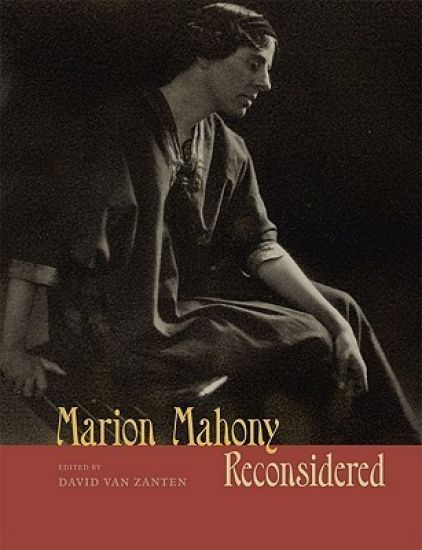
Marion Mahony Reconsidered

Marion Mahony Reconsidered

University of Chicago Press
2011
sidottu
Marion Mahony Griffin (1871-1961) was an American architect and artist, one of the first licensed female architects in the world, designer for Frank Lloyd Wright's Chicago studio, and an original member of the Prairie School of architecture. Largely heralded for her exquisite presentation drawings for both Wright and her husband, Walter Burley Griffin, Mahony was an adventurous designer in her own right, whose independent and highly original work attracted attention at a moment when architectural drawing and graphic illustration were becoming integral to the design process. This book examines new research into Mahony's life and paints a vivid portrait of a woman's place among the lives and productions of some of our most noted American architects. The essays included take us on an ambitious journey from Mahony's origins in the Chicago suburbs, through her years as Wright's right-hand woman and her bohemian life with her husband in Australia - whose new capital city, Canberra, she helped to plan - up until her golden years in the middle of the twentieth century. Filled with richly detailed analyses of Mahony's works and populated by an international cast of characters, "Marion Mahony Reconsidered" greatly expands our knowledge of this talented, complex, and enigmatic modern architect.
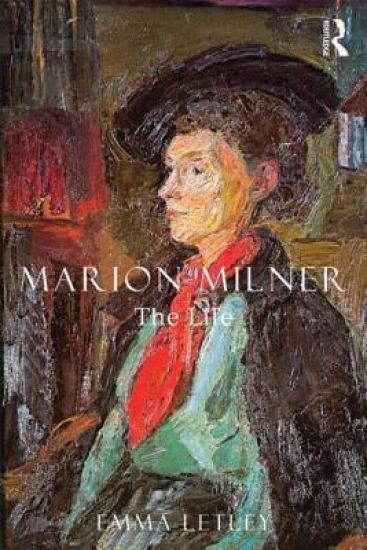
Marion Milner: The Life

Marion Milner: The Life

Emma Letley

Routledge
2013
sidottu
Artist, poet, educationalist and autobiographer, Marion Milner is considered one of the most original of psychoanalytic thinkers whose life (1900-1998) spans a century of radical change. Marion Milner: The Life, is the first biography of this extraordinary woman. It introduces Milner and her works to the reader through her family, colleagues and, above all through her books, charting their evolution and development as well as their critical reception and contribution to current twenty-first century debates and discourses. In this book Emma Letley draws on primary sources, including the newly-opened Marion Milner Collection at the Archives of the British Psychoanalytical Society in London, as well as interviews and the re-contextualised series of Milner texts. She traces the process of Milner's writing of her books, her discovery of psychoanalysis, her training and her place in that world from the 1940's onwards. Marion Milner: The Life includes discussion of Milner's connection with D.W. Winnicott and her emergence as a most individual member of the Independent Group. Letley also shows how Milner's Personal Notebooks offer fascinating insights into her relationships, both personal and professional, and into many of her important ideas on creativity, the body-mind relationship, her revolutionary ideas on education and her particular personality as clinician working with both children and adults. Further, Letley explores Milner's literary character from her very early diaries and narratives to her last book written in her 90's published in 2012.Marion Milner: The Life places Marion Milner firmly in her Edwardian family setting and contains new material from primary sources, including a new view of her collegial connections. It provides a wealth of material on her life and works that will be invaluable to psychoanalysts, psychotherapists, art psychotherapists, students, those involved with life writing and autobiography, and the general reader.
Marion Milner: The Life

Marion Milner: The Life

Emma Letley

Routledge
2013
nidottu
Artist, poet, educationalist and autobiographer, Marion Milner is considered one of the most original of psychoanalytic thinkers whose life (1900-1998) spans a century of radical change. Marion Milner: The Life, is the first biography of this extraordinary woman. It introduces Milner and her works to the reader through her family, colleagues and, above all through her books, charting their evolution and development as well as their critical reception and contribution to current twenty-first century debates and discourses. In this book Emma Letley draws on primary sources, including the newly-opened Marion Milner Collection at the Archives of the British Psychoanalytical Society in London, as well as interviews and the re-contextualised series of Milner texts. She traces the process of Milner's writing of her books, her discovery of psychoanalysis, her training and her place in that world from the 1940's onwards. Marion Milner: The Life includes discussion of Milner's connection with D.W. Winnicott and her emergence as a most individual member of the Independent Group. Letley also shows how Milner's Personal Notebooks offer fascinating insights into her relationships, both personal and professional, and into many of her important ideas on creativity, the body-mind relationship, her revolutionary ideas on education and her particular personality as clinician working with both children and adults. Further, Letley explores Milner's literary character from her very early diaries and narratives to her last book written in her 90's published in 2012.Marion Milner: The Life places Marion Milner firmly in her Edwardian family setting and contains new material from primary sources, including a new view of her collegial connections. It provides a wealth of material on her life and works that will be invaluable to psychoanalysts, psychotherapists, art psychotherapists, students, those involved with life writing and autobiography, and the general reader.
Marion Zimmer Bradley's Ancestors of Avalon

Marion Zimmer Bradley's Ancestors of Avalon

Diana L. Paxson; Marion Zimmer Bradley

Ace Books
2005
nidottu
A story based on the saga by Marion Zimmer Bradley follows the Avalon characters' predecessors, the exiled high priestess Tiriki and royal acolyte Damisa, who escape from Atlantis to the mist-shrouded isle of Britain, where their duties conflict with their hearts. By the author of Priestess of Avalon. Reprint.
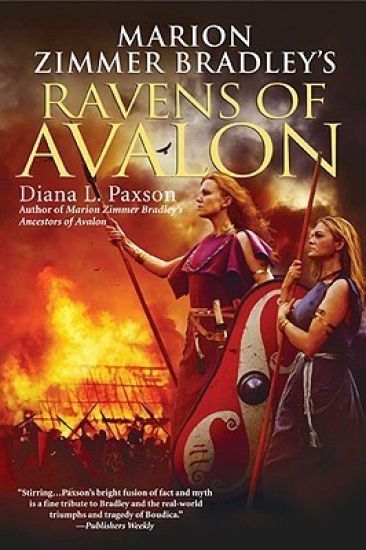
Marion Zimmer Bradley's Ravens of Avalon
Marion Zimmer Bradley's beloved Avalon saga continues in 'a fine tribute to Bradley and the real-world triumphs and tragedy of Boudica.' (Publishers Weekly) Epic in its sweep and peopled by the remarkable women who have always inhabited Avalon, Marion Zimmer Bradley's Ravens of Avalon expands the legendary saga that has enchanted millions of readers over the years and is sure to please Bradley's loyal readership and anyone who loves wonderfully told stories of history, myth, and fantasy.
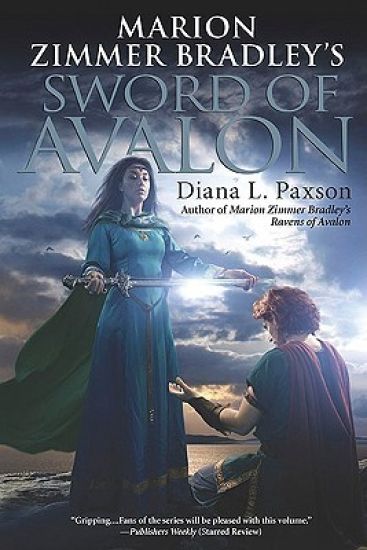
Marion Zimmer Bradley's Sword of Avalon
Epic in its sweep and peopled by the remarkable women who have always inhabited Avalon, Marion Zimmer Bradley's Sword of Avalon expands the legendary saga that has enchanted countless readers over the years and is sure to please Bradley's loyal readership and anyone who loves wonderfully told stories of history, myth, and fantasy.
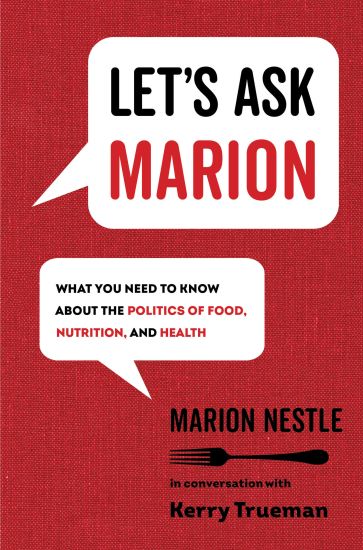
Let's Ask Marion

Let's Ask Marion

Marion Nestle; Kerry Trueman

University of California Press
2020
sidottu
"There is no one better to ask than Marion, who is the leading guide in intelligent, unbiased, independent advice on eating, and has been for decades."––Mark Bittman, author of How to Cook Everything Let’s Ask Marion is a savvy and insightful question-and-answer collection that showcases the expertise of food politics powerhouse Marion Nestle in exchanges with environmental advocate Kerry Trueman. These informative essays show us how to advocate for food systems that are healthier for people and the planet, moving from the politics of personal dietary choices, to community food issues, and finally to matters that affect global food systems. Nestle has been thinking, writing, and teaching about food systems for decades, and her impact is unparalleled. Let’s Ask Marion provides an accessible survey of her opinions and conclusions for anyone curious about the individual, social, and global politics of food.
Marion and Theology

Marion and Theology

Christina M. Gschwandtner

T. T.Clark Ltd
2016
nidottu
Jean-Luc Marion’s early work on Descartes and his more recent writings in phenomenology have not only elicited huge interest in France and the US, but also created huge potential in the field of theology. This book is organised around central questions about the divine raised by Marion’s work: how to speak of God, how to approach God, how to experience God, how to receive God, how to believe in God, how to worship God. Within that context it deals with the important aspects of his philosophical work: the inspiration of his writings in what he calls Descartes’ “white theology” and its late medieval context as well as the apophatic theology associated with Dionysius the Areopagite; his important claims about idolatrous and iconic ways of speaking of the divine; his notion of the saturated phenomenon or a phenomenology of revelation and givenness, and his extensive writings on love. Christina M. Gschwandtner also considers Marion’s explicitly theological writings and establishes their relationship to his larger phenomenological oeuvre. Overall, it approaches Marion’s work not only as a philosophy of religion, but with specifically theological questions in mind. It hence shows how Marion’s extensive historical and phenomenological work can be profitable and inspiring for theology today, for both systematic questions and for concerns of spirituality, in a way that holds the theoretical and the practical together.
Marion and Theology

Marion and Theology

Christina M. Gschwandtner

T. T.Clark Ltd
2016
sidottu
Jean-Luc Marion’s early work on Descartes and his more recent writings in phenomenology have not only elicited huge interest in France and the US, but also created huge potential in the field of theology. This book is organised around central questions about the divine raised by Marion’s work: how to speak of God, how to approach God, how to experience God, how to receive God, how to believe in God, how to worship God. Within that context it deals with the important aspects of his philosophical work: the inspiration of his writings in what he calls Descartes’ “white theology” and its late medieval context as well as the apophatic theology associated with Dionysius the Areopagite; his important claims about idolatrous and iconic ways of speaking of the divine; his notion of the saturated phenomenon or a phenomenology of revelation and givenness, and his extensive writings on love. Christina M. Gschwandtner also considers Marion’s explicitly theological writings and establishes their relationship to his larger phenomenological oeuvre. Overall, it approaches Marion’s work not only as a philosophy of religion, but with specifically theological questions in mind. It hence shows how Marion’s extensive historical and phenomenological work can be profitable and inspiring for theology today, for both systematic questions and for concerns of spirituality, in a way that holds the theoretical and the practical together.
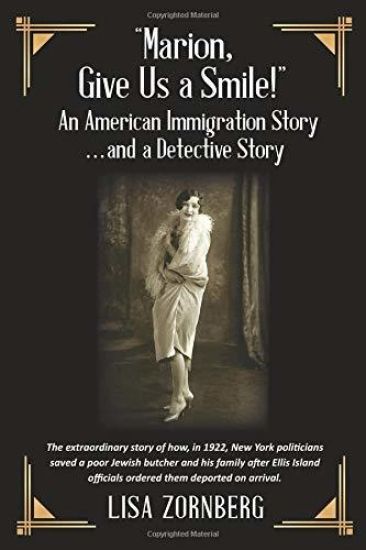
"Marion, Give Us a Smile!" An American Immigration Story ... and a Detective Story
In 1922, Marion leaves a small Eastern European town with her father (Meyer, a butcher), mother (Sarah), brother (Hymie), and sister (Ruthie) to set sail for their new life in America. But it is a time of cataclysmic change in US immigration policy. Upon reaching Ellis Island, the family is detained and ordered to be sent back to Europe. Go back? Years later, Marion would tell how a Bronx aunt came to the family's rescue by "riding the train" to Washington, DC, and "personally convincing President Coolidge" to let the family stay. Could there be truth to that legend? Nearly one hundred years later, the author of this book, Marion's granddaughter, embarks on her own journey to find out.This gripping memoir, told with humor and insight, is a detective story, American history lesson, political drama, and coming-of-age tale about the glamorous, young Marion. It takes the reader from Galician towns to Ellis Island's detention wards, from the floor of the US House of Representatives to the halls of Harvard and New York City in the Roaring Twenties. It exposes the political backlash to America's peak immigration years and reveals the unheralded saviors of Marion's family, whom Marion never knew.