

Kirjahaku
Etsi kirjoja tekijän nimen, kirjan nimen tai ISBN:n perusteella.
1000 tulosta hakusanalla Marion Brunet


A twist on Hitchcock's iconic classic Psycho--where the leading lady doesn't die, but instead turns the knife on Norm, kicking off a crime spree that turns the silver screen victim into a heroine for our times. NORMAN WAS HER FIRST. Marion is in deep. She's stolen money from the Manhattan ad agency where she works in a desperate bid to help her sister escape an abusive marriage, but the bus breaks down before she can make it to Saratoga Springs. It's late at night, and the only place with vacancies is an old set of cabins on the outskirts of town. She pays for a room in cash, and ends up chatting with Norm, the young innkeeper who's handsome, charming and a touch hung-up on his elderly mother. Back in her room, she steps into the shower, scrubbing off the late-summer heat, when the curtain is pulled back... Norm Billings is there with a knife. He raises his arm to strike, but before he does, Marion knees him in the balls, grabs the knife, and stabs the life out of him. Now, she's covered in blood, and she's a woman on the run--not just a thief, but a killer, too. Where will she go? How will she save both herself and her sister? And what mysteries will she uncover as she does? In Psycho, Hitchcock shocked audiences when he killed off his protagonist. But what if the leading lady had fought back? Marion offers an alternate history of the most famous dead blonde to ever grace the silver screen. Only this time, the knife is in her hands--and she's no victim.

Born into a large family of Asian ethnicity in Canada, Marion Ascough always felt like an outsider, not just because of her heritage, but also because of her aspiration to be an artist. At home, her siblings often take notice in the ways she defies expectation, and their next-door neighbors call Marion and her siblings “heathens” because they are not white. As Marion comes of age, she escapes the scrutiny of her siblings and the racism of Quebec to move to New York. There, Marion is dedicated to following her dream of having a successful art career. In New York, Marion is now labeled as a Canadian rather than ethnic, which lessens the racial discrimination she faces, but is instead disenfranchised because she is a woman. Because of this, Marion struggles to be taken seriously. While she fights to start her career and earn a consistent living, she meets Reggie, the man of her dreams. The two grow close and quickly talk of marriage. But when Reggie reveals that he wants all the benefits of a marriage without the actual ceremony, Marion becomes suspicious of his intentions. Set in three major cities, Quebec, Boston, and New York, Onoto Watanna’s Marion: The Story of an Artist’s Model provides invaluable insight on the 20th century societal values and practices present in these cities. With compelling themes of race, gender, and class, Marion: The Story of an Artist’s Model allows readers a gripping and rare perspective of the experience of people of Asian descent in the United States in the early 20th century. First published in 1916, Miss Numé of Japan: A Japanese American Romance is rarely found in print. This special edition features a stunning cover design and is printed in an easy-to-read font. With these accommodations, this edition of Miss Numé of Japan: A Japanese American Romance caters to contemporary readers by restoring the novel to modern standards while preserving the original intricacy of Onoto Watanna’s work.

Born into a large family of Asian ethnicity in Canada, Marion Ascough always felt like an outsider, not just because of her heritage, but also because of her aspiration to be an artist. At home, her siblings often take notice in the ways she defies expectation, and their next-door neighbors call Marion and her siblings “heathens” because they are not white. As Marion comes of age, she escapes the scrutiny of her siblings and the racism of Quebec to move to New York. There, Marion is dedicated to following her dream of having a successful art career. In New York, Marion is now labeled as a Canadian rather than ethnic, which lessens the racial discrimination she faces, but is instead disenfranchised because she is a woman. Because of this, Marion struggles to be taken seriously. While she fights to start her career and earn a consistent living, she meets Reggie, the man of her dreams. The two grow close and quickly talk of marriage. But when Reggie reveals that he wants all the benefits of a marriage without the actual ceremony, Marion becomes suspicious of his intentions. Set in three major cities, Quebec, Boston, and New York, Onoto Watanna’s Marion: The Story of an Artist’s Model provides invaluable insight on the 20th century societal values and practices present in these cities. With compelling themes of race, gender, and class, Marion: The Story of an Artist’s Model allows readers a gripping and rare perspective of the experience of people of Asian descent in the United States in the early 20th century. First published in 1916, Miss Numé of Japan: A Japanese American Romance is rarely found in print. This special edition features a stunning cover design and is printed in an easy-to-read font. With these accommodations, this edition of Miss Numé of Japan: A Japanese American Romance caters to contemporary readers by restoring the novel to modern standards while preserving the original intricacy of Onoto Watanna’s work.

Starting over can be one of the hardest things in the world, or in fifteen year old Marion Johnson's case, one of the easiest. After being bullied and tormented at her middle school in Colorado, Marion and her parents decide to send her to Florida to live with her Aunt and Uncle for her high school years. Besides getting to live with her favorite Aunt and Uncle, Marion will also be attending a high school that has a zero tolerance bullying policy. Who knows, she may even meet new friends who like her for her.In this book of starting over and endless possibilities, follow one girl as she discovers that starting over may have been the best thing to ever happen to her.



Les Ballons et les voyages aeriens, par F. Marion...Date de l'edition originale: 1874Ce livre est la reproduction fidele d'une oeuvre publiee avant 1920 et fait partie d'une collection de livres reimprimes a la demande editee par Hachette Livre, dans le cadre d'un partenariat avec la Bibliotheque nationale de France, offrant l'opportunite d'acceder a des ouvrages anciens et souvent rares issus des fonds patrimoniaux de la BnF.Les oeuvres faisant partie de cette collection ont ete numerisees par la BnF et sont presentes sur Gallica, sa bibliotheque numerique.En entreprenant de redonner vie a ces ouvrages au travers d'une collection de livres reimprimes a la demande, nous leur donnons la possibilite de rencontrer un public elargi et participons a la transmission de connaissances et de savoirs parfois difficilement accessibles.Nous avons cherche a concilier la reproduction fidele d'un livre ancien a partir de sa version numerisee avec le souci d'un confort de lecture optimal. Nous esperons que les ouvrages de cette nouvelle collection vous apporteront entiere satisfaction.Pour plus d'informations, rendez-vous sur www.hachettebnf.fr
Unver nderter Nachdruck der Originalausgabe von 1868.
Unver nderter Nachdruck der Originalausgabe von 1868.
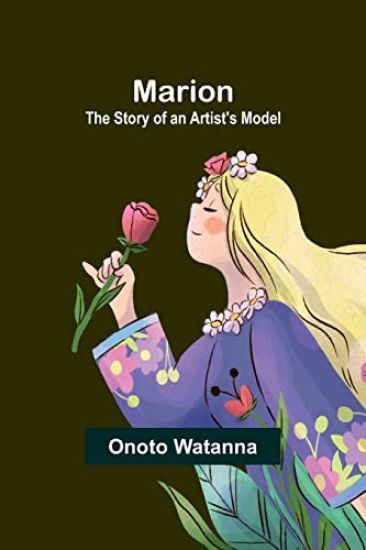
Marion: The Story of an Artist's Model has been regarded as significant work throughout human history, and in order to ensure that this work is never lost, we have taken steps to ensure its preservation by republishing this book in a contemporary format for both current and future generations. This entire book has been retyped, redesigned, and reformatted. Since these books are not made from scanned copies, the text is readable and clear.
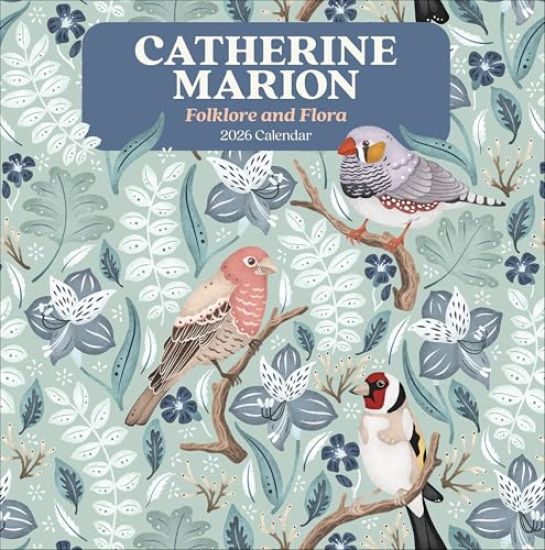
Inspired by aesthetic colour palettes, Catherine Marion creates fully immersive, bespoke atmospheres in her designs featuring flowers, foliage, and animals. Her intention is to remind the observer of the rich diversity of natural beauty that can sometimes be overlooked in our busy lives. Take a moment to slow down and smell these intertwined blossoms. The mandala-like patterns and illustrations in this calendar spark joy every month of the year.

A bloody and wickedly funny twist on Hitchcock’s iconic classic Psycho. Trapped in a world full of sexism, abusive men and glass ceilings, Marion is on the run. Then one fateful night at a rundown motel, she turns the knife on Norm, kicking off a murder spree – and with the knife in her hands, she'll prove she's no victim. NORMAN WAS HER FIRST. Marion is in deep. She's stolen money from the Manhattan ad agency where she works in a desperate bid to help her sister escape an abusive marriage, but the bus breaks down before she can make it to Saratoga Springs. It's late at night, and the only place with vacancies is an old set of cabins on the outskirts of town. She pays for a room in cash, and ends up chatting with Norm, the young innkeeper who's handsome, charming and a touch hung-up on his elderly mother. Back in her room, she steps into the shower, scrubbing off the late-summer heat, when the curtain is pulled back... Norm Billings is there with a knife. He raises his arm to strike, but before he does, Marion knees him in the balls, grabs the knife, and stabs the life out of him. Now, she's covered in blood, and she's a woman on the run—not just a thief, but a killer, too. Where will she go? How will she save both herself and her sister? And what mysteries will she uncover as she does? In Psycho, Hitchcock shocked audiences when he killed off his protagonist. But what if the leading lady had fought back? Marion offers an alternate history of the most famous dead blonde to ever grace the silver screen. Only this time, the knife is in her hands—and she's no victim.
Unver nderter Nachdruck der Originalausgabe von 1868.

This is a book about reading, drawing, and getting better--and what they have to do with one another. The British essayist, artist, and psychoanalyst Marion Milner (1900-1996) thought deeply about how reading, drawing, and getting better related to each other. The guiding question of Milner's life was of how people come to feel alive in, and feel creatively responsive to, their own lives. In pursuit of this, Milner explored fields as diverse as anthropology, folklore, education, literature, art, philosophy, mysticism, and psychology. She became one of the twentieth century's most extraordinary thinkers about creativity. David Russell shows that there is no writer quite like Milner and the rewards of reading her are immense. Key to all her writing is her search for creative practices of attention--of how we pay attention in the life we have. She helped to develop a kind of psychoanalysis in Britain that focussed on the ways people relate to their own lives and the lives of others. Milner was literary and artistic; she took herself as her subject. Her writing performs ways of responding associatively to the words and images she encountered. In the process, she found she was a quite different person than she had first thought. In the 1930s Milner invented a form for writing about reading: an original kind of diary book, which is structured by the experience of going back to, and rereading, past diaries. In her interplay of past and present selves, she finds new ways of looking at, and experiencing, the world.
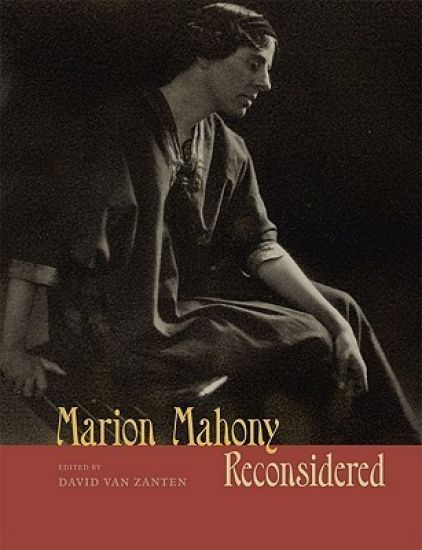
Marion Mahony Reconsidered
University of Chicago Press
2011
sidottu
Marion Mahony Griffin (1871-1961) was an American architect and artist, one of the first licensed female architects in the world, designer for Frank Lloyd Wright's Chicago studio, and an original member of the Prairie School of architecture. Largely heralded for her exquisite presentation drawings for both Wright and her husband, Walter Burley Griffin, Mahony was an adventurous designer in her own right, whose independent and highly original work attracted attention at a moment when architectural drawing and graphic illustration were becoming integral to the design process. This book examines new research into Mahony's life and paints a vivid portrait of a woman's place among the lives and productions of some of our most noted American architects. The essays included take us on an ambitious journey from Mahony's origins in the Chicago suburbs, through her years as Wright's right-hand woman and her bohemian life with her husband in Australia - whose new capital city, Canberra, she helped to plan - up until her golden years in the middle of the twentieth century. Filled with richly detailed analyses of Mahony's works and populated by an international cast of characters, "Marion Mahony Reconsidered" greatly expands our knowledge of this talented, complex, and enigmatic modern architect.

Artist, poet, educationalist and autobiographer, Marion Milner is considered one of the most original of psychoanalytic thinkers whose life (1900-1998) spans a century of radical change. Marion Milner: The Life, is the first biography of this extraordinary woman. It introduces Milner and her works to the reader through her family, colleagues and, above all through her books, charting their evolution and development as well as their critical reception and contribution to current twenty-first century debates and discourses. In this book Emma Letley draws on primary sources, including the newly-opened Marion Milner Collection at the Archives of the British Psychoanalytical Society in London, as well as interviews and the re-contextualised series of Milner texts. She traces the process of Milner's writing of her books, her discovery of psychoanalysis, her training and her place in that world from the 1940's onwards. Marion Milner: The Life includes discussion of Milner's connection with D.W. Winnicott and her emergence as a most individual member of the Independent Group. Letley also shows how Milner's Personal Notebooks offer fascinating insights into her relationships, both personal and professional, and into many of her important ideas on creativity, the body-mind relationship, her revolutionary ideas on education and her particular personality as clinician working with both children and adults. Further, Letley explores Milner's literary character from her very early diaries and narratives to her last book written in her 90's published in 2012.Marion Milner: The Life places Marion Milner firmly in her Edwardian family setting and contains new material from primary sources, including a new view of her collegial connections. It provides a wealth of material on her life and works that will be invaluable to psychoanalysts, psychotherapists, art psychotherapists, students, those involved with life writing and autobiography, and the general reader.