Kirjojen hintavertailu. Mukana 11 699 587 kirjaa ja 12 kauppaa.

Kirjahaku

Etsi kirjoja tekijän nimen, kirjan nimen tai ISBN:n perusteella.

1000 tulosta hakusanalla Marit Werenskiold

Hannah Ryggen: Threads of Defiance

Hannah Ryggen: Threads of Defiance

Marit Paasche

University of Chicago Press
2019
sidottu
Hannah Ryggen (1894-1970) was a Swedish-Norwegian modern artist who began her career as a painter before switching to creating political art in the form of monumental tapestries. Combining the decorative and the political, Ryggen was ahead of her time with her turn to "political weaving." She was also a feminist with strong communist sympathies involved in the international workers' movement. Her dramatic, beautiful tapestries were shown at both the Paris and Brussels World's Fairs, but she was largely forgotten by the international art world in the decades after her death. In recent years, however, as interest in both fiber arts and pioneering women artists has grown, Ryggen's work has returned to the public eye, with major international exhibitions and fresh attention from curators, collectors, and critics. A widely recognized authority on Ryggen, Marit Paasche brings this important Scandinavian artist to the foreground in this biography, the first published on Ryggen in English. Paasche looks at Ryggen within the social, political, and cultural contexts of her time and explores how these issues informed her work, from her anti-fascist tapestry that depicted a spear piercing Mussolini's head to one protesting the war in Vietnam. Published to correspond with a major retrospective in Frankfurt, of which Paasche is one of the curators, Hannah Ryggen is a foundational book that will provide a crucial introduction of this artist to a broader audience.
Hannah Ryggen

Hannah Ryggen

Marit Paasche

Thames Hudson Ltd
2019
sidottu
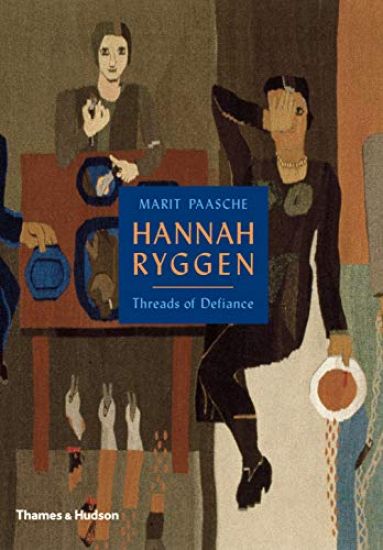
The significance of Hannah Ryggen (1894–1970) as one of the most important figures in the history of Scandinavian art has only recently been recognized internationally. Beloved and renowned for her original contributions to modernist tapestry, Ryggen made radical political statements against Fascism and Nazism before and during the Second World War. Using primary sources, Ryggen expert Marit Paasche brings us a much fuller knowledge of the artist, weaving her life and work into a story that illuminates not only the artist herself, but also 20th-century art history in general. Hannah Ryggen’s visually spellbinding tapestries, made on a homemade handloom in her small farm on the remote Norwegian coast, depict a wealth of subjects: Mussolini’s Abyssinian campaign, her husband’s internment in a Nazi camp in occupied Norway, the post-war growth of nuclear power, and media coverage of the Vietnam War. At once hard-hitting and humorous, her works combine personal candour, social and political engagement and visual majesty. Paasche explores both the artist’s bold subject matter and particular balance of abstraction and figuration within the context of her life and beliefs. Including a comprehensive selection of works, this book provides an enthralling account of a remarkable, and unjustly overlooked, artist.
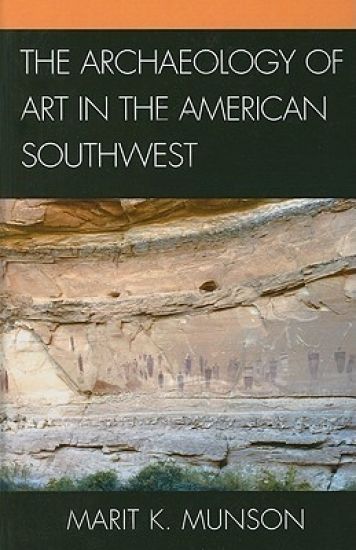
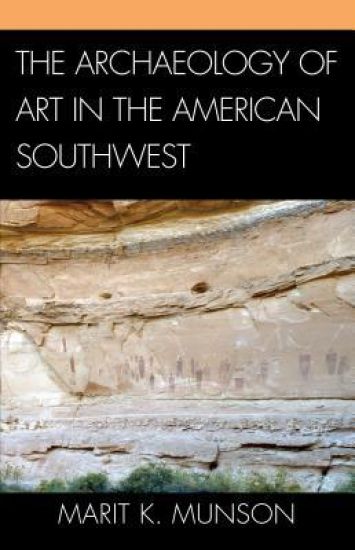
The Archaeology of Art in the American Southwest

The Archaeology of Art in the American Southwest

Marit K. Munson

AltaMira Press,U.S.
2011
sidottu
Archaeologists seldom study ancient art, even though art is fundamental to the human experience. The Archaeology of Art in the American Southwest argues that archaeologists should study ancient artifacts as artwork, as applying the term "art" to the past raises new questions about artists, audiences, and the works of art themselves. Munson proposes that studies of ancient artwork be based on standard archaeological approaches to material culture, framed by theoretical insights of disciplines such as art history, visual studies, and psychology. Using examples drawn from the American Southwest, The Archaeology of Art in the American Southwest discusses artistic practice in ancestral Pueblo and Mimbres ceramics and the implications of context and accessibility for the audiences of painted murals and rock art. Studies of Hohokam figurines and rock art illustrate methods for studying ancient images, while the aesthetics of ancient art are suggested by work on ceramics and kivas from Chaco Canyon. This book will be of interest to archaeologists working in the Southwest who want to broaden their perspective on the past. It will also appeal to archaeologists in other parts of the world and to anthropologists, art historians, and those who are intrigued by the material world, aesthetics, and the visual.
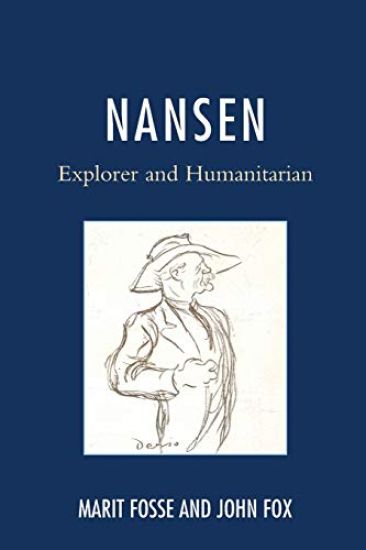
Nansen

Nansen

Marit Fosse; John Fox

Hamilton Books
2015
nidottu
Visionary, explorer, researcher, diplomat, humanist-Fridtjof Nansen was no ordinary man. Nansen was a dedicated scientist who made an outstanding contribution to marine zoology and oceanography, an audacious adventurer who pushed our knowledge of the Arctic to new frontiers, and an indefatigable savior of human beings displaced by conflict. As a young man Nansen led two successful polar expeditions and became a national hero, participating in the birth pangs of his country-Norway. As a respected international elder statesman he began a new career in 1919 by bringing home hundreds of thousands of prisoners-of-war from the remotest corners of Europe and Siberia. He created the “Nansen Passport” for stateless people under his responsibility and sought to give the Armenian people a secure homeland. For his efforts in favor of prisoners of war, famine relief and Russian refugees, he was awarded the Nobel Peace Prize in 1922.
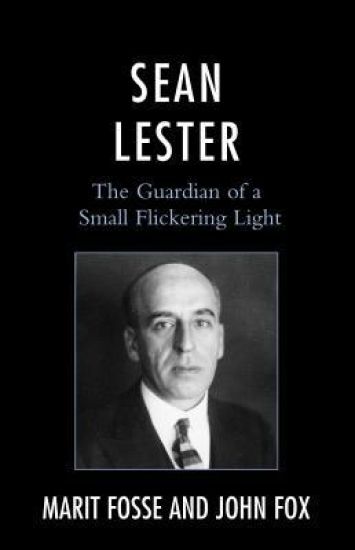
Sean Lester

Sean Lester

Marit Fosse; John Fox

Hamilton Books
2016
nidottu
It was an incredible destiny for a man who repeatedly announced that he was “without ambition.” Although he had left school aged fourteen, had no experience of foreign affairs and spoke no languages other than English, in 1929 Sean Lester became the Irish representative to the League of Nations in Geneva. He was soon recognized by his peers as an outspoken and able politician of integrity ready to defend the rules governing civilized society. As the League’s High Commissioner in the Free City of Danzig from 1934 to 1936, he tried to resist the Nazi juggernaut. In the early part of the Second World War, Lester took over as Secretary-General of the League of Nations from his disgraced predecessor and for four years fought to keep the institution alive. In his dairies he witnessed many dark chapters of European history in the 1930s and 1940s.
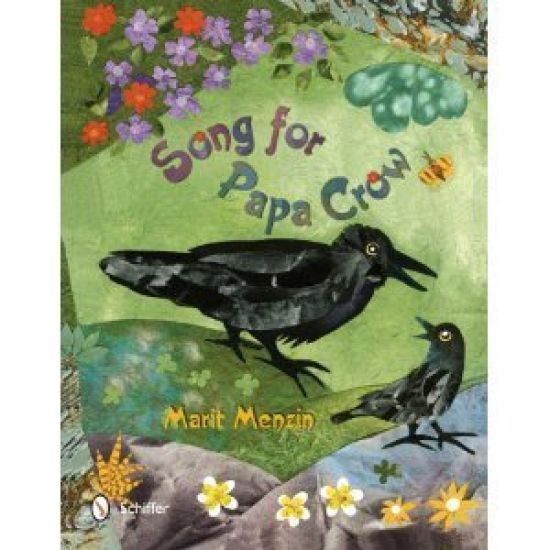
Song for Papa Crow

Song for Papa Crow

Marit Menzin

Schiffer Publishing Ltd
2012
sidottu
Little Crow loves to sing, and Papa Crow loves his song. But when Little Crow shares his crow songs with the other birds at the big old tree, they laugh and scatter. Maybe the Amazing Mockingbird can teach him to sing songs with the finches, flycatchers, and cardinals – and help him make some friends. But Little Crow should be careful what he wishes for… Using Mockingbird's tip, Little Crow quickly becomes the most popular bird on the block. But, in a moment of danger, he learns that singing someone else's song can have terrible consequences and that his own voice – and his father's love – is of the greatest value. Paired with colorful collage illustrations, this inspirational story is complemented by fun facts about North American birds and their sounds. Early reader–ages 5-8.
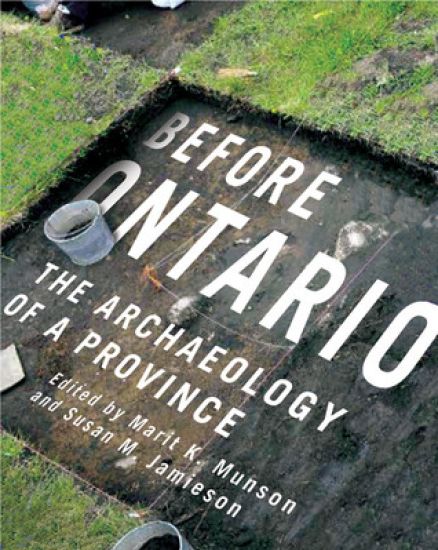
Before Ontario

Before Ontario

Marit K. Munson; Susan M. Jamieson

McGill-Queen's University Press
2013
sidottu
Before Ontario there was ice. As the last ice age came to an end, land began to emerge from the melting glaciers. With time, plants and animals moved into the new landscape and people followed. For almost 15,000 years, the land that is now Ontario has provided a home for their descendants: hundreds of generations of First Peoples. With contributions from the province's leading archaeologists, Before Ontario provides both an outline of Ontario's ancient past and an easy to understand explanation of how archaeology works. The authors show how archaeologists are able to study items as diverse as fish bones, flakes of stone, and stains in the soil to reconstruct the events and places of a distant past - fishing parties, long-distance trade, and houses built to withstand frigid winters. Presenting new insights into archaeology's purpose and practice, Before Ontario bridges the gap between the modern world and a past that can seem distant and unfamiliar, but is not beyond our reach. Contributors include Christopher Ellis (University of Western Ontario), Neal Ferris (University of Western Ontario/Museum of Ontario Archaeology), William Fox (Canadian Museum of Civilization/Royal Ontario Museum), Scott Hamilton (Lakehead University), Susan Jamieson (Trent University Archaeological Research Centre - TUARC), Mima Kapches (Royal Ontario Museum), Anne Keenleyside (TUARC), Stephen Monckton (Bioarchaeological Research), Marit Munson (TUARC), Kris Nahrgang (Kawartha Nishnawbe First Nation), Suzanne Needs-Howarth (Perca Zooarchaeological Research), Cath Oberholtzer (TUARC), Michael Spence (University of Western Ontario), Andrew Stewart (Strata Consulting Inc.), Gary Warrick (Wilfrid Laurier University), and Ron Williamson (Archaeological Services Inc).
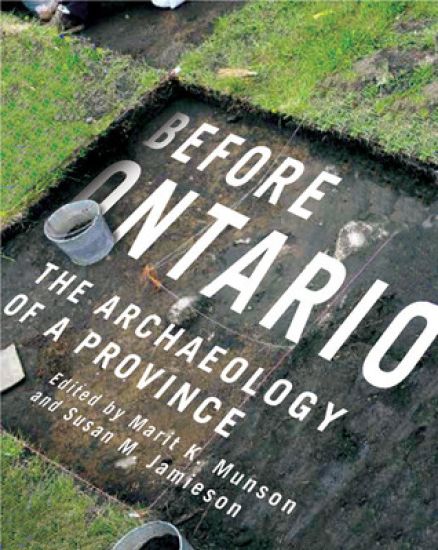
Before Ontario

Before Ontario

Marit K. Munson; Susan M. Jamieson

McGill-Queen's University Press
2013
nidottu
Before Ontario there was ice. As the last ice age came to an end, land began to emerge from the melting glaciers. With time, plants and animals moved into the new landscape and people followed. For almost 15,000 years, the land that is now Ontario has provided a home for their descendants: hundreds of generations of First Peoples. With contributions from the province's leading archaeologists, Before Ontario provides both an outline of Ontario's ancient past and an easy to understand explanation of how archaeology works. The authors show how archaeologists are able to study items as diverse as fish bones, flakes of stone, and stains in the soil to reconstruct the events and places of a distant past - fishing parties, long-distance trade, and houses built to withstand frigid winters. Presenting new insights into archaeology's purpose and practice, Before Ontario bridges the gap between the modern world and a past that can seem distant and unfamiliar, but is not beyond our reach. Contributors include Christopher Ellis (University of Western Ontario), Neal Ferris (University of Western Ontario/Museum of Ontario Archaeology), William Fox (Canadian Museum of Civilization/Royal Ontario Museum), Scott Hamilton (Lakehead University), Susan Jamieson (Trent University Archaeological Research Centre - TUARC), Mima Kapches (Royal Ontario Museum), Anne Keenleyside (TUARC), Stephen Monckton (Bioarchaeological Research), Marit Munson (TUARC), Kris Nahrgang (Kawartha Nishnawbe First Nation), Suzanne Needs-Howarth (Perca Zooarchaeological Research), Cath Oberholtzer (TUARC), Michael Spence (University of Western Ontario), Andrew Stewart (Strata Consulting Inc.), Gary Warrick (Wilfrid Laurier University), and Ron Williamson (Archaeological Services Inc).
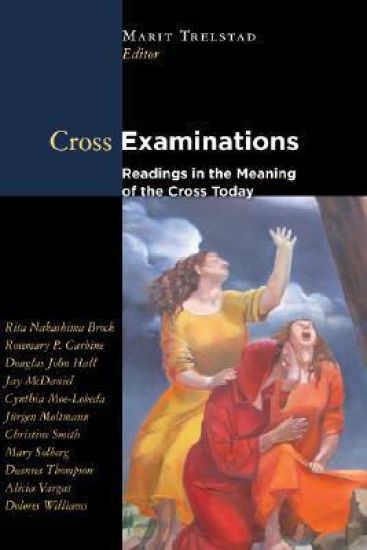
Cross Examinations

Cross Examinations

Marit A. Trelstad

Augsburg Fortress
2006
pokkari
Here, leading theologians explore the Christian symbol of the cross. This work considers the following questions: do traditional understandings of the cross assign a value to suffering or violence? Are traditional models of redemption as a ransom or debt payment fitting for the world today? The contributors include: Delores Williams, Rita Nakashima Brock, Christine Smith, Rosemary R Carbine, Jay McDaniel, Jurgen Moltmann, Douglas John Hall, Deanna Thompson, Mary Solberg, Alicia Vargas, Cynthia Moe-Lobeda and Merit Trelstad.
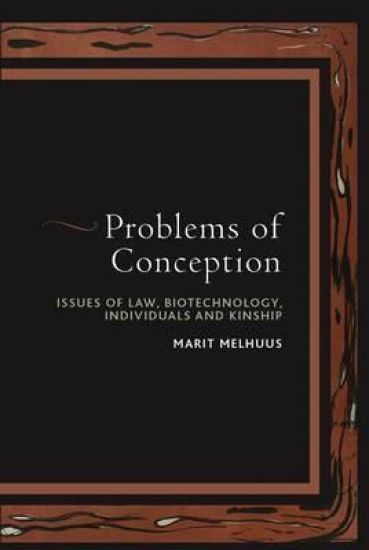
Problems of Conception

Problems of Conception

Marit Melhuus

Berghahn Books
2012
sidottu
The Biotechnology Act in Norway, one of the most restrictive in Europe, forbids egg donation and surrogacy and has rescinded the anonymity clause with respect to donor insemination. Thus, it limits people’s choice as to how they can procreate within the boundaries of the nation state. The author pursues this significant datum ethnographically and addresses the issues surrounding contemporary biopolitics in Norway. This involves investigating such fundamental questions as the relation between individual and society, meanings of kinship and relatedness, the moral status of the embryo and the role of science, religion and ethics in state policies. Even though the book takes reproductive technologies as its focus, it reveals much about vital processes that are central to contemporary Norwegian society.
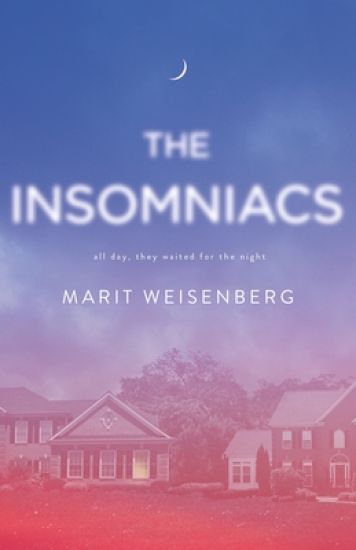
The Insomniacs

The Insomniacs

Marit Weisenberg

FLATIRON BOOKS
2022
nidottu
Ingrid can’t sleep. She can’t remember, either. A competitive diver, seventeen-year-old Ingrid is haunted by what she saw at the pool at a routine meet, before falling off the high dive and waking up concussed. The only thing she remembers about the moment before her dive is locking eyes with Van — her neighbor, former best friend, and forever crush — kissing his girlfriend on the sidelines. But that can’t be all. Then one sleepless night, she sees Van out her window looking right back at her. They begin not sleeping together by night, still ignoring each other at school by day. Ingrid tells herself this is just temporary, but soon, she and Van are up every night piecing her memory back together. As Van works through his own reasons for not being able to sleep, they’re both pulled into a mystery that threatens to turn their quiet neighborhood into a darker place than they realized.
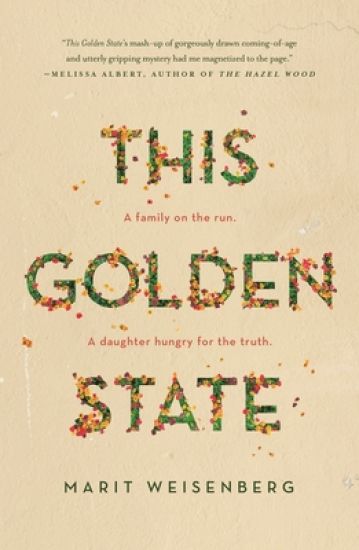
This Golden State

This Golden State

Marit Weisenberg

FLATIRON BOOKS
2023
nidottu
The Winslow family lives by five principles: 1. No one can know your real name. 2. Don’t stay in one place too long. 3. If you sense anything is wrong, go immediately to the meeting spot. 4. Keeping our family together is everything. 5. We wish we could tell you who we are, but we can’t. Please—do not ask…………… Poppy doesn’t know why her family has been running her whole life, but she does know that there are dire consequences if they’re ever caught. Still, her curiosity grows each year, as does her desire for real friends and the chance to build on something, instead of leaving behind school projects, teams, and crushes at a moment’s notice. When a move to California exposes a crack in her parents’ airtight planning, Poppy realizes how fragile her world is. Determined to find out the truth, she mails in a home DNA test. Just as she starts to settle into her new life and even begins opening up to a boy in her math class, the forgotten test results bring her crashing back to reality.
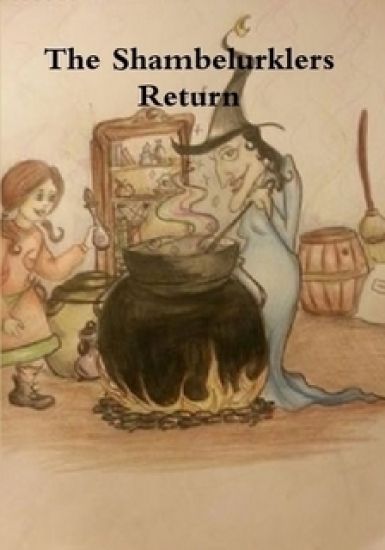
The Shambelurklers Return

The Shambelurklers Return

Marit Meredith

Lulu.com
2014
nidottu
A selection of children's stories and poems contributed by writers near and far, spreading the joy of reading, while also raising money for children on the autism spectrum within education. All royalties will be donated to http://www.autism.org.uk/advocacy
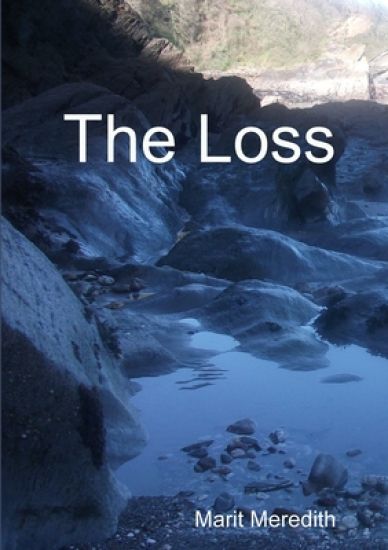
The Loss

The Loss

Marit Meredith

Lulu.com
2014
nidottu
Holidaying in a small Welsh seaside village in the early 60s, a brother and sister enjoy exploring, until the last day of the holiday, when six year old Daniel disappears without a trace. It seems only Jennie, his five year old sister, knows what happened, but her memories are suppressed for decades - until, as a grandmother, a small pencil box triggers memories. But is what Jennie thinks she remembers what actually happened? Leaving her brother behind, when the tide was coming in, could only mean one thing...and all that was left, was one small red sandal...
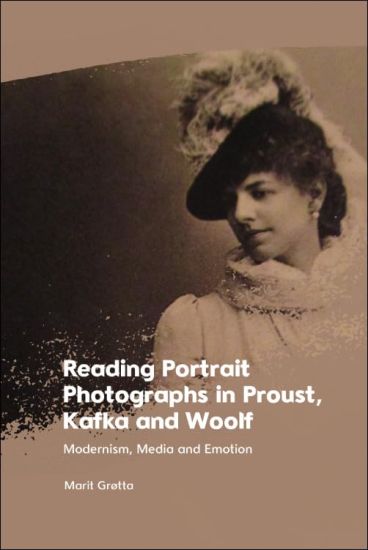
Reading Portrait Photographs in Proust, Kafka and Woolf

Reading Portrait Photographs in Proust, Kafka and Woolf

Marit Grotta

EDINBURGH UNIVERSITY PRESS
2024
sidottu
Portrait photography increased in popularity during the modernist period and offered new ways of seeing and understanding the human face. This book examines how portrait photographs appeared as literary motifs in the works of three modernist writers with personal experience of the medium: Marcel Proust, Franz Kafka and Virginia Woolf. Combining perspectives from literary, visual and media studies, Marit Grotta discusses these writers' ambivalent views on portrait photographs and the uncertain status of technical images in the early twentieth century more generally. In reconsidering the attention paid to analogue photographs in literature, this book throws light on both modernist reactions to portrait photography and on our relationships to photographs today.
The Archaeology of Art in the American Southwest
Archaeologists seldom study ancient art, even though art is fundamental to the human experience. The Archaeology of Art in the American Southwest argues that archaeologists should study ancient artifacts as artwork, as applying the term 'art' to the past raises new questions about artists, audiences, and the works of art themselves. Munson proposes that studies of ancient artwork be based on standard archaeological approaches to material culture, framed by theoretical insights of disciplines such as art history, visual studies, and psychology. Using examples drawn from the American Southwest, The Archaeology of Art in the American Southwest discusses artistic practice in ancestral Pueblo and Mimbres ceramics and the implications of context and accessibility for the audiences of painted murals and rock art. Studies of Hohokam figurines and rock art illustrate methods for studying ancient images, while the aesthetics of ancient art are suggested by work on ceramics and kivas from Chaco Canyon. This book will be of interest to archaeologists working in the Southwest who want to broaden their perspective on the past. It will also appeal to archaeologists in other parts of the world and to anthropologists, art historians, and those who are intrigued by the material world, aesthetics, and the visual.
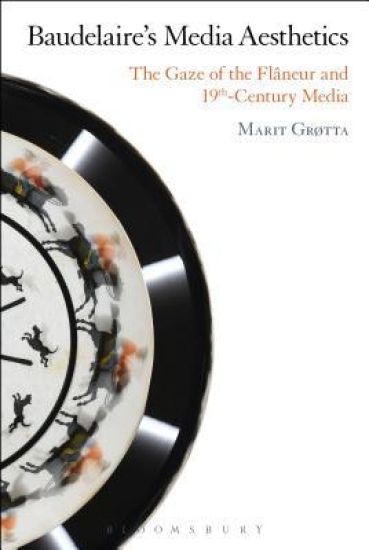
Baudelaire's Media Aesthetics

Baudelaire's Media Aesthetics

Marit Grøtta

Bloomsbury Academic USA
2016
nidottu
Baudelaire’s Media Aesthetics situates Charles Baudelaire in the midst of 19th-century media culture. It offers a thorough study of the role of newspapers, photography, and precinematic devices in Baudelaire’s writings, while also discussing the cultural history of these media generally. The book reveals that Baudelaire was not merely inspired by the new media, but that he played with them, using them as frames of perception and ways of experiencing the world. His writings demonstrate how different media respond to one another and how the conventions of one medium can be paraphrased in another medium. Accordingly, Baudelaire’s Media Aesthetics argues that Baudelaire should be seen merely as an advocate of “pure poetry,” but as a poet in a media saturated environment. It shows that mediation, montage, and movement are features that are central to Baudelaire’s aesthetics and that his modernist aesthetics can be conceived of, to a large degree, as a media aesthetics.Highlighting Baudelaire’s interaction with the media of his age, Baudelaire’s Media Aesthetics discusses the ways in which we respond to new media technology, drawing on perspectives from Walter Benjamin and Giorgio Agamben. Combining detailed research with contemporary theory, the book opens up new perspectives on Baudelaire’s writings, the figure of the flâneur, and modernist aesthetics.