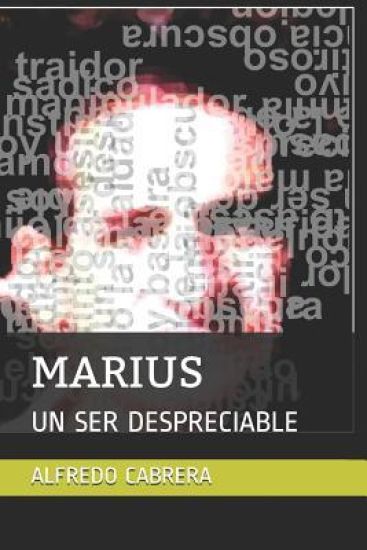
un hombre con el alma y cuerpo fragmentados, una lucha entre el esp ritu y la carne, una traves a infernal y celestial lo acechan, dominado por los instintos bajos, se convierte en un suplicio la busqueda incesante por deshacerse de aquello que lo atormenta dia y noche, realmente la locura lo esta consumiendo.
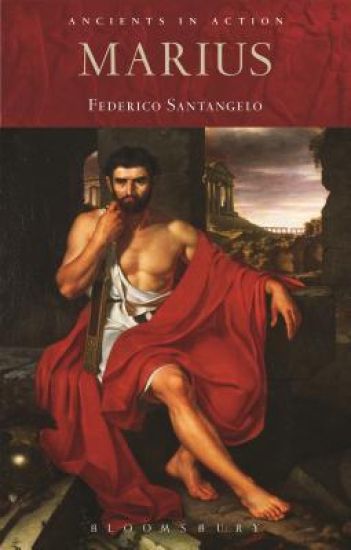
Gaius Marius (158/157-86 BC) has a major transformational impact on the history of the late Roman Republic. Although none of his ancestors had been a member of the Senate, he managed to reach the consulship on seven occasions, and was responsible for a series of major military victories, notably against King Jugurtha in North Africa and the Teutons and the Cimbrians in Southern Gaul and Northern Italy. Much of his internal political agenda, however, was highly controversial. His reform of the army recruitment system was regarded by some (perhaps with undue emphasis) as a crucial factor in the downfall of the Roman Republic. The final years of his life witnessed his exile, his return to Rome at the head of an armed force, and his comeback to power, shortly followed by his sudden death.This volume provides an account of the life and career of Gaius Marius, sets his achievements and failures within the wider context of the decline of the Roman Republic, and discusses his political legacy in the following decades. It also provides an assessment of the main modern interpretations of the man and his policies.
When a car-bomb explodes in the centre of London the bomb-maker is soon identified. But there's one big problem with the chief suspect; he died fifteen years ago. DS Robert McGraw soon discovers that looking for the dead among the living is a risky business when terrorism and organised crime work together. Old friends and acquaintances aren't what they seem.
Accouplez ces deux id es qui contiennent, l'une toute la fournaise, l'autre toute l'aurore, choquez ces tincelles, Paris, l'enfance; il en jaillit un petit tre. Homuncio 2], dirait Plaute. Ce petit tre est joyeux. Il ne mange pas tous les jours et il va au spectacle, si bon lui semble, tous les soirs. Il n'a pas de chemise sur le corps, pas de souliers aux pieds, pas de toit sur la t te; il est comme les mouches du ciel qui n'ont rien de tout cela 3]. Il a de sept treize ans, vit par bandes, bat le pav , loge en plein air, porte un vieux pantalon de son p re qui lui descend plus bas que les talons, un vieux chapeau de quelque autre p re qui lui descend plus bas que les oreilles, une seule bretelle en lisi re jaune, court, guette, qu te, perd le temps, culotte des pipes, jure comme un damn , hante le cabaret, conna t des voleurs, tutoie des filles, parle argot, chante des chansons obsc nes, et n'a rien de mauvais dans le coeur. C'est qu'il a dans l' me une perle, l'innocence, et les perles ne se dissolvent pas dans la boue. Tant que l'homme est enfant, Dieu veut qu'il soit innocent. Si l'on demandait l' norme ville: Qu'est-ce que c'est que cela ? elle r pondrait: C'est mon petit.
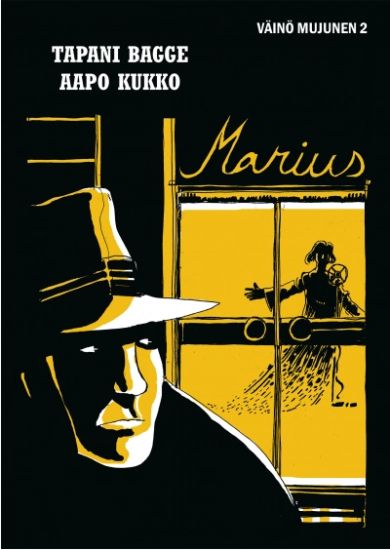
Mujusen toinen tuleminen!Keväällä 1946 vaarallinen vanki karkaa kuljetuksesta juuri ennen Sörnäisten vankilan porttia. Yksikätinen yksityisetsivä Väinö Mujunen saa tehtäväkseen suojella vanhaa heilaansa, joka yritetään heti ampua. Punainen Valpo painostaa Mujusta. Mitä on kaiken takana? Kuka on Marius? Ehtiikö Mujunen pelastaa Ingen - ja itsensä?Tapani Baggen luoma etsivä Väinö Mujunen on seikkaillut halki 1900-luvun kuohuvien vuosikymmenten jo seitsemässä historiallisessa rikosromaanissa. Marius on Mujusen toinen sarjakuva-albumi, jonka Aapo Kukko on sovittanut ja piirtänyt Baggen tarinasta. Ensimmäinen oli vuoteen 1943 sijoittunut sukellusveneseikkailu Harmaa susi (2016).
Lili viettää elokuista hellepäivää puutarhamajassaan vanhan kartanon hakamailla, muinaisessa purolaaksossa, jonka läpi kulkee raitiotie. Hän odottaa Mariusta, ihailemaansa nuorta ranskalaista, saapuvaksi vieraakseen vielä viimeisen kerran. Päivän aikana Lilin rakas ystävä Paul vierailee majalla, ja Lili muistelee heidän yhteistä aikaansa Euroopan kaupungeissa sekä kuumaa romanssiaan Pariisissa. Hän pohtii eroottista historiaansa, ihailemaansa naismaalaria joka maalasi hehkuvia mieskuvia, kuolemaa. Ilta saapuu, Mariusta ei kuulu. Romaanin maailma laajenee yhden päivän rajojen yli kertomukseksi taiteesta, Euroopasta ja syvästä surusta rakkauden ja intohimon poltteen rinnalla. ”Kyllä yhden päivän vielä kestäisi, jaksaisi odotusta, iloa, tätä hiljaista hyrinää”
One of the most important ballet choreographers of all time, Marius Petipa (1818 - 1910) created works that are now mainstays of the ballet repertoire. Every day, in cities around the world, performances of Swan Lake and The Sleeping Beauty draw large audiences to theatres and inspire new generations of dancers, as does The Nutcracker during the winter holidays. These are his best-known works, but others - Don Quixote, La Bayadère - have also become popular, even canonical components of the classical repertoire, and together they have shaped the defining style of twentieth-century ballet. The first biography in English of this monumental figure of ballet history, Marius Petipa: The Emperor's Ballet Master covers the choreographer's life and work in full within the context of remarkable historical and political surroundings. Over the course of ten well-researched chapters, Nadine Meisner explores Marius Petipa's life and legacy: the artist's arrival in Russia from his native France, the socio-political tensions and revolution he experienced, his popularity on the Russian imperial stage, his collaborations with other choreographers and composers (most famously Tchaikovsky), and the conditions under which he worked, in close proximity to the imperial court. Meisner presents a thrilling and exhaustive narrative not only of Petipa's life but of the cultural development of ballet across the 19th and early 20th centuries. The book also extends beyond Petipa's narrative with insightful analyses of the evolution of ballet technique, theatre genres, and the rise of male dancers. Richly illustrated with archival photographs, this book unearths original material from Petipa's 63 years in Russia, much of it never published in English before. As Meisner demonstrates, the choreographer laid the foundations for Soviet ballet and for Diaghilev's Ballets Russes, the expatriate company which exercised such an enormous influence on ballet in the West, including the Royal Ballet and Balanchine's New York City Ballet. After Petipa, Western ballet would never be the same.
This is the first English translation of Marius Victorinus' commentary on Galatians. Analytical notes, full bibliography, and a lengthy introduction make this book a valuable resource for the study of the first Latin commentator on Paul. No such comparable work exists in English; and this volume engages fully with German, French, and Italian scholarship on Victorinus' commentaries. A number of themes receive special treatment in a lengthy introduction: the relation of Victorinus' exegetical efforts to the trinitarian debates; the iconography of the apostle Paul in mid-fourth-century Rome; Victorinus' exegetical methodology; his intentions as a commentator; and the question of his influence on later Latin commentators (Ambrosiaster and Augustine).
This title is part of UC Press's Voices Revived program, which commemorates University of California Press’s mission to seek out and cultivate the brightest minds and give them voice, reach, and impact. Drawing on a backlist dating to 1893, Voices Revived makes high-quality, peer-reviewed scholarship accessible once again using print-on-demand technology. This title was originally published in 1976.
This title is part of UC Press's Voices Revived program, which commemorates University of California Press’s mission to seek out and cultivate the brightest minds and give them voice, reach, and impact. Drawing on a backlist dating to 1893, Voices Revived makes high-quality, peer-reviewed scholarship accessible once again using print-on-demand technology. This title was originally published in 1976.
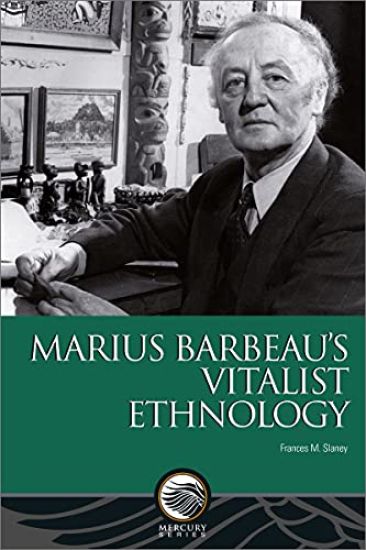
This book examines Marius Barbeau’s career at Canada’s National Museum (now the Canadian Museum of History), in light of his education at Oxford and in Paris (1907–1911)._x000D_ _x000D_ Based on archival research in England, France and Canada, Marius Barbeau’s Vitalist Ethnology presents Barbeau’s anthropological training at Oxford through his meticulous course notes, as well as archival photographs at the Pitt Rivers Museum and the Bibliothèque et Archives nationales du Québec. It also draws upon Barbeau’s professional correspondence at Library and Archives Canada, the BC Archives, and, above all, the National Museum, where he worked for over four decades._x000D_ _x000D_ The author, Frances M. Slaney, sheds light on the professional life of this founder of Canadian anthropology, exploring his difficult working relationships with Edward Sapir, his collaborations with Franz Boas, and his outstanding fieldwork in rural Quebec and with Indigenous communities on British Columbia’s Northwest Coast._x000D_ _x000D_ Barbeau penned over 1,000 books and articles, in addition to curating innovative museum exhibitions and art shows. He invited Group of Seven artists into his field sites, convinced that their works could better capture the “vitality” of Quebec’s rural culture than his own abundant photographs. _x000D_ _x000D_ For these—and many other—contributions, the Historic Sites and Monuments Board of Canada recognized him as a “person of national historic importance” in 1985.