Kirjojen hintavertailu. Mukana 11 244 527 kirjaa ja 12 kauppaa.

Kirjahaku

Etsi kirjoja tekijän nimen, kirjan nimen tai ISBN:n perusteella.

1000 tulosta hakusanalla Mark C Taylor

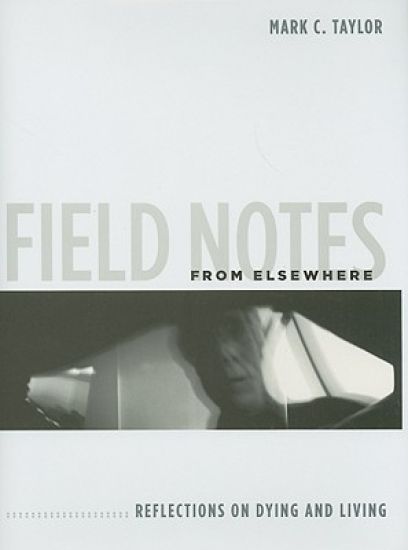
Field Notes from Elsewhere

Field Notes from Elsewhere

Mark C. Taylor

Columbia University Press
2009
sidottu
In the fall of 2005, Mark C. Taylor, the controversial public intellectual and widely respected scholar, suddenly fell critically ill. For two days a team of forty doctors, many of whom thought he would not live, fought to save him. Taylor would eventually recover, but only to face a new threat: surgery for cancer. "These experiences have changed me in ways I am still struggling to understand," Taylor writes in this absorbing memoir. "After the past year, I am persuaded that I have done enough fieldwork to write a book that combines philosophical and theological reflection with autobiographical narrative. Writing is not only possible but actually seems necessary." Field Notes from Elsewhere is Taylor's unforgettable, inverted journey from death to life. Each of his memoir's fifty-two chapters and accompanying photographs recounts a morning-to-evening experience with sickness and convalescence, mingling humor and hope with a deep exploration of human frailty and, conversely, resilience. When we confront the end of life, Taylor explains, the axis of the lived world shifts, and everything must be reevaluated. As Taylor sorts through his remembrances, much that once seemed familiar becomes strange, paradoxical, and contradictory. He reads his experience with and against ghosts from his past, recasting the meaning of mortality, sacrifice, solitude, and abandonment, along with a host of other issues, in light of modern ways of dying. "You never come back from elsewhere," Taylor concludes, "because elsewhere always comes back with you."
Field Notes from Elsewhere

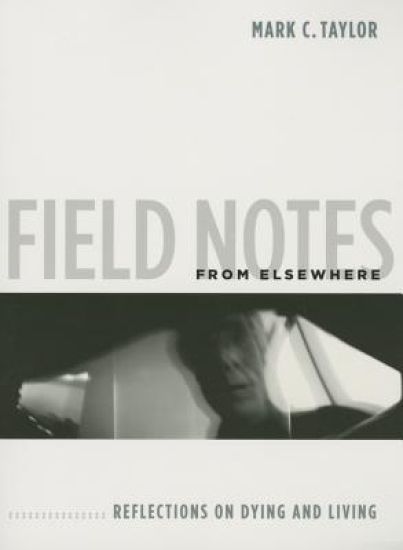
Field Notes from Elsewhere

Mark C. Taylor

Columbia University Press
2014
pokkari
In the fall of 2005, Mark C. Taylor, the controversial public intellectual and widely respected scholar, suddenly fell critically ill. For two days a team of forty doctors, many of whom thought he would not live, fought to save him. Taylor would eventually recover, but only to face a new threat: surgery for cancer. "These experiences have changed me in ways I am still struggling to understand," Taylor writes in this absorbing memoir. "After the past year, I am persuaded that I have done enough fieldwork to write a book that combines philosophical and theological reflection with autobiographical narrative. Writing is not only possible but actually seems necessary." Field Notes from Elsewhere is Taylor's unforgettable, inverted journey from death to life. Each of his memoir's fifty-two chapters and accompanying photographs recounts a morning-to-evening experience with sickness and convalescence, mingling humor and hope with a deep exploration of human frailty and, conversely, resilience. When we confront the end of life, Taylor explains, the axis of the lived world shifts, and everything must be reevaluated. As Taylor sorts through his remembrances, much that once seemed familiar becomes strange, paradoxical, and contradictory. He reads his experience with and against ghosts from his past, recasting the meaning of mortality, sacrifice, solitude, and abandonment, along with a host of other issues, in light of modern ways of dying. "You never come back from elsewhere," Taylor concludes, "because elsewhere always comes back with you."
Refiguring the Spiritual

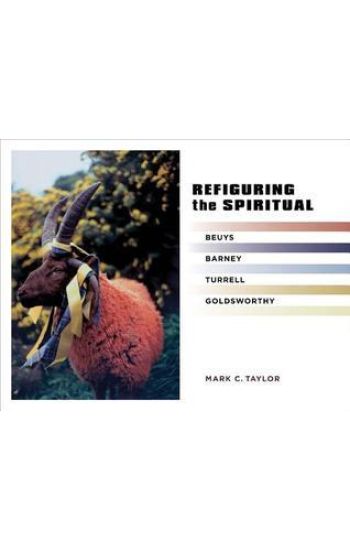
Refiguring the Spiritual

Mark C. Taylor

Columbia University Press
2012
sidottu
Mark C. Taylor provocatively claims that contemporary art has lost its way. With the art market now mirroring the art of finance, many artists create works solely for the purpose of luring investors and inspiring trade among hedge funds and private equity firms. When art is commodified, corporatized, and financialized, it loses its critical edge and is transformed into a financial instrument calculated to maximize profitable returns. Joseph Beuys, Matthew Barney, James Turrell, and Andy Goldsworthy are artists who differ in style, yet they all defy the trends that have diminished art's potential in recent decades. They understand that art is a transformative practice drawing inspiration directly and indirectly from ancient and modern, Eastern and Western forms of spirituality. For Beuys, anthroposophy, alchemy, and shamanism drive his multimedia presentations; for Barney and Goldsworthy, Celtic mythology informs their art; and for Turrell, Quakerism and Hopi myth and ritual shape his vision. Eluding traditional genres and classifications, these artists combine spiritually inspired styles and techniques with material reality, creating works that resist merging space into cyberspace in a way that overwhelms local contexts with global networks. Their art reminds us of life's irreducible materiality and humanity's inescapability of place. For them, art is more than just an object or process-it is a vehicle transforming human awareness through actions echoing religious ritual. By lingering over the extraordinary work of Beuys, Barney, Turrell, and Goldsworthy, Taylor not only creates a novel and personal encounter with their art but also opens a new understanding of overlooked spiritual dimensions in our era.
Rewiring the Real

Rewiring the Real

Mark C. Taylor

Columbia University Press
2013
sidottu
Digital and electronic technologies that act as extensions of our bodies and minds are changing how we live, think, act, and write. Some welcome these developments as bringing humans closer to unified consciousness and eternal life. Others worry that invasive globalized technologies threaten to destroy the self and the world. Whether feared or desired, these innovations provoke emotions that have long fueled the religious imagination, suggesting the presence of a latent spirituality in an era mistakenly deemed secular and posthuman. William Gaddis, Richard Powers, Mark Danielewski, and Don DeLillo are American authors who explore this phenomenon thoroughly in their work. Engaging the works of each in conversation, Mark C. Taylor discusses their sophisticated representations of new media, communications, information, and virtual technologies and their transformative effects on the self and society. He focuses on Gaddis's The Recognitions, Powers's Plowing the Dark, Danielewski's House of Leaves, and DeLillo's Underworld, following the interplay of technology and religion in their narratives and their imagining of the transition from human to posthuman states. Their challenging ideas and inventive styles reveal the fascinating ways religious interests affect emerging technologies and how, in turn, these technologies guide spiritual aspirations. To read these novels from this perspective is to see them and the world anew.
Rewiring the Real

Rewiring the Real

Mark C. Taylor

Columbia University Press
2014
pokkari
Digital and electronic technologies that act as extensions of our bodies and minds are changing how we live, think, act, and write. Some welcome these developments as bringing humans closer to unified consciousness and eternal life. Others worry that invasive globalized technologies threaten to destroy the self and the world. Whether feared or desired, these innovations provoke emotions that have long fueled the religious imagination, suggesting the presence of a latent spirituality in an era mistakenly deemed secular and posthuman. William Gaddis, Richard Powers, Mark Danielewski, and Don DeLillo are American authors who explore this phenomenon thoroughly in their work. Engaging the works of each in conversation, Mark C. Taylor discusses their sophisticated representations of new media, communications, information, and virtual technologies and their transformative effects on the self and society. He focuses on Gaddis's The Recognitions, Powers's Plowing the Dark, Danielewski's House of Leaves, and DeLillo's Underworld, following the interplay of technology and religion in their narratives and their imagining of the transition from human to posthuman states. Their challenging ideas and inventive styles reveal the fascinating ways religious interests affect emerging technologies and how, in turn, these technologies guide spiritual aspirations. To read these novels from this perspective is to see them and the world anew.
Recovering Place

Recovering Place

Mark C. Taylor

Columbia University Press
2014
sidottu
Mark C. Taylor recounts a poignant love affair not with a person but with a place that, paradoxically, cannot be easily localized. For many years, Taylor has lived in the Berkshire Mountains, where he writes and creates land art and sculpture. In a world of mobile screens and virtual realities, where speed is the measure of success and place is disappearing, his work slows down thought and brings life back to earth to give readers time to ponder the importance of place before it slips away. Taylor extends reflection beyond the page and returns with new insights about what is hiding in plain sight all around us. Weaving together words and images, his artful work enacts what it describes. Things long familiar suddenly appear strange, and the strange, unexpected, and unprogrammed unsettle readers in surprising ways. This timely meditation gives pause in the midst of harried lives and turns attention toward what we usually overlook: night, silence, touch, grace, ghosts, water, earth, stones, bones, idleness, infinity, slowness, and contentment. Recovering Place is a unique work with reflections that linger long after the book is closed.
Recovering Place

Recovering Place

Mark C. Taylor

Columbia University Press
2016
pokkari
Mark C. Taylor recounts a poignant love affair not with a person but with a place that, paradoxically, cannot be easily localized. For many years, Taylor has lived in the Berkshire Mountains, where he writes and creates land art and sculpture. In a world of mobile screens and virtual realities, where speed is the measure of success and place is disappearing, his work slows down thought and brings life back to earth to give readers time to ponder the importance of place before it slips away. Taylor extends reflection beyond the page and returns with new insights about what is hiding in plain sight all around us. Weaving together words and images, his artful work enacts what it describes. Things long familiar suddenly appear strange, and the strange, unexpected, and unprogrammed unsettle readers in surprising ways. This timely meditation gives pause in the midst of harried lives and turns attention toward what we usually overlook: night, silence, touch, grace, ghosts, water, earth, stones, bones, idleness, infinity, slowness, and contentment. Recovering Place is a unique work with reflections that linger long after the book is closed.
Intervolution

Intervolution

Mark C. Taylor

Columbia University Press
2020
sidottu
Where does my body begin? Where does it end? What is inside my body? What is outside? What is primary? What is secondary? What is natural? What is artificial?Science fiction has long imagined a future fusion of humanity with technology. Today, many of us—especially people with health issues such as autoimmune diseases—have functionally become hybrids connected to other machines and to other bodies. The combination of artificial intelligence with implants, transplants, prostheses, and genetic reprogramming is transforming medical research and treatment, and it is now also transforming what we thought was human nature.Mark C. Taylor identifies this process as “intervolution” and explores how it is weaving together smart things and smart bodies to create new forms of life. Our wired bodies are no longer freestanding individuals, but interconnected nodes in worldwide networks. Recognizing this transformation overturns deeply entrenched distinctions and oppositions between minds and bodies. Intervolution reveals that we are already cyborgs, integral cogs in what will become a superorganism of bodies and things.
Intervolution

Intervolution

Mark C. Taylor

Columbia University Press
2020
pokkari
Where does my body begin? Where does it end? What is inside my body? What is outside? What is primary? What is secondary? What is natural? What is artificial?Science fiction has long imagined a future fusion of humanity with technology. Today, many of us—especially people with health issues such as autoimmune diseases—have functionally become hybrids connected to other machines and to other bodies. The combination of artificial intelligence with implants, transplants, prostheses, and genetic reprogramming is transforming medical research and treatment, and it is now also transforming what we thought was human nature.Mark C. Taylor identifies this process as “intervolution” and explores how it is weaving together smart things and smart bodies to create new forms of life. Our wired bodies are no longer freestanding individuals, but interconnected nodes in worldwide networks. Recognizing this transformation overturns deeply entrenched distinctions and oppositions between minds and bodies. Intervolution reveals that we are already cyborgs, integral cogs in what will become a superorganism of bodies and things.
After the Human

After the Human

Mark C. Taylor

Columbia University Press
2025
sidottu
The world is on fire and time for avoiding impending disaster is rapidly running out. This catastrophe has deeply entrenched foundations: a belief in human exceptionalism and human mastery over the Earth. Accelerating technological changes ranging from genetic engineering, synthetic biology, and nanotechnology to biobots, neuroprosthetics, and artificial intelligence are creating new worlds in which human beings will either be radically transformed or become extinct.After the Human is an ambitious and audacious grand synthesis that weaves together philosophy, theology, quantum mechanics, relativity theory, information theory, ecology, plant and animal cognition, and artificial intelligence to forge a new philosophical vision for the future. Mark C. Taylor calls for replacing human exceptionalism with a theory of radical relationalism, an account of the world in which everything is interrelated and codependent. People, in this telling, are not isolated individuals separated from each other and set apart from the complex world they are destined to dominate but integral parts of a vital web, where differences enrich each other and nourish the greater whole. Ranging from the grounded worlds of dirt and soil to the most abstract realms of quantum ecology, After the Human reveals the alternative intelligences and transformative possibilities that provide hope for life beyond our perilous moment.
After the Human

After the Human

Mark C. Taylor

Columbia University Press
2025
pokkari
The world is on fire and time for avoiding impending disaster is rapidly running out. This catastrophe has deeply entrenched foundations: a belief in human exceptionalism and human mastery over the Earth. Accelerating technological changes ranging from genetic engineering, synthetic biology, and nanotechnology to biobots, neuroprosthetics, and artificial intelligence are creating new worlds in which human beings will either be radically transformed or become extinct.After the Human is an ambitious and audacious grand synthesis that weaves together philosophy, theology, quantum mechanics, relativity theory, information theory, ecology, plant and animal cognition, and artificial intelligence to forge a new philosophical vision for the future. Mark C. Taylor calls for replacing human exceptionalism with a theory of radical relationalism, an account of the world in which everything is interrelated and codependent. People, in this telling, are not isolated individuals separated from each other and set apart from the complex world they are destined to dominate but integral parts of a vital web, where differences enrich each other and nourish the greater whole. Ranging from the grounded worlds of dirt and soil to the most abstract realms of quantum ecology, After the Human reveals the alternative intelligences and transformative possibilities that provide hope for life beyond our perilous moment.
Kierkegaard's Pseudonymous Authorship

Kierkegaard's Pseudonymous Authorship

Mark C. Taylor

Princeton University Press
2019
pokkari
This book deals with a central problem in the writings of Soren Kierkegaard, the themes of time and the self as developed in the pseudonymous writings. Arguing that a most effective way to grasp the unity of Kierkegaard's dialectic of the stages of existence is to focus on the dramatic presentation of time and the self that appears at each stage, Mark C. Taylor pursues these themes from the viewpoints of theology, philosophy, psychology, and related areas of study.The author works from the original texts and makes much use of untranslated primary and secondary material. His concluding evaluation offerse a critical perspective from which to view Kierkegaard's interpretation of time and selfhood and indicates the importance of Kierkegaard's work for our time.Mark C. Taylor teaches religion at Williams College.Originally published in 1975.The Princeton Legacy Library uses the latest print-on-demand technology to again make available previously out-of-print books from the distinguished backlist of Princeton University Press. These editions preserve the original texts of these important books while presenting them in durable paperback and hardcover editions. The goal of the Princeton Legacy Library is to vastly increase access to the rich scholarly heritage found in the thousands of books published by Princeton University Press since its founding in 1905.
Kierkegaard's Pseudonymous Authorship

Kierkegaard's Pseudonymous Authorship

Mark C. Taylor

PRINCETON UNIVERSITY PRESS
2019
sidottu
This book deals with a central problem in the writings of Soren Kierkegaard, the themes of time and the self as developed in the pseudonymous writings. Arguing that a most effective way to grasp the unity of Kierkegaard's dialectic of the stages of existence is to focus on the dramatic presentation of time and the self that appears at each stage, Mark C. Taylor pursues these themes from the viewpoints of theology, philosophy, psychology, and related areas of study.The author works from the original texts and makes much use of untranslated primary and secondary material. His concluding evaluation offerse a critical perspective from which to view Kierkegaard's interpretation of time and selfhood and indicates the importance of Kierkegaard's work for our time.Mark C. Taylor teaches religion at Williams College.Originally published in 1975.The Princeton Legacy Library uses the latest print-on-demand technology to again make available previously out-of-print books from the distinguished backlist of Princeton University Press. These editions preserve the original texts of these important books while presenting them in durable paperback and hardcover editions. The goal of the Princeton Legacy Library is to vastly increase access to the rich scholarly heritage found in the thousands of books published by Princeton University Press since its founding in 1905.
Tears

Tears

Mark C. Taylor

State University of New York Press
1989
pokkari
In Tears, the author explores theoretical issues raised by the intersection of philosophy, literature, art, architecture, and theology. The critical accounts of thinkers like Derrida, Blanchot, Jabès, Kierkegaard, Hegel, Heidegger, Ricoeur, Gadamer, Austin, Ayre, Rorty, Tillich, Barth, and Altizer developed in this book effectively reshape and refocus the terms of current debate.
Journeys to Selfhood

Journeys to Selfhood

Mark C. Taylor

Fordham University Press
2000
sidottu
Taylor (humanities and religion, Williams College, Massachusetts) reconsiders the two philosophers based on the notion that all modern philosophy lies between the poles of their thought. He has added a new introduction to the 1980 original edition.
Journeys to Selfhood

Journeys to Selfhood

Mark C. Taylor

Fordham University Press
2000
pokkari
Taylor (humanities and religion, Williams College, Massachusetts) reconsiders the two philosophers based on the notion that all modern philosophy lies between the poles of their thought. He has added a new introduction to the 1980 original edition.
Last Works

Last Works

Mark C. Taylor

Yale University Press
2018
sidottu
For many today, retirement and the leisure said to accompany it have become vestiges of a slower, long-lost time. In a world where the sense of identity is tied to work and careers, to stop working often is to become nobody. In this deeply perceptive and personal exploration of last works, Mark C. Taylor explores the final reflections of writers and thinkers from Kierkegaard to David Foster Wallace. How did they either face or avoid ending and leaving? What do their lessons in ending teach us about living in the time that remains for us? Some leavings brought relief, even joy, while others brought pain and suffering. Whether the cause was infirmity, impending death, or simply exhaustion and ennui, the ways these influential voices fell silent offer poignant examples of people negotiating the challenges of ending. Throughout this profound and moving book, Taylor probes how the art of living involves learning to leave gracefully.
A Friendship in Twilight

A Friendship in Twilight

Jack Miles; Mark C. Taylor

Columbia University Press
2022
sidottu
In a time of plague, fundamental questions become immediate and personal. The pandemic, droughts, floods, fire, political violence: the world has been grimly reminded of the proximity and inevitability of death. Jack Miles and Mark C. Taylor—acclaimed public intellectuals and scholars of religion, one a Christian and the other an atheist, close friends for fifty years—have spent their lives grappling with questions of ultimate concern. At the onset of the COVID-19 pandemic, locked down at home and facing an uncertain future, Miles and Taylor embarked on an extended conversation about living and dying in an imperiled world.A Friendship in Twilight is their plague journal. In raw and searching letters, written daily from the first lockdowns through the Capitol riot, Miles and Taylor reflect on life during overlapping crises. Amid the menace of the pandemic and the unceasing political turmoil, they debate the lessons that a catastrophic present can teach about the future and how to read, think, live, and face up to death. Confronting the vulnerability of their aging bodies and the frailty of American democracy, the two friends discuss why and how philosophical reflection matters for a wounded world. Their conversations are imbued with an ever-present sense of urgency about the worth of a life, the fragility of existence, and the uncertainty of endings. Seamlessly moving from heartfelt emotion to philosophical speculation, current events to great art and literature, this book is a powerful and moving testament to the precarity of life and to enduring friendship.
A Friendship in Twilight

A Friendship in Twilight

Jack Miles; Mark C. Taylor

Columbia University Press
2022
pokkari
In a time of plague, fundamental questions become immediate and personal. The pandemic, droughts, floods, fire, political violence: the world has been grimly reminded of the proximity and inevitability of death. Jack Miles and Mark C. Taylor—acclaimed public intellectuals and scholars of religion, one a Christian and the other an atheist, close friends for fifty years—have spent their lives grappling with questions of ultimate concern. At the onset of the COVID-19 pandemic, locked down at home and facing an uncertain future, Miles and Taylor embarked on an extended conversation about living and dying in an imperiled world.A Friendship in Twilight is their plague journal. In raw and searching letters, written daily from the first lockdowns through the Capitol riot, Miles and Taylor reflect on life during overlapping crises. Amid the menace of the pandemic and the unceasing political turmoil, they debate the lessons that a catastrophic present can teach about the future and how to read, think, live, and face up to death. Confronting the vulnerability of their aging bodies and the frailty of American democracy, the two friends discuss why and how philosophical reflection matters for a wounded world. Their conversations are imbued with an ever-present sense of urgency about the worth of a life, the fragility of existence, and the uncertainty of endings. Seamlessly moving from heartfelt emotion to philosophical speculation, current events to great art and literature, this book is a powerful and moving testament to the precarity of life and to enduring friendship.
Living the Death of God

Living the Death of God

Thomas J. J. Altizer; Mark C. Taylor

State University of New York Press
2006
pokkari
The eminent death-of-God theologian traces his lifelong search for a theory that is contemporary yet biblical.Theologian Thomas J. J. Altizer became both famous and infamous as the chief spokesman for death-of-God theology in the 1960s. In the years that followed, he has created a theological tradition that has influenced all succeeding generations of theologians. Living the Death of God is Altizer's theological memoir. Taking us from his transformation as a theological student to his present life of solitude, Altizer recapitulates the voyage to create a truly new theology. The memoir recounts each stage of this voyage, from being overwhelmed by Satan to a conversion to the death of God and an extensive and even ecstatic preaching of the death of God. However, this is the death of that God who is the wholly alienated God, a death realizing anew the crucified God or the apocalyptic Christ.Written with Altizer's characteristic elegance, this book is fascinating on its own account, but can also serve the reader as a companion or introduction to Altizer's body of work.