

Kirjahaku
Etsi kirjoja tekijän nimen, kirjan nimen tai ISBN:n perusteella.
1000 tulosta hakusanalla Mark Chan

Helping you become a creative, logical thinker and skillful "simulator," Monte Carlo Simulation for the Pharmaceutical Industry: Concepts, Algorithms, and Case Studies provides broad coverage of the entire drug development process, from drug discovery to preclinical and clinical trial aspects to commercialization. It presents the theories and methods needed to carry out computer simulations efficiently, covers both descriptive and pseudocode algorithms that provide the basis for implementation of the simulation methods, and illustrates real-world problems through case studies.The text first emphasizes the importance of analogy and simulation using examples from a variety of areas, before introducing general sampling methods and the different stages of drug development. It then focuses on simulation approaches based on game theory and the Markov decision process, simulations in classical and adaptive trials, and various challenges in clinical trial management and execution. The author goes on to cover prescription drug marketing strategies and brand planning, molecular design and simulation, computational systems biology and biological pathway simulation with Petri nets, and physiologically based pharmacokinetic modeling and pharmacodynamic models. The final chapter explores Monte Carlo computing techniques for statistical inference.This book offers a systematic treatment of computer simulation in drug development. It not only deals with the principles and methods of Monte Carlo simulation, but also the applications in drug development, such as statistical trial monitoring, prescription drug marketing, and molecular docking.

Classic biostatistics, a branch of statistical science, has as its main focus the applications of statistics in public health, the life sciences, and the pharmaceutical industry. Modern biostatistics, beyond just a simple application of statistics, is a confluence of statistics and knowledge of multiple intertwined fields. The application demands, the advancements in computer technology, and the rapid growth of life science data (e.g., genomics data) have promoted the formation of modern biostatistics. There are at least three characteristics of modern biostatistics: (1) in-depth engagement in the application fields that require penetration of knowledge across several fields, (2) high-level complexity of data because they are longitudinal, incomplete, or latent because they are heterogeneous due to a mixture of data or experiment types, because of high-dimensionality, which may make meaningful reduction impossible, or because of extremely small or large size; and (3) dynamics, the speed of development in methodology and analyses, has to match the fast growth of data with a constantly changing face. This book is written for researchers, biostatisticians/statisticians, and scientists who are interested in quantitative analyses. The goal is to introduce modern methods in biostatistics and help researchers and students quickly grasp key concepts and methods. Many methods can solve the same problem and many problems can be solved by the same method, which becomes apparent when those topics are discussed in this single volume.
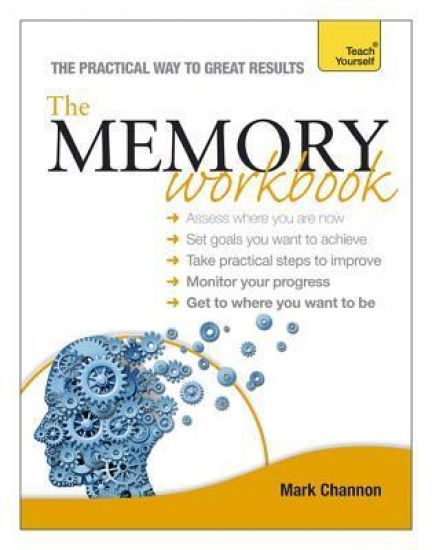
- Understand the core strategies for an effective memory and explore the real-life benefits- Make the most of your social network with an improved memory for names, faces andpersonal facts- Get smarter with numbers and increase your capacity to remember important facts and figures- Be more confident with words, grow your vocabulary and remember quotes and keytechnical terms- Improve your memory for learning a new language, music and lyrics, or dance stepsDo you want a better memory for directions, names and your shopping list? Do you wantto increase your performance at work with an improved memory for facts and figures,better organisational skills and impressive presentations? Do you want to avoidfrustration and decrease anxiety with a memory you can rely on? This new TeachYourself Workbook accompanies you every step of the way, with diagnostic tools, goalsetting charts, practical exercises, and many more features ideal for people who want a more active style of learning. Specially created exercises will boost your memory to make you sharper and smarter in all areas of life.This book includes information on: MemoryLogicNumbersCreative memorizationLanguageCareerFacts FiguresDirectionsNamesVocabulary
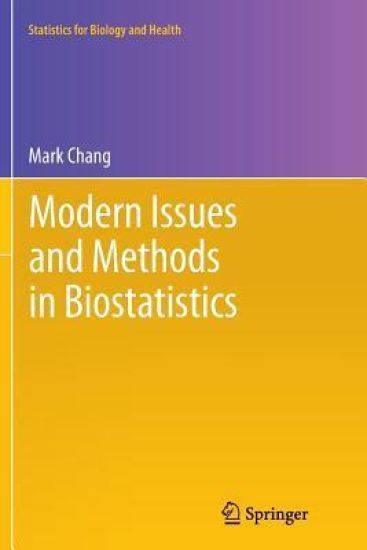
Classic biostatistics, a branch of statistical science, has as its main focus the applications of statistics in public health, the life sciences, and the pharmaceutical industry. Modern biostatistics, beyond just a simple application of statistics, is a confluence of statistics and knowledge of multiple intertwined fields. The application demands, the advancements in computer technology, and the rapid growth of life science data (e.g., genomics data) have promoted the formation of modern biostatistics. There are at least three characteristics of modern biostatistics: (1) in-depth engagement in the application fields that require penetration of knowledge across several fields, (2) high-level complexity of data because they are longitudinal, incomplete, or latent because they are heterogeneous due to a mixture of data or experiment types, because of high-dimensionality, which may make meaningful reduction impossible, or because of extremely small or large size; and (3) dynamics, the speed of development in methodology and analyses, has to match the fast growth of data with a constantly changing face. This book is written for researchers, biostatisticians/statisticians, and scientists who are interested in quantitative analyses. The goal is to introduce modern methods in biostatistics and help researchers and students quickly grasp key concepts and methods. Many methods can solve the same problem and many problems can be solved by the same method, which becomes apparent when those topics are discussed in this single volume.

Paradoxes are poems of science and philosophy that collectively allow us to address broad multidisciplinary issues within a microcosm. A true paradox is a source of creativity and a concise expression that delivers a profound idea and provokes a wild and endless imagination. The study of paradoxes leads to ultimate clarity and, at the same time, indisputably challenges your mind.Paradoxes in Scientific Inference analyzes paradoxes from many different perspectives: statistics, mathematics, philosophy, science, artificial intelligence, and more. The book elaborates on findings and reaches new and exciting conclusions. It challenges your knowledge, intuition, and conventional wisdom, compelling you to adjust your way of thinking. Ultimately, you will learn effective scientific inference through studying the paradoxes.

This new edition of a popular guide to improving your memory will help you improve your performance at work and sharpen your focus.Written by a former memory champion, Improve Your Memory: Sharpen Focus and Improve Performance shows how a radically improved memory can add real value, helping you build your career and your personal life. As well as offering practical techniques to help you remember numbers, dates and facts, it contains innovative insight into new ways of learning and processing information that could completely change your life. It includes the latest scientific perspectives on mental agility and has a motivational approach that will help you develop smart goals and achieve a more focused realization of them.

Principles of Scientific Methods focuses on the fundamental principles behind scientific methods. The book refers to "science" in a broad sense, including natural science, physics, mathematics, statistics, social science, political science, and engineering science. A principle is often abstract and has broad applicability while a method is usually concrete and specific. The author uses many concrete examples to explain principles and presents analogies to connect different methods or problems to arrive at a general principle or a common notion. He mainly discusses a particular method to address the great idea behind the method, not the method itself. The book shows how the principles are not only applicable to scientific research but also to our daily lives. The author explains how scientific methods are used for understanding how and why things happen, making predictions, and learning how to prevent mistakes and solve problems. Studying the principles of scientific methods is to think about thinking and to enlighten our understanding of scientific research.Scientific principles are the foundation of scientific methods. In this book, you’ll see how the principles reveal the big ideas behind our scientific discoveries and reflect the fundamental beliefs and wisdoms of scientists. The principles make the scientific methods coherent and constitute the source of creativity.

Adaptive Design Theory and Implementation Using SAS and R
Mark Chang
Apple Academic Press Inc.
2014
sidottu
Get Up to Speed on Many Types of Adaptive DesignsSince the publication of the first edition, there have been remarkable advances in the methodology and application of adaptive trials. Incorporating many of these new developments, Adaptive Design Theory and Implementation Using SAS and R, Second Edition offers a detailed framework to understand the use of various adaptive design methods in clinical trials. New to the Second EditionTwelve new chapters covering blinded and semi-blinded sample size reestimation design, pick-the-winners design, biomarker-informed adaptive design, Bayesian designs, adaptive multiregional trial design, SAS and R for group sequential design, and much moreMore analytical methods for K-stage adaptive designs, multiple-endpoint adaptive design, survival modeling, and adaptive treatment switchingNew material on sequential parallel designs with rerandomization and the skeleton approach in adaptive dose-escalation trialsTwenty new SAS macros and R functionsEnhanced end-of-chapter problems that give readers hands-on practice addressing issues encountered in designing real-life adaptive trialsCovering even more adaptive designs, this book provides biostatisticians, clinical scientists, and regulatory reviewers with up-to-date details on this innovative area in pharmaceutical research and development. Practitioners will be able to improve the efficiency of their trial design, thereby reducing the time and cost of drug development.

Inventory of Intertidal Habitats: Boston Harbor Islands, A National Park Area
Mark Chandler; Robert Buchsbaum; Charles Roman
Createspace Independent Publishing Platform
2013
nidottu



All the Essentials to Start Using Adaptive Designs in No TimeCompared to traditional clinical trial designs, adaptive designs often lead to increased success rates in drug development at reduced costs and time. Introductory Adaptive Trial Designs: A Practical Guide with R motivates newcomers to quickly and easily grasp the essence of adaptive designs as well as the foundations of adaptive design methods.The book reduces the mathematics to a minimum and makes the material as practical as possible. Instead of providing general, black-box commercial software packages, the author includes open-source R functions that enable readers to better understand the algorithms and customize the designs to meet their needs. Readers can run the simulations for all the examples and change the input parameters to see how each input parameter affects the simulation outcomes or design operating characteristics.Taking a learning-by-doing approach, this tutorial-style book guides readers on planning and executing various types of adaptive designs. It helps them develop the skills to begin using the designs immediately.

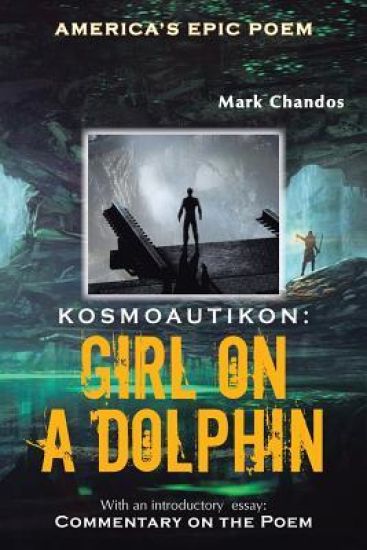
Why should you read the KOSMOAUTIKON Epic Cycle? KOSMOAUTIKON has information of the long count of the Human Condition. No other work of American literature observes the ancient origins of the human genome. No other poem projects the force of the strong poet into a Space faring civilization. KOSMOAUTIKON does not repeat any modernist clichEs. Modernism can only detect modernism. Modern literature can only regurgitate modernist linguistic codices - a fascination with disease, medical mythos, and the omnipotence of laboratory science. KOSMOAUTIKON accuses the madness of this modernist experiment. Instead, KOSMOAUTIKON detects the astral position of the human mind. A story is told that places man in a position of power in relation to the universe. Modernism treats men as irrelevant parasites. In story Theory man is the center of all things, since only the human has a terra- forming mind. KOSMOAUTIKON creates a new linguistic codex to project a new advance in the human Genome. A new linguistic structure must always prepare the way for any human advance. "I had to remove your planet - and then your bones." KOSMOAUTIKON tells the story of Rogue males. Who are our rogue males? Alexander, Christ, Cesar, Dante, Michelangelo, Leonardo Da Vinci, Caravaggio, Henry VIII, Edward De Vere (Shake-speare), Beethoven, Francis bacon, Oscar Wilde (etc.). Western civilization has been made by rogue males. No other modern text would even dare to discuss the power of the rogue male. Modernism seeks to inoculate, medicate, or incarcerate the rogue male - early. Yet there will be rogues makes again - and they will change the human genome. This is the story of KOSMOAUTIKON There is no other document that contains future speech. No Western person of the future can be educated without first reading KOSMOAUTIKON

Michael J. Knowles is the author of bestselling "Reasons to Vote for Democrats: A Comprehensive Guide". It's the most comprehensive, well researched book on Socialism and Democratic Politics.

The Bible in the Public Square
Mark Chancey; Carol Meyers; Eric Meyers
Society of Biblical Literature
2014
pokkari

The Bible in the Public Square
Mark Chancey; Carol Meyers; Eric Meyers
Society of Biblical Literature
2014
sidottu
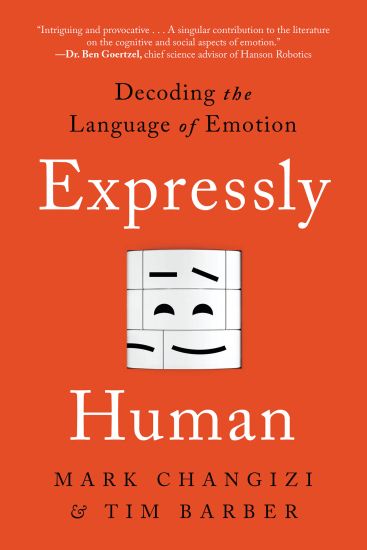
Good communication, conventional wisdom suggests, is calm, logical, rational. Emotions, we’re told, just get in the way. But what if this is backwards? What if those emotional overtones are the main messages we’re sending to one another, and all that logical language is just window dressing?Over billions of years of evolution, animals have become increasingly sophisticated and increasingly sentient. In the process, they evolved emotions, which helped improve their odds of survival in complex situations. These emotions were, at first, purely internal. But at some point, social animals began expressing their emotions, in increasingly dramatic ways. These emotional expressions could accurately reflect internal emotions (smiling to express happiness)—or they could be quite different (smiling to cover up that you’re actually furious, but can’t tell your boss that). Why did once-stone-faced animals evolve to be so emotionally expressive—to be us? The answer, as evolutionary neurobiologist Mark Changizi and mathematician Tim Barber reveal, is that emotional expressions are our first and most important language—one that allows us, as social animals, to engage in highly sophisticated communications and negotiations. Expressly Human introduces an original theory that explains, from first principles, how the broad range of emotional expressions evolved, and provides a Rosetta Stone for human communication. It will revolutionize the way you see every social interaction, from deciding who gets the last slice of pizza to multimillion-dollar business negotiations, and change your definition of what makes us human.
