Kirjojen hintavertailu. Mukana 11 244 527 kirjaa ja 12 kauppaa.

Kirjahaku

Etsi kirjoja tekijän nimen, kirjan nimen tai ISBN:n perusteella.

1000 tulosta hakusanalla Mark D. Jacobs

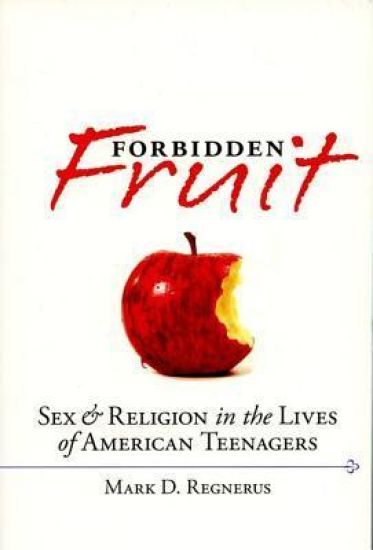
Forbidden Fruit Sex and Religion in the Lives of American Teenagers
As is evident from contemporary debates about sex education, Americans remain deeply ambivalent about teenage sexuality. While many presume that such reticence is rooted in religion, how exactly religion contributes to the formation of teenagers' sexual values and behaviors has been poorly understood before now. Does religion really motivate the sexual choices of a significant segment of adolescent society? Are abstinence pledges effective? Is there evidence for a "technical virginity" phenomenon among religious teenagers? What does it mean to be "emotionally ready" for sex? Who expresses regrets about their sexual activity and why? Tackling these and other questions, Forbidden Fruit tells the definitive story of the sexual values and practices of American teenagers, paying particular attention to how participating in organized religion shapes sexual decision-making. Merging analyses of three national surveys of teenagers with stories from interviews with over 250 of them across America, Forbidden Fruit covers a wide range of topics, including sentiment about waiting to have sex until marriage, motivation to pursue sexual relationships, proclivity for same-sex attraction and behaviors, teenagers' experience of virginity loss, and the frequency of several heterosexual practices. Forbidden Fruit reveals the complexity of teenagers' sexual decision-making, documenting that religion affects their sexual attitudes, but that it does not often motivate their decisions to act. Instead, religion often accompanies other "secular" reasons for delaying sex, like concern for safeguarding one's educational future. Forbidden Fruit describes this largely religion-less "middle class sexual morality" in detail, and concludes with a new typology for documenting how religion shapes human action among adolescents and adults. More broadly, however, Forbidden Fruit puts to rest inane fears about rampant teenage sexuality, concluding that most teenage sex is "traditional," while pointing out new evidence for disturbing trends both in particular sexual practices and how teenagers learn about human sexuality.

Intellectual Property Law of Plants

Intellectual Property Law of Plants

Mark D. Janis; Herbert H. Jervis; Richard C. Peet

Oxford University Press
2014
nidottu
Plant intellectual property law is a complex proposition which stands apart from other intellectual property endeavours, and this book seeks to elucidate on the key issues involved. This work encompasses aspects of plant innovation and related law in the US and overseas providing a global perspective. Full treatment is given to the legal and technological framework; intellectual property regimes of importance in plant breeding; formal grants of rights under plant variety protection schemes; plant and utility patent regimes and trade mark regimes. Antitrust restrictions on intellectual property licensing and international regulations on plant genetic resources are also covered in detail. All this ensures this text guarantees a comprehensive collection of all useful materials. Written by an expert team of both academics and practitioners, this book is the first to provide unique practical analysis on the creation and implementation of specialised, plant-specific intellectual property regimes.
The Russian Revolution, 1905-1921

The Russian Revolution, 1905-1921

Mark D. Steinberg

Oxford University Press
2016
sidottu
The Russian Revolution, 1905-1921 is a new history of Russia's revolutionary era as a story of experience-of people making sense of history as it unfolded in their own lives and as they took part in making history themselves. The major events, trends, and explanations, reaching from Bloody Sunday in 1905 to the final shots of the civil war in 1921, are viewed through the doubled perspective of the professional historian looking backward and the contemporary journalist reporting and interpreting history as it happened. The volume then turns toward particular places and people: city streets, peasant villages, the margins of empire (Central Asia, Ukraine, the Jewish Pale), women and men, workers and intellectuals, artists and activists, utopian visionaries, and discontents of all kinds. We spend time with the famous (Vladimir Lenin, Lev Trotsky, Alexandra Kollontai, Vladimir Mayakovsky, Isaac Babel) and with those whose names we don't even know. Key themes include difference and inequality (social, economic, gendered, ethnic), power and resistance, violence, and ideas about justice and freedom. Written especially for students and general readers, this history relies extensively on contemporary texts and voices in order to bring the past and its meanings to life. This is a history about dramatic and uncertain times and especially about the interpretations, values, emotions, desires, and disappointments that made history matter to those who lived it.
The Russian Revolution, 1905-1921

The Russian Revolution, 1905-1921

Mark D. Steinberg

Oxford University Press
2016
nidottu
The Russian Revolution, 1905-1921 is a new history of Russia's revolutionary era as a story of experience-of people making sense of history as it unfolded in their own lives and as they took part in making history themselves. The major events, trends, and explanations, reaching from Bloody Sunday in 1905 to the final shots of the civil war in 1921, are viewed through the doubled perspective of the professional historian looking backward and the contemporary journalist reporting and interpreting history as it happened. The volume then turns toward particular places and people: city streets, peasant villages, the margins of empire (Central Asia, Ukraine, the Jewish Pale), women and men, workers and intellectuals, artists and activists, utopian visionaries, and discontents of all kinds. We spend time with the famous (Vladimir Lenin, Lev Trotsky, Alexandra Kollontai, Vladimir Mayakovsky, Isaac Babel) and with those whose names we don't even know. Key themes include difference and inequality (social, economic, gendered, ethnic), power and resistance, violence, and ideas about justice and freedom. Written especially for students and general readers, this history relies extensively on contemporary texts and voices in order to bring the past and its meanings to life. This is a history about dramatic and uncertain times and especially about the interpretations, values, emotions, desires, and disappointments that made history matter to those who lived it.
The Fantasy of Reunion

The Fantasy of Reunion

Mark D. Chapman

Oxford University Press
2014
sidottu
This book discusses the different understandings of 'catholicity' that emerged in the interactions between the Church of England and other churches - particularly the Roman Catholic Church and later the Old Catholic Churches - from the early 1830s to the early 1880s. It presents a pre-history of ecumenism, which isolates some of the most distinctive features of the ecclesiological positions of the different churches as these developed through the turmoil of the nineteenth century. It explores the historical imagination of a range of churchmen and theologians, who sought to reconstruct their churches through an encounter with the past whose relevance for the construction of identity in the present went unquestioned. The past was no foreign country but instead provided solutions to the perceived dangers facing the church of the present. Key protagonists are John Henry Newman and Edward Bouverie Pusey, the leaders of the Oxford Movement, as well as a number of other less well-known figures who made their distinctive mark on the relations between the churches. The key event in reshaping the terms of the debates between the churches was the Vatican Council of 1870, which put an end to serious dialogue for a very long period, but which opened up new avenues for the Church of England and other non-Roman European churches including the Orthodox. In the end, however, ecumenism was halted in the 1880s by an increasingly complex European situation and an energetic expansion of the British Empire, which saw the rise of Pan-Anglicanism at the expense of ecumenism.
Geriatric Psychiatry

Geriatric Psychiatry

Mark D. Miller; LalithKumar K. Solai

Oxford University Press Inc
2013
nidottu
Part of the Pittsburgh Pocket Psychiatry series, this volume comprehensively and definitively addresses geriatric psychiatry, focusing on depression, dementia, anxiety as well as managing the caregivers. Additional chapters cover psychotherapy, legal issues, alcohol and drug use, and chronic pain management. Designed to be a highly practical, clinical guide for practitioners, each chapter is clearly written by one or more faculty members from Western Psychiatric Institute and Clinic, many of whom are recognized experts in their field. Self-assessment questions help the student learn the material.
Blessing Same-Sex Unions

Blessing Same-Sex Unions

Mark D. Jordan

University of Chicago Press
2013
nidottu
Why are so many churches vehemently opposed to blessing same-sex unions? In this incisive work, Mark D. Jordan shows how carefully selected ideals of Christian marriage have come to dominate recent debates over same-sex unions. Opponents of gay marriage, he reveals, too often confuse simplified ideals of matrimony with historical facts, purporting that there has been a stable Christian tradition of marriage across millennia, when the reality has been anything but. Raising trenchant questions about social obligations, impulses, intentions, and determination, Blessing Same-Sex Unions is a must-read for both sides of the ongoing American debate over gay marriage.
Blessing Same-Sex Unions

Blessing Same-Sex Unions

Mark D. Jordan

University of Chicago Press
2005
sidottu
At most church weddings, the person presiding over the ritual is not a priest or a pastor, but the wedding planner, followed by the photographer, the florist, and the caterer. And in this day and age, more wedding theology is supplied by Modern Bride magazine or reality television than by any of the Christian treatises on holy matrimony. Indeed, church weddings have strayed long and far from distinctly Christian aspirations. The costumes and gestures might still be right, but the intentions are hardly religious. Why then, asks noted gay commentator Mark D. Jordan, are so many churches vehemently opposed to blessing same-sex unions? In this incisive work, Jordan shows how carefully selected ideals of Christian marriage have come to dominate recent debates over same-sex unions. Opponents of gay marriage, he reveals, too often confuse simplified ideals of matrimony with historical facts. They suppose, for instance, that there has been a stable Christian tradition of marriage across millennia, when in reality Christians have quarreled among themselves for centuries about even the most basic elements of marital theology, authorizing experiments like polygamy and divorce. Jordan also argues that no matter what the courts do, Christian churches will have to decide for themselves whether to bless same-sex unions. No civil compromise can settle the religious questions surrounding gay marriage. And queer Christians, he contends, will have to discover for themselves what they really want out of marriage. If they are not just after legal recognition as a couple or a place at the social table, do they really seek the blessing of God? Or just the garish melodrama of a white wedding? Posing trenchant questions such as these, Blessing Same-Sex Unions will be a must-read for both sides of the debate over gay marriage in America today.
The Invention of Sodomy in Christian Theology

The Invention of Sodomy in Christian Theology

Mark D. Jordan

University of Chicago Press
1998
nidottu
This text explores the invention of sodomy in medieval Christendom, examining its conceptual foundations in theology and gauging its impact on Christian sexual ethics both then and now. It traces the historical genealogy of this enduring cultural construct through many of the idiosyncratic worldviews of the Middle Ages - worldviews at war with themselves in their attitudes toward sex, love and eroticism. Moving from poetic conceit through medieval treatise to confessor's manual and scholastic summa, the text demonstrates that the medieval notion of sodomy was fashioned out of conceptual instabilities and tensions.
The Silence of Sodom

The Silence of Sodom

Mark D. Jordan

University of Chicago Press
2000
sidottu
Sexual scandals in the Roman Catholic Church have been highly public in recent years, and increasingly shrill directives from the Vatican about homosexuality have become commonplace. The visibility of these issues begs the question of how the Catholic Church can be at once so homophobic and so homoerotic. Mark D. Jordan, the authors of the award-winning "The Invention of Sodomy in Christian Theology", takes up this fundamental question in a deeply learned yet readable study of the relationship between male homosexuality and Catholicism. "The Silence of Sodom" is devoted, first, to teasing out the Church's complex bureaucratic language about sexual morality. Rather than trying to point out that official Catholic documents are simply wrong in their discussions and directives regarding homosexuality, Jordan examines the rhetorical devices used by the Church throughout its history to actively produce silence around the topic of male homosexuality. Arguing that we cannot find the Church's knowledge of homosexuality in its documents, Jordan looks to the unspoken but widely known features of clerical culture to illuminate the striking analogies between clerical institutions and contemporary gay culture, particularly in the mechanisms of discipline, the training of seminarians and the ambiguities of liturgical celebration. The Catholic Church's long experiment with masculine desire cannot be discovered through sensationalist trials of priest-paedophiles or surveys of gay clergy. "The Silence of Sodom" looks deeply into the intertwining, in words and deeds, of Catholicism with homoeroticism; it is a profound reflection on both "being gay" and "being Catholic".
The Silence of Sodom

The Silence of Sodom

Mark D. Jordan

University of Chicago Press
2002
nidottu
Sexual scandals in the Roman Catholic Church have been highly public in recent years, and increasingly shrill directives from the Vatican about homosexuality have become commonplace. The visibility of these issues begs the question of how the Catholic Church can be at once so homophobic and so homoerotic. Mark D. Jordan, the authors of the award-winning "The Invention of Sodomy in Christian Theology", takes up this fundamental question in a deeply learned yet readable study of the relationship between male homosexuality and Catholicism. "The Silence of Sodom" is devoted, first, to teasing out the Church's complex bureaucratic language about sexual morality. Rather than trying to point out that official Catholic documents are simply wrong in their discussions and directives regarding homosexuality, Jordan examines the rhetorical devices used by the Church throughout its history to actively produce silence around the topic of male homosexuality. Arguing that we cannot find the Church's knowledge of homosexuality in its documents, Jordan looks to the unspoken but widely known features of clerical culture to illuminate the striking analogies between clerical institutions and contemporary gay culture, particularly in the mechanisms of discipline, the training of seminarians and the ambiguities of liturgical celebration. The Catholic Church's long experiment with masculine desire cannot be discovered through sensationalist trials of priest-paedophiles or surveys of gay clergy. "The Silence of Sodom" looks deeply into the intertwining, in words and deeds, of Catholicism with homoeroticism; it is a profound reflection on both "being gay" and "being Catholic".
Recruiting Young Love

Recruiting Young Love

Mark D. Jordan

University of Chicago Press
2011
sidottu
In the view of many Christians, the teenage years are simultaneously the most dangerous and the most promising. At the very moment when teens are trying to establish a sense of identity and belonging, they are beset by temptation on all sides - from the pressure of their peers to the nihilism and materialism of popular culture. Add the specter of homosexuality to the mix, and you've got a situation ripe for worry, sermonizing, and exploitation. In "Recruiting Young Love", Mark D. Jordan explores more than a half century of American church debate about homosexuality to show that even as the main lesson - homosexuality is bad, teens are vulnerable - has remained constant, the arguments and assumptions have changed remarkably. At the time of the first Kinsey Report, in 1948, homosexuality was simultaneously condemned and little discussed - a teen struggling with same-sex desire would have found little specific guidance. Sixty years later, church rhetoric has undergone a radical shift, as silence has given way to frequent, public, detailed discussion of homosexuality and its perceived dangers. Along the way, churches have quietly adopted much of the language and ideas of modern sexology, psychiatry, and social reformers-deploying it, for example, to buttress the credentials of anti-gay 'deprogramming' centers and traditional gender roles. Jordan tells this story through a wide variety of sources, including oral histories, interviews, memoirs, and even pulp novels; the result is a fascinating window onto the never-ending battle for the teenage soul.
Law in Everyday Japan

Law in Everyday Japan

Mark D. West

University of Chicago Press
2005
sidottu
Lawsuits are rare events in most people's lives. And high-stakes cases are even less commonplace. Why is it, then, that scholarship concerning the Japanese legal system has focused almost exclusively on big topics like corporate law and large-scale social issues? Mark D. West's Law in Everyday Japan fills a void in our understanding of the relationship between law and social life in Japan by shifting the focus to cases most representative of everyday Japanese life. Compiling case studies based on seven fascinating themes - karaoke-based noise complaints, sumo wrestling, love hotels, post-Kobe earthquake condominium reconstruction, lost-and-found outcomes, working hours, and debt-induced suicide - Law in Everyday Japan offers a vibrant portrait of the way law intermingles with social norms, historically ingrained ideas, and cultural mores in Japan. Each example is informed by extensive fieldwork. West interviews the participants - from judges and lawyers to defendants, plaintiffs, and their families - to uncover an everyday Japan where law matters, albeit in very unexpected ways.
Law in Everyday Japan

Law in Everyday Japan

Mark D. West

University of Chicago Press
2005
nidottu
Lawsuits are rare events in most people's lives. And high-stakes cases are even less commonplace. Why is it, then, that scholarship concerning the Japanese legal system has focused almost exclusively on big topics like corporate law and large-scale social issues? Mark D. West's Law in Everyday Japan fills a void in our understanding of the relationship between law and social life in Japan by shifting the focus to cases most representative of everyday Japanese life. Compiling case studies based on seven fascinating themes - karaoke-based noise complaints, sumo wrestling, love hotels, post-Kobe earthquake condominium reconstruction, lost-and-found outcomes, working hours, and debt-induced suicide - Law in Everyday Japan offers a vibrant portrait of the way law intermingles with social norms, historically ingrained ideas, and cultural mores in Japan. Each example is informed by extensive fieldwork. West interviews the participants - from judges and lawyers to defendants, plaintiffs, and their families - to uncover an everyday Japan where law matters, albeit in very unexpected ways.
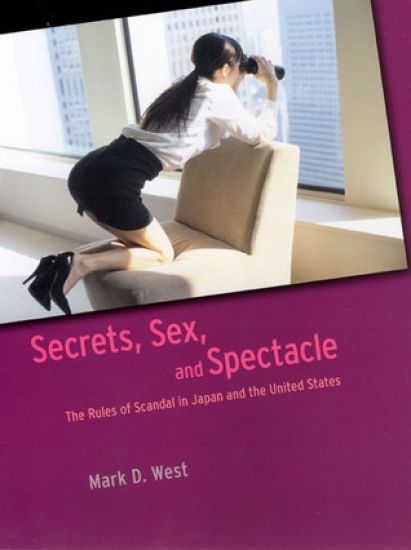
Secrets, Sex, and Spectacle

Secrets, Sex, and Spectacle

Mark D. West

University of Chicago Press
2006
sidottu
A leader of a global superpower is betrayed by his mistress, who makes public the sordid details of their secret affair. His wife stands by as he denies the charges. Debates over definitions of moral leadership ensue. Sound familiar? If you guessed Clinton and Lewinsky, try again. This incident involved former Japanese prime minister Sosuke Uno and a geisha. In Secrets, Sex, and Spectacle, Mark D. West organizes the seemingly random worlds of Japanese and American scandal—from corporate fraud to baseball cheaters, political corruption to celebrity sexcapades—to explore well-ingrained similarities and contrasts in law and society. In Japan and the United States, legal and organizational rules tell us what kind of behavior is considered scandalous. When Japanese and American scandal stories differ, those rules—rules that define what’s public and what’s private, rules that protect injuries to dignity and honor, and rules about sex, to name a few—often help explain the differences. In the cases of Clinton and Uno, the rules help explain why the media didn’t cover Uno’s affair, why Uno’s wife apologized on her husband’s behalf, and why Uno—and not Clinton—resigned. Secrets, Sex, and Spectacle offers a novel approach to viewing the phenomenon of scandal—one that will be applauded by anyone who has obsessed over (or ridiculed) these public episodes.
As it Was in the Beginning

As it Was in the Beginning

Mark D. Owens

James Clarke Co Ltd
2016
nidottu
The meaning of Paul's comments about the new creation in 2 Corinthians 5:17 and Galatians 6:15 has long been obscured. Debate has raged for years, with some arguing that the phrase "new creation" solely refers to the inward transformation believers have experienced through faith in Jesus Christ, and others that this phrase should be understood cosmologically and linked with Isaiah's "new heavens and new earth". Still more advocate an ecclesiological interpretation of this phrase that centres Paul in the new community formed around Jesus Christ. In As It Was in the Beginning, Mark Owens argues that the concept of "new creation" should be understood within the realm of Paul's anthropology, cosmology, and ecclesiology. Paul's understanding of new creation belongs within an Urzeit-Endzeit typological framework, especially within 2 Corinthians 5-6 and Ephesians 1-2. Owens's reading of "new creation" gives due weight to the use of Isaianic traditions in Paul's letters, and to demonstrate that the vision of new creation in 2 Corinthians and Galatians is in striking harmony with that of Ephesians.
Okinawan Karate (Kobudo & Te) Teachers, Styles and Secret Techniques
Time moves on, cultures change with the twists of history and secret arts are lost. To understand the essence of karate, kobudo and te is to read and digest this work. To devour the mysteries of the secret principles it records is to dwell in a former time, only then will the reader know the true meanings of what the masters passed on. This book was a classic of the 20th century and, with the passing of time, is now considered to be an historic record for the modern era; both a time capsule and an integrated tool of knowledge transmission. Also featuring contributions from the latest breed of expert researchers, this Expanded Third Edition keeps the original version alive in its entirety, while bringing the Okinawan karate world up to date, as it expands into an ever-increasing international world. Be warned though, it also answers questions that have not been asked until now and topics that could not have been discussed, while expanding on newly debatable issues. This is what the masters were really saying
Zen Bodywork Dynamics, Enigma Key to Restorative Martial Arts
Zen Bodywork Dynamics is a natural, martial-arts-based, hands-on method of helping to restore health in a holistic way. It corresponds with other martial-arts training, which it is seen as complementing - whatever the style. Thumbs, hands, elbows and feet, etc. are used to apply pressure and relieve pent-up stress in the format of: Relax, Release & Let Go. Many trainees have benefitted from its wisdom, as have thousands of members of the public - the book is highly recommended.