Kirjojen hintavertailu. Mukana 11 699 587 kirjaa ja 12 kauppaa.

Kirjahaku

Etsi kirjoja tekijän nimen, kirjan nimen tai ISBN:n perusteella.

1000 tulosta hakusanalla Mark D. Jordan

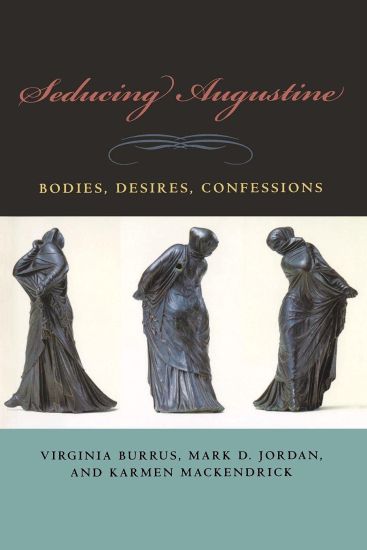
Seducing Augustine

Seducing Augustine

Virginia Burrus; Mark D. Jordan; Karmen MacKendrick

Fordham University Press
2010
sidottu
Augustine's Confessions is a text that seduces. But how often do its readers respond in kind? Here three scholars who share a longstanding fascination with sexuality and Christian discourse attempt to do just that. Where prior interpreters have been inclined either to defend or to criticize Augustine's views, Virginia Burrus, Mark Jordan, and Karmen MacKendrick set out both to seduce and to be seduced by his text. Often ambivalent but always passionately engaged, their readings of the Confessions center on four sets of intertwined themes—secrecy and confession, asceticism and eroticism, constraint and freedom, and time and eternity. Rather than expose Augustine's sexual history, they explore how the Confessions conjoins the erotic with the hidden, the imaginary, and the fictional. Rather than bemoan the repressiveness of his text, they uncover the complex relationship between seductive flesh and persuasive words that pervades all of its books. Rather than struggle to escape the control of the author, they embrace the painful pleasure of willed submission that lies at the erotic heart not only of the Confessions but also of Augustine's broader understanding of sin and salvation. Rather than mourn the fateful otherworldliness of his theological vision, they plumb the bottomless depths of beauty that Augustine discovers within creation, thereby extending desire precisely by refusing satisfaction. In unfolding their readings, the authors draw upon other works in Augustine's corpus while building on prior Augustinian scholarship in their own overlapping fields of history, theology, and philosophy. They also press well beyond the conventional boundaries of scholarly disciplines, conversing with such wide-ranging theorists of eroticism as Barthes, Baudrillard, Klossowski, Foucault, and Harpham. In the end, they offer not only a fresh interpretation of Augustine's famous work but also a multivocal literary-philosophical meditation on the seductive elusiveness of desire, bodies, language, and God.
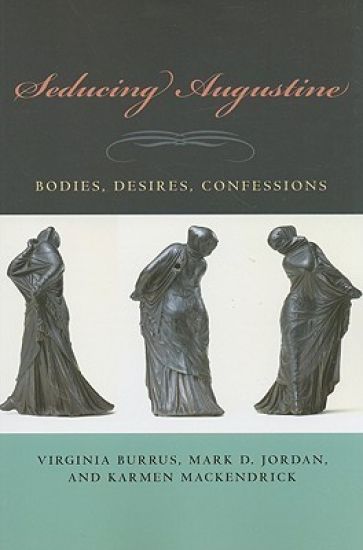
Seducing Augustine

Seducing Augustine

Virginia Burrus; Mark D. Jordan; Karmen MacKendrick

Fordham University Press
2010
pokkari
Augustine's Confessions is a text that seduces. But how often do its readers respond in kind? Here three scholars who share a longstanding fascination with sexuality and Christian discourse attempt to do just that. Where prior interpreters have been inclined either to defend or to criticize Augustine's views, Virginia Burrus, Mark Jordan, and Karmen MacKendrick set out both to seduce and to be seduced by his text. Often ambivalent but always passionately engaged, their readings of the Confessions center on four sets of intertwined themes—secrecy and confession, asceticism and eroticism, constraint and freedom, and time and eternity. Rather than expose Augustine's sexual history, they explore how the Confessions conjoins the erotic with the hidden, the imaginary, and the fictional. Rather than bemoan the repressiveness of his text, they uncover the complex relationship between seductive flesh and persuasive words that pervades all of its books. Rather than struggle to escape the control of the author, they embrace the painful pleasure of willed submission that lies at the erotic heart not only of the Confessions but also of Augustine's broader understanding of sin and salvation. Rather than mourn the fateful otherworldliness of his theological vision, they plumb the bottomless depths of beauty that Augustine discovers within creation, thereby extending desire precisely by refusing satisfaction. In unfolding their readings, the authors draw upon other works in Augustine's corpus while building on prior Augustinian scholarship in their own overlapping fields of history, theology, and philosophy. They also press well beyond the conventional boundaries of scholarly disciplines, conversing with such wide-ranging theorists of eroticism as Barthes, Baudrillard, Klossowski, Foucault, and Harpham. In the end, they offer not only a fresh interpretation of Augustine's famous work but also a multivocal literary-philosophical meditation on the seductive elusiveness of desire, bodies, language, and God.

Rudolph's Pediatrics

Rudolph's Pediatrics

Mark W. Kline; Susan M. Blaney; Angelo P. Giardino; Jordan S. Orange; Daniel J. Penny; Gordon E. Schutze; Lara S. Shekerdemian; Abraham M. Rudolph; Abraham Rudolph; Colin D. Rudolph; Colin Rudolph

McGraw-Hill Education
2018
sidottu
The landmark pediatrics reference – completely reinvented by an all-new team of editorsRudolph's Pediatrics has virtually defined the pediatric field for over a century, becoming one of the most important and well-respected pediatrics texts ever published. Renowned for its balance of clinical features and treatment of disease with underlying biological principles, this classic sourcebook has helped generations of pediatricians optimize their care of infants, children, and adolescents. The Twenty-Third Edition of Rudolph's has been completely restructured and streamlined thanks to an all new team of editors whose goal was to reinvent this classic with today’s busy practitioner in mind. Presented in full color, the Twenty-Third Edition provides an up-to-date, in-depth survey of pediatric medicine unmatched by any other text. With its algorithmic approach to pediatric systems, the book facilitates the diagnosis and treatment of both common and uncommon pediatric illnesses; and it reflects new technologies and advances in molecular medicine that continue to evolve with current thinking about normal childhood development and pediatric disease processes.• New team of editors achieves consistency in both tone and depth of content• Contributions from section editors and authors from leading academic pediatrics programs give expert coverage of general pediatrics and all of the pediatric sub-specialties• Streamlined and consistent format for most chapters outlining Pathogenesis and Epidemiology, Clinical Manifestations, Diagnosis, Treatment, and Prevention• New 2-Volume presentation improves portability• Hundreds of full-color illustrations and tables• The acclaimed balance between clinical applicability and underlying biological principles offers pediatricians a depth of coverage not found anywhere else• Brand new or significantly revised chapters include: Complementary and Integrative Pediatrics, Childhood Adversity and Toxic Stress, Autism Spectrum Disorder, Pediatric Depression and Bipolar Spectrum Disorders, Extracorporeal Membrane Oxygenation (ECMO), Palliative Care for Children with Chronic Diseases, Arboviruses (with new coverage of Zika virus and chikungunya virus), Physiologic Basis of Pulmonary Function; Acute Lymphoblastic Leukemia; Neuroblastoma “You'd be hard pressed to find a resource that matches up to the comprehensive scope of Rudolph's. It's no wonder it's a staple in most offices and hospitals.” -Doody’s Review Service
The Several Declarations, Together with the Several Depositions Made in Council on Monday Oct. 22. 1688. Concerning the Birth of the Prince of Wales. N.B. Those Mark'd with This Mark * Were Roman Catholicks
The 18th century was a wealth of knowledge, exploration and rapidly growing technology and expanding record-keeping made possible by advances in the printing press. In its determination to preserve the century of revolution, Gale initiated a revolution of its own: digitization of epic proportions to preserve these invaluable works in the largest archive of its kind. Now for the first time these high-quality digital copies of original 18th century manuscripts are available in print, making them highly accessible to libraries, undergraduate students, and independent scholars.Delve into what it was like to live during the eighteenth century by reading the first-hand accounts of everyday people, including city dwellers and farmers, businessmen and bankers, artisans and merchants, artists and their patrons, politicians and their constituents. Original texts make the American, French, and Industrial revolutions vividly contemporary.++++The below data was compiled from various identification fields in the bibliographic record of this title. This data is provided as an additional tool in helping to insure edition identification: ++++British LibraryT223115The typography definitely suggests this to be an early 18th century reprint.London: printed, and sold by the booksellers of London and Westminster, 1710?] 48p.; 8
Les Identités d’Amélie Nothomb

Les Identités d’Amélie Nothomb

Mark D. Lee

Editions Rodopi B.V.
2010
nidottu
Soupçonnée d’imposture dès sa première rentrée littéraire, accusée d’être un homme âgé publiant sous un pseudonyme invraisemblable, Amélie Nothomb est une auteure qui – plus que d’autres – a dû s’inventer. Dans Les Identités d’Amélie Nothomb, Mark D. Lee revient sur les circonstances qui ont marqué les débuts d’une carrière extraordinaire et pour la première fois, il confronte les multiples constructions médiatiques de notre ‘barge belge’ avec l’énigme de l’invention identitaire qui se déploie dans son écriture fascinante, surtout dans Métaphysique des tubes. A travers des analyses accessibles aux spécialistes comme aux amateurs, Lee trace les différentes variations d’un roman familial dans la fiction de l’auteure et il explore l’élaboration et l’échec de sa version japonaise dans ses œuvres autobiographiques. Juxtaposant interviews et récits littéraires, Lee identifie ensuite un ‘désastre onomastique’, point de départ et fondement de la quête identitaire nothombienne et explore son retour unheimliche – étrangement inquiétant – dans la représentation de la sexualité, de la nationalité, et jusque dans la scène même de l’écriture. Entre baptêmes et ‘dé-baptêmes’, entre noyades, exorcismes et fantasmes nippons, Les Identités d’Amélie Nothomb est une étude fondamentale pour ceux et celles qui veulent comprendre la question cruciale de l’identité chez cette auteure.
Drunk Japan

Drunk Japan

Mark D. West

Oxford University Press Inc
2020
sidottu
Each society that consumes alcohol has its own unique drinking culture, and each society deals with the drunken products of that culture in particular ways. As Mark D. West shows in Drunk Japan, the distinctive features of Japanese drinking culture and its intoxication-related laws are not simply interesting in and of themselves, but offer a unique window into Japanese society more broadly. Drawing upon close readings of over 5,000 published Japanese court opinions on drunkenness-related cases, he provides a rich description of Japanese alcohol consumption, drinking culture, and intoxication. West reveals that the opinions not only show patterns in what, where, and why people drink in Japan, but they also focus to a surprising extent on characteristics (including occupation, wealth, gender, and education) of individual litigants. By examining the consistencies and contradictions that emerge from the cases, West finds that, at its most extreme, the Japanese legal system is hyper-individualized. Focusing on individual people sometimes leads courts to ignore forensic evidence, to rely on post-arrest drinking tests, and to calculate prison sentences based on factors such as a mother's promise to help her adult child abstain. Cumulatively, the colorful and often tragic cases West uses not only illuminate the complexity of the culture, but they also reveal an entirely new vision of Japanese law and a comprehensive picture of alcohol use in Japanese society writ large.
Polarization and the Politics of Personal Responsibility

Polarization and the Politics of Personal Responsibility

Mark D. Brewer; Jeffrey M. Stonecash

Oxford University Press Inc
2015
sidottu
Contemporary American politics is highly polarized, and it is increasingly clear that this polarization exists at both the elite and mass levels. What is less clear is the source of this polarization. Social issues are routinely presented by some as the driver of polarization, while others point to economic inequality and class divisions. Still others single out divisions surrounding race and ethnicity, or gender, or religion as the underlying source of the deep political divide that currently exists in the United States. All of these phenomena are undoubtedly highly relevant in American politics, and it is also beyond question that they represent significant cleavages within the American polity. We argue, however, that disagreement over a much more fundamental matter lies at the foundation of the polarization that marks American politics in the early 21st century. That matter is personal responsibility. Some Americans fervently believe that an individual's lot in life is primarily if not exclusively his or her own responsibility. Opportunity is widespread in American society, and individuals succeed or fail based on their own talents and efforts. Society greatly benefits from such an arrangement, and as such government policies should support and reward individual initiative and responsibility. Other Americans see personal responsibility-while fine in theory-as an unjust organizing principle for contemporary American society. For these Americans, success or failure in life is far too often not the result of personal effort but of large forces well beyond the control of the individual. Opportunity is not widespread, and is by no means equally available to all Americans. In light of these basic facts of American life, it is the responsibility of the state to step in and implement policies that alleviate inequality and assist those who fail by no fault of their own. These basic differences surrounding the idea of personal responsibility are what separate Republicans and Democrats, conservatives and liberals, in contemporary American politics.
Polarization and the Politics of Personal Responsibility

Polarization and the Politics of Personal Responsibility

Mark D. Brewer; Jeffrey M. Stonecash

Oxford University Press Inc
2015
nidottu
Contemporary American politics is highly polarized, and it is increasingly clear that this polarization exists at both the elite and mass levels. What is less clear is the source of this polarization. Social issues are routinely presented by some as the driver of polarization, while others point to economic inequality and class divisions. Still others single out divisions surrounding race and ethnicity, or gender, or religion as the underlying source of the deep political divide that currently exists in the United States. All of these phenomena are undoubtedly highly relevant in American politics, and it is also beyond question that they represent significant cleavages within the American polity. We argue, however, that disagreement over a much more fundamental matter lies at the foundation of the polarization that marks American politics in the early 21st century. That matter is personal responsibility. Some Americans fervently believe that an individual's lot in life is primarily if not exclusively his or her own responsibility. Opportunity is widespread in American society, and individuals succeed or fail based on their own talents and efforts. Society greatly benefits from such an arrangement, and as such government policies should support and reward individual initiative and responsibility. Other Americans see personal responsibility-while fine in theory-as an unjust organizing principle for contemporary American society. For these Americans, success or failure in life is far too often not the result of personal effort but of large forces well beyond the control of the individual. Opportunity is not widespread, and is by no means equally available to all Americans. In light of these basic facts of American life, it is the responsibility of the state to step in and implement policies that alleviate inequality and assist those who fail by no fault of their own. These basic differences surrounding the idea of personal responsibility are what separate Republicans and Democrats, conservatives and liberals, in contemporary American politics.
Cheap Sex

Cheap Sex

Mark D. Regnerus

Oxford University Press Inc
2017
sidottu
Sex is cheap. Coupled sexual activity has become more widely available than ever. Cheap sex has been made possible by two technologies that have little to do with each other--the wide uptake of the Pill and high-quality pornography--and its distribution made more efficient by a third, the uptake of online dating. Together, they drive down the cost of real sex, have created a massive slow-down in the development of significant relationships, put women's fertility at risk, and have even taken a toll on men's marriageability. What the West has witnessed of late is not the social construction of sexuality or marriage or family forms toward different possibilities as a product of political will, but technology-driven social change. This revolution in sexual autonomy also ushered in an era of plastic sexuality and prompted the flourishing on non-heterosexual identities. This book takes readers on a tour inside the American mating market, and highlights key patterns that characterize young adults' experience today, including the early timing of first sex in relationships, overlapping partners, the hazards of online dating, frustrating returns on their relational investments, and a failure to link future goals like marriage with how they are conducting their current relationships. Drawing upon several large nationally-representative surveys, in-person interviews with 100 men and women, and the assertions of scholars ranging from evolutionary psychologists to gender theorists, what emerges is a story about social change, technological breakthroughs, and the unintended consequences of women's economic success. Sex and its satisfactions are becoming increasingly important in contemporary life. No longer playing a supporting role in enduring relationships, sex has emerged as a central priority in relationship development and continuation. But unravel the layers, and it is obvious that the emergence of "industrial sex" is far more a reflection of men's interests than women's.
The Evangelical Rhetoric of Ramon Llull

The Evangelical Rhetoric of Ramon Llull

Mark D. Johnston

Oxford University Press Inc
1996
sidottu
BLThe first full-length analysis of the rhetorical and preaching theories of Ramon Llull, the thirteenth century lay philosopher and theologian Johnston demonstrates how Llull adapted commonplace ideas of courtly speech and popular sermons in order to create a unitary art of secular and sacred eloquence, and shows that Llull exemplifies the development of intellectual and spiritual ideals among the growing class of educated lay people in the later Middle Ages.
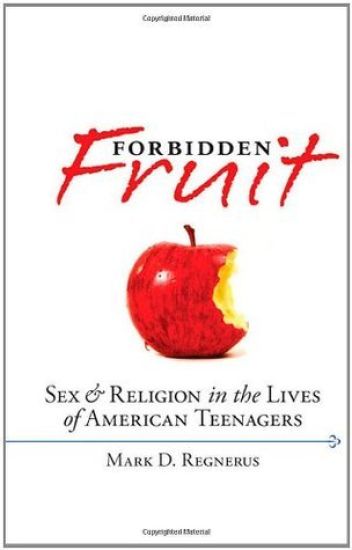
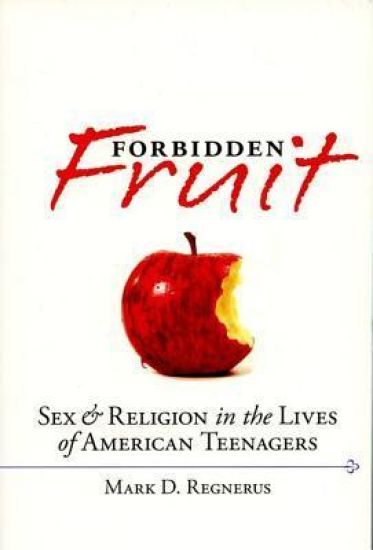
Forbidden Fruit

Forbidden Fruit

Mark D Regnerus

Oxford University Press Inc
2007
sidottu
Forbidden Fruit tells the definitive story of the sexual values and practices of American teenagers, paying particular attention to how participating in organized religion shapes sexual decision-making. Merging analyses of three national surveys with stories from interviews with over 250 teenagers across America, Forbidden Fruit covers a wide range of topics, including sentiment about waiting to have sex until marriage, motivation to pursue sexual relationships, proclivity for same-sex attraction and behaviors, teenagers experience of virginity loss, and the frequency of several heterosexual practices.
Clinician's Guide to Interpersonal Psychotherapy in Late Life

Clinician's Guide to Interpersonal Psychotherapy in Late Life

Mark D Miller

Oxford University Press Inc
2009
nidottu
This title aims to improve coping skills of older adults. It builds on traditional interpersonal psychotherapy, an evidence-based treatment that has been found useful in treating depressed elders. Cognitive impairment, a common occurrence in the older population due to disease or age-related causes of changes in brain function, calls for additional strategies to optimize functioning. IPT seeks to help older patients and their caregivers manage the effects of cognitive impairment, particularly in the early phase when behavior changes are often misunderstood, as well as to plan for potential future declines in cognitive functioning.
Forbidden Fruit Sex and Religion in the Lives of American Teenagers
As is evident from contemporary debates about sex education, Americans remain deeply ambivalent about teenage sexuality. While many presume that such reticence is rooted in religion, how exactly religion contributes to the formation of teenagers' sexual values and behaviors has been poorly understood before now. Does religion really motivate the sexual choices of a significant segment of adolescent society? Are abstinence pledges effective? Is there evidence for a "technical virginity" phenomenon among religious teenagers? What does it mean to be "emotionally ready" for sex? Who expresses regrets about their sexual activity and why? Tackling these and other questions, Forbidden Fruit tells the definitive story of the sexual values and practices of American teenagers, paying particular attention to how participating in organized religion shapes sexual decision-making. Merging analyses of three national surveys of teenagers with stories from interviews with over 250 of them across America, Forbidden Fruit covers a wide range of topics, including sentiment about waiting to have sex until marriage, motivation to pursue sexual relationships, proclivity for same-sex attraction and behaviors, teenagers' experience of virginity loss, and the frequency of several heterosexual practices. Forbidden Fruit reveals the complexity of teenagers' sexual decision-making, documenting that religion affects their sexual attitudes, but that it does not often motivate their decisions to act. Instead, religion often accompanies other "secular" reasons for delaying sex, like concern for safeguarding one's educational future. Forbidden Fruit describes this largely religion-less "middle class sexual morality" in detail, and concludes with a new typology for documenting how religion shapes human action among adolescents and adults. More broadly, however, Forbidden Fruit puts to rest inane fears about rampant teenage sexuality, concluding that most teenage sex is "traditional," while pointing out new evidence for disturbing trends both in particular sexual practices and how teenagers learn about human sexuality.
Intellectual Property Law of Plants

Intellectual Property Law of Plants

Mark D. Janis; Herbert H. Jervis; Richard C. Peet

Oxford University Press
2014
nidottu
Plant intellectual property law is a complex proposition which stands apart from other intellectual property endeavours, and this book seeks to elucidate on the key issues involved. This work encompasses aspects of plant innovation and related law in the US and overseas providing a global perspective. Full treatment is given to the legal and technological framework; intellectual property regimes of importance in plant breeding; formal grants of rights under plant variety protection schemes; plant and utility patent regimes and trade mark regimes. Antitrust restrictions on intellectual property licensing and international regulations on plant genetic resources are also covered in detail. All this ensures this text guarantees a comprehensive collection of all useful materials. Written by an expert team of both academics and practitioners, this book is the first to provide unique practical analysis on the creation and implementation of specialised, plant-specific intellectual property regimes.
The Russian Revolution, 1905-1921

The Russian Revolution, 1905-1921

Mark D. Steinberg

Oxford University Press
2016
sidottu
The Russian Revolution, 1905-1921 is a new history of Russia's revolutionary era as a story of experience-of people making sense of history as it unfolded in their own lives and as they took part in making history themselves. The major events, trends, and explanations, reaching from Bloody Sunday in 1905 to the final shots of the civil war in 1921, are viewed through the doubled perspective of the professional historian looking backward and the contemporary journalist reporting and interpreting history as it happened. The volume then turns toward particular places and people: city streets, peasant villages, the margins of empire (Central Asia, Ukraine, the Jewish Pale), women and men, workers and intellectuals, artists and activists, utopian visionaries, and discontents of all kinds. We spend time with the famous (Vladimir Lenin, Lev Trotsky, Alexandra Kollontai, Vladimir Mayakovsky, Isaac Babel) and with those whose names we don't even know. Key themes include difference and inequality (social, economic, gendered, ethnic), power and resistance, violence, and ideas about justice and freedom. Written especially for students and general readers, this history relies extensively on contemporary texts and voices in order to bring the past and its meanings to life. This is a history about dramatic and uncertain times and especially about the interpretations, values, emotions, desires, and disappointments that made history matter to those who lived it.
The Russian Revolution, 1905-1921

The Russian Revolution, 1905-1921

Mark D. Steinberg

Oxford University Press
2016
nidottu
The Russian Revolution, 1905-1921 is a new history of Russia's revolutionary era as a story of experience-of people making sense of history as it unfolded in their own lives and as they took part in making history themselves. The major events, trends, and explanations, reaching from Bloody Sunday in 1905 to the final shots of the civil war in 1921, are viewed through the doubled perspective of the professional historian looking backward and the contemporary journalist reporting and interpreting history as it happened. The volume then turns toward particular places and people: city streets, peasant villages, the margins of empire (Central Asia, Ukraine, the Jewish Pale), women and men, workers and intellectuals, artists and activists, utopian visionaries, and discontents of all kinds. We spend time with the famous (Vladimir Lenin, Lev Trotsky, Alexandra Kollontai, Vladimir Mayakovsky, Isaac Babel) and with those whose names we don't even know. Key themes include difference and inequality (social, economic, gendered, ethnic), power and resistance, violence, and ideas about justice and freedom. Written especially for students and general readers, this history relies extensively on contemporary texts and voices in order to bring the past and its meanings to life. This is a history about dramatic and uncertain times and especially about the interpretations, values, emotions, desires, and disappointments that made history matter to those who lived it.