Kirjojen hintavertailu. Mukana 11 627 461 kirjaa ja 12 kauppaa.

Kirjahaku

Etsi kirjoja tekijän nimen, kirjan nimen tai ISBN:n perusteella.

1000 tulosta hakusanalla Mark E. Johnson

Extractive Metallurgy of Copper

Extractive Metallurgy of Copper

Mark E. Schlesinger; Kathryn C. Sole; William G. Davenport

Elsevier / The Lancet
2011
sidottu
This multi-author new edition revises and updates the classic reference by William G. Davenport et al (winner of, among other awards, the 2003 AIME Mineral Industry Educator of the Year Award "for inspiring students in the pursuit of clarity"), providing fully updated coverage of the copper production process, encompassing topics as diverse as environmental technology for wind and solar energy transmission, treatment of waste by-products, and recycling of electronic scrap for potential alternative technology implementation. The authors examine industrially grounded treatments of process fundamentals and the beneficiation of raw materials, smelting and converting, hydrometallurgical processes, and refining technology for a mine-to-market perspective - from primary and secondary raw materials extraction to shipping of rod or billet to customers. The modern coverage of the work includes bath smelting processes such as Ausmelt and Isasmelt, which have become state-of-the-art in sulfide concentrate smelting and converting.
Optical Coherence Tomography

Optical Coherence Tomography

Mark E. Brezinski

Academic Press Inc
2006
sidottu
Optical Coherence Tomography gives a broad treatment of the subject which will include 1)the optics, science, and physics needed to understand the technology 2) a description of applications with a critical look at how the technology will successfully address actual clinical need, and 3) a discussion of delivery of OCT to the patient, FDA approval and comparisons with available competing technologies. The required mathematical rigor will be present where needed but be presented in such a way that it will not prevent non-scientists and non-engineers from gaining a basic understanding of OCT and the applications as well as the issues of bringing the technology to the market.
Extractive Metallurgy of Copper

Extractive Metallurgy of Copper

Mark E. Schlesinger; Kathryn C. Sole; William G. Davenport; Gerardo R.F. Alvear Flores

Elsevier Science Publishing Co Inc
2021
sidottu
Extractive Metallurgy of Copper, Sixth Edition, expands on previous editions, including sections on orogenesis and copper mineralogy and new processes for efficiently recovering copper from ever-declining Cu-grade mineral deposits. The book evaluates processes for maintaining concentrate Cu grades from lower grade ores. Sections cover the recovery of critical byproducts (e.g., cesium), worker health and safety, automation as a safety tool, and the geopolitical forces that have moved copper metal production to Asia (especially China) and new smelting and refining processes. Indigenous Asian smelting processes are evaluated, along with energy and water requirements, environmental performance, copper electrorefining processes, and sulfur dioxide capture processes (e.g., WSA). The book puts special emphasis on the benefits of recycling copper scrap in terms of energy and water requirements. Comparisons of ore-to-product and scrap-to-product carbon emissions are also made to illustrate the concepts included.
Renegade

Renegade

Mark E. Smith

Penguin Books Ltd
2009
pokkari
The only way to appreciate the legendary Mark E Smith is to encounter the man in his own words.'Ranting, raging, burning...relentlessly splenetic, a long and sustained rant... may also be the funniest music book ever written' - Observer'Unutterably funny... a riot of aimings and blamings and score-settlings. Smith manages to have a right laff, and reveal himself as a figure of dazzling sociological import' - Independent on SundayThe Fall are one of the most distinctive British bands ever, their music - odd, spare, cranky and repetitious - an acknowledged influence on The Smiths, The Happy Mondays, Nirvana and Franz Ferdinand. And Mark E. Smith IS The Fall - 66 members came and went over the years yet he remained its charismatic leader until his death in 2018.'If it's me and yer granny on bongos, it's The Fall.' - Mark E. SmithMark was a professional outsider and all-round enemy of compromise, a true enigma. There have been a number of biographies of the legendary Smith, but this is the first time he opened up in a full autobiography. For the first time we hear his full, candid take on the ups and downs of a band as notorious for its in-house fighting as for its great music; and on a life that endured prison in America, drugs, bankruptcy, divorce, and the often bleak results of a legendary thirst.'Remarkable, brilliant. A provocative joy. Smith's rant gushes like a furious fountain of razor-sharp invective over his childhood and the early days of The Fall, relationships/ marriage, the record industry/ musicians and his views on everything from football to mobile phones, from drinking and drugs to driving, from books to bankruptcy, from Paul Morley to pubs. Unbeatable' - Time Out 'Engrossing, exhausting, dense with fascinating detail. As both memoir and cultural history, Renegade is a remarkable achievement' - Daily Telegraph
Political Vices

Political Vices

Mark E. Button

Oxford University Press Inc
2016
sidottu
Historically speaking, our vices, like our virtues, have come in two basic forms: intellectual and moral. One of the main purposes of this book is to analyze a set of specifically political vices that have not been given sufficient attention within political theory but that nonetheless pose enduring challenges to the sustainability of free and equitable political relationships of various kinds. Political vices like hubris, willful blindness, and recalcitrance are persistent dispositions of character and conduct that imperil both the functioning of democratic institutions and the trust that a diverse citizenry has in the ability of those institutions to secure a just political order of equal moral standing, reciprocal freedom, and human dignity. Political vices embody a repudiation of the reciprocal conditions of politics and, as a consequence of this, they represent a standing challenge to the principles and values of the mixed political regime we call liberal-democracy. Mark Button shows how political vices not only carry out discrete forms of injustice but also facilitate the habituation in and indifference toward systemic forms of social and political injustice. They do so through excesses and deficiencies in human sensory and communicative capacities relating to voice (hubris), vision (moral blindness), and listening (recalcitrance). Drawing on a wide range of intellectual resources, including ancient Greek tragedy, social psychology, moral epistemology, and democratic theory, Political Vices gives new consideration to a list of "deadly vices" that contemporary political societies can neither ignore as a matter of personal "sin" nor publicly disregard as a matter of mere bad choice, and it provides a democratic account that outlines how citizens can best contend with our most troubling political vices without undermining core commitments to liberalism or pluralism.
Statistical Mechanics: Theory and Molecular Simulation

Statistical Mechanics: Theory and Molecular Simulation

Mark E. Tuckerman

Oxford University Press
2023
sidottu
Scientists are increasingly finding themselves engaged in research problems that cross the traditional disciplinary lines of physics, chemistry, biology, materials science, and engineering. Because of its broad scope, statistical mechanics is an essential tool for students and more experienced researchers planning to become active in such an interdisciplinary research environment. Powerful computational methods that are based in statistical mechanics allow complex systems to be studied at an unprecedented level of detail. This book synthesizes the underlying theory of statistical mechanics with the computational techniques and algorithms used to solve real-world problems and provides readers with a solid foundation in topics that reflect the modern landscape of statistical mechanics. Topics covered include detailed reviews of classical and quantum mechanics, in-depth discussions of the equilibrium ensembles and the use of molecular dynamics and Monte Carlo to sample classical and quantum ensemble distributions, Feynman path integrals, classical and quantum linear-response theory, nonequilibrium molecular dynamics, the Langevin and generalized Langevin equations, critical phenomena, techniques for free energy calculations, machine learning models, and the use of these models in statistical mechanics applications. The book is structured such that the theoretical underpinnings of each topic are covered side by side with computational methods used for practical implementation of the theoretical concepts.
The Book of Eggs: A Lifesize Guide to the Eggs of Six Hundred of the World's Bird Species
From the brilliantly green and glossy eggs of the Elegant Crested Tinamou--said to be among the most beautiful in the world--to the small brown eggs of the house sparrow that makes its nest in a lamppost and the uniformly brown or white chickens' eggs found by the dozen in any corner grocery, birds' eggs have inspired countless biologists, ecologists, and ornithologists, as well as artists, from John James Audubon to the contemporary photographer Rosamond Purcell. For scientists, these vibrant vessels are the source of an array of interesting topics, from the factors responsible for egg coloration to the curious practice of "brood parasitism," in which the eggs of cuckoos mimic those of other bird species in order to be cunningly concealed among the clutches of unsuspecting foster parents. The Book of Eggs introduces readers to eggs from six hundred species--some endangered or extinct--from around the world and housed mostly at Chicago's Field Museum of Natural History. Organized by habitat and taxonomy, the entries include newly commissioned photographs that reproduce each egg in full color and at actual size, as well as distribution maps and drawings and descriptions of the birds and their nests where the eggs are kept warm. Birds' eggs are some of the most colorful and variable natural products in the wild, and each entry is also accompanied by a brief description that includes evolutionary explanations for the wide variety of colors and patterns, from camouflage designed to protect against predation, to thermoregulatory adaptations, to adjustments for the circumstances of a particular habitat or season. Throughout the book are fascinating facts to pique the curiosity of binocular-toting birdwatchers and budding amateurs alike. Female mallards, for instance, invest more energy to produce larger eggs when faced with the genetic windfall of an attractive mate. Some seabirds, like the cliff-dwelling guillemot, have adapted to produce long, pointed eggs, whose uneven weight distribution prevents them from rolling off rocky ledges into the sea. A visually stunning and scientifically engaging guide to six hundred of the most intriguing eggs, from the pea-sized progeny of the smallest of hummingbirds to the eggs of the largest living bird, the ostrich, which can weigh up to five pounds, The Book of Eggs offers readers a rare, up-close look at these remarkable forms of animal life.
Evolutionary Restraints

Evolutionary Restraints

Mark E. Borrello

University of Chicago Press
2010
sidottu
Much of the history of the evolutionary debate since Darwin has focused on the level at which natural selection occurs. Most biologists acknowledge multiple levels of selection - from the gene, the trait, and the organism, to the family, the group, and the species. However, it is the debate about group selection that Mark E. Borrello focuses on in "Evolutionary Restraints". Tracing the history of biological attempts to determine whether selection could lead to the evolution of fitter groups, Borrello takes as his focus the British naturalist V. C. Wynne-Edwards, who proposed that animals could regulate their own population levels and thereby avoid overexploitation of their food and other resources. By the mid-twentieth century, Wynne-Edwards became the primary advocate for group selection theory and precipitated a debate that engaged the most significant evolutionary biologists, including Ernst Mayr, John Maynard Smith, G. C. Williams, and Richard Dawkins. The resultant interpretations and arguments bled out into broader conversations about population regulation, environmental crises, and the evolution of human and animal social behavior. "Evolutionary Restraints" illuminates both the process of science and the role of controversy in the process. From its origins in Darwin's own thinking, this debate, Borrello reminds us, remains relevant and alive to this day.
Evolutionary Restraints

Evolutionary Restraints

Mark E. Borrello

University of Chicago Press
2012
nidottu
Much of the evolutionary debate since Darwin has focused on the level at which natural selection occurs. Most biologists acknowledge multiple levels of selection - from the gene to the species. The debate about group selection, however, is the focus of Mark E. Borrello's "Evolutionary Restraints". Tracing the history of biological attempts to determine whether selection leads to the evolution of fitter groups, Borrello takes as his focus the British naturalist V. C. Wynne-Edwards, who proposed that animals could regulate their own populations and thus avoid overexploitation of their resources. By the mid-twentieth century, Wynne-Edwards became an advocate for group selection theory and led a debate that engaged the most significant evolutionary biologists of his time, including Ernst Mayr, G. C. Williams, and Richard Dawkins. This important dialogue bled out into broader conversations about population regulation, environmental crises, and the evolution of human social behavior. By examining a single facet of the long debate about evolution, Borrello provides powerful insight into an intellectual quandary that remains relevant and alive to this day.
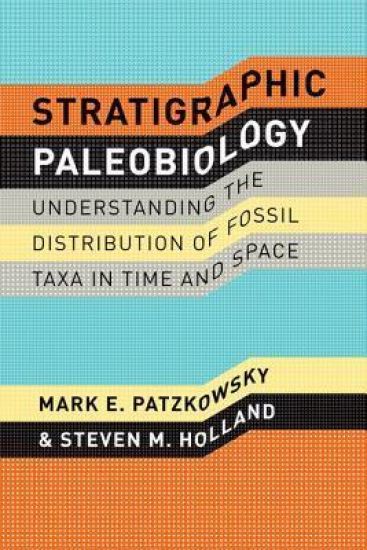
Stratigraphic Paleobiology – Understanding the Distribution of Fossil Taxa in Time and Space

Stratigraphic Paleobiology – Understanding the Distribution of Fossil Taxa in Time and Space

Mark E. Patzkowsky; Steven Holland; Steven M. Holland

University of Chicago Press
2012
sidottu
Whether the fossil record should be read at face value or whether it presents a distorted view of the history of life is an argument seemingly as old as many fossils themselves. In the late 1700s, Georges Cuvier argued for a literal interpretation, but in the early 1800s, Charles Lyell's gradualist view of the earth's history required a more nuanced interpretation of that same record. To this day, the tension between literal and interpretive readings lies at the heart of paleontological research, influencing the way scientists view extinction patterns and their causes, eco-system persistence and turnover, and the pattern of morphologic change and mode of speciation. With "Stratigraphic Paleobiology", Mark E. Patzkowsky and Steven M. Holland present a critical framework for assessing the fossil record, one based on a modern understanding of the principles of sediment accumulation. Patzkowsky and Holland argue that the distribution of fossil taxa in time and space is controlled not only by processes of ecology, evolution, and environmental change, but also by the stratigraphic processes that govern where and when sediment that might contain fossils is deposited and preserved. The authors explore the exciting possibilities of stratigraphic paleobiology, and along the way demonstrate its great potential to answer some of the most critical questions about the history of life.
Stratigraphic Paleobiology

Stratigraphic Paleobiology

Mark E. Patzkowsky; Steven Holland; Steven M. Holland

University of Chicago Press
2012
nidottu
Whether the fossil record should be read at face value or whether it presents a distorted view of the history of life is an argument seemingly as old as many fossils themselves. In the late 1700s, Georges Cuvier argued for a literal interpretation, but in the early 1800s, Charles Lyell's gradualist view of the earth's history required a more nuanced interpretation of that same record. To this day, the tension between literal and interpretive readings lies at the heart of paleontological research, influencing the way scientists view extinction patterns and their causes, eco-system persistence and turnover, and the pattern of morphologic change and mode of speciation. With "Stratigraphic Paleobiology", Mark E. Patzkowsky and Steven M. Holland present a critical framework for assessing the fossil record, one based on a modern understanding of the principles of sediment accumulation. Patzkowsky and Holland argue that the distribution of fossil taxa in time and space is controlled not only by processes of ecology, evolution, and environmental change, but also by the stratigraphic processes that govern where and when sediment that might contain fossils is deposited and preserved. The authors explore the exciting possibilities of stratigraphic paleobiology, and along the way demonstrate its great potential to answer some of the most critical questions about the history of life.
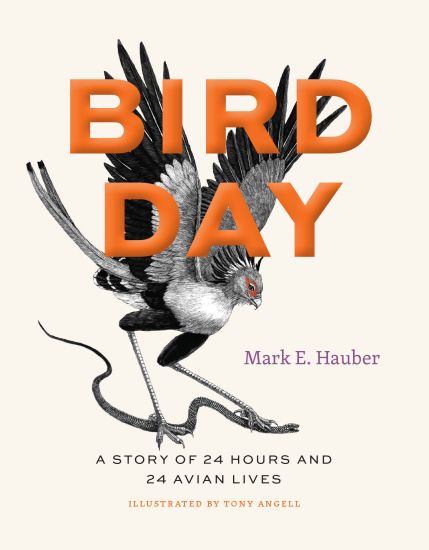
Bird Day

Bird Day

Mark E. Hauber

THE UNIVERSITY OF CHICAGO PRESS
2023
sidottu
An hourly guide that follows twenty-four birds as they find food, mates, and safety from predators. From morning to night and from the Antarctic to the equator, birds have busy days. In this short book, ornithologist Mark E. Hauber shows readers exactly how birds spend their time. Each chapter covers a single bird during a single hour, highlighting twenty-four different bird species from around the globe, from the tropics through the temperate zones to the polar regions. We encounter owls and nightjars hunting at night and kiwis and petrels finding their way in the dark. As the sun rises, we witness the beautiful songs of the “dawn chorus.” At eleven o’clock in the morning, we float alongside a common pochard, a duck resting with one eye open to avoid predators. At eight that evening, we spot a hawk swallowing bats whole, gorging on up to fifteen in rapid succession before retreating into the darkness. For each chapter, award-winning artist Tony Angell has depicted these scenes with his signature pen and ink illustrations, which grow increasingly light and then dark as our bird day passes. Working closely together to narrate and illustrate these unique moments in time, Hauber and Angell have created an engaging read that is a perfect way to spend an hour or two—and a true gift for readers, amateur scientists, and birdwatchers.
Contract, Culture, and Citizenship

Contract, Culture, and Citizenship

Mark E. Button

Pennsylvania State University Press
2008
sidottu
The idea of the social contract has typically been seen in political theory as legitimating the exercise of governmental power and creating the moral basis for political order. Mark Button wants to draw our attention to an equally crucial, but seldom emphasized, role for the social contract: its educative function in cultivating the habits and virtues that citizens need to fulfill the promises that the social contract represents. In this book, he retells the story of social contract theory as developed by some of its major proponents—Hobbes, Locke, Rousseau, and Rawls—highlighting this constructive feature of the theory in order to show that not only do citizens make the social contract, but the social contract also makes citizens. Button’s interest in recovering this theme from past political theory is not merely historical, however. He means to resurrect our concern for it so that we can better understand the political-institutional and cultural-ethical conditions necessary for balancing individual freedom and common citizenship in our modern world of moral pluralism. Drawing on the history of public reason, Button shows how political justification continues to depend upon an ethics of character formation and why this matters for citizens today.
Contract, Culture, and Citizenship

Contract, Culture, and Citizenship

Mark E. Button

Pennsylvania State University Press
2010
pokkari
In a beautifully written, persuasively argued book, Button offers a new account of the modern liberal tradition of political thought. --D. Casson, Choice. ""Button argues that 'contract makes citizens,' rather than vice versa. He provides no less than a reexamination of the major texts in social contract theory--including those of Hobbes, Locke, and Rousseau--emphasizing the importance within this tradition of a 'transformative' and deeply educative project. An excellent book: fresh, original, clearly written and cogently argued, and based on an impressively wide array of sources. This book deserves a wide readership."" --Stephen Macedo, Princeton University.The idea of the social contract has typically been seen in political theory as legitimating the exercise of governmental power and creating the moral basis for political order. Mark Button wants to draw our attention to an equally crucial, but seldom emphasized, role for the social contract: its educative function in cultivating the habits and virtues that citizens need to fulfill the promises that the social contract represents. .In this book, he retells the story of social contract theory as developed by some of its major proponents--Hobbes, Locke, Rousseau, and Rawls--highlighting this constructive feature of the theory in order to show that not only do citizens make the social contract, but the social contract also makes citizens. .Button's interest in recovering this theme from past political theory is not merely historical, however. He means to resurrect our concern for it so that we can better understand the political-institutional and cultural-ethical conditions necessary for balancing individual freedom and common citizenship in our modern world of moral pluralism. Drawing on the history of public reason, Button shows how political justification continues to depend upon an ethics of character formation and why this matters for citizens today.
Politics and Space

Politics and Space

Mark E. Byrnes

Praeger Publishers Inc
1994
sidottu
Government agencies have tended to attempt to project favorable public images of themselves as a method of building the public support they need to survive, all the more so in times of increasingly sophisticated communications and decreasingly available financial resources. This study analyzes NASA's efforts to build political support through its public image. Throughout its tumultuous history, the space agency has carefully tailored its use of basic images: nationalism (during the Mercury era), romanticism (during the Apollo era), and pragmatism (during the Shuttle era)--to fit its prevailing political circumstances. This in-depth study will be of keen interest to scholars in political science and political communication.
Japanese Assimilation Policies in Colonial Korea, 1910-1945

Japanese Assimilation Policies in Colonial Korea, 1910-1945

Mark E. Caprio

University of Washington Press
2009
sidottu
From the late nineteenth century, Japan sought to incorporate the Korean Peninsula into its expanding empire. Japan took control of Korea in 1910 and ruled it until the end of World War II. During this colonial period, Japan advertised as a national goal the assimilation of Koreans into the Japanese state. It never achieved that goal. Mark Caprio here examines why Japan's assimilation efforts failed. Utilizing government documents, personal travel accounts, diaries, newspapers, and works of fiction, he uncovers plenty of evidence for the potential for assimilation but very few practical initiatives to implement the policy.Japan's early history of colonial rule included tactics used with peoples such as the Ainu and Ryukyuan that tended more toward obliterating those cultures than to incorporating the people as equal Japanese citizens. Following the annexation of Taiwan in 1895, Japanese policymakers turned to European imperialist models, especially those of France and England, in developing strengthening its plan for assimilation policies. But, although Japanese used rhetoric that embraced assimilation, Japanese people themselves, from the top levels of government down, considered Koreans inferior and gave them few political rights. Segregation was built into everyday life. Japanese maintained separate communities in Korea, children were schooled in two separate and unequal systems, there was relatively limited intermarriage, and prejudice was ingrained. Under these circumstances, many Koreans resisted assimilation. By not actively promoting Korean-Japanese integration on the ground, Japan's rhetoric of assimilation remained just that.
Japanese Assimilation Policies in Colonial Korea, 1910-1945

Japanese Assimilation Policies in Colonial Korea, 1910-1945

Mark E. Caprio

University of Washington Press
2009
pokkari
From the late nineteenth century, Japan sought to incorporate the Korean Peninsula into its expanding empire. Japan took control of Korea in 1910 and ruled it until the end of World War II. During this colonial period, Japan advertised as a national goal the assimilation of Koreans into the Japanese state. It never achieved that goal. Mark Caprio here examines why Japan's assimilation efforts failed. Utilizing government documents, personal travel accounts, diaries, newspapers, and works of fiction, he uncovers plenty of evidence for the potential for assimilation but very few practical initiatives to implement the policy.Japan's early history of colonial rule included tactics used with peoples such as the Ainu and Ryukyuan that tended more toward obliterating those cultures than to incorporating the people as equal Japanese citizens. Following the annexation of Taiwan in 1895, Japanese policymakers turned to European imperialist models, especially those of France and England, in developing strengthening its plan for assimilation policies. But, although Japanese used rhetoric that embraced assimilation, Japanese people themselves, from the top levels of government down, considered Koreans inferior and gave them few political rights. Segregation was built into everyday life. Japanese maintained separate communities in Korea, children were schooled in two separate and unequal systems, there was relatively limited intermarriage, and prejudice was ingrained. Under these circumstances, many Koreans resisted assimilation. By not actively promoting Korean-Japanese integration on the ground, Japan's rhetoric of assimilation remained just that.
Doctrine Under Trial

Doctrine Under Trial

Mark E. Grotelueschen

Praeger Publishers Inc
2000
sidottu
Artillery proved to be the greatest killer on the Western front in World War I, and the use and misuse of artillery was certainly a determining factor in the war^D's outcome. While many books explore the artillery forces and employment of the European powers, this is the first study to examine artillery employment in the American Expeditionary Force. Grotelueschen follows one AEF division through its entire World War I experience, from preliminary training to each of its battles in France. This approach allows for great investigative depth and an opportunity to explore the implementation of doctrinal changes throughout the war. While accounts of the AEF written in the immediate aftermath of the war praised it as a great fighting machine, most scholars have concluded that the AEF was a flawed combat force. This study demonstrates that despite significant flaws and weaknesses, especially in artillery doctrine and employment, at least some AEF divisions did attain effective fighting ability. American divisions were most successful when carrying out limited, set-piece attacks, efforts that ran counter to approved US Army and AEF doctrine at the time. Historians will find this unique approach to the study of division level strengths and weaknesses to be useful in making more accurate and complete comparisons among the great armies of the Western Front.
Diagnostic Ultrasound: Vascular

Diagnostic Ultrasound: Vascular

Mark E. Lockhart

Elsevier - Health Sciences Division
2019
sidottu
Develop a solid understanding of vascular ultrasound with this practical, point-of-care reference in the popular Diagnostic Ultrasound series. Written by leading experts in the field, Diagnostic Ultrasound: Vascular offers detailed, clinically oriented coverage of ultrasound anatomy, pathology, technique, and diagnosis. This wealth of up-to-date information helps you achieve an accurate vascular ultrasound diagnosis for every patient. Ensures that you stay on top of rapidly evolving vascular ultrasound practice and its expanding applications for everyday clinical use Includes extensively illustrated coverage of sonographic anatomy that depicts pertinent vascular structures of the head and neck, chest and abdomen, and extremities Features image-rich chapters on vascular ultrasound techniques, covering grayscale, color, power, and spectral (pulsed) Doppler imaging, as well as imaging artifacts Provides detailed sonographic descriptions for the vascular diseases and anomalies encountered in clinical practice, including lesions of head and neck, chest and abdomen (including transplants), and extremities, including tips, tricks, and pitfalls Contains a gallery of typical and atypical ultrasound appearances covering a wide spectrum of disease, correlated with CT and MR imaging where appropriate, and detailed artistic renderings Discusses key vascular ultrasound intervention techniques for both diagnosis and treatment Uses a bulleted, templated format that helps you quickly find and understand complex information, as well as thousands of high-quality images and illustrations An ideal reference for radiologists, sonographers, vascular surgeons, and those who are training in these fields Expert ConsultT eBook version included with purchase, which allows you to search all of the text, figures, and references from the book on a variety of devices.
Pregnancy and Endocrine Disorders, An Issue of Endocrinology and Metabolism Clinics of North America
This issue of Endocrinology and Metabolism Clinics, Guest Edited by Dr. Mark E. Molitch, will focus on Pregnancy and Endocrine Disorders. Topics include, but are not limited to, Gestational Diabetes Mellitus, Type 1 Diabetes Mellitus, Type 2 Diabetes Mellitus, Hyperthyroidism, Hypothyroidism, Thyroid Nodules, Thyroid Cancer, Thyroiditis, Pituitary Tumors, Pheochromocytoma, Congenital adrenal hyperplasia, Adrenal Insufficiency, and Calcium/Vitamin D Disorders.