Kirjojen hintavertailu. Mukana 11 244 527 kirjaa ja 12 kauppaa.

Kirjahaku

Etsi kirjoja tekijän nimen, kirjan nimen tai ISBN:n perusteella.

1000 tulosta hakusanalla Mark E. Strong

Stratigraphic Paleobiology – Understanding the Distribution of Fossil Taxa in Time and Space

Stratigraphic Paleobiology – Understanding the Distribution of Fossil Taxa in Time and Space

Mark E. Patzkowsky; Steven Holland; Steven M. Holland

University of Chicago Press
2012
sidottu
Whether the fossil record should be read at face value or whether it presents a distorted view of the history of life is an argument seemingly as old as many fossils themselves. In the late 1700s, Georges Cuvier argued for a literal interpretation, but in the early 1800s, Charles Lyell's gradualist view of the earth's history required a more nuanced interpretation of that same record. To this day, the tension between literal and interpretive readings lies at the heart of paleontological research, influencing the way scientists view extinction patterns and their causes, eco-system persistence and turnover, and the pattern of morphologic change and mode of speciation. With "Stratigraphic Paleobiology", Mark E. Patzkowsky and Steven M. Holland present a critical framework for assessing the fossil record, one based on a modern understanding of the principles of sediment accumulation. Patzkowsky and Holland argue that the distribution of fossil taxa in time and space is controlled not only by processes of ecology, evolution, and environmental change, but also by the stratigraphic processes that govern where and when sediment that might contain fossils is deposited and preserved. The authors explore the exciting possibilities of stratigraphic paleobiology, and along the way demonstrate its great potential to answer some of the most critical questions about the history of life.
Stratigraphic Paleobiology

Stratigraphic Paleobiology

Mark E. Patzkowsky; Steven Holland; Steven M. Holland

University of Chicago Press
2012
nidottu
Whether the fossil record should be read at face value or whether it presents a distorted view of the history of life is an argument seemingly as old as many fossils themselves. In the late 1700s, Georges Cuvier argued for a literal interpretation, but in the early 1800s, Charles Lyell's gradualist view of the earth's history required a more nuanced interpretation of that same record. To this day, the tension between literal and interpretive readings lies at the heart of paleontological research, influencing the way scientists view extinction patterns and their causes, eco-system persistence and turnover, and the pattern of morphologic change and mode of speciation. With "Stratigraphic Paleobiology", Mark E. Patzkowsky and Steven M. Holland present a critical framework for assessing the fossil record, one based on a modern understanding of the principles of sediment accumulation. Patzkowsky and Holland argue that the distribution of fossil taxa in time and space is controlled not only by processes of ecology, evolution, and environmental change, but also by the stratigraphic processes that govern where and when sediment that might contain fossils is deposited and preserved. The authors explore the exciting possibilities of stratigraphic paleobiology, and along the way demonstrate its great potential to answer some of the most critical questions about the history of life.

Bird Day

Bird Day

Mark E. Hauber

THE UNIVERSITY OF CHICAGO PRESS
2023
sidottu
An hourly guide that follows twenty-four birds as they find food, mates, and safety from predators. From morning to night and from the Antarctic to the equator, birds have busy days. In this short book, ornithologist Mark E. Hauber shows readers exactly how birds spend their time. Each chapter covers a single bird during a single hour, highlighting twenty-four different bird species from around the globe, from the tropics through the temperate zones to the polar regions. We encounter owls and nightjars hunting at night and kiwis and petrels finding their way in the dark. As the sun rises, we witness the beautiful songs of the “dawn chorus.” At eleven o’clock in the morning, we float alongside a common pochard, a duck resting with one eye open to avoid predators. At eight that evening, we spot a hawk swallowing bats whole, gorging on up to fifteen in rapid succession before retreating into the darkness. For each chapter, award-winning artist Tony Angell has depicted these scenes with his signature pen and ink illustrations, which grow increasingly light and then dark as our bird day passes. Working closely together to narrate and illustrate these unique moments in time, Hauber and Angell have created an engaging read that is a perfect way to spend an hour or two—and a true gift for readers, amateur scientists, and birdwatchers.
Contract, Culture, and Citizenship

Contract, Culture, and Citizenship

Mark E. Button

Pennsylvania State University Press
2008
sidottu
The idea of the social contract has typically been seen in political theory as legitimating the exercise of governmental power and creating the moral basis for political order. Mark Button wants to draw our attention to an equally crucial, but seldom emphasized, role for the social contract: its educative function in cultivating the habits and virtues that citizens need to fulfill the promises that the social contract represents. In this book, he retells the story of social contract theory as developed by some of its major proponents—Hobbes, Locke, Rousseau, and Rawls—highlighting this constructive feature of the theory in order to show that not only do citizens make the social contract, but the social contract also makes citizens. Button’s interest in recovering this theme from past political theory is not merely historical, however. He means to resurrect our concern for it so that we can better understand the political-institutional and cultural-ethical conditions necessary for balancing individual freedom and common citizenship in our modern world of moral pluralism. Drawing on the history of public reason, Button shows how political justification continues to depend upon an ethics of character formation and why this matters for citizens today.
Contract, Culture, and Citizenship

Contract, Culture, and Citizenship

Mark E. Button

Pennsylvania State University Press
2010
pokkari
In a beautifully written, persuasively argued book, Button offers a new account of the modern liberal tradition of political thought. --D. Casson, Choice. ""Button argues that 'contract makes citizens,' rather than vice versa. He provides no less than a reexamination of the major texts in social contract theory--including those of Hobbes, Locke, and Rousseau--emphasizing the importance within this tradition of a 'transformative' and deeply educative project. An excellent book: fresh, original, clearly written and cogently argued, and based on an impressively wide array of sources. This book deserves a wide readership."" --Stephen Macedo, Princeton University.The idea of the social contract has typically been seen in political theory as legitimating the exercise of governmental power and creating the moral basis for political order. Mark Button wants to draw our attention to an equally crucial, but seldom emphasized, role for the social contract: its educative function in cultivating the habits and virtues that citizens need to fulfill the promises that the social contract represents. .In this book, he retells the story of social contract theory as developed by some of its major proponents--Hobbes, Locke, Rousseau, and Rawls--highlighting this constructive feature of the theory in order to show that not only do citizens make the social contract, but the social contract also makes citizens. .Button's interest in recovering this theme from past political theory is not merely historical, however. He means to resurrect our concern for it so that we can better understand the political-institutional and cultural-ethical conditions necessary for balancing individual freedom and common citizenship in our modern world of moral pluralism. Drawing on the history of public reason, Button shows how political justification continues to depend upon an ethics of character formation and why this matters for citizens today.
Politics and Space

Politics and Space

Mark E. Byrnes

Praeger Publishers Inc
1994
sidottu
Government agencies have tended to attempt to project favorable public images of themselves as a method of building the public support they need to survive, all the more so in times of increasingly sophisticated communications and decreasingly available financial resources. This study analyzes NASA's efforts to build political support through its public image. Throughout its tumultuous history, the space agency has carefully tailored its use of basic images: nationalism (during the Mercury era), romanticism (during the Apollo era), and pragmatism (during the Shuttle era)--to fit its prevailing political circumstances. This in-depth study will be of keen interest to scholars in political science and political communication.
Japanese Assimilation Policies in Colonial Korea, 1910-1945

Japanese Assimilation Policies in Colonial Korea, 1910-1945

Mark E. Caprio

University of Washington Press
2009
sidottu
From the late nineteenth century, Japan sought to incorporate the Korean Peninsula into its expanding empire. Japan took control of Korea in 1910 and ruled it until the end of World War II. During this colonial period, Japan advertised as a national goal the assimilation of Koreans into the Japanese state. It never achieved that goal. Mark Caprio here examines why Japan's assimilation efforts failed. Utilizing government documents, personal travel accounts, diaries, newspapers, and works of fiction, he uncovers plenty of evidence for the potential for assimilation but very few practical initiatives to implement the policy.Japan's early history of colonial rule included tactics used with peoples such as the Ainu and Ryukyuan that tended more toward obliterating those cultures than to incorporating the people as equal Japanese citizens. Following the annexation of Taiwan in 1895, Japanese policymakers turned to European imperialist models, especially those of France and England, in developing strengthening its plan for assimilation policies. But, although Japanese used rhetoric that embraced assimilation, Japanese people themselves, from the top levels of government down, considered Koreans inferior and gave them few political rights. Segregation was built into everyday life. Japanese maintained separate communities in Korea, children were schooled in two separate and unequal systems, there was relatively limited intermarriage, and prejudice was ingrained. Under these circumstances, many Koreans resisted assimilation. By not actively promoting Korean-Japanese integration on the ground, Japan's rhetoric of assimilation remained just that.
Japanese Assimilation Policies in Colonial Korea, 1910-1945

Japanese Assimilation Policies in Colonial Korea, 1910-1945

Mark E. Caprio

University of Washington Press
2009
pokkari
From the late nineteenth century, Japan sought to incorporate the Korean Peninsula into its expanding empire. Japan took control of Korea in 1910 and ruled it until the end of World War II. During this colonial period, Japan advertised as a national goal the assimilation of Koreans into the Japanese state. It never achieved that goal. Mark Caprio here examines why Japan's assimilation efforts failed. Utilizing government documents, personal travel accounts, diaries, newspapers, and works of fiction, he uncovers plenty of evidence for the potential for assimilation but very few practical initiatives to implement the policy.Japan's early history of colonial rule included tactics used with peoples such as the Ainu and Ryukyuan that tended more toward obliterating those cultures than to incorporating the people as equal Japanese citizens. Following the annexation of Taiwan in 1895, Japanese policymakers turned to European imperialist models, especially those of France and England, in developing strengthening its plan for assimilation policies. But, although Japanese used rhetoric that embraced assimilation, Japanese people themselves, from the top levels of government down, considered Koreans inferior and gave them few political rights. Segregation was built into everyday life. Japanese maintained separate communities in Korea, children were schooled in two separate and unequal systems, there was relatively limited intermarriage, and prejudice was ingrained. Under these circumstances, many Koreans resisted assimilation. By not actively promoting Korean-Japanese integration on the ground, Japan's rhetoric of assimilation remained just that.
Doctrine Under Trial

Doctrine Under Trial

Mark E. Grotelueschen

Praeger Publishers Inc
2000
sidottu
Artillery proved to be the greatest killer on the Western front in World War I, and the use and misuse of artillery was certainly a determining factor in the war^D's outcome. While many books explore the artillery forces and employment of the European powers, this is the first study to examine artillery employment in the American Expeditionary Force. Grotelueschen follows one AEF division through its entire World War I experience, from preliminary training to each of its battles in France. This approach allows for great investigative depth and an opportunity to explore the implementation of doctrinal changes throughout the war. While accounts of the AEF written in the immediate aftermath of the war praised it as a great fighting machine, most scholars have concluded that the AEF was a flawed combat force. This study demonstrates that despite significant flaws and weaknesses, especially in artillery doctrine and employment, at least some AEF divisions did attain effective fighting ability. American divisions were most successful when carrying out limited, set-piece attacks, efforts that ran counter to approved US Army and AEF doctrine at the time. Historians will find this unique approach to the study of division level strengths and weaknesses to be useful in making more accurate and complete comparisons among the great armies of the Western Front.
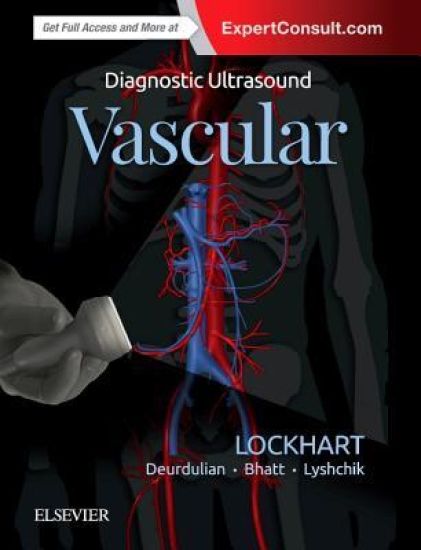
Diagnostic Ultrasound: Vascular

Diagnostic Ultrasound: Vascular

Mark E. Lockhart

Elsevier - Health Sciences Division
2019
sidottu
Develop a solid understanding of vascular ultrasound with this practical, point-of-care reference in the popular Diagnostic Ultrasound series. Written by leading experts in the field, Diagnostic Ultrasound: Vascular offers detailed, clinically oriented coverage of ultrasound anatomy, pathology, technique, and diagnosis. This wealth of up-to-date information helps you achieve an accurate vascular ultrasound diagnosis for every patient. Ensures that you stay on top of rapidly evolving vascular ultrasound practice and its expanding applications for everyday clinical use Includes extensively illustrated coverage of sonographic anatomy that depicts pertinent vascular structures of the head and neck, chest and abdomen, and extremities Features image-rich chapters on vascular ultrasound techniques, covering grayscale, color, power, and spectral (pulsed) Doppler imaging, as well as imaging artifacts Provides detailed sonographic descriptions for the vascular diseases and anomalies encountered in clinical practice, including lesions of head and neck, chest and abdomen (including transplants), and extremities, including tips, tricks, and pitfalls Contains a gallery of typical and atypical ultrasound appearances covering a wide spectrum of disease, correlated with CT and MR imaging where appropriate, and detailed artistic renderings Discusses key vascular ultrasound intervention techniques for both diagnosis and treatment Uses a bulleted, templated format that helps you quickly find and understand complex information, as well as thousands of high-quality images and illustrations An ideal reference for radiologists, sonographers, vascular surgeons, and those who are training in these fields Expert ConsultT eBook version included with purchase, which allows you to search all of the text, figures, and references from the book on a variety of devices.
Pregnancy and Endocrine Disorders, An Issue of Endocrinology and Metabolism Clinics of North America
This issue of Endocrinology and Metabolism Clinics, Guest Edited by Dr. Mark E. Molitch, will focus on Pregnancy and Endocrine Disorders. Topics include, but are not limited to, Gestational Diabetes Mellitus, Type 1 Diabetes Mellitus, Type 2 Diabetes Mellitus, Hyperthyroidism, Hypothyroidism, Thyroid Nodules, Thyroid Cancer, Thyroiditis, Pituitary Tumors, Pheochromocytoma, Congenital adrenal hyperplasia, Adrenal Insufficiency, and Calcium/Vitamin D Disorders.
Structural Analysis of Polymeric Composite Materials
Structural Analysis of Polymeric Composite Materials, Second Edition introduces the mechanics of composite materials and structures and combines classical lamination theory with macromechanical failure principles for prediction and optimization of composite structural performance. It addresses topics such as high-strength fibers, manufacturing techniques, commercially available compounds, and the behavior of anisotropic, orthotropic, and transversely isotropic materials and structures subjected to complex loading. Emphasizing the macromechanical (structural) level over micromechanical issues and analyses, this unique book integrates effects of environment at the outset to establish a coherent and updated knowledge base. In addition, each chapter includes example problems to illustrate the concepts presented.
Sampling and Surveying Radiological Environments
Private landowners or Federal Agencies responsible for cleaning up radiological environments are faced with the challenge of clearly defining the nature and extent of radiological contamination, implementing remedial alternatives, then statistically verifying that cleanup objectives have been met. Sampling and Surveying Radiological Environments provides the how-tos for designing and implementing cost effective and defensible sampling programs in radiological environments, such as those found in the vicinity of uranium mine sites, nuclear weapons production facilities, nuclear reactors, radioactive waste storage and disposal facilities, and nuclear accidents. It includes downloadable resources that walk you through the EPA's Data Quality Objectives(DQO) procedures and provides electronic templates you can complete and print. Sampling and Surveying Radiological Environments addresses all of the major topics that will assist you in designing and implementing statistically defensible sampling programs in radiological environments, including: Summary of the major environmental laws and regulations that apply to radiological sites, and advice on regulatory interfacing· Internet addresses where you can find regulations pertaining to each States Theory of radiation detection and definitions of common radiological terminology Statistics and statistical software that apply to the environmental industry Details on commercially available radiological instrumentation and detection systems Building decontamination and decommissioning, radiological and chemical equipment decontamination procedures, and tank/drum/remote characterization Standard operating procedures for collecting environmental media samples Guidance on sample preparation, documentation, and shipment Guidance on data verification/validation, radiological data management, data quality assessment (DQA)
Nietzsche’s Philosophy of Education

Nietzsche’s Philosophy of Education

Mark E. Jonas; Douglas W. Yacek

Routledge
2020
nidottu
Nietzsche’s Philosophy of Education makes the case that Nietzsche’s ?philosophy has ?significant import for the theory and contemporary practice of education, arguing that ?some of ?Nietzsche?'s most important ?ideas ?have been misunderstood by ?previous ?interpreters. ?In ?providing novel reinterpretations of ?Nietzsche's ?ethical theory, political? philosophy? and philosophical anthropology ?and outlining concrete ways in which ?these ideas can enrich teaching and learning in modern democratic schools, the book sets itself apart? from previous works on Nietzsche?. This is one of the first ?extended engagements with Nietzsche’s philosophy ?which attempts to determine his true legacy for democratic education.?In its engagement with both the vast secondary literature on Nietzsche's philosophy and the educational implications of his philosophical vision, this book makes a unique contribution to both the philosophy of education and Nietzsche scholarship. In addition, its ?development of four concrete pedagogi?cal approaches from Nietzsche's educational ideas ?makes the book a potentially helpful guide to meeting the practical challenges of ?contemporary teaching.This book will be of great interest to Nietzsche scholars, researchers in the philosophy of education and ??students studying educational foundations.
History and Leadership

History and Leadership

Mark E. Blincoe; John R. Shoup

TAYLOR FRANCIS LTD
2022
sidottu
Leaders and managers are rightly tasked to take their organizations and communities to a desired future. They are expected to be forward looking with compelling vision statements. As a result, they are often too busy in the present managing the future to be bothered with the past. Yet it is organizational histories that provide the contexts and clues for the future. History and Leadership: The Nature and Role of the Past in Navigating the Future demonstrates that intentional historical perspective-taking provides a sort-of wisdom for doing business in the present and future and equips leaders to leverage the past to help their organizations thrive.This book appeals to several audiences. It will serve as a supplementary text for undergraduate and graduate students in both the humanities and leadership studies. The book also appeals to practicing leaders and managers who wish to develop their emotional, cultural, and social intelligence by exploring perennial issues and lessons found in well-developed histories. This book also serves as a stand-alone read for a range of professionals who want a more recreational and non-traditional read on history and leadership. The book cultivates an appreciation for history and equips readers to be connoisseurs of history for the betterment of themselves and society.
History and Leadership

History and Leadership

Mark E. Blincoe; John R. Shoup

TAYLOR FRANCIS LTD
2024
nidottu
Leaders and managers are rightly tasked to take their organizations and communities to a desired future. They are expected to be forward looking with compelling vision statements. As a result, they are often too busy in the present managing the future to be bothered with the past. Yet it is organizational histories that provide the contexts and clues for the future. History and Leadership: The Nature and Role of the Past in Navigating the Future demonstrates that intentional historical perspective-taking provides a sort-of wisdom for doing business in the present and future and equips leaders to leverage the past to help their organizations thrive.This book appeals to several audiences. It will serve as a supplementary text for undergraduate and graduate students in both the humanities and leadership studies. The book also appeals to practicing leaders and managers who wish to develop their emotional, cultural, and social intelligence by exploring perennial issues and lessons found in well-developed histories. This book also serves as a stand-alone read for a range of professionals who want a more recreational and non-traditional read on history and leadership. The book cultivates an appreciation for history and equips readers to be connoisseurs of history for the betterment of themselves and society.
Biotreatment of Agricultural Wastewater
Biotreatment of Agricultural Wastewater is based on a symposium held in Lake Arrowhead, California in 1986, supported by a coalition of federal, state, and local agencies, and sponsored by the engineering firm of Swanson/Oswald Associates (Lafayette, California) and the research and development firms of Aquasearch, Inc. and EcoTechnology Corp. (La Jolla, California). This book is a synopsis of topics covered by world renowned experts on the biology and aquaculture of algae and bacteria and on the engineering of industrial scale systems for biological wastewater treatment and economists that were gathered to evaluate historically proven systems and develop new and innovative approaches to the biological treatment of agriculture wastewater.
Diagnostic Ultrasound: Vascular

Diagnostic Ultrasound: Vascular

Mark E. Lockhart

Elsevier Health Sciences
2024
sidottu
Develop a solid understanding of ultrasound and evolving vascular ultrasound practices with this practical, point-of-care reference in the popular Diagnostic Ultrasound series. Written by leading experts in the field, the second edition of Diagnostic Ultrasound: Vascular offers detailed, clinically oriented coverage of anatomy, techniques, and diagnoses in this complex area. Featuring more than 1,750 images and full-color illustrations throughout, this edition showcases vascular ultrasound techniques across 4 different types of ultrasound, including details regarding imaging artifacts. Diagnostic pearls and pitfalls accompany the detailed sonographic descriptions of vascular disease and anomalies regularly encountered in the head and neck, chest and abdomen (including transplants), and extremities. Provides a wide range of anatomic detail, technical factors, and diagnostic criteria to guide accurate application of ultrasound throughout the body Covers new and evolving techniques such as the increasing use of microbubble imaging to enhance image resolution, distinguish vessels more clearly, and minimize noise and background signals Details the latest information across several ACR RADS criteria, and contains extensive new material from the LI-RADS, GB-RADS, and transplant criteria, which now include Doppler ultrasound with its noninvasive methodology rated highly for appropriate use Reflects an increased use of Doppler extremity evaluations due to ongoing COVID-19 diagnoses and a higher incidence of venous thrombosis Contains updated ACR Appropriateness Criteria regarding the new “highly appropriate” ratings, as well as new Intersocietal Accreditation Commission (IAC) recommendations in numerous diagnosis chapters Contains a gallery of typical and atypical ultrasound appearances covering a wide spectrum of disease, correlated with CT and MR imaging where appropriate, and detailed artistic renderings Features image-rich chapters on vascular ultrasound techniques, covering grayscale, color, power, and spectral (pulsed) Doppler imaging, as well as imaging artifacts Contains time-saving reference features such as succinct and bulleted text, a variety of test data tables, a Key Facts section that begins in each chapter, annotated images, and an extensive index An ideal reference for radiologists, sonographers, vascular surgeons, and those who are training in these fields Includes an eBook version that enables you to access all text, figures, and references, with the ability to search, customize your content, make notes and highlights, and have content read aloud
Robot Evolution

Robot Evolution

Mark E. Rosheim

John Wiley Sons Inc
1994
nidottu
Lavishly Illustrated, Comprehensive, Detailed, and Reader-Friendly—This is the Ultimate Robot Book! From newly discovered designs of Leonardo da Vinci to the pioneering nineteenth-century work of Nikola Tesla, and on to burgeoning anthropomorphic robots, "anthrobots," that are dextrous, communicative, and autonomous, Robot Evolution covers the length and ever-widening breadth of this new robotics field. Acknowledged robotics expert Mark Rosheim offers at once a fascinating look at more than 2,000 years of robot history, as well as a technical guide to their development, design, and component parts. This book explores the evolution and increasing complexity of robot designs and points out the advantages and disadvantages of various design approaches for robot arms, hands, wrists, and legs. By analyzing the kinematics of robot components in comparison to human limbs, Robot Evolution also introduces a powerful new design tool to measure and evaluate past, present, and new designs. This book features:*Robot survey from ancient Greece to the nineteenth century*Analysis of modern robots from 1950 to the present*Comparative anatomy of human and robot joints*Chapter-by-chapter analysis of robot arms, wrists, hands, and legs*Evolution of sensors and artificial intelligence*Development of mechanical men from man-amplifiers to amazing anthropomorphic robots—anthrobots!