Kirjahaku
Etsi kirjoja tekijän nimen, kirjan nimen tai ISBN:n perusteella.
1000 tulosta hakusanalla Mark Robertson
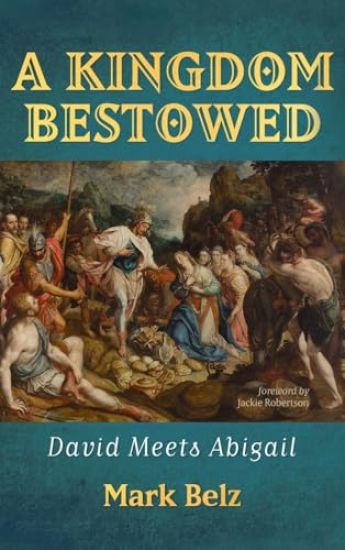
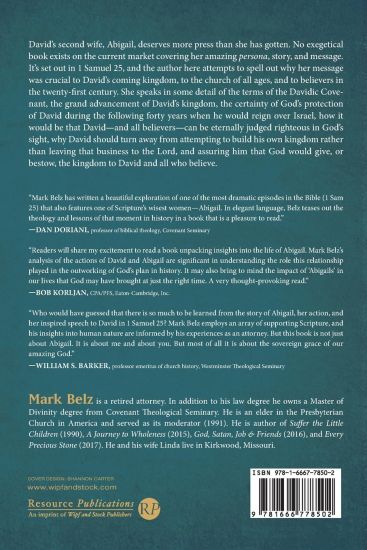
David's second wife, Abigail, deserves more press than she has gotten. No exegetical book exists on the current market covering her amazing persona, story, and message. It's set out in 1 Samuel 25, and the author here attempts to spell out why her message was crucial to David's coming kingdom, to the church of all ages, and to believers in the twenty-first century. She speaks in some detail of the terms of the Davidic Covenant, the grand advancement of David's kingdom, the certainty of God's protection of David during the following forty years when he would reign over Israel, how it would be that David--and all believers--can be eternally judged righteous in God's sight, why David should turn away from attempting to build his own kingdom rather than leaving that business to the Lord, and assuring him that God would give, or bestow, the kingdom to David and all who believe.
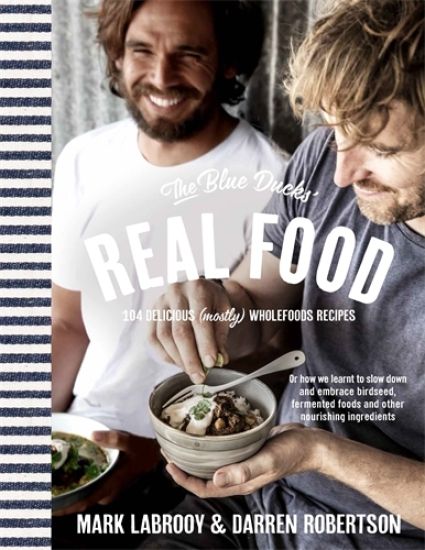
Professional chefs, wannabe farmers and flavour seekers, Darren Roberston and Mark LaBrooy are passionate about growing, sourcing and making their own food. In this quirky and fresh take on cooking with wholefoods, Mark and Darren share more than 80 delicious recipes, based around whole grains, free-range meat, sustainable seafood, fresh vegetables and fruit, and nuts and seeds. All of their dishes are bursting with flavour, colour and goodness. The book also features a series of how-to sections, showing you how easy it is to create your own basics from scratch. Learn how to make yoghurt, flavoured vinegars and salts, smoked salmon, beef jerky and fermented veggies such as sauerkraut and kimchi. There's a comprehensive user's guide to grains, nuts and seeds, as well as sections on cooking with spices (you can't beat a good curry night!), using secondary cuts of meat in your recipes, simple ways to cook whole fish, preserving foods, cold-pressed juices etc.
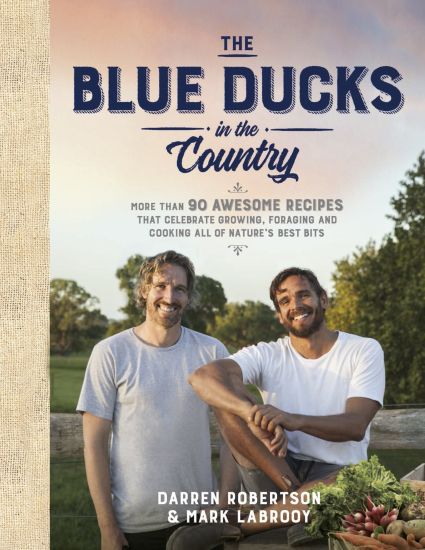
The ducks have spread their wings. After the incredible success of their Bronte cafe, Mark LaBrooy, Darren Robertson and the the rest of the Blue Ducks upped sticks and opened a new restaurant and produce store at The Farm in Byron Bay. Here, they have nurtured and built upon their garden-to-plate ethos to create real food that is locally sourced, reared humanely and supportive of the local community. At The Farm, the Ducks' love for sustainable food is taken to the next level as they cook with the produce that is literally on their doorstep, creating new and exciting dishes while learning the ropes of farm life. This book is the sum of their adventures. It is filled with the very best recipes that celebrate their love for good food: from simple salads and veggie dishes with bold flavours, to the ultimate barbecue recipes that will have you building your own fire in no time. There are recipes for foraged foods that showcase the true bounty that the Australian land and coast have to offer, while the Ducklings chapter will keep the little ones quiet, even if just for a while. Those with a sweet tooth can indulge in the Ducks' finest cakes and desserts from their sweets cabinet, and you can toast the success of your new culinary creations with some of the most inventive cocktails around. The Blue Ducks in the Country is accessible, creative and truly makes the very best of the produce available to us.
The first book to examine the role of Canada's newspapers in perpetuating the myth of Native inferiority. Seeing Red is a groundbreaking study of how Canadian English-language newspapers have portrayed Aboriginal peoples from 1869 to the present day. It assesses a wide range of publications on topics that include the sale of Rupert's Land, the signing of Treaty 3, the North-West Rebellion and Louis Riel, the death of Pauline Johnson, the outing of Grey Owl, the discussions surrounding Bill C-31, the “Bended Elbow” standoff at Kenora, Ontario, and the Oka Crisis.The authors uncover overwhelming evidence that the colonial imaginary not only thrives, but dominates depictions of Aboriginal peoples in mainstream newspapers. The colonial constructs ingrained in the news media perpetuate an imagined Native inferiority that contributes significantly to the marginalization of Indigenous people in Canada. That such imagery persists to this day suggests strongly that our country lives in denial, failing to live up to its cultural mosaic boosterism.
Carl Jung coined the term "synchronicity" to describe meaningful coincidences that conventional notions of time and causality cannot explain. Working with the great quantum physicist Wolfgang Pauli, Jung sought to reveal these coincidences as phenomena that involve mind and matter, science and spirit, thus providing rational explanations for parapsychological events like telepathy, precognition, and intuition. Synchronicity examines the work of Jung and Pauli, as well as noted scientists Werner Heisenberg and David Bohm identifies the phenomena in ancient and modern mythologies, particularly the Greek legend of Hermes the Trickster and illustrates it with engaging anecdotes from everyday life and literature.
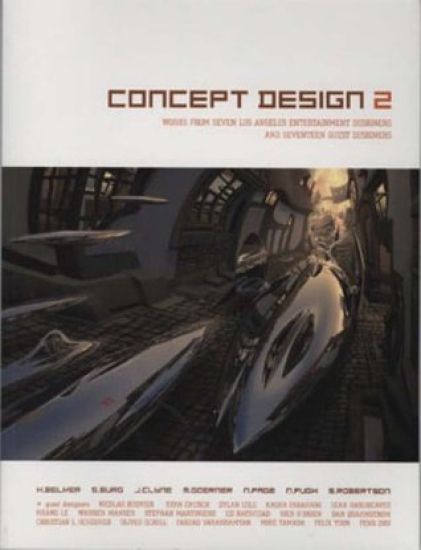
Concept Design 2
Neville Page; Scott Robertson; Harald Belker; Mark Goerner
Titan Books Ltd
2006
nidottu
Following the success of "Concept Design", the result of seven entertainment designers' shared desire to create and explore new images and ideas, "Concept Design 2" features seventeen guest artists along with the original seven to show us worlds, vehicles, monsters and creations beyond your wildest imagination! "Concept Design 2" contains over 470 original works, from finished pieces to support sketches and roughs, with each piece accompanied by text detailing the design ideas and illustration techniques used. Take a journey into the minds of talented and successful concept design professionals as they bring fantastic new worlds to life!
The Atlas of Global Conservation
Jonathan Hoekstra; Jennifer L. Molnar; Michael Jennings; Carmen Revenga; Mark D. Spalding; Timothy M. Boucher; James C. Robertson; Thomas J. Heibel; Katherine Ellison
University of California Press
2010
sidottu
Visually rich, up-to-date, and authoritative, "The Atlas of Global Conservation" is a premier resource for everyone concerned about the natural world. Drawing from the best data available, it is an unprecedented guide to the state of the planet and our most pressing resource and environmental issues. Top scientists at The Nature Conservancy, the leading conservation organization working around the world to protect ecologically important lands and water, have joined forces to create this extraordinary reference. It features 79 richly-detailed, full-color maps and other graphics paired with an informative, inviting discussion of major trends across the world's terrestrial, marine, and freshwater environments. Interspersed throughout, essays by noted international authorities point the way forward in confronting some of our greatest conservation challenges. The most comprehensive single volume on global environmental conservation and future sustainability, this title includes the latest data on environmental threats, such as climate change, water use, habitat protection, deforestation and overfishing. There are full-color maps and graphics that are designed to facilitate side-by-side comparisons, empowering readers to draw their own conclusions. This title brings together information that has been widely dispersed across myriad publications and databases in a format that invites evaluation and application. Supporting data is available on an accompanying website.
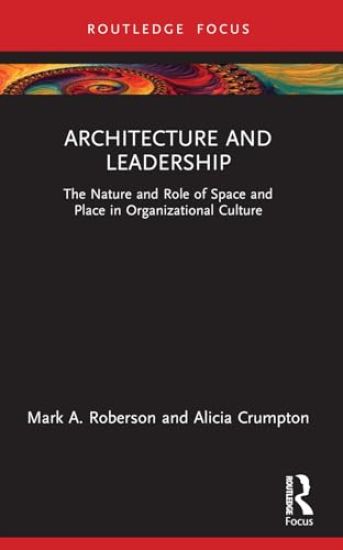
From cathedrals to cubicles, people go to great lengths and expense to design their living and working environments. They want their spaces to be places where they enjoy being, reflecting who they are and what they care about. The resultant environments in turn become loud, albeit unvocal, leaders for people occupying those corresponding spaces. The design and use of work and living spaces typifies and thematizes expectations for the group. Essentially, the architecture of rooms, buildings and cities creates cultures by conveying explicit and implicit messages. This is evident when people approach and walk into St. Basil’s Cathedral in Moscow, the Forbidden City in Beijing, the Sydney Opera House in Sydney, Australia, the Jewish Museum in Berlin, or the Rothko Chapel in Houston, to name some examples. While leaders oftentimes lack the resources to have their spaces mirror the greatest architectural achievements of the world, they are in a position to use the art and science of architecture, at whatever scale is available, to their advantage. The creative and intentional use of space and place advances and promotes cherished values and enhances organizational effectiveness. This book explores the essence of good architecture and establishes relevant connections for leaders and managers to strategically design and use the organizational workplace and space to support their mission and purpose, and create aesthetically meaningful work environments. It equips leaders to be culturally astute on what defines good architecture and to incorporate principles of beauty in their leadership practices accordingly and will be of interest to researchers, academics, professionals, and students in the fields of leadership, organizational studies, and architecture theory and practice.
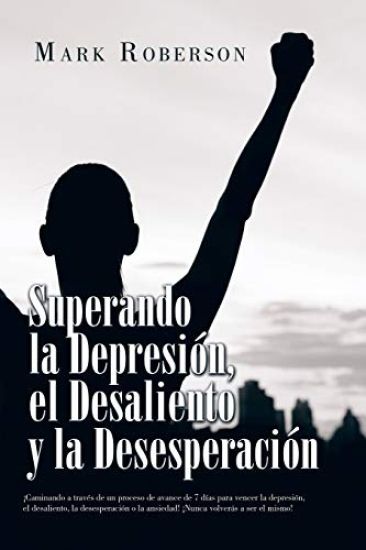
En su libro, Superando la depresi n, el Desaliento y la Desesperaci n, el pastor Mark Roberson lleva a sus lectores a trav s de un proceso innovador de 7 d as que fortalece, alienta, inspira e ilumina a todos los que han sufrido depresi n o desaliento. Este proceso de 7 d as es una revelaci n personal que el pastor Mark recibi de Dios cuando l mismo sufri con la depresi n y desesperaci n. Despu s de experimentar su propio avance y caminar en la sanidad total de la depresi n y la desesperaci n durante m s de 15 a os, el pastor Mark utiliz este mismo proceso de avance para ayudar a su propio familiar. El pastor Mark toca base con cualquier persona que haya experimentado depresi n, des nimo, desesperaci n o ansiedad. Se centra en cambiar la perspectiva y la mentalidad del lector rompiendo su patr n diario. l va justo hacia lo que alimenta la depresi n y la desesperaci n, que es tu enfoque, tus sentimientos, tus conversaciones diarias y los pensamientos que eliges entretener. El Pastor Mark motiva e inspira a una persona a comprender que para llegar a donde nunca has estado, debes hacer lo que nunca has hecho. En su libro, l dirige a las persona a trav s de un proceso de hacer cosas diferentes para provocar que surjan nuevas experiencias. A medida que avanzas en este proceso de avance de 7 d as, cada d a comenzar s a experimentar m s fuerza, m s est mulo y tu vida nunca volver a ser la misma cuando entres en tu propio avance personal. Una palabra de Dios y nunca volver s a ser la misma persona
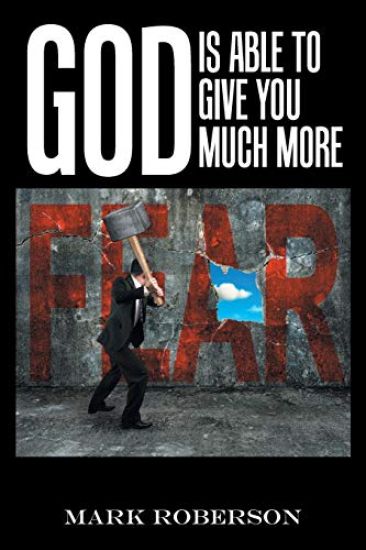
In this book, Pastor Mark Roberson shares how you can experience more from God, who is more than enough God is able to give you much more No matter where you are in life, no matter what you've experienced in life, no matter what you're going through in life, no matter what you presently have, God is able to give you much more The most valuable truth you can ever learn about God is that he is a good, loving Father, who has made provision for us to have everything we need pertaining to life and godliness. No matter where you are today spiritually, financially, physically, emotionally, socially, or mentally; whether you're living on a barely-get-along street; whether you're experiencing just enough or living in the land on more than enough, God wants to do more for you. God has an increase on his mind, and one word from God and you will never be the same again
Instrumental Data for Drug Analysis - 6 Volume Set
III Mills; James Conrad Roberson; Christian C. Matchett; Mathew J. Simon; Mark D. Burns; Jr. Ollis
CRC Press Inc
2005
muu
Finding current, detailed information on the analysis of drug-related compounds is challenging at best. While almost everyone engaged in the study of these compounds has accumulated a vast variety of data over time, a single-source, comprehensive review of that data would be an invaluable resource to have. Instrumental Data for Drug Analysis (IDDA), Third Edition is that resource, presenting the latest information on these compounds in a thorough, straightforward format. What's new in the Third Edition:Presents FT-Raman Spectra tables Includes information and analysis relating to 125 new drugs, including Zoloft, Claritin, Ambien, and the latest generation of narcotics Organizes information on each drug in a simple, streamlined format
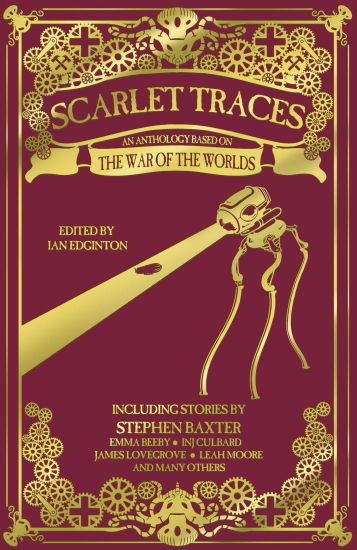
Scarlet Traces
Stephen Baxter; INJ Culbard; Adam Roberts; Emma Beeby; James Lovegrove; Nathan Duck; Mark Morris; Dan Whitehead; Chris Roberson
Abaddon Books
2019
sidottu
It is the dawn of the twentieth century.Following the Martians' failed invasion of Earth, the British Empire has seized their technology and unlocked its secrets for themselves. It is a Golden Age of discovery, adventure, culture, invention—and of domination, and rebellion.Scarlet Traces reveals a world of ant-headed nightmares; vacuum salesmen; war machines; deadly secrets; clockwork marvels; and Sherlock Holmes, T. S. Eliot and Thomas Edison as you've never seen them before...Including stories by Stephen Baxter, I. N. J. Culbard, Adam Roberts, Emma Beeby, James Lovegrove, Nathan Duck, Mark Morris, Dan Whitehead, Chris Roberson, Maura McHugh, Jonathan Green and Andrew Lane.
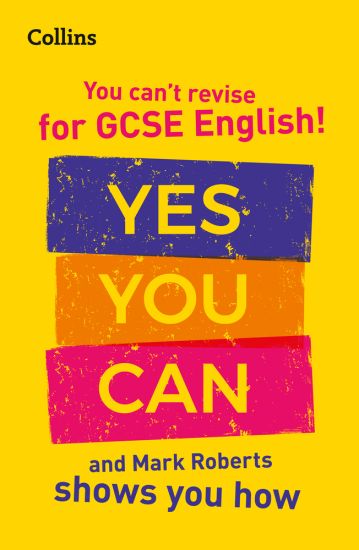
You can’t revise for GCSE 9-1 English! Yes you can, and Mark Roberts shows you how
Mark Roberts
Collins
2020
nidottu
Brilliant revision strategies for GCSE 9-1 English that really work! Students often tell teacher Mark Roberts that they find it hard to revise for GCSE English. This guide will show you why that is a common misconception, and that all you need is an organised, step-by-step approach to your English revision! Shortlisted for the Education Resources Awards 2021 · Discover how to banish ineffective revision and use study skills that will help you to do brilliantly in your exams · Understand what really successful students do to help them towards top grades in GCSE English · Implement practice methods that actually improve your memory Read this book to find out more! Chapter 1. Effective revision for English exams Chapter 2. Organising your notes and annotations Chapter 3. Memorising quotes Chapter 4. Exploding your quotes Chapter 5. Building up a bank of ‘killer quotes’ Chapter 6. Using context successfully Chapter 7, Improving practice essays Chapter 8. Getting ready for the unseen texts Chapter 9. Preparing for the creative writing questions Chapter 10. Taking care of yourself and coping with exams
You can’t revise for A Level English Literature! Yes you can, and Mark Roberts shows you how
Mark Roberts
Collins
2021
nidottu
Exam board: Edexcel Level: A-level Year 2 Subject: Maths Suitable for the 2025 exams Complete revision and practice to fully prepare for the A-level exam · Discover how to banish ineffective revision and use study skills that will help you to do brilliantly in your A Level exams · Understand what really successful students do to help them towards top grades in A Level English Literature · Implement practice methods that actually improve your memory Read this book to find out more! Chapter 1. Effective revision for English examsChapter 2. Organising your notes and annotationsChapter 3. Building up a bank of “killer quotes”Chapter 4. “Exploding” your quotesChapter 5. Applying critical viewpointsChapter 6. Using context successfullyChapter 7. Developing your academic styleChapter 8. Improving practice essaysChapter 9. Getting ready for the unseen textsChapter 10. Taking care of yourself and coping with exams