Kirjojen hintavertailu. Mukana 11 522 454 kirjaa ja 12 kauppaa.

Kirjahaku

Etsi kirjoja tekijän nimen, kirjan nimen tai ISBN:n perusteella.

1000 tulosta hakusanalla Mark T. DeMeuse

Honour and Conflict in the Ancient World

Honour and Conflict in the Ancient World

Mark T. Finney

T. T.Clark Ltd
2013
nidottu
In this volume, Finney argues that the conflict in 1 Corinthians is driven by lust for honour and Paul's use of the paradigm of the cross. Studies in contemporary social anthropology have noted the importance of male honour and how this is able to generate ideas of social identity within a community and to elucidate patterns of social behaviour. Finney examines the letter of 1 Corinthians , which presents a unique expose of numerous aspects of social life in the first-century Greco-Roman world where honour was of central importance. At the same time, filotimia (the love and lust for honour) also had the capacity to generate an environment of competition, antagonism, factionalism, and conflict, all of which are clearly evident within the pages of 1 Corinthians . Finney seeks to examine the extent to which the social constraints of filotimia, and its potential for conflict, lay behind the many problems evident within the nascent Christ-movement at Corinth. Finney presents a fresh reading of the letter, and the thesis it proposes is that the honour-conflict model, hitherto overlooked in studies on 1 Corinthians , provides an appropriate and compelling framework within which to view the many disparate aspects of the letter in their social context. Formerly the Journal for the Study of the New Testament Supplement , this is a book series that explores the many aspects of New Testament study including historical perspectives, social-scientific and literary theory, and theological, cultural and contextual approaches.

The 77 Fragments of my Lovestory

The 77 Fragments of my Lovestory

Mark T. Jones Sr; Janelle Randall

Plenty of Pink
2017
nidottu
The 77 Fragments of my Lovestory is an intimate collection of 77 poems. Throughout the poems, the author illustrates her disappointments in love starting as a child. She illustrates the imagery of never feeling loved and accepted by her family; as well as the disappointment in going through the fear of sexual child abuse while being an example as the oldest of ten children. Anxious to move on with her life, she illustrates running from her past by attending college and never looking back; only to be catapulted in bitterness and unforgiveness towards her family which became reflective in her relationships. In the end, the author concludes that everything she always wanted to experience in love is found in Jesus Christ; and that he was always present loving and protecting her in all that she had been through. Whereby, finally finding her true love.
Bully Nation: The Remains: Part One

Bully Nation: The Remains: Part One

Mark T Sneed

Abm Publications Inc.
2020
nidottu
The world as we know it is in ruins. The rich and powerful have gone into space. Those that live in the shambles of what was once the Bay Area find themselves behind two twenty-foot walls. In the walled city there are rumors of monsters roaming in the dead zones. Inside of the walled city the seven lines that make up the Remains work to make their community perfect. There is little to no crime in the Remains. Annually, there is a no holds barred life and death televised contest for the residents needed bloodlust. Ralphie Reynolds, 15, learns that he likes a girl and he and his friends sign up for the challenge. Ralphie prepares for the upcoming battle. Many will watch contestants battle while one boy comes to grips with his new crush at a very awkward time, indeed.
Nothing Simple or Easy

Nothing Simple or Easy

Mark T Sneed

Abm Publications Inc.
2020
pokkari
Was it Jules's fault he was nearly six-foot-tall and two hundred pounds of dark chocolate and unafraid to walk down the most dangerous streets in Chicago? He never looked for trouble. He couldn't help being big. That was genetics. Unlucky in love and destined to wile away his life just working and hanging out with his friends it was sheer luck and his best friend, Max, who took him to a pop-up club on Lower Wacker Drive to get over a girl. At the club, Jules meets and falls for a streetwise stunner named Bethany. Little does Jules know the chance meeting will lead to a series of events which will test him and make him question the need for love and his desire to guard his heart. In Nothing Simple or Easy Jules tries to figure out many things in the rough and tumble of Chicago's near Northside as he criss crosses gangland territories, struggles with love versus lust as well as trust and openness, but the most important lesson he hopes to learn is why is love never simple or easy?
A Death in the Family

A Death in the Family

Mark T Pifher

Mark Pifher
2022
pokkari
A death in the family can result in profound and enduring impacts on the future of those left behind. Tom O'Brien, a journalist, has lost his wife, Laura, to cancer. Katie, his college aged daughter, and Katie's older brother, Brian, no longer have a mother. In an attempt to mend a strained family relationship, father and daughter agree to jointly write a journal, the content of which will focus on their investigation into the brutal murder of a local political operative.Their efforts will trigger a chain of tragic events, some planned, others seemingly fortuitous. They will uncover a pattern of sexual harassment and assaults in a Congressional office which will lead, in one way or another, to the deaths of Brian's fianc , the convicted murderer, the father of Katie's best friend, and a United States Senator. Each of these deaths, beginning with the passing of Laura O'Brien, will expose hidden secrets and personal vulnerabilities that will require father and daughter to recognize the existence of an inextinguishable familial light before they can escape a period of intense darkness.
General Lesley J. McNair: Unsung Architect of the U.S. Army

General Lesley J. McNair: Unsung Architect of the U.S. Army

Mark T. Calhoun

University Press of Kansas
2015
sidottu
George C. Marshall once called him “the brains of the army.” And yet General Lesley J. McNair (1883-1944), a man so instrumental to America’s military preparedness and Army modernization, remains little known today, his papers purportedly lost, destroyed by his wife in her grief at his death in Normandy. This book, the product of an abiding interest and painstaking research, restores the general Army Magazine calls one of “Marshall’s forgotten men” to his rightful place in American military history. Because McNair contributed so substantially to America’s war preparedness, this first complete account of his extensive and varied career also leads to a reevaluation of U.S. Army effectiveness during WWII.Born halfway between the Civil War and the dawn of the 20th century, Lesley McNair—“Whitey” by his classmates for his blond hair–graduated 11th of 124 in West Point’s class of 1904 and rose slowly through the ranks like all officers in the early twentieth century. He was 31 when World War I erupted, 34 and a junior officer when American troops prepared to join the fight. It was during this time, and in the interwar period that followed the end of the First World War, that McNair’s considerable influence on Army doctrine and training, equipment development, unit organization, and combined arms fighting methods developed. By looking at the whole of McNair’s career–not just his service in WWII as chief of staff, General Headquarters, 1940-1942, and then as commander, Army Ground Forces, 1942-1944–Calhoun reassesses the evolution and extent of that influence during the war, as well as McNair’s, and the Army’s, wartime performance. This in-depth study tracks the significantly positive impact of McNair’s efforts in several critical areas: advanced officer education; modernization, military innovation, and technological development; the field-testing of doctrine; streamlining and pooling of assets for necessary efficiency; arduous and realistic combat training; combined arms tactics; and an increasingly mechanized and mobile force.Because McNair served primarily in staff roles throughout his career and did not command combat formations during WWII, his contribution has never received the attention given to more public—and publicized—military exploits. In its detail and scope, this first full military biography reveals the unique and valuable perspective McNair’s generalship offers for the serious student of military history and leadership.
Industrial Society and the Science Fiction Blockbuster
Can blockbuster films be socially relevant or are they just escapist diversions to entertain the masses and enrich the studios? Not every successful film contains thoughtful commentary, but some that are marketed as pure entertainment do seriously engage social issues. Popular science fiction films of the late 1970s and early 1980s--such as George Lucas' Star Wars trilogy, Ridley Scott's Alien and Aliens, and James Cameron's Terminator films--present a critique of our engagement with technology in a way that resonates with 1960s counterculture. As challengers of the status quo's technological underpinnings, Luke Skywalker, Ellen Ripley and Sarah Connor echo the once-popular social criticism of philosopher Herbert Marcuse and speak directly to the concerns of people living in a technologically complex society. The films of Lucas, Scott and Cameron made money but also made us think about the world we live in.
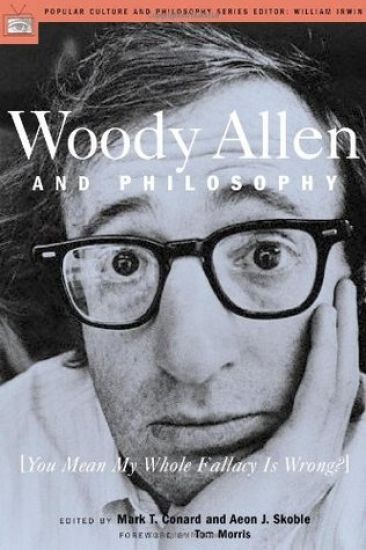
Woody Allen and Philosophy

Woody Allen and Philosophy

Mark T. Conard; Aeon J. Skoble; Tom Morris

Open Court Publishing Co ,U.S.
2004
pokkari
Fifteen philosophers representuing different schools of thought answer the question what is Woody Allen trying to say in his films? And why should anyone care? Focusing on different works and varied aspects of Allen's multifaceted output, these essays explore the philosophical undertones of Anne Hall, Crimes and Misdemeanors, Manhattan, A Midsummer Night's Sex Comedy and reminds us that just because the universe is meaningless and life is pointless is no reason to commit suicide.
The Quest for God and the Good Life

The Quest for God and the Good Life

Mark T. Miller

The Catholic University of America Press
2013
nidottu
Troubled by the Great Depression, two world wars, and modernity's challenges to religion, Bernard Lonergan attempted to do for our age what Thomas Aquinas did for his: to integrate the best of secular and sacred learning and thus further the Catholic tradition of using both faith and reason to advance the common good and participate in God's work of salvation. Drawing on modern advances in the natural sciences, economics, history and psychology, as well as ancient and medieval philosophy and theology, Lonergan's work is highly fruitful but exceedingly complex. This book provides a basic yet broad introduction to Lonergan's thought in particular and Catholic theology in general. Mark T. Miller's approach is a theological anthropology organised into three main categories, ""progress,"" ""decline,"" and ""redemption,"" which transpose the traditional concepts of nature, sin, and grace into a contemporary social and historical context. Progress is driven by the natural human desire for God. Decline is a downward spiral of violence and suffering caused by sin's perversion of the good, natural desire. Redemption is God's gift of God's self that fulfills our natural desire and becomes the foundation for authentic human living.Throughout this introductory text, progress, decline and redemption constitute a systematic framework for examining the central terms of Catholic theology, as well as key notions in Lonergan's theology. The book provides a firm foundation for students of Lonergan as well as anyone interested in understanding Catholic theology and applying it to ministry, education and other fields.
Shades of White Flight

Shades of White Flight

Mark T. Mulder

Rutgers University Press
2015
nidottu
Since World War II, historians have analyzed a phenomenon of “white flight” plaguing the urban areas of the northern United States. One of the most interesting cases of “white flight” occurred in the Chicago neighborhoods of Englewood and Roseland, where seven entire church congregations from one denomination, the Christian Reformed Church, left the city in the 1960s and 1970s and relocated their churches to nearby suburbs. In Shades of White Flight, sociologist Mark T. Mulder investigates the migration of these Chicago church members, revealing how these churches not only failed to inhibit white flight, but actually facilitated the congregations’ departure. Using a wealth of both archival and interview data, Mulder sheds light on the forces that shaped these midwestern neighborhoods and shows that, surprisingly, evangelical religion fostered both segregation as well as the decline of urban stability. Indeed, the Roseland and Englewood stories show how religion—often used to foster community and social connectedness—can sometimes help to disintegrate neighborhoods. Mulder describes how the Dutch CRC formed an insular social circle that focused on the local church and Christian school—instead of the local park or square or market—as the center point of the community. Rather than embrace the larger community, the CRC subculture sheltered themselves and their families within these two places. Thus it became relatively easy—when black families moved into the neighborhood—to sell the church and school and relocate in the suburbs. This is especially true because, in these congregations, authority rested at the local church level and in fact they owned the buildings themselves. Revealing how a dominant form of evangelical church polity—congregationalism—functioned within the larger phenomenon of white flight, Shades of White Flight lends new insights into the role of religion and how it can affect social change, not always for the better.
Shades of White Flight

Shades of White Flight

Mark T. Mulder

Rutgers University Press
2015
sidottu
Since World War II, historians have analyzed a phenomenon of “white flight” plaguing the urban areas of the northern United States. One of the most interesting cases of “white flight” occurred in the Chicago neighborhoods of Englewood and Roseland, where seven entire church congregations from one denomination, the Christian Reformed Church, left the city in the 1960s and 1970s and relocated their churches to nearby suburbs. In Shades of White Flight, sociologist Mark T. Mulder investigates the migration of these Chicago church members, revealing how these churches not only failed to inhibit white flight, but actually facilitated the congregations’ departure. Using a wealth of both archival and interview data, Mulder sheds light on the forces that shaped these midwestern neighborhoods and shows that, surprisingly, evangelical religion fostered both segregation as well as the decline of urban stability. Indeed, the Roseland and Englewood stories show how religion—often used to foster community and social connectedness—can sometimes help to disintegrate neighborhoods. Mulder describes how the Dutch CRC formed an insular social circle that focused on the local church and Christian school—instead of the local park or square or market—as the center point of the community. Rather than embrace the larger community, the CRC subculture sheltered themselves and their families within these two places. Thus it became relatively easy—when black families moved into the neighborhood—to sell the church and school and relocate in the suburbs. This is especially true because, in these congregations, authority rested at the local church level and in fact they owned the buildings themselves. Revealing how a dominant form of evangelical church polity—congregationalism—functioned within the larger phenomenon of white flight, Shades of White Flight lends new insights into the role of religion and how it can affect social change, not always for the better.
The Glass Church

The Glass Church

Mark T. Mulder; Gerardo Martí

Rutgers University Press
2020
sidottu
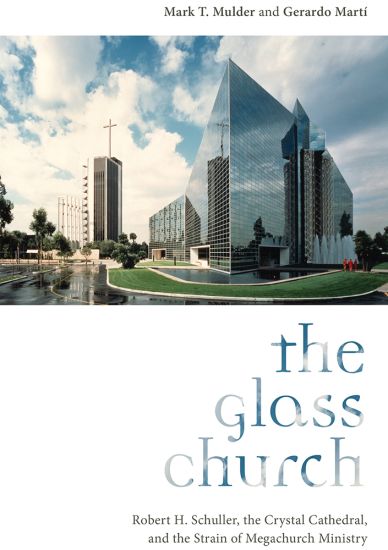
Robert H. Schuller’s ministry—including the architectural wonder of the Crystal Cathedral and the polished television broadcast of Hour of Power—cast a broad shadow over American Christianity. Pastors flocked to Southern California to learn Schuller’s techniques. The President of United States invited him sit prominently next to the First Lady at the State of the Union Address. Muhammad Ali asked for the pastor’s autograph. It seemed as if Schuller may have started a second Reformation. And then it all went away. As Schuller’s ministry wrestled with internal turmoil and bankruptcy, his emulators—including Rick Warren, Bill Hybels, and Joel Osteen— nurtured megachurches that seemed to sweep away the Crystal Cathedral as a relic of the twentieth century. How did it come to this?Certainly, all churches depend on a mix of constituents, charisma, and capital, yet the size and ambition of large churches like Schuller’s Crystal Cathedral exert enormous organizational pressures to continue the flow of people committed to the congregation, to reinforce the spark of charismatic excitement generated by high-profile pastors, and to develop fresh flows of capital funding for maintenance of old projects and launching new initiatives. The constant attention to expand constituencies, boost charisma, and stimulate capital among megachurches produces an especially burdensome strain on their leaders. By orienting an approach to the collapse of the Crystal Cathedral on these three core elements—constituency, charisma, and capital—The Glass Church demonstrates how congregational fragility is greatly accentuated in larger churches, a notion we label megachurch strain, such that the threat of implosion is significantly accentuated by any failures to properly calibrate the inter-relationship among these elements.
The Glass Church

The Glass Church

Mark T. Mulder; Gerardo Martí

RUTGERS UNIVERSITY PRESS
2023
nidottu
Robert H. Schuller’s ministry—including the architectural wonder of the Crystal Cathedral and the polished television broadcast of Hour of Power—cast a broad shadow over American Christianity. Pastors flocked to Southern California to learn Schuller’s techniques. The President of United States invited him sit prominently next to the First Lady at the State of the Union Address. Muhammad Ali asked for the pastor’s autograph. It seemed as if Schuller may have started a second Reformation. And then it all went away. As Schuller’s ministry wrestled with internal turmoil and bankruptcy, his emulators—including Rick Warren, Bill Hybels, and Joel Osteen— nurtured megachurches that seemed to sweep away the Crystal Cathedral as a relic of the twentieth century. How did it come to this?Certainly, all churches depend on a mix of constituents, charisma, and capital, yet the size and ambition of large churches like Schuller’s Crystal Cathedral exert enormous organizational pressures to continue the flow of people committed to the congregation, to reinforce the spark of charismatic excitement generated by high-profile pastors, and to develop fresh flows of capital funding for maintenance of old projects and launching new initiatives. The constant attention to expand constituencies, boost charisma, and stimulate capital among megachurches produces an especially burdensome strain on their leaders. By orienting an approach to the collapse of the Crystal Cathedral on these three core elements—constituency, charisma, and capital—The Glass Church demonstrates how congregational fragility is greatly accentuated in larger churches, a notion we label megachurch strain, such that the threat of implosion is significantly accentuated by any failures to properly calibrate the inter-relationship among these elements.