Kirjojen hintavertailu. Mukana 12 464 855 kirjaa ja 12 kauppaa.

Kirjahaku

Etsi kirjoja tekijän nimen, kirjan nimen tai ISBN:n perusteella.

1000 tulosta hakusanalla Marko B. Popovic

Agriculture in World History

Agriculture in World History

Mark B. Tauger

Routledge
2020
sidottu
Now in its second edition, Agriculture in World History presents a unique exploration of farmers and farming, and their relationships to non-farmers and urban societies from the ancient world to the 21st century.From its origins, civilization has depended on the food, fiber, and other goods produced by farmers. This book illustrates how urban societies both exploited and supported farmers, and together endured economic and environmental crises. Viewing farmers as the crucial interface between civilization and the natural world, Mark Tauger examines the environmental changes, political and social transformations, and scientific and technological developments in farming. The second edition draws attention to the modern period, particularly the effects of war, depression, and authoritarianism on world agriculture, scientific advances and the problems they created, increased international competition between countries with the expanding role of corporations, the threats posed by climate change, and some of agriculture's future prospects. Accessibly written and following a chronological structure, the volume enables readers to easily gain a foundational understanding of an important aspect of world history.This survey will be an indispensable text for world history students and for anyone interested in the historical development of the present agricultural and food crises.
Agriculture in World History

Agriculture in World History

Mark B. Tauger

Routledge
2020
nidottu
Now in its second edition, Agriculture in World History presents a unique exploration of farmers and farming, and their relationships to non-farmers and urban societies from the ancient world to the 21st century.From its origins, civilization has depended on the food, fiber, and other goods produced by farmers. This book illustrates how urban societies both exploited and supported farmers, and together endured economic and environmental crises. Viewing farmers as the crucial interface between civilization and the natural world, Mark Tauger examines the environmental changes, political and social transformations, and scientific and technological developments in farming. The second edition draws attention to the modern period, particularly the effects of war, depression, and authoritarianism on world agriculture, scientific advances and the problems they created, increased international competition between countries with the expanding role of corporations, the threats posed by climate change, and some of agriculture's future prospects. Accessibly written and following a chronological structure, the volume enables readers to easily gain a foundational understanding of an important aspect of world history.This survey will be an indispensable text for world history students and for anyone interested in the historical development of the present agricultural and food crises.

Endö Shüsaku

Endö Shüsaku

Mark B. Williams

Routledge
1999
sidottu
Endö Shüsaka is probably the most widely translated of all Japanese authors. In this first major study of Endö's works, Mark Williams moves the discussion on from the well-worn depictions of Endö as the 'Japanese Graham Greene', and places him in his own political and cultural context.
The United States and Central America

The United States and Central America

Mark B. Rosenberg; Luis G. Solis

Routledge
2007
sidottu
This book is a concise overview of the recent history of U.S.-Central American relations. Part of the Contemporary Inter-American Relations series edited by Jorge Dominguez and Rafael Fernandez de Castro, it focuses on the relations between the U.S. and this region since the end of the Cold War. The volume considers economic relations between the two regions, presenting pertinent information on the Central American Free Trade Agreement (CAFTA). It also looks at political issues such as military cooperation, security issues, the drug trade and organized crime, democracy in the region, and migration. Finally, it concludes with an assessment of the direction US-Central American relations are taking at present, moving beyond the black-and-white challenges of Soviet domination in the region to address post-9/11 security concerns.The United States and Central America will be of interest to students and scholars of foreign policy, Latin American politics and politics and international relations in general.
The United States and Central America

The United States and Central America

Mark B. Rosenberg; Luis G. Solis

Routledge
2007
nidottu
This book is a concise overview of the recent history of U.S.-Central American relations. Part of the Contemporary Inter-American Relations series edited by Jorge Dominguez and Rafael Fernandez de Castro, it focuses on the relations between the U.S. and this region since the end of the Cold War. The volume considers economic relations between the two regions, presenting pertinent information on the Central American Free Trade Agreement (CAFTA). It also looks at political issues such as military cooperation, security issues, the drug trade and organized crime, democracy in the region, and migration. Finally, it concludes with an assessment of the direction US-Central American relations are taking at present, moving beyond the black-and-white challenges of Soviet domination in the region to address post-9/11 security concerns.The United States and Central America will be of interest to students and scholars of foreign policy, Latin American politics and politics and international relations in general.
Bodies in Code

Bodies in Code

Mark B. N. Hansen

Routledge
2006
sidottu
Bodies in Code explores how our bodies experience and adapt to digital environments. Cyberculture theorists have tended to overlook biological reality when talking about virtual reality, and Mark B. N. Hansen's book shows what they've been missing. Cyberspace is anchored in the body, he argues, and it's the body--not high-tech computer graphics--that allows a person to feel like they are really "moving" through virtual reality. Of course these virtual experiences are also profoundly affecting our very understanding of what it means to live as embodied beings. Hansen draws upon recent work in visual culture, cognitive science, and new media studies, as well as examples of computer graphics, websites, and new media art, to show how our bodies are in some ways already becoming virtual.
Bodies in Code

Bodies in Code

Mark B. N. Hansen

Routledge
2006
nidottu
Bodies in Code explores how our bodies experience and adapt to digital environments. Cyberculture theorists have tended to overlook biological reality when talking about virtual reality, and Mark B. N. Hansen's book shows what they've been missing. Cyberspace is anchored in the body, he argues, and it's the body--not high-tech computer graphics--that allows a person to feel like they are really "moving" through virtual reality. Of course these virtual experiences are also profoundly affecting our very understanding of what it means to live as embodied beings. Hansen draws upon recent work in visual culture, cognitive science, and new media studies, as well as examples of computer graphics, websites, and new media art, to show how our bodies are in some ways already becoming virtual.
The Logical Trader

The Logical Trader

Mark B. Fisher

John Wiley Sons Inc
2002
sidottu
Praise for The Logical Trader Applying a Method to the Madness "Fisher’s messianic willingness to share with the public the successful system he has developed is an opportunity to be exploited." –from the Foreword by Paul Tudor Jones Chairman and CEO, Tudor Investment Corp. "Mark takes the same mental approach to trading that professional athletes and coaches use to succeed on the court. He has taken several college and pro athletes and provided them a game plan for life after basketball." –John Calipari, Head Basketball Coach, Memphis University Former NBA Head Coach, New Jersey Nets "I have been actively involved in the markets (foreign exchange, equities, derivatives) since the early 1970s–as a trader on the CBOT floor in the bond and note ‘pits,’ as a foreign exchange dealer at a large multinational bank, as the head of a bank’s futures brokering operation, as a reasonably widely known analyst of the world capital markets writing a daily commentary on these markets, and as a trader on my own. I’ve read a myriad number of ‘how to’ books on trading, most of which have proven to be of little merit, if any. However, from the outset, reading and understanding Mark’s insights into his ACD system in The Logical Trader, I’ve learned methods of trading that I probably understood intuitively but now understand logically and with almost numerical rationality. The reading may be difficult for the beginning trader, but the lessons learned will be immediately beneficial; of that I am certain. I strongly endorse this book for the beginner and professional trader alike." –Dennis Gartman, Editor/Publisher, The Gartman Letter, LC In trading, as in life, you need a plan. In The Logical Trader: Applying a Method to the Madness, expert trader Mark Fisher reveals a plan and a method that he has used for over twenty years to successfully trade. Mark Fisher has taught thousands of people–from traders on the floors of major exchanges to individual investors in front of computer screens–how to trade stocks, commodities, even currencies, using his highly successful and innovative ACD method. Now, in The Logical Trader, Fisher will teach you how to use the ACD method to trade more effectively and profitably than ever before.
Embodying Technesis

Embodying Technesis

Mark B.N. Hansen

The University of Michigan Press
2000
nidottu
Critics of contemporary culture have argued that critical theory must keep pace with technological change and, in the process, have instituted a theoretical model that restricts consideration of technology's impact on human experience to those dimensions that can be captured in language. In this wide-ranging critical study of poststructuralism's legacy to contemporary cultural studies, Mark Hansen challenges the hegemony of this model, contending that technologies fundamentally alter our sensory experience and drastically affect what it means to live as embodied human agents.Embodying Technesis examines how technological changes have rendered obsolete notions of technology as machine and as text. Voicing a sustained plea for rethinking the technological, Hansen argues that radical technological changes--from the steam engine to the internet and virtual reality--have fundamentally altered conditions of perception and, in so doing, changed the prevailing structures of modern experience. By emphasizing the dynamic interaction between technologies and bodies, between the diffuse effects of technological shifts and the collective embodied experiences of contemporary agents, Hansen opens the path for a radical revision of our understanding of the technological.Mark Hansen is Assistant Professor of English, Princeton University.
Embodying Technesis

Embodying Technesis

Mark B.N. Hansen

The University of Michigan Press
2000
sidottu
Critics of contemporary culture have argued that critical theory must keep pace with technological change and, in the process, have instituted a theoretical model that restricts consideration of technology's impact on human experience to those dimensions that can be captured in language. In this wide-ranging critical study of poststructuralism's legacy to contemporary cultural studies, Mark Hansen challenges the hegemony of this model, contending that technologies fundamentally alter our sensory experience and drastically affect what it means to live as embodied human agents.Embodying Technesis examines how technological changes have rendered obsolete notions of technology as machine and as text. Voicing a sustained plea for rethinking the technological, Hansen argues that radical technological changes--from the steam engine to the internet and virtual reality--have fundamentally altered conditions of perception and, in so doing, changed the prevailing structures of modern experience. By emphasizing the dynamic interaction between technologies and bodies, between the diffuse effects of technological shifts and the collective embodied experiences of contemporary agents, Hansen opens the path for a radical revision of our understanding of the technological.Mark Hansen is Assistant Professor of English, Princeton University.
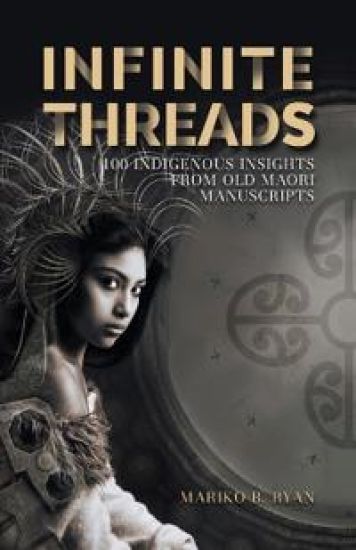
Infinite Threads

Infinite Threads

Mariko B Ryan

Paua Interface Ltd
2020
pokkari
For thousands of years, the Maori tohunga, sages, passed closely guarded knowledge to new generations of sages, using only an orally coded system. Two hundred years ago, they started recording that knowledge into secret manuscripts.Why did they suddenly abandon their oral traditions?Who were they writing for?Can this indigenous knowledge provide us with a beacon in our time?Infinite Threads presents rare excerpts and concepts from old manuscripts, interprets them, and reveals their insights through the voices of the old sages. Their words, by turns, are gritty, loving, blunt, funny, rousing. Their writings are eloquent expressions for what moves us-love, rage, compassion, grief, joy, fear, and identity.Discover how the writings help us understand our power, integrity, and purpose-and maybe even this strange world we now live in.Read about the oceanic voyages, creatures in their lairs, love trysts, living cosmos, deeds of all kinds, and how they teach us to connect with one another, the world, and universe.Learn about the colonial history that nearly obliterated an indigenous esoteric knowledge system-how the sages saved it and why it matters.Follow the author's journey beyond the confines of her social and cultural conditioning, from fear towards freedom, and her ultimate decision to share these insights.AUTHORS MESSAGE TO YOU: I've loved this writing journey. It's been a life-changing and profound adventure. Several times I put the writing down and asked whether I could even do it. And then the world tipped upside down. Yes, you know it too right? We live in challenging times. So, after a seven year writing journey, here it is. The insights I believe our tupuna (ancestors) left for us, for this very time, for me and you.BUY BOOK NO
Infinite Threads

Infinite Threads

Mariko B Ryan

Paua Interface Ltd
2020
sidottu
Get 100 Ancient Maori Wisdoms for Today.​Powerful. Profound. Timely.Plus an astute narrative on the fascinating history and culture of the Maori people in New Zealand / Aotearoa as told by an insider.Imbued with entertaining "wit, humour, cutting insight" that keeps you hooked and "turning pages to find answers to the tantalising threads left dangling."INFINITE THREADS takes you on an epic, eye-opening journey through a series of 100 interpretations of the wisdoms, stories and words of old Maori Sages.Just released this month during one of the world's most challenging times, already, many of the book's first readers have said Infinite Threads is a must read for right now and has changed their lives. Find out why.What is Infinite Threads about?For thousands of years, the Maori tohunga, sages, passed closely guarded knowledge to new generations of sages, using only an orally coded system. Two hundred years ago, they started recording that knowledge into secret manuscripts.Why did they suddenly abandon their oral traditions?Who were they writing for?Can this indigenous knowledge provide us with a beacon in our time?Infinite Threads presents rare excerpts and concepts from old manuscripts, interprets them, and reveals their insights through the voices of the old sages. Their words, by turns, are gritty, loving, blunt, funny, rousing. Their writings are eloquent expressions for what moves us-love, rage, compassion, grief, joy, fear, and identity.Read about the oceanic voyages, creatures in their lairs, love trysts, living cosmos, deeds of all kinds, and how they teach you to connect with others, the world, and universe.Learn about the colonial history that nearly obliterated an indigenous esoteric knowledge system-how the sages saved it and why it matters.Follow the author's journey beyond the confines of her social and cultural conditioning, from fear towards freedom, and her ultimate decision to share these insights with you.
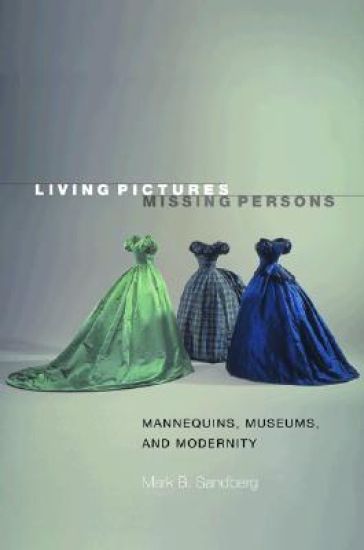
Living Pictures, Missing Persons

Living Pictures, Missing Persons

Mark B. Sandberg

Princeton University Press
2002
pokkari
In the late nineteenth century, Scandinavian urban dwellers developed a passion for a new, utterly modern sort of visual spectacle: objects and effigies brought to life in astonishingly detailed, realistic scenes. The period 1880-1910 was the popular high point of mannequin display in Europe. Living Pictures, Missing Persons explores this phenomenon as it unfolded with the rise of wax museums and folk museums in the largest cities of Denmark, Sweden, and Norway. Mark Sandberg asks: Why did modernity generate a cultural fascination with the idea of effigy? He shows that the idea of effigy is also a portal to understanding other aspects of visual entertainment in that period, including the widespread interest in illusionistic scenes and tableaux, in the "portability" of sights, spaces, and entire milieus. Sandberg investigates this transformation of visual culture outside the usual test cases of the largest European metropolises. He argues that Scandinavian spectators desired an unusual degree of authenticity--a cultural preference for naturalism that made its way beyond theater to popular forms of museum display. The Scandinavian wax museums and folk-ethnographic displays of the era helped pre-cinematic spectators work out the social implications of both voyeuristic and immersive display techniques. This careful study thus anticipates some of the central paradoxes of twentieth-century visual culture--but in a time when the mannequin and the physical relic reigned supreme, and in a place where the contrast between tradition and modernity was a high-stakes game.
South and West from Waterloo

South and West from Waterloo

Mark B Warburton

Ian Allan Publishing
2014
sidottu
This lovely new collection of photographs covers the area in which the London & South Western Railway operated, which subsequently became part of the Southern Railway in the Grouping in 1923 and then Southern Region under BR on Nationalisation. As well as the main line from London Waterloo to Basingstoke, Southampton and Bournemouth, the book covers other lines in Hampshire and Dorset, the Lymington branch, the Swanage branch, Weymouth, and the holiday routes via Salisbury into Somerset, Devon and Cornwall, with detours to the Lyme Regis branch, the Exmouth branch, Wadebridge and Torrington, terminating at the Atlantic Coast at Ilfracombe This book presents an evocative pictorial record of the end of the 1950s and the 1960s on South Western lines. The photographs record the whole railway scene of the time, including the stations - from busy main line stations to unspoilt branch line stops and rural halts - and detail of railway infrastructure such as signalling. It portrays a way of life on the railway that was soon to disappear with the end of steam and the closure of many lines in the 1960s.
Barbarians and Civilization in International Relations
The terrorist attacks in New York and Washington have led to popular conceptions of Muslims as terrorists. Some commentators have harked back to the 'Clash of Civilizations' argument outlined by Samuel Huntington which argued that, after the collapse of the Cold War, culture would become the main axis of conflict for civilisational alliances. Mark Salter takes issue with Huntington's theory and explains how the terms of his argument are part of an imperialist discourse that casts other civilisations as essentially barbarian. Although many commentators have engaged with Huntington's claims, few have pursued the political implications of his argument. Barbarians and Civilisation offers a decisive exploration of the colonial rhetoric inherent in current political discourse. Charting the usefulness of concepts of culture and identity for understanding world politics, Salter brilliantly illustrates the benefits and the limitations of the civilised/barbarian dichotomy in international relations.