Mallory Vaylen vanhemmat ovat kuolleet oudoissa olosuhteissa. Outoa on myös se, että Mallory pystyy edelleen näkemään heidät ja puhumaan heidän kanssaan. Vanhempien haamut seuraavat mukana, kun Malloryn on muutettava Lilith-tätinsä aavemaiseen taloon. Siellä Mallory huomaa, että hänellä on vielä vahvempiakin mystisiä kykyjä. Hellysh Spatzlin, historian synkimmän ja ilkeimmän nekromantin varjon ryöstäessä Malloryn vanhempien henget nuo kyvyt on otettava käyttöön. Apurikseen pelastustehtävässä Mallory saa puheliaan pääkallon nimeltä Kallo Matonen. Vastineeksi avustaan turhamainen Kallo haluaa upean peruukin. Lisäksi Malloryn on murrettava Kallon kirous. Kallon kirous aloittaa Mallory Vayle -kirjasarjan, joka on noussut tapaukseksi Iso-Britanniassa. Tunnistat fanit värikkäistä peruukeista!
This text examines in detail the role of one of the most important fortifications in military history, the Lines of Torres Vedras, in the Peninsular war, 1809 to 1812.
Integrating intersectional criminology with organizational theory, Forgotten Law Enforcement examines how identity, power, and institutional design shape correctional staff experiences. Drawing on in-depth interviews with correctional staff at Rikers Island, one of the nation’s largest jail complexes, Dr. Simone Martin-Howard centers the lived experiences of Black and Caribbean men and women working inside the jail system. Amid ongoing challenges in recruiting, retaining, and managing correctional officers—issues intensified by the COVID-19 pandemic—the book offers an insider’s perspective on staff dynamics, organizational culture, and occupational safety and health. Set against the backdrop of the impending closure of Rikers Island Jail, this timely and thoughtful work humanizes correctional staff who are often depicted in the media as a uniformly punitive group. By shifting the focus from incarcerated and detained populations to those who work within correctional institutions, Forgotten Law Enforcement provides a compelling and necessary contribution to contemporary discussions on jail confinement, labor, and institutional reform.
Cartoons, as a form of humour and entertainment, are a social product which are revealing of different social and political practices that prevail in a society, humourised and satirised by the cartoonist. This book advances research on cartoons and humour in the Saudi context. It contributes to the growing multimodal research on non-interactional humour in the media that benefits from traditional theories of verbal humour. The study analyses the interaction between visual and verbal modes, highlighting the multimodal manifestations of the rhetorical devices frequently employed to create humour in English-language cartoons collected from the Saudi media. The multimodal analysis shows that the frequent rhetorical devices such as allusions, parody, metaphor, metonymy, juxtaposition, and exaggeration take a form which is woven between the visual and verbal modes, and which makes the production of humorous and satirical effect more unique and interesting. The analysis of the cartoons across various thematic categories further offers a window into contemporary Saudi society.
This volume explores the relationship between 'study abroad' and the acquisition of 'sociolinguistic competence' - the ability to communicate in socially appropriate ways. The volume looks at language development and use during study abroad in France by examining patterns of variation in the speech of advanced L2 speakers. Within a variationist paradigm, fine-grained empirical analyses of speech illuminate choices the L2 speaker makes in relation to their new identity, gender patterns, closeness or distance maintained in the social context in which they find themselves. Using both cross-sectional and longitudinal data, four variable features of contemporary spoken French are analysed in a large population of advanced Irish-English speakers of French. This close-up picture provides empirical evidence by which to evaluate the wide-spread assumption that Study Abroad is highly beneficial for second language learning.
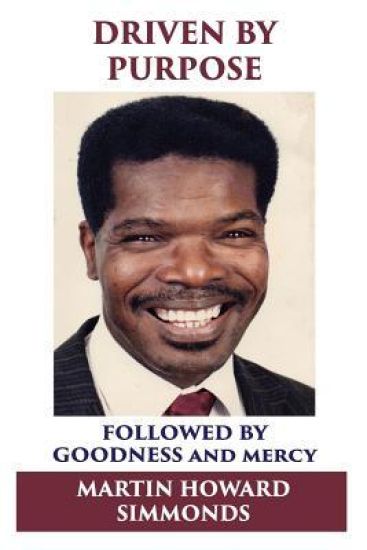
Driven by purpose is a personal account of the life of Martin Howard Simmonds. A Bishop, Lecturer, teacher, husband, father, counsellor whose life journey has taken many turns, peaks and valleys with the ever-demonstrated message of God's goodness and mercy. The reader is taken through church history, relationships, pains, frustrations, and seemingly impossible happy and miraculous events of his life, providing insight of a life of struggle but also a life of immense joy, satisfaction and accomplishment against many odds. The reader will be encouraged and stirred to know through it all God's goodness and mercy continues to follow Martin's life even in his later years.
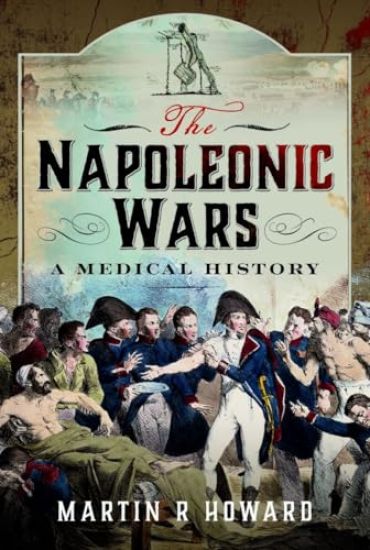
In the tumultuous saga of the Napoleonic Wars, one critical narrative has remained notably absent: a comprehensive medical history. This meticulously researched new volume from Martin R. Howard fills this gap in the literature. From the blood-stained fields of battle to the makeshift hospitals overflowing with sick and wounded soldiers, every aspect of medical care is vividly portrayed. Readers are immersed in the chaos of battlefield triage, groundbreaking surgical procedures, and the epidemics of disease. Not just mere historical documentation, this work is a gripping testament to human resilience. Through the eyes of those who lived it, the pages pulsate with the drama and urgency of the era, offering a riveting narrative that is both informative and compelling. The book draws on accounts from Europe, North America, The West Indies, Egypt, and India to give a truly global picture of the medical landscape of the time. The often-overlooked medical legacy of the Napoleonic Wars is given due recognition.
The American Revolutionary War, fought 250 years ago between Britain's North American colonies and the British colonial government, was a conflict of global significance. It had a profound influence on the history of the United States, Britain and the wider world, and an enormous body of literature has been devoted to the subject. Yet there is no comprehensive account of the military medicine practised during the war, which is why this thorough, graphic and highly readable study by Martin Howard is so timely and valuable. His account describes the medical story of the War between Lexington and Yorktown in absorbing detail. He covers the key military events, the medicine and surgery of the period, and the medical departments of the opposing armies. The narrative is enriched by the vivid eyewitness testimonies of soldiers, doctors, and civilians. Previously neglected topics such as biological warfare and the impact of disease on black soldiers and the Native American population are explored. The human toll of epidemic disease had a significant impact on the outcome of the war and vital lessons were learnt. The war was associated with improvements in military medicine and the professionalization of American medicine. Martin Howard's ambitious work will be stimulating reading for all students of the American Revolutionary War, particularly those with a special interest in the history of medicine.
The Peninsular War and the Napoleonic Wars across Europe are subjects of such enduring interest that they have prompted extensive research and writing. Yet other campaigns, in what was a global war, have been largely ignored. Such is the case for the war in India which persisted for much of the French Revolutionary and Napoleonic periods and peaked in the years 1798?1805 with the campaigns of Arthur Wellesley - later the Duke of Wellington - and General Lake in the Deccan and Hindustan. That is why this new study by Martin Howard is so timely and important. While it fully acknowledges Wellington's vital role, it also addresses the nature of the warring armies, the significance of the campaigns of Lake in North India, and leaves the reader with an understanding of the human experience of war in the region. For this was a brutal conflict in which British armies clashed with the formidable forces of the Sultan of Mysore and the Maratha princes. There were dramatic pitched battles at Assaye, Argaum, Delhi and Laswari, and epic sieges at Seringapatam, Gawilghur and Bhurtpore. The British success was not universal.
The Peninsular War and the Napoleonic Wars across Europe are subjects of such enduring interest that they have prompted extensive research and writing. Yet other campaigns, in what was a global war, have been largely ignored. Such is the case for the war in India which persisted for much of the French Revolutionary and Napoleonic periods and peaked in the years 1798-1805 with the campaigns of Arthur Wellesley – later the Duke of Wellington – and General Lake in the Deccan and Hindustan. That is why this new study by Martin Howard is so timely and important. While it fully acknowledges Wellington’s vital role, it also addresses the nature of the warring armies, the significance of the campaigns of Lake in North India, and leaves the reader with an understanding of the human experience of war in the region. For this was a brutal conflict in which British armies clashed with the formidable forces of the Sultan of Mysore and the Maratha princes. There were dramatic pitched battles at Assaye, Argaum, Delhi and Laswari, and epic sieges at Seringapatam, Gawilghur and Bhurtpore. The British success was not universal.
The Intelligent Heart Access the power of your heart's intelligence to improve your focus and creativity, elevate your emotional clarity, lower your stress and anxiety levels, strengthen your immune system, promote your body's optimal performance, and slow the aging process.
?Doc Childre’s writing is eloquent, his wisdom is profound, and his easy way of communicating makes this book a treasure. His colleagues present the energy of the heart in the safety of a scientific context that invites us again and again to move beyond it.” -- Gary Zukav, author The Seat of the Soul and The Dancing Wu Li Masters Heart Intelligence, Connecting with the Intuitive Guidance of the Heart provides readers with a new, high definition picture of the energetic heart as a unifying, creative, intuitive intelligence that we can learn to draw on for moment to moment guidance. Heart Intelligence links the physical heart to the spiritual (energetic) heart. Through its extensive communication with the brain and body, the heart is intimately involved in how we think, feel, and respond to the world. Expanding on their breakthrough book, The HeartMath Solution, the authors offer heart-based techniques and guidelines for living from the heart, which connects the puzzle pieces of our purpose and fulfillment. The book provides information and simple practices for accessing our heart’s intuitive guidance to connect with our highest choices for better outcomes. Our choices are especially important through these changing times because they constantly create or disrupt our peace, happiness and self-security. Our thoughts and feelings influence the chemistry that regulates much of our health ? how we feel, for better or worse. Our thoughts, feelings, emotions and attitudes are just frequencies that we can learn to change ? once we put our heart into our intention. Heart Intelligence provides practices to replace fear with the attitude of intelligent concern (managed concern) which leaves us in charge and more attuned to intuitive direction. We learn the benefits of practicing simple coherence techniques a few times a day for boosting resilience and emotional balance; making appropriate choices; and clearing our mind from anxiety or overwhelm when needed. It is through deepening our heart intelligence, coherence and connection that humanity will be able to shift from separation to cooperation resulting in higher solutions to our personal and global problems
It's easy to feel powerless in the current state of the world - but it doesn't have to be this way. You can unlock the natural intelligence of your heart to reconnect with hope, wellbeing, and empowerment. This new edition of Heart Intelligence shows you how. It has been updated to help you navigate more effectively through today's challenging times. You'll learn easy, effective techniques and exercises and see benefits right away. These tools will empower you to rise above the stress and overwhelm of today's changing times and learn to feel good (again). You can reclaim balance and self-security in managing your energy and life's direction. Heart intelligence increases your heart-brain connection, providing access to your heart's intuitive guidance and practical intuition needed at important choice points, allowing you to choose your responses rather than mechanically react in the same old stress-producing behaviors. Humanity is realizing that the heart contains a higher intelligence for providing the intuitive guidance needed for navigating life effectively. People instinctively know there's something seriously intelligent about the heart. This may be why we say, "When there's nowhere else to go for an answer, go to your heart." The fun question is, why not go there to start with, rather than everywhere else first? Most of us sense that profound societal changes will continue to take place, as our world becomes increasingly interconnected. An important step for humanity to achieve its potential, is that we learn to get along with each other. People kind of know this is a missing piece, yet the mind without the heart hasn't been able to pull this off. The heart's intuitive intelligence can offer us, personally and collectively, a chance to create (not wait for) our fulfillment. Building trust in our heart's intuitive guidance leads to uplifting possibilities and the increased capacity to manifest them. This enables us to become our true self--with the heart power and effectiveness of our love and care to help change the world.
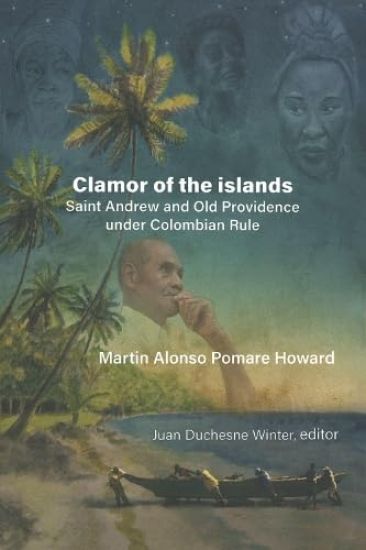
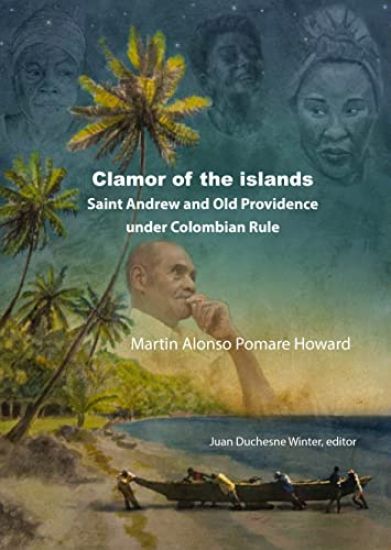
The purpose of this book is to provide brief information about what the islands of Providencia and San Andr s were in the past, and in contrast, what they are today, and the context of the settlers throughout the centuries. The motivation of this work, fundamentally, is to show the discrimination and the constant suffering of the natives of these islands. This book does not record the complete historical events since the so-called discovery; however, it contains a summary of the first inhabitants of the islands, their activities and submission to various authorities at different times, the preservation of their traditions in the midst of their difficulties to survive, and the development of a culture imposed with the help of religion and language since 1926. Another additional purpose is to raise awareness among the natives of the Providencia and San Andr s Archipelago about their history and about the abuses committed against them by the Colombian government for more than a century.
The purpose of this book is to provide brief information about what the islands of Providencia and San Andr were in the past, and in contrast, what they are today, and the context of the settlers throughout the centuries. The motivation of this work, fundamentally, is to show the discrimination and the constant suffering of the natives of these islands. This book does not record the complete historical events since the so-called discovery; however, it contains a summary of the first inhabitants of the islands, their activities and submission to various authorities at different times, the preservation of their traditions in the midst of their difficulties to survive, and the development of a culture imposed with the help of religion and language since 1926. Another additional purpose is to raise awareness among the natives of the Providencia and San Andr s Archipelago about their history and about the abuses committed against them by the Colombian government for more than a century.
John Martin was a pioneer of Clark County, Kentucky, where he lived on Lower Howard's Creek. John had been a blacksmith in Goochland County, Virginia, where he married Rachel Pace. He owned a small farm there before moving to Ballenger Creek in what is now Fluvanna County. John and Rachel were the parents of thirteen children. In the late 1780s, the parents and children moved to Kentucky. John settled on a hillside farm in an area then known as the Bush Settlement. John now has descendants too numerous to count, some still in Clark County, the others spread all over. Our John Martin has been confused with a number of other men of the same name, and their deeds have been conflated to create a mythical man. One goal of this work is to provide a fully documented history of the life of John Martin of Lower Howard's Creek. Illustrated, indexed.
Howard Thurman and Martin Luther King, Jr. were seminal figures in 20th Century American religion. Their thought and practice helped to shape the ongoing vision for peace and community across the many forms of diversity incumbent in society. In Blessed are the Peacemakers: A Theological Analysis of the Thought of Howard Thurman and Martin Luther King, Jr., Dr. C. Anthony Hunt offers insights on the life and thought of Thurman and King. As both envisaged peaceful community as critical to just society, Hunt identifies ten principles from the work of Thurman and King that will be critical to the realization of peaceful community in the new millennium.