Kirjojen hintavertailu. Mukana 11 377 346 kirjaa ja 12 kauppaa.

Kirjahaku

Etsi kirjoja tekijän nimen, kirjan nimen tai ISBN:n perusteella.

1000 tulosta hakusanalla Martin M. Zuckerman

The Complete Book of Trusts

The Complete Book of Trusts

Martin M. Shenkman

John Wiley Sons Inc
2002
nidottu
A new, updated edition of the ultimate guide to trusts Trusts are powerful and flexible financial planning tools, and this new edition of The Complete Book of Trusts covers everything you need to know to protect your hard-earned assets from taxes, creditors, and more. This updated Third Edition provides all the latest information on trusts, addressing recent changes due to economic growth and the Tax Relief Reconciliation Act of 2001 in such areas as transferring assets, distribution of income, gift and estate tax rules, and many others. Along with in-depth examinations of sixty different types of trusts, this book also shows you how to: *Set up a trust to manage assets in the event of disability or death *Avoid probate *Minimize or eliminate estate and other transfer taxes *Financially protect loved ones *And more The Complete Book of Trusts, Third Edition is an invaluable resource for anyone with significant assets to protect.

6 Hour Guide to Protecting Your Assets

6 Hour Guide to Protecting Your Assets

Martin M. Shenkman

John Wiley Sons Inc
2003
nidottu
SIMPLE, AFFORDABLE STEPS YOU CAN TAKE TO PROTECT WHAT’S YOURS By the time you’re named as a defendant in a lawsuit or divorce proceeding, it may be too late to protect your assets. The time to shield the hard-won fruits of your labor is now! Fortunately, protecting your assets can be much easier and far less expensive than you think. In this complete, practical, and easy-to-follow guide, leading tax and estate planning attorney and bestselling author Martin Shenkman presents the steps you can and should take to protect your home, your savings, and other assets from creditors, litigants, and divorce. Shenkman explains the essential concepts of protecting what you own from malpractice claims, lawsuits, and divorce. This book offers step-by-step guidance in determining which asset-protection strategies and techniques are right for you. You’ll learn numerous legal and effective methods you can use to: *Protect your personal assets from business and professional claims *Protect your assets and your heirs’ assets from divorce *Minimize your risk of lawsuits and other claims against your assets *Create limited partnerships and LLCs to protect your assets *Make your home-based business judgment-proof *Use domestic trusts to protect against lawsuits *Secure real estate and stock holdings against lawsuits
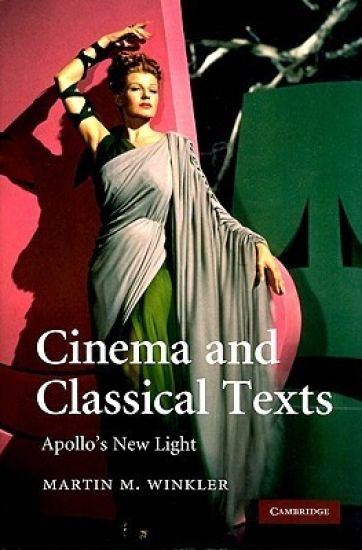
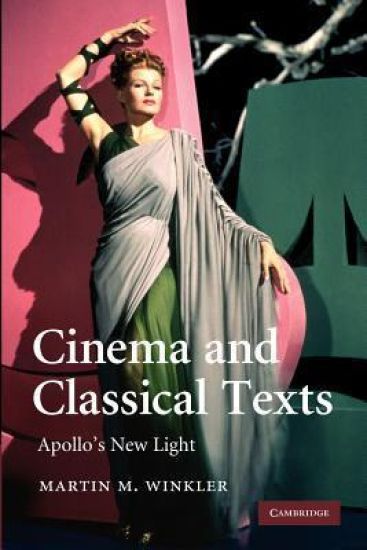
Cinema and Classical Texts

Cinema and Classical Texts

Martin M. Winkler

Cambridge University Press
2009
sidottu
Apollo was the ancient god of light and the divine patron of the arts. He is therefore a fitting metaphor for cinematography, which is the modern art of writing with moving light. This book interprets films as visual texts and provides the first systematic theoretical and practical demonstration of the affinities between Greco-Roman literature and the cinema. It examines major themes from classical myth and history such as film portrayals of gods, exemplified by Apollo and the Muses; Oedipus, antiquity's most influential mythic-tragic hero; the question of heroism and patriotism in war; and the representation of women like Helen of Troy and Cleopatra as products of male desire and fantasy. Covering a wide range of European and American directors, genres and classical authors, this study provides an innovative perspective on the two disciplines of classics and cinema and demonstrates our most influential medium's unlimited range when it adapts ancient texts.
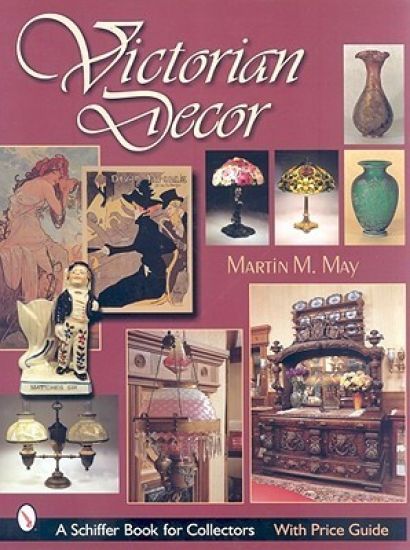
Victorian Decor

Victorian Decor

Martin M. May

Schiffer Publishing Ltd
2001
sidottu
The best craftsmanship in home furnishings of the late 19th century is documented in this beautiful study by a dedicated connoisseur. At a time when American and European economies were expanding quickly, consumers' tastes were increasingly elaborate and refined. Demand for exquisite design, fine materials, and masterful workmanship resulted in interiors of a calibre never equalled or surpassed since. This book presents an overview of those Victorian architectural antiques, stained glass windows, furniture, art glass, lighting devices, match holders, and poster art in chapters that explain the development of the forms and show examples in over 400 color photographs. Period room settings as well as single items are featured. Especially strong here are the pieces that demonstrate originality in Tiffany windows and art glass, Mitchell and Rammelsburg furniture, Globe-Wernicke bookcases, French Burgun Schverer and English cameo glass, and Duffner and Kimberly lamps. More and more people today recognize and seek out the superior quality of Victorian antiques. With this new book as a guide, they will learn important details to help identify originals and marvel at the beauty they can hope to find. Current price ranges are included with the captions.
An Integrative Theory of Leadership

An Integrative Theory of Leadership

Martin M. Chemers

Psychology Press
1997
sidottu
A definition of leadership that would be widely accepted by the majority of theorists and researchers might say that "leadership is a process of social influence in which one person is able to enlist the aid and support of others in the accomplishment of a common task."The major points of this definition are that leadership is a group activity, is based on social influence, and revolves around a common task. While this specification seems relatively simple, the reality of leadership is very complex. Intrapersonal factors (thoughts and emotions) interact with interpersonal processes (attraction, communication, and influence) to have effects on a dynamic external environment. Each of these aspects brings complexity to the leadership process. It is the purpose of this book to make that complexity a bit more manageable, increasing the ability to understand what effective leadership is.This volume offers a comprehensive analysis and integration of the empirical research literature and major theories of leadership. It employs a functional analysis stressing what leaders must do to be effective and specifies the processes related to each function. The chapters provide an extensive review of the major approaches to leadership. Each chapter is discussed with an eye to explaining the basic principles, the research evidence, and where appropriate, the relationship of the theory or research program to other theories. In addition, this volume offers the most comprehensive treatment of cultural and gender factors in leadership of any recent book. The question of male-female differences in leadership style and performance is carefully analyzed against the empirical findings. The ultimate goal of this review of the literature is to provide a basis for the presentation of an integrative model of leadership that brings together function and process and provides an armature for integrating what is known.
An Integrative Theory of Leadership

An Integrative Theory of Leadership

Martin M. Chemers

Psychology Press
1997
nidottu
A definition of leadership that would be widely accepted by the majority of theorists and researchers might say that "leadership is a process of social influence in which one person is able to enlist the aid and support of others in the accomplishment of a common task."The major points of this definition are that leadership is a group activity, is based on social influence, and revolves around a common task. While this specification seems relatively simple, the reality of leadership is very complex. Intrapersonal factors (thoughts and emotions) interact with interpersonal processes (attraction, communication, and influence) to have effects on a dynamic external environment. Each of these aspects brings complexity to the leadership process. It is the purpose of this book to make that complexity a bit more manageable, increasing the ability to understand what effective leadership is.This volume offers a comprehensive analysis and integration of the empirical research literature and major theories of leadership. It employs a functional analysis stressing what leaders must do to be effective and specifies the processes related to each function. The chapters provide an extensive review of the major approaches to leadership. Each chapter is discussed with an eye to explaining the basic principles, the research evidence, and where appropriate, the relationship of the theory or research program to other theories. In addition, this volume offers the most comprehensive treatment of cultural and gender factors in leadership of any recent book. The question of male-female differences in leadership style and performance is carefully analyzed against the empirical findings. The ultimate goal of this review of the literature is to provide a basis for the presentation of an integrative model of leadership that brings together function and process and provides an armature for integrating what is known.
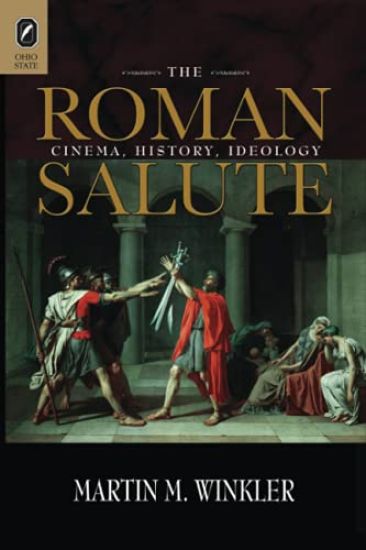
The Roman Salute

The Roman Salute

Martin M Winkler

OHIO STATE UNIVERSITY PRESS
2021
pokkari
The raised-arm salute was the most popular symbol of Fascism, Nazism, and related political ideologies in the twentieth century and is said to have derived from an ancient Roman custom. Although modern historians and others employ it as a matter of course, the term "Roman salute" is a misnomer. The true origins of this salute can be traced back to the popular culture of the late nineteenth and early twentieth centuries that dealt with ancient Rome: historical plays and films. The visual culture of stage and screen from the 1890s to the 1920s was chiefly responsible for the wide familiarity of Europeans and Americans with forms of the raised-arm salute and made it readily available for political purposes. The Roman Salute: Cinema, History, Ideology by Martin M. Winkler presents extensive evidence for the modern origin of the raised-arm salute from well before the birth of Fascism and traces its varieties and its dissemination. The continuing presence of certain aspects of Fascism makes an examination of all its facets desirable, especially when the true origins of a symbol as potent as the salute and the history of its dissemination are barely known to classicists and historians of ancient Rome on the one hand, and to scholars of modern European history, on the other. Thus this book will appeal to classicists and historians, including film historians, and will be of interest to readers beyond the academy.
Photodegradation of Water Pollutants

Photodegradation of Water Pollutants

Martin M. Halmann

CRC Press Inc
1995
sidottu
Photodegradation of Water Pollutants, the only complete survey available of current photocatalytic methods for treating water pollutants, covers all aspects of light-stimulated detoxification. Ideal for researchers and students, this new book explains methods for pollution treatment that have proven more effective than conventional biodegradation. Photodegradation of Water Pollutants examines advanced oxidation processes that have been successful in treating the chemical substances produced by industrial effluents and intensive agriculture. These oxidation processes include irradiation with ultraviolet or visible light, the use of homogenous sensitizers, such as dyes, and the use of heterogeneous photocatalysts, such as dispersed semiconductors. In addition, Photodegradation of Water Pollutants addresses the naturally occurring self-cleaning of some pollutants in sunlit surface waters, as well as several alternative non-photochemical approaches to water treatment. Available treatment options are discussed for the main groups of water pollutants, including toxic inorganic ions (cyanides, heavy metals), hydrocarbon derivatives (oil spills, surfactants, pulp and paper wastes), halocarbons, organo-N, organo-P, and organo-S compounds. The text also contains a unique section on the economics of advanced oxidation pollution treatments.
Chemical Fixation of Carbon DioxideMethods for Recycling CO2 into Useful Products
Chemical Fixation of Carbon Dioxide presents new concepts and results from research into the problems caused by increasing levels of carbon dioxide. The book discusses the limitations of natural plant photosynthesis as a sink for carbon dioxide and emphasizes chemical fixation as an important alternative. A number of significant topics are covered, including new coupling reactions for producing compounds such as carbamates, urethanes, and heterocyclic structures; new catalyst systems, particularly for methanation and methanol synthesis; the use of homogeneous solution photosensitizers and heterogeneous semiconductor photocatalysts to photoreduce carbon dioxide with visible light and sunlight; and electrochemical reduction. This book will be a useful reference for organic chemists working on environmental problems, chemical engineers, environmental chemists, professionals at research facilities, and students.
Classical Antiquity and the Cinematic Imagination

Classical Antiquity and the Cinematic Imagination

Martin M. Winkler

Cambridge University Press
2025
pokkari
This book aims to enhance our appreciation of the modernity of the classical cultures and, conversely, of cinema's debt to ancient Greece and Rome. It explores filmic perspectives on the ancient verbal and visual arts and applies what is often referred to as pre-cinema and what Sergei Eisenstein called cinematism: that paintings, statues, and literature anticipate modern visual technologies. The motion of bodies depicted in static arts and the vividness of epic ecphrases point to modern features of storytelling, while Plato's Cave Allegory and Zeno's Arrow Paradox have been related to film exhibition and projection since the early days of cinema. The book additionally demonstrates the extensive influence of antiquity on an age dominated by moving-image media, as with stagings of Odysseus' arrow shot through twelve axes or depictions of the Golden Fleece. Chapters interpret numerous European and American silent and sound films and some television productions and digital videos.
Classical Antiquity and the Cinematic Imagination

Classical Antiquity and the Cinematic Imagination

Martin M. Winkler

Cambridge University Press
2024
sidottu
This book aims to enhance our appreciation of the modernity of the classical cultures and, conversely, of cinema's debt to ancient Greece and Rome. It explores filmic perspectives on the ancient verbal and visual arts and applies what is often referred to as pre-cinema and what Sergei Eisenstein called cinematism: that paintings, statues, and literature anticipate modern visual technologies. The motion of bodies depicted in static arts and the vividness of epic ecphrases point to modern features of storytelling, while Plato's Cave Allegory and Zeno's Arrow Paradox have been related to film exhibition and projection since the early days of cinema. The book additionally demonstrates the extensive influence of antiquity on an age dominated by moving-image media, as with stagings of Odysseus' arrow shot through twelve axes or depictions of the Golden Fleece. Chapters interpret numerous European and American silent and sound films and some television productions and digital videos.
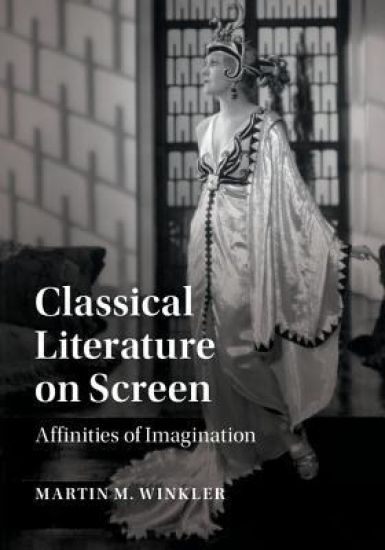
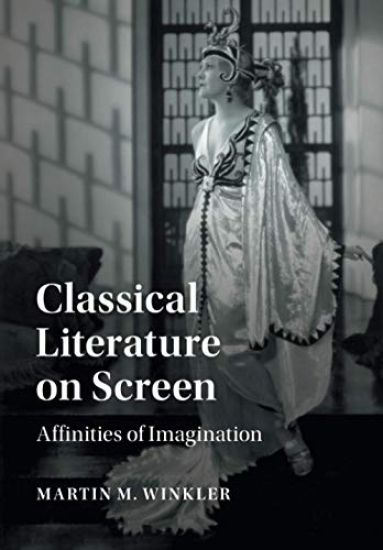
Classical Literature on Screen

Classical Literature on Screen

Martin M. Winkler

Cambridge University Press
2017
sidottu
Martin M. Winkler argues for a new approach to various creative affinities between ancient verbal and modern visual narratives. He examines screen adaptations of classical epic, tragedy, comedy, myth, and history, exploring, for example, how ancient rhetorical principles regarding the emotions apply to moving images and how Aristotle's perspective on thrilling plot-turns can recur on screen. He also interprets several popular films, such as 300 and Nero, and analyzes works by international directors, among them Pier Paolo Pasolini (Oedipus Rex, Medea), Jean Cocteau (The Testament of Orpheus), Mai Zetterling (The Girls), Lars von Trier (Medea), Arturo Ripstein (Such Is Life), John Ford (westerns), Alfred Hitchcock (Psycho), and Spike Lee (Chi-Raq). The book demonstrates the undiminished vitality of classical myth and literature in our visual media, as with screen portrayals of Helen of Troy. It is important for all classicists and scholars and students of film, literature, and history.
Cinema and Classical Texts

Cinema and Classical Texts

Martin M. Winkler

Cambridge University Press
2012
pokkari
Apollo was the ancient god of light and the divine patron of the arts. He is therefore a fitting metaphor for cinematography, which is the modern art of writing with moving light. This book interprets films as visual texts and provides the first systematic theoretical and practical demonstration of the affinities between Greco-Roman literature and the cinema. It examines major themes from classical myth and history such as film portrayals of gods, exemplified by Apollo and the Muses; Oedipus, antiquity's most influential mythic-tragic hero; the question of heroism and patriotism in war; and the representation of women like Helen of Troy and Cleopatra as products of male desire and fantasy. Covering a wide range of European and American directors, genres and classical authors, this study provides an innovative perspective on the two disciplines of classics and cinema and demonstrates our most influential medium's unlimited range when it adapts ancient texts.
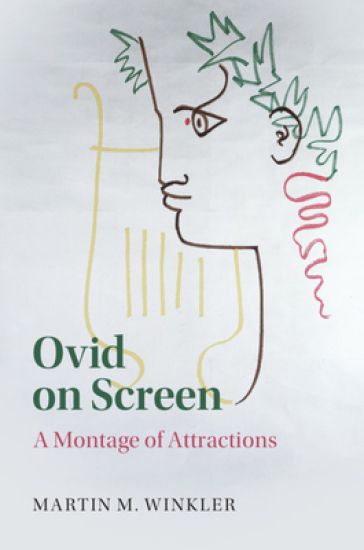
Ovid on Screen

Ovid on Screen

Martin M. Winkler

Cambridge University Press
2020
sidottu
This book presents the first systematic appreciation of Ovid's extensive influence on, and affinity with, modern visual culture. Some topics are directly related to Ovid; others exhibit features, characters, or themes analogous to those in his works. The book demonstrates the wide-ranging ramifications that Ovidian archetypes, especially from the Metamorphoses, have provoked in a modern artistic medium that did not exist in Ovid's time. It ranges from the earliest days of film history (Georges Méliès's discovery of screen metamorphosis) and theory (Gabriele D'Annunzio's fascination with the metamorphosis of Daphne; Sergei Eisenstein's concept of film sense) through silent films, classic sound films, commercial cinema, art-house and independent films to modernism and the C.G.I. era. Films by well-known directors, including Ingmar Bergman, Walerian Borowczyk, Jean Cocteau, Alfred Hitchcock, Stanley Kubrick, Fritz Lang, Max Ophüls, Alain Resnais, and various others, are analyzed in detail.
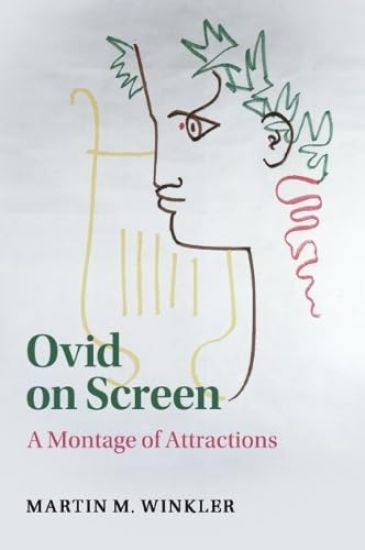
Ovid on Screen

Ovid on Screen

Martin M. Winkler

Cambridge University Press
2025
pokkari
This book presents the first systematic appreciation of Ovid's extensive influence on, and affinity with, modern visual culture. Some topics are directly related to Ovid; others exhibit features, characters, or themes analogous to those in his works. The book demonstrates the wide-ranging ramifications that Ovidian archetypes, especially from the Metamorphoses, have provoked in a modern artistic medium that did not exist in Ovid's time. It ranges from the earliest days of film history (Georges Méliès's discovery of screen metamorphosis) and theory (Gabriele D'Annunzio's fascination with the metamorphosis of Daphne; Sergei Eisenstein's concept of film sense) through silent films, classic sound films, commercial cinema, art-house and independent films to modernism and the C.G.I. era. Films by well-known directors, including Ingmar Bergman, Walerian Borowczyk, Jean Cocteau, Alfred Hitchcock, Stanley Kubrick, Fritz Lang, Max Ophüls, Alain Resnais, and various others, are analyzed in detail.
Classical Literature on Screen

Classical Literature on Screen

Martin M. Winkler

Cambridge University Press
2020
pokkari
Martin M. Winkler argues for a new approach to various creative affinities between ancient verbal and modern visual narratives. He examines screen adaptations of classical epic, tragedy, comedy, myth, and history, exploring, for example, how ancient rhetorical principles regarding the emotions apply to moving images and how Aristotle's perspective on thrilling plot-turns can recur on screen. He also interprets several popular films, such as 300 and Nero, and analyzes works by international directors, among them Pier Paolo Pasolini (Oedipus Rex, Medea), Jean Cocteau (The Testament of Orpheus), Mai Zetterling (The Girls), Lars von Trier (Medea), Arturo Ripstein (Such Is Life), John Ford (westerns), Alfred Hitchcock (Psycho), and Spike Lee (Chi-Raq). The book demonstrates the undiminished vitality of classical myth and literature in our visual media, as with screen portrayals of Helen of Troy. It is important for all classicists and scholars and students of film, literature, and history.