Kirjojen hintavertailu. Mukana 11 244 527 kirjaa ja 12 kauppaa.

Kirjahaku

Etsi kirjoja tekijän nimen, kirjan nimen tai ISBN:n perusteella.

1000 tulosta hakusanalla Martin P. Rouse

The Consumerist Manifesto

The Consumerist Manifesto

Martin P. Davidson

Routledge
1992
nidottu
Advertising is no longer on the defensive. It has survived the snobbery of the 50s, the conspiracy theories of the 60s and the semiology of the 70s to be embraced and apotheosised by the 80s.The Consumerist Manifesto is the first book to examine the advertising process from within the agency itself, and from the wider perspective of advertising's dual relationship as both consumer and object, with contemporary cultural theory. Martin Davidson follows the creation of successful campaigns and explores how advertising has succeeded in setting the tone for even larger aspects of our material and personal lives. With the impact of postmodernism and popular culture, and the subsequent collapse of the old anti-advertising critique, the books reveals how advertising came to be embraced as the idiom of the enterprise culture, and how it became central to the decades assault on traditional notions of political and cultural value. Martin Davidson explores the wider implications of advertising's dominance for cultural theory, art, anthropology and language. Finally, Martin Davidson asks how this new critique will have to develop if the industry's new credibility is to be maintained.

GIS in Land and Property Management

GIS in Land and Property Management

Martin P. Ralphs; Peter Wyatt

Taylor Francis Ltd
2003
sidottu
Economists, geographers and surveyors are beginning to recognise the powerful tool which a Geographical Information System (GIS) offers in effective property management. It provides a means of managing land and property information digitally and in a geographical context, and allows for rapid access to information and a means of analyzing that information in a geographical context.GIS in Land and Property Management shows how to use GIS, both in principle and in practice. It introduces digital mapping and GIS, along with a brief history of the development of GIS and LIS, all with an emphasis on property. In presenting the spectrum of GIS applications in property management it gives a number of case studies from a variety of market sectors, and it analyzes the issues to provide guidance and a number of recommendations for the implementation of GIS. At the same time common themes and issues are drawn out to present a coherent message for students and practitioners.The book is useful for undergraduate and postgraduate students on land management, built environment, economics and geography courses, and for property professionals, in both public and private sectors, looking to GIS as a property management decision aid.
GIS in Land and Property Management

GIS in Land and Property Management

Martin P. Ralphs; Peter Wyatt

Taylor Francis Ltd
2003
nidottu
Economists, geographers and surveyors are beginning to recognise the powerful tool which a Geographical Information System (GIS) offers in effective property management. It provides a means of managing land and property information digitally and in a geographical context, and allows for rapid access to information and a means of analyzing that information in a geographical context.GIS in Land and Property Management shows how to use GIS, both in principle and in practice. It introduces digital mapping and GIS, along with a brief history of the development of GIS and LIS, all with an emphasis on property. In presenting the spectrum of GIS applications in property management it gives a number of case studies from a variety of market sectors, and it analyzes the issues to provide guidance and a number of recommendations for the implementation of GIS. At the same time common themes and issues are drawn out to present a coherent message for students and practitioners.The book is useful for undergraduate and postgraduate students on land management, built environment, economics and geography courses, and for property professionals, in both public and private sectors, looking to GIS as a property management decision aid.
Data Networks, IP and the Internet

Data Networks, IP and the Internet

Martin P. Clark

John Wiley Sons Inc
2003
sidottu
Data Networking is a capability that allows users to combine separate data bases, telecommunication systems, and specialised computer operations into a single integrated system, so that data communication can be handled as easily as voice messages. Data communications is the problem of getting information from one place to another reliably (secure both from channel disruptions and deliberate interference) while conforming to user requirements. IP (Internet protocol) is the central pillar of the Internet and was designed primarily for internetworking as being a simple protocol almost any network could carry. The business world appears to increasingly revolve around data communications and the Internet and all modern data networks are based around either the Internet or at least around IP (Internet Protocol)-based networks. However, many people still remain baffled by multiprotocol networks - how do all the protocols fit together? How do I build a network? What sort of problems should I expect? This volume is intended not only for network designers and practitioners, who for too long have been baffled by the complex jargon of data networks, but also for the newcomer - eager to put the plethora of "protocols" into context. After the initial boom the rate of IP development is now beginning to stabilise, making a standard textbook and reference book worthwhile with a longer shelf life. Highly illustrated and written in an accessible style this book is intended to provide a complete foundation textbook and reference of modern IP-based data networking - avoiding explanation of defunct principles that litter other books. Network/IP engineers, Network operators, engineering managers and senior undergraduate students will all find this invaluable.
Hydrology

Hydrology

Martin P. Wanielista; Robert Kersten; Ron Eaglin

John Wiley Sons Inc
1996
nidottu
This edition of its popular predecessor has been significantly revised to increase flexibility in the presentation and maintain greater continuity of the material. Combining both theory and practical applications of empirical equations the text contains expanded treatment of water quantity and quality control, a detailed presentation of basic principles and use in analysis and design, hydrograph topics including synthetic and convolution techniques, practical and realistic case studies relating to design problems, and additional end-of-chapter problems. It provides new computer programs to explain complex concepts and solve large data-based problems. An additional appendix offers suggestions for classroom or lab problems.
Wireless Access Networks

Wireless Access Networks

Martin P. Clark

John Wiley Sons Inc
2000
sidottu
Fixed wireless access networks and Wireless Local Loop (WLL) technology are effective and efficient means for rapidly creating new access to telecommunications networks and services which are short of capacity and incapable of handling the bitrates expected by today's high speed multimedia, Internet, video and voice services. Wireless Access Networks is a complete reference for all involved in fixed wireless access and wireless local loop, including business strategists, marketing, technical, planning and operations staff of public network operators, as well as students. Well-illustrated and simple-to-read, topics covered include: * Economics of fixed wireless networks - why and when they are attractive * Technical and operational planning, practicality and maintenance * Design of radio systems and their basic functionality * Point-to-point (PTP) and point-to-multipoint (PMP) radio * Calculation of radio system range and reliability * Fixed wireless applications and their network integration
Stormwater Management

Stormwater Management

Martin P. Wanielista; Yousef A. Yousef

John Wiley Sons Inc
1992
sidottu
Designed for both students and practicing professionals, it addresses critical issues of water quality, focusing on the illustration and application of both hydrologic and economic water management techniques. Stresses applications using worked examples, case studies and problems. Software is to assist in solving more complex problems and to apply demonstrated techniques. The software discussed in the book is available for download at http://www.cee.ucf.edu/software/swm1993.zip
Networks and Telecommunications

Networks and Telecommunications

Martin P. Clark

JOHN WILEY SONS INC
1997
sidottu
Telecommunications network design and operation is now widely regarded as an issue of business management as well as electrical engineering. In this updated edition, Martin Clark, a pioneer of this perspective, applies it to the increasingly complex and diverse realm of voice, data and multimedia networks. Written in an accessible style and clearly illustrated throughout, this is a basic, practical and intuitive insight into modern network engineering with sections including: * Technical accounts of modern voice, data and multimedia networks * Coverage of ATM, B-ISDN, SDH, mobile radio and satellite networks, Internet and TCP/IP * Practical aspects of running and setting-up networks * Running a business based on telecommunications A text specifically for readers new to the whole subject of telecommunications, and professional telecommunications managers who need an introduction and reference work on all aspects of technology, operational techniques and regulation.
Where Have All the Voters Gone?

Where Have All the Voters Gone?

Martin P. Wattenberg

Harvard University Press
2002
nidottu
As the confusion over the ballots in Florida in 2000 demonstrated, American elections are complex and anything but user-friendly. This phenomenon is by no means new, but with the weakening of political parties in recent decades and the rise of candidate-centered politics, the high level of complexity has become ever more difficult for many citizens to navigate. Thus the combination of complex elections and the steady decline of the party system has led to a decline in voter turnout. In this timely book, Martin Wattenberg confronts the question of what low participation rates mean for democracy. At the individual level, turnout decline has been highest among the types of people who most need to have electoral decisions simplified for them through a strong party system--those with the least education, political knowledge, and life experience. As Wattenberg shows, rather than lamenting how many Americans fail to exercise their democratic rights, we should be impressed with how many arrive at the polls in spite of a political system that asks more of a typical person than is reasonable. Meanwhile, we must find ways to make the American electoral process more user-friendly.
The Decline of American Political Parties, 1952-1996

The Decline of American Political Parties, 1952-1996

Martin P. Wattenberg

Harvard University Press
1998
nidottu
"The major theme of Chapter 12, new to this edition, is the missed opportunities for the parties in the 1996 elections. The year started with a highly visible confrontation over the budget that could have revitalized the party coalitions if the issues had been carried over to the election. However, the candidate-centered campaign of 1996 ultimately did little to resolve these issues or to reinvigorate partisanship in the electorate. In spite of the opportunities for getting new voters to the polls created by the Motor Voter Act, voter turnout in 1996 was the lowest since 1924. Turning out the vote is one of the most crucial functions of political parties, and their inability to mobalize more than half of the eligible electorate strongly indicates their future decline in importance to voters. Until citizens support the parties more by showing up to cast votes for their candidates, the decline of American political parties must be considered to be an ongoing phenomenon."--From the preface
The Rise of Candidate-Centered Politics

The Rise of Candidate-Centered Politics

Martin P Wattenberg

Harvard University Press
1991
sidottu
Every presidential election since 1964 has been won by the candidate backed by the most united party; yet as party unity has become more important to voting decisions, it has also become increasingly difficult to achieve. In his latest book, Martin Wattenberg offers an in-depth interpretation of the presidential elections of the 1980s, illuminating current theories of political behavior and how they operate in today's candidate-centered politics. Wattenberg investigates the impact that political parties' declining relevance has had on presidential politics. As the parties' ability to polarize opinion weakened and voters were set politically adrift, the candidates themselves had to fill the power vacuum. Interestingly, as the candidates have become more prominent, their popularity has spiraled downward. Wattenberg's national survey data debunks the notion of Reagan as the "teflon president;' demonstrating that many negative judgments stuck to Reagan's public image throughout the 1980s, particularly the criticisms of his conservative policies. The author's intricate analysis shows that many people were torn between candidates whose policies they preferred and those who they thought would produce the best results, and these contradictory attitudes were primarily resolved in favor of Reagan and Bush. This book is not only the successor volume to the author's widely used book on American parties, it is also a controversial and thought-provoking commentary on American parties, politics, and representative government.
Writing the Gettysburg Address

Writing the Gettysburg Address

Martin P. Johnson

University Press of Kansas
2013
sidottu
Four score and seven years ago . . .Are any six words better known, of greater import, or from a more crucial moment in America’s history? And yet after 150 years the dramatic and surprising story of how Lincoln wrote the Gettysburg Address has never been fully told. Until now. Martin Johnson’s remarkable work of historical and literary detection illuminates a speech, a man, and a moment in history that we thought we knew. Johnson guides readers on Lincoln’s emotional and intellectual journey to the speaker’s platform, revealing that Lincoln himself experienced writing the Gettysburg Address as an eventful process that was filled with the possibility of failure, but which he knew resulted finally in success beyond expectation. We listen as Lincoln talks with the cemetery designer about the ideals and aspirations behind the unprecedented cemetery project, look over Lincoln’s shoulder as he rethinks and rewrites his speech on the very morning of the ceremony, and share his anxiety that he might not live up to the occasion. And then, at last, we stand with Lincoln at Gettysburg, when he created the words and image of an enduring and authentic legend. Writing the Gettysburg Address resolves the puzzles and problems that have shrouded the composition of Lincoln’s most admired speech in mystery for fifteen decades. Johnson shows when Lincoln first started his speech, reveals the state of the document Lincoln brought to Gettysburg, traces the origin of the false story that Lincoln wrote his speech on the train, identifies the manuscript Lincoln held while speaking, and presents a new method for deciding what Lincoln’s audience actually heard him say. Ultimately, Johnson shows that the Gettysburg Address was a speech that grew and changed with each step of Lincoln’s eventful journey to the podium. His two-minute speech made the battlefield and the cemetery into landmarks of the American imagination, but it was Lincoln’s own journey to Gettysburg that made the Gettysburg Address.
Writing the Gettysburg Address

Writing the Gettysburg Address

Martin P. Johnson

University Press of Kansas
2015
nidottu
Four score and seven years ago . . . . Are any six words better known, of greater import, or from a more crucial moment in our nation's history? And yet after 150 years the dramatic and surprising story of how Lincoln wrote the Gettysburg Address has never been fully told. Until now. Martin Johnson's remarkable work of historical and literary detection illuminates a speech, a man, and a moment in history that we thought we knew. Johnson guides readers on Lincoln's emotional and intellectual journey to the speaker's platform, revealing that Lincoln himself experienced writing the Gettysburg Address as an eventful process that was filled with the possibility of failure, but which he knew resulted finally in success beyond expectation. We listen as Lincoln talks with the cemetery designer about the ideals and aspirations behind the unprecedented cemetery project, look over Lincoln's shoulder as he rethinks and rewrites his speech on the very morning of the ceremony, and share his anxiety that he might not live up to the occasion. And then, at last, we stand with Lincoln at Gettysburg, when he created the words and image of an enduring and authentic legend. Writing the Gettysburg Address resolves the puzzles and problems that have shrouded the composition of Lincoln's most admired speech in mystery for fifteen decades. Johnson shows when Lincoln first started his speech, reveals the state of the document Lincoln brought to Gettysburg, traces the origin of the false story that Lincoln wrote his speech on the train, identifies the manuscript Lincoln held while speaking, and presents a new method for deciding what Lincoln's audience actually heard him say. Ultimately, Johnson shows that the Gettysburg Address was a speech that grew and changed with each step of Lincoln's eventful journey to the podium. His two-minute speech made the battlefield and the cemetery into landmarks of the American imagination, but it was Lincoln's own journey to Gettysburg that made the Gettysburg Address.
Programming 8-bit PIC Microcontrollers in C

Programming 8-bit PIC Microcontrollers in C

Martin P. Bates

Newnes (an imprint of Butterworth-Heinemann Ltd )
2008
nidottu
Microcontrollers are present in many new and existing electronic products, and the PIC microcontroller is a leading processor in the embedded applications market. Students and development engineers need to be able to design new products using microcontrollers, and this book explains from first principles how to use the universal development language C to create new PIC based systems, as well as the associated hardware interfacing principles. The book includes many source code listings, circuit schematics and hardware block diagrams. It describes the internal hardware of 8-bit PIC microcontroller, outlines the development systems available to write and test C programs, and shows how to use CCS C to create PIC firmware. In addition, simple interfacing principles are explained, a demonstration program for the PIC mechatronics development board provided and some typical applications outlined.
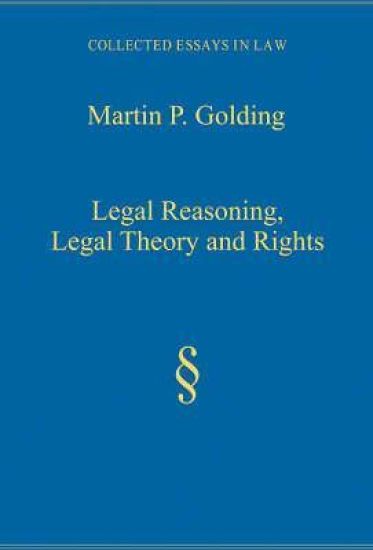
Legal Reasoning, Legal Theory and Rights

Legal Reasoning, Legal Theory and Rights

Martin P. Golding

Ashgate Publishing Limited
2007
sidottu
This book is a selection of articles and chapters published over Martin Golding's academic career. Golding's approach to the philosophy of law is that it contains conceptual and normative issues and in this volume logical issues in legal reasoning are examined, and various theories of law are critically discussed. Normative questions are dealt with regarding the rule of law and criminal law defenses, and the concept of rights and the terminology of rights are analyzed. Much of Golding's work is critical-historical as well as constructive. This volume will prove an informative and useful collection for scholars and students of the philosophy of law.
Jewish Law and Legal Theory

Jewish Law and Legal Theory

Martin P. (EDT) Golding

New York University Press
1994
sidottu
Dealing with issues pivotal to Jewish law theory, this volume offers English-language readers a concise presentation of an important legal tradition. This volume touches on theological concerns of Judaism and the law, but it focuses on broader trends in legal theory. essays address the philosophy of law and jurisprudential analysis which have contributed to modern legal systems.
Gay Macho

Gay Macho

Martin P. Levine; Michael Kimmel

New York University Press
1998
pokkari
A sociological examination into the emergence of male homosexuality with a traditional masculine ethos Before gay liberation, gay men were usually perceived as failed men—"inverts," men trapped in women's bodies. The 1970s saw a radical shift in gay male culture, as a male homosexuality emerged that embraced a more traditional masculine ethos. The gay clone, a muscle-bound, sexually free, hard-living Marlboro man, appeared in the gay enclaves of major cities, changing forever the face of gay male culture. Gay Macho presents the ethnography of this homosexual clone. Martin P. Levine, a pioneer of the sociological study of homosexuality, was among the first social scientists to map the emergence of a gay community and this new style of gay masculinity. Levine was a participant in as well as an observer of gay culture in the 1970s, and this perspective allowed him to capture the true flavor of what it was like to be a gay man before AIDS. Levine's clone was a gender conformist, whose masculinity was demonstrated in patterns of social interaction and especially in his sexuality. According to Levine, his life centered around the "four D's: disco, drugs, dish, and dick." Later chapters, based on Levine's pathbreaking empirical research, explore some of the epidemiological and social consequences of the AIDS epidemic on this particular substratum of the gay community. Although Levine explicitly refuses to pathologize gay men afflicted with HIV, his work develops a scathing, feminist-inspired critique of masculinity, whether practiced by gay or straight men.
Que Paso?

Que Paso?

Martin P. Kantrowitz

University of New Mexico Press
1984
sidottu
This latest edition of a best-selling handbook is the first to include paediatric workups. Designed for use by health-care personnel. Also so useful for travellers in Spanish-speaking countries. Text in English and Spanish.