
Kirjahaku
Etsi kirjoja tekijän nimen, kirjan nimen tai ISBN:n perusteella.
1000 tulosta hakusanalla Mary R Strand
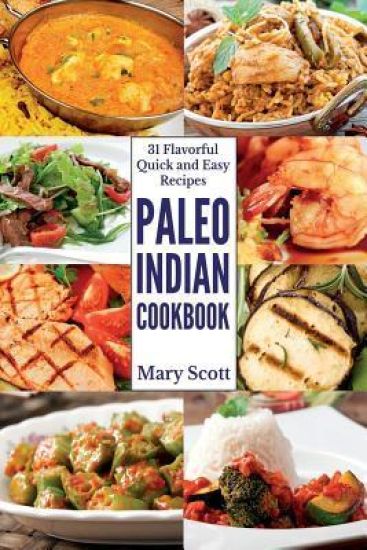
Paleo Indian Cookbook: 31 Flavorful Quick and Easy Recipes
Mary R. Scott
Wings of Eagles Publications LLC
2014
nidottu
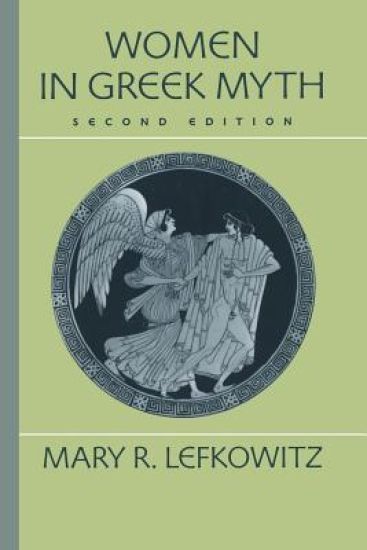
In the first edition of "Women in Greek Myth", published in 1986, Mary R. Lefkowitz convincingly challenged narrow, ideological interpretations of the roles of female characters in Greek mythology. Where some scholars saw the Amazons as the last remnant of a forgotten matriarchy, Clytemnestra as a frustrated individualist, and Antigone as an oppressed revolutionary, Lefkowitz argued that such views were justified neither by the myths themselves nor by the relevant documentary evidence. Concentrating on those aspects of women's experience most often misunderstood - life apart from men, marriage, influence in politics, self-sacrifice and martyrdom, misogyny - she presented a far less negative account of the role of Greek women, both ordinary and extraordinary, as manifested in the central works of Greek literature. This updated and expanded edition includes six new chapters on such topics as heroic women in Greek epic, seduction and rape in Greek myth, and the parts played by women in ancient rites and festivals. Revisiting the original chapters as well to incorporate two decades of more recent scholarship, Lefkowitz again shows that what Greek men both feared and valued in women was not their sexuality but their intelligence.
Designed for students of all ages, Exploring Catholic Literature: A Companion and Resource Guide provides an engaging and succinct introduction to twelve recognized masterpieces of Catholic literature, from Augustine's 4th century conversion narrative, The Confessions, to the recent poetry of Denise Levertov collected in The Stream and the Sapphire. Each chapter contains a brief biography of the author, an extended critical essay highlighting the work's Catholic and literary aspects, suggestions for further reading and study, and questions for discussion.


In this fascinating account of the battle tanks that saw combat in the European Theater of World War II, Mary R. Habeck traces the strategies developed between the wars for the use of armored vehicles in battle. Only in Germany and the Soviet Union were truly original armor doctrines (generally known as "blitzkreig" and "deep battle") fully implemented. Storm of Steel relates how the German and Soviet armies formulated and chose to put into practice doctrines that were innovative for the time, yet in many respects identical to one another. As part of her extensive archival research in Russia, Germany, and Britain, Habeck had access to a large number of formerly secret and top-secret documents from several post-Soviet archives. This research informs her comparative approach as she looks at the roles of technology, shared influences, and assumptions about war in the formation of doctrine. She also explores relations between the Germans and the Soviets to determine whether collaboration influenced the convergence of their armor doctrines.

Women's Life in Greece and Rome: A Source Book in Translation
Mary R. Lefkowitz; Maureen B. Fant
Johns Hopkins University Press
2005
nidottu

In the first edition of Women in Greek Myth, Mary R. Lefkowitz convincingly challenged narrow, ideological interpretations of the roles of female characters in Greek mythology. Where some scholars saw the Amazons as the last remnant of a forgotten matriarchy, Clytemnestra as a frustrated individualist, and Antigone as an oppressed revolutionary, Lefkowitz argued that such views were justified neither by the myths themselves nor by the relevant documentary evidence. Concentrating on those aspects of women's experience most often misunderstood-life apart from men, marriage, influence in politics, self-sacrifice and martyrdom, and misogyny-she presented a far less negative account of the role of Greek women, both ordinary and extraordinary, as manifested in the central works of Greek literature. This updated and expanded edition includes six new chapters on such topics as heroic women in Greek epic, seduction and rape in Greek myth, and the parts played by women in ancient rites and festivals. Revisiting the original chapters as well to incorporate two decades of more recent scholarship, Lefkowitz again shows that what Greek men both feared and valued in women was not their sexuality but their intelligence.
Beyond Grammar
Mary R. Harmon; Marilyn J. Wilson
Routledge Member of the Taylor and Francis Group
2006
nidottu
Beyond Grammar: Language, Power, and the Classroom asks readers to think about the power of words, the power of language attitudes, and the power of language policies as they play out in communities, in educational institutions, and in their own lives as individuals, teachers, and participants in the larger community. Each chapter provides extended discussion of a set of critical language issues that directly affect students in classrooms: the political nature of language, the power of words, hate language and bullying, gender and language, dialects, and language policies. Written for pre-service and practicing teachers, this text addresses how teachers can alert students to the realities of language and power--removing language study from a “neutral” corner to situate it within the context of political, social, and cultural issues. Developing a critical pedagogy about language instruction can help educators understand that classrooms can either maintain existing inequity or address and diminish inequity through critical language study.A common framework structures the chapters of the text: * Each chapter begins with an overview of the language issue in question, and includes references for further research and for classroom use, and provides applications for classroom teachers.* Numerous references to the popular press and the breadth of language issues found therein foreground current thought on socio-cultural language issues, attitudes, standards, and policies found in the culture(s) at large.* References to current and recent events illustrate the language issue’s importance, cartoons address the issue, and brief “For Thought” activities illustrate the point being discussed and extend the reader’s knowledge and awareness.* “Personal Explorations” ask readers to go beyond the text to develop further understanding; “Teaching Explorations” ask teachers to apply chapter content to teaching situations.Beyond Grammar: Language, Power, and the Classroom is intendedfor undergraduate and master’s level courses that address literacy education, linguistics, and issues of language and culture.
Ladies in the Laboratory? American and British Women in Science, 1800-1900
Mary R.S. Creese
Scarecrow Press
1998
sidottu
A systematic survey and comparison of the work of 19th-century American and British women in scientific research, this book covers the two countries in which women of the period were most active in scientific work and examines all the fields in which they were engaged. The field-by-field examination brings out patterns and concentrations in women's research (in both countries) and allows a systematic comparison of the two national groups. Through this comparison, new insights are provided into how the national patterns developed and what they meant, in terms of both the process of women's entry into research and the contributions they made there. Ladies in the Laboratory? features a specialized bibliography of nineteenth century research journal publications by women, created from the London Royal Society's Catalogue of Scientific Papers, 1800-1900. In addition, 23 illustrations present in condensed form information about American and British women's scientific publications throughout the nineteenth century. This well-organized blend of individual life stories and quantitative information presents a great deal of new data and field-by-field analysis; its broad and methodical coverage will make it a basic work for everyone interested in the story of women's participation in nineteenth century science.

The lives of many of the nineteenth century's most notable women of science are presented in English for the first time in this companion volume to Ladies in the Laboratory: American and British Women in Science. The present volume bridges a considerable gap in English literature available on women from twelve west European countries and their work in the biological and medical sciences, mathematics, and social sciences. A fascinating analysis of the work of notable women by national group, giving thorough data comparing the contributions of women in choice fields. Among the women presented are more than a few colorful personalities representative of the entire social scale, from a royal princess to the daughter of a Paris slum shopkeeper. Researchers in the field of women's history and science history will find this indexed volume a valuable resource.
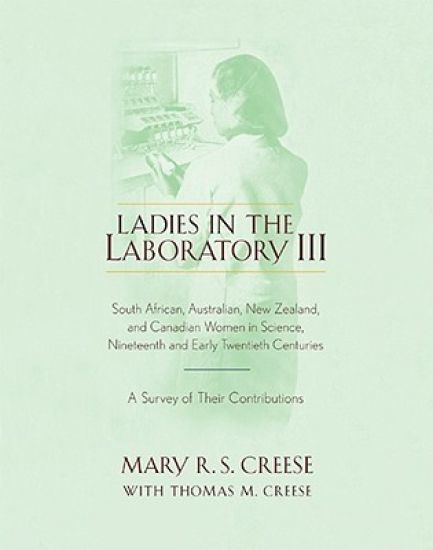
Published in 1998, Ladies in the Laboratory provided a systematic survey and comparison of the work of 19th-century American and British women in scientific research. A companion volume, published in 2004, focused on women scientists from Western Europe. In this third volume, author Mary R.S. Creese expands her scope to include the contributions of 19th- and early 20th-century women of South Africa, Australia, New Zealand, and Canada. The women whose lives and work are discussed here range from natural history collectors and scientific illustrators of the early and mid years of the 19th century to the first generation of graduates of the new colonial colleges and universities. Rarely acknowledged in publications of the British and European specialists, the contributions of these women nonetheless formed a significant part of the natural history information about extensive, previously unknown regions and their products. Rather than a biographical dictionary or a collection of self-contained essays on individuals from many time periods, Ladies in the Laboratory III is a connected narrative tied into the wider framework of 19th-century science and education. A well-organized blend of individual life stories and quantitative information, this volume is for everyone interested in the story of women's participation in 19th century science. The stories of these women make for fascinating reading and serve as a valuable source for the student of women's and colonial history.

Although the iconic television series Father Knows Best (CBS 1954–55; NBC 1955–58; CBS 1958–60) has enjoyed a long history in rerun syndication and an enduring fan base, it is often remembered as cultural shorthand for 1950s-era conformism and authoritarianism. In this study of Father Knows Best, author Mary R. Desjardins examines the program, its popularity, and its critical position within historical, industrial, and generic contexts to challenge oversimplified assumptions about the show’s use of comedy and melodrama in exploring the place of family in mid-twentieth century American society. Desjardins begins by looking at Father Knows Best within media and production contexts, including its origin on radio, its place in the history of Screen Gems telefilm production, and its roots in the backgrounds and creative philosophies of co-producer Eugene Rodney and star-producer Robert Young. She goes on to examine the social contexts for the creation and reception of the series, especially in the era’s emphasis on family togetherness, shared parenting by both father and mother, and generational stages of the life cycle. Against this background, Desjardins also discusses several Father Knows Best episodes in-depth to consider their treatment of conflicts over appropriate gender roles for women. She concludes by exploring how the series’ cast participated in reevaluations of the Anderson family’s meaning in relation to “real families” of the fifties, through television specials, talk show appearances, magazine and book interviews, and documentaries.Blending melodrama and comedy, naturalistic acting, and stylized cinematic visuals, Father Knows Best dramatized ideological tensions in the most typical situations facing the American family. Scholars of mid-century American popular culture and film history as well as fans of the show will appreciate Desjardin’s measured analysis.

Robert Stafford of Cumberland Island offers a rare glimpse into the life and times of a nineteenth-century planter on one of Georgia's Sea Islands. Born poor, Robert Stafford (1790-1877) became the leading planter on his native Cumberland Island. Specializing in the highly valued long staple variety of cotton, he claimed among his assets more than 8,000 acres and 350 slaves.Mary R. Bullard recounts Stafford's life in the context of how events from the Federalist period to the Civil War to Reconstruction affected Sea Island planters. As she discusses Stafford's associations with other planters, his business dealings (which included banking and railroad investments), and the day-to-day operation of his plantation, Bullard also imparts a wealth of information about cotton farming methods, plantation life and material culture, and the geography and natural history of Cumberland Island.Stafford's career was fairly typical for his time and place; his personal life was not. He never married, but fathered six children by Elizabeth Bernardey, a mulatto slave nurse. Bullard's discussion of Stafford's decision to move his family to Groton, Connecticut—and freedom—before the Civil War illuminates the complex interplay between southern notions of personal honor, the staunch independent-mindedness of Sea Island planters, and the practice and theory of racial separation.In her afterword to the Brown Thrasher edition, Bullard presents recently uncovered information about a second extralegal family of Robert Stafford as well as additional information about Elizabeth Bernardey's children and the trust funds Stafford provided for them.

Cumberland Island is a national treasure. The largest of the Sea Islands along the Georgia coast, it is a history-filled place of astounding natural beauty. With a thoroughness unmatched by any previous account, Cumberland Island: A History chronicles five centuries of change to the landscape and its people from the days of the first Native Americans through the late-twentieth-century struggles between developers and conservationists.Author Mary Bullard, widely regarded as the person most knowledgeable about Cumberland Island, is a descendant of the Carnegie family, Cumberland's last owners before it was acquired by the federal government in 1972 and designated a National Seashore. Bullard's discussion of the Carnegie era on Cumberland is notable for its intimate glimpse into how the family's feelings toward the island bore upon Cumberland's destiny.Bullard draws on more than twenty years of research and travels about the island to describe how water, wind, and the cycles of nature continue to shape it and also how humans have imprinted themselves on the face of Cumberland across time—from the Timuca, Guale, and Mocamo Indians to the subsequent appearances of Spanish, French, African, British, and American inhabitants. The result is an engaging narrative in which discussions about tidal marshes, sea turtles, and wild horses are mixed with accounts of how the island functioned as a center for indigo, rice, cotton, fishing, and timber. Even frequent visitors and former residents will learn something new from Bullard's account of Cumberland Island.
The popularity of television in postwar suburban America had a devastating effect on the traditional Hollywood studio system. Yet many aging Hollywood stars used television to revive their fading careers. In Recycled Stars, Mary R. Desjardins examines the recirculation, ownership, and control of female film stars and their images in television, print, and new media. Female stardom, she argues, is central to understanding both the anxieties and the pleasures that these figures evoke in their audiences’ psyches through patterns of fame, decline, and return. From Gloria Swanson, Loretta Young, Ida Lupino, and Lucille Ball, who found new careers in early television, to Maureen O’Hara’s high-profile 1957 lawsuit against the scandal magazine Confidential, to the reappropriation of iconic star images by experimental filmmakers, video artists, and fans, this book explores the contours of female stars’ resilience as they struggled to create new contexts for their waning images across emerging media.
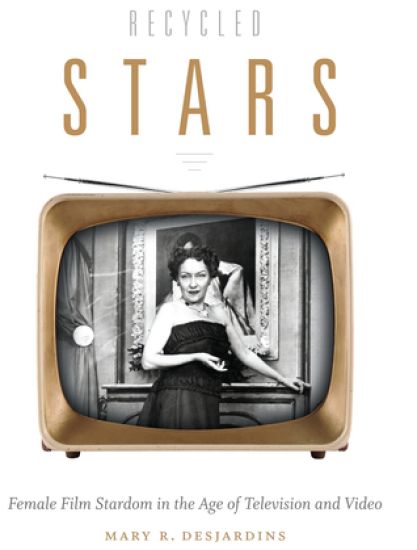
The popularity of television in postwar suburban America had a devastating effect on the traditional Hollywood studio system. Yet many aging Hollywood stars used television to revive their fading careers. In Recycled Stars, Mary R. Desjardins examines the recirculation, ownership, and control of female film stars and their images in television, print, and new media. Female stardom, she argues, is central to understanding both the anxieties and the pleasures that these figures evoke in their audiences’ psyches through patterns of fame, decline, and return. From Gloria Swanson, Loretta Young, Ida Lupino, and Lucille Ball, who found new careers in early television, to Maureen O’Hara’s high-profile 1957 lawsuit against the scandal magazine Confidential, to the reappropriation of iconic star images by experimental filmmakers, video artists, and fans, this book explores the contours of female stars’ resilience as they struggled to create new contexts for their waning images across emerging media.

This carto-bibliography of over 1300 Devon manuscript maps published in two volumes contains details not only of the maps themselves, extracted from 30 separate repositories in addition to some in private hands, but also biographical information on the surveyors who made them, over a third of whom have not appeared in any national cartographic reference book. There is also an Introduction which explains the significance of these, mostly large-scale, Devonmaps and how they fit into the national cartographic picture. The detailed list of maps is arranged in alphabetical order of parish for ease of reference and there is a Personal Names index. There are coloured illustrations of some of the maps and the two volumes will be presented in a slipcase. The volumes will be an indispensable reference tool for all interested in the social history, the landscape and archaeology of Devon.