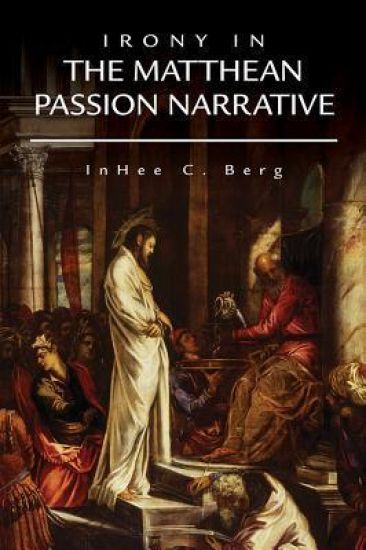
Irony (as used here) is a rhetorical and literary device for revealing "what is hidden behind what is seen." It thus offers the reader a superior understanding by means of the distinction between reality and its shadow. The book provides a history of different definitions of irony, from Aristophanes to Booth; discusses the constitutive formal elements of irony and the functions of irony; then studies particular aspects of the Matthean Passion Narrative that require the reader to recognize a deeper truth beneath the surface of the narrative. This engaging study gives important insight into the literary qualities in the Gospel of Matthew. This work is a unique resource destined for use by scholars and students of the New Testament.
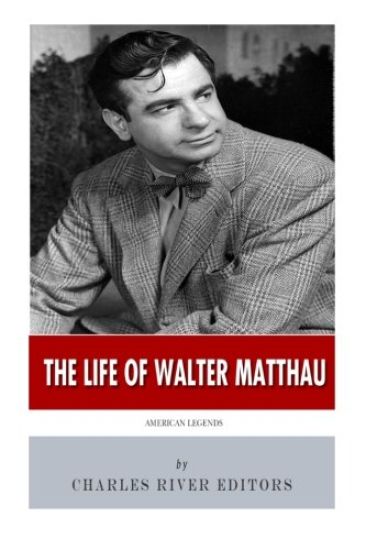
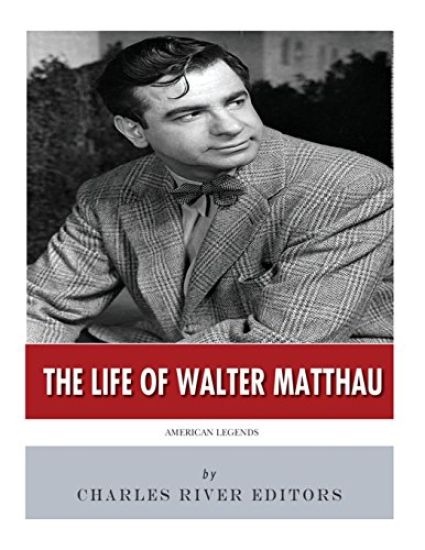
*Includes pictures *Includes Matthau's own quotes about his life and career *Includes a bibliography for further reading "Every actor looks all his life for a part that will combine his talents with his personality...'The Odd Couple' was mine. That was the plutonium I needed. It all started happening after that." - Walter Matthau A lot of ink has been spilled covering the lives of history's most influential figures, but how much of the forest is lost for the trees? In Charles River Editors' American Legends series, readers can get caught up to speed on the lives of America's most important men and women in the time it takes to finish a commute, while learning interesting facts long forgotten or never known. Walter Matthau is probably best-remembered for his films with Jack Lemmon, but he was clearly an established actor in Hollywood by the time they appeared in their first film together. Before his movies with Lemmon, Matthau most often played shady criminals in dramatic films, and his character in Elia Kazan's A Face in the Crowd (1957) offers one of the best examples. Matthau's major breakthrough did not occur until 1965, when he starred in the stage production of The Odd Couple, which was later adapted into the film that might be the duo's best known movie together. For Matthau, teaming up with Lemmon did not elevate him to stardom, but his films with Matthau are generally more traditional comedies and not necessarily romantic comedies. In several of their movies, viewers witness all of the core elements of the Lemmon-Matthau dynamic. Lemmon plays the straight man to Matthau's shadier, conniving character, and a sharp contrast exists between the two: Lemmon is relatively short and conventionally handsome, while Matthau is far taller and appears far more clownish, and the contrast would grow starker as they aged and Matthau became rather stocky. Even though Lemmon is invariably tempted by Matthau's schemes, he denounces them at the conclusion but doesn't reject or condemn Matthau as a person. A romantic plot often develops between leading ladies and the two actors, but the chief relationship is usually between Lemmon and Matthau, whose comedic value as a team is greater than the sum of its parts. It is all the more noteworthy that while Lemmon and Matthau are often mentioned in the pantheon of legendary male comedy teams, they were not natural comics in the manner of Laurel and Hardy or Abbot and Costello. Instead, they became great comics when acting alongside their comic foil, and while it is Matthau who took primacy in The Fortune Cookie (he did win an Academy Award, after all), in The Odd Couple, Saul Austerlitz argues that the opposite occurs in the subsequent movie: "Matthau has the showier role as gruff, sloppy sportswriter Oscar Madison, but Lemmon steals the show as the prim...Felix Unger." In an act of homage toward their legendary partnership, Lemmon was buried near Matthau, who died about a year before Lemmon, and upon Matthau's death, Lemmon stated, "I have lost someone I loved as a brother, as a closest friend, and a remarkable human being. We have also lost one of the best damn actors we'll ever see." Lemmon may have put it even more aptly when he said, "Death ends a life, not a relationship." American Legends: The Life of Walter Matthau explores the life and career of one of America's favorite grumpy old men. Along with pictures of important people, places, and events, you will learn about Matthau like never before, in no time at all.
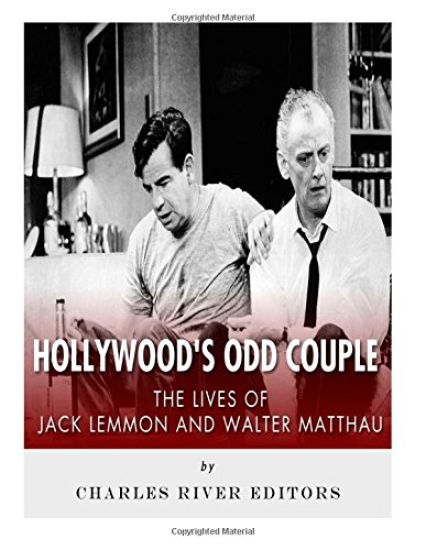
*Includes pictures *Includes the actors' quotes *Includes a bibliography for further reading "Every actor looks all his life for a part that will combine his talents with his personality...'The Odd Couple' was mine. That was the plutonium I needed. It all started happening after that." - Walter Matthau "It's hard enough to write a good drama, it's much harder to write a good comedy, and it's hardest of all to write a drama with comedy. Which is what life is." - Jack Lemmon Walter Matthau and Jack Lemmon are probably best remembered for their films together, but both were clearly established actors in Hollywood by the time they appeared in their first film together. The great film director Billy Wilder once noted of Jack Lemmon that Lemmon "was my everyman", and Lemmon did indeed represent a great everyman to American audiences during the latter half of the 20th century. For rich, poor, and working class audiences alike, Lemmon was an accessible leading male, someone certainly less stately than Cary Grant or Laurence Olivier and seemingly more approachable even than archetypal leading men such as Jimmy Stewart or Henry Fonda. Viewers may not have known Lemmon on a personal level, yet his easygoing demeanor made it easy for the American public to feel as if they knew Lemmon. His wide appeal is summarized nicely by Richard T. Stanley, who noted that he "had the personality and versatile talent to star in any era," and Lemmon became intimately associated with other famous figures of Hollywood, including Billy Wilder and Matthau. Before his movies with Lemmon, Matthau most often played shady criminals in dramatic films, and his character in Elia Kazan's A Face in the Crowd (1957) offers one of the best examples. Matthau's major breakthrough did not occur until 1965, when he starred in the stage production of The Odd Couple, which was later adapted into the film that might be the duo's best known movie together. In several of their movies, viewers witness all of the core elements of the Lemmon-Matthau dynamic. Lemmon plays the straight man to Matthau's shadier, conniving character, and a sharp contrast exists between the two: Lemmon is relatively short and conventionally handsome, while Matthau is far taller and appears far more clownish, and the contrast would grow starker as they aged and Matthau became rather stocky. Even though Lemmon is invariably tempted by Matthau's schemes, he denounces them at the conclusion but doesn't reject or condemn Matthau as a person. A romantic plot often develops between leading ladies and the two actors, but the chief relationship is usually between Lemmon and Matthau, whose comedic value as a team is greater than the sum of its parts. It is all the more noteworthy that while Lemmon and Matthau are often mentioned in the pantheon of legendary male comedy teams, they were not natural comics in the manner of Laurel and Hardy or Abbot and Costello. Instead, they became great comics when acting alongside their comic foil, and while it is Matthau who took primacy in The Fortune Cookie (he did win an Academy Award, after all), in The Odd Couple, Saul Austerlitz argues that the opposite occurs in the subsequent movie: "Matthau has the showier role as gruff, sloppy sportswriter Oscar Madison, but Lemmon steals the show as the prim...Felix Unger." In an act of homage toward their legendary partnership, Lemmon was buried near Matthau, who died about a year before Lemmon, and upon Matthau's death, Lemmon stated, "I have lost someone I loved as a brother, as a closest friend, and a remarkable human being. We have also lost one of the best damn actors we'll ever see." Lemmon may have put it even more aptly when he said, "Death ends a life, not a relationship." Hollywood's Odd Couple chronicles the lives, careers, and partnership between the two actors. Along with pictures and a bibliography, you will learn about Lemmon and Matthau like never before
*Includes pictures *Includes the actors' quotes *Includes a bibliography for further reading "Every actor looks all his life for a part that will combine his talents with his personality...'The Odd Couple' was mine. That was the plutonium I needed. It all started happening after that." - Walter Matthau "It's hard enough to write a good drama, it's much harder to write a good comedy, and it's hardest of all to write a drama with comedy. Which is what life is." - Jack Lemmon Walter Matthau and Jack Lemmon are probably best remembered for their films together, but both were clearly established actors in Hollywood by the time they appeared in their first film together. The great film director Billy Wilder once noted of Jack Lemmon that Lemmon "was my everyman", and Lemmon did indeed represent a great everyman to American audiences during the latter half of the 20th century. For rich, poor, and working class audiences alike, Lemmon was an accessible leading male, someone certainly less stately than Cary Grant or Laurence Olivier and seemingly more approachable even than archetypal leading men such as Jimmy Stewart or Henry Fonda. Viewers may not have known Lemmon on a personal level, yet his easygoing demeanor made it easy for the American public to feel as if they knew Lemmon. His wide appeal is summarized nicely by Richard T. Stanley, who noted that he "had the personality and versatile talent to star in any era," and Lemmon became intimately associated with other famous figures of Hollywood, including Billy Wilder and Matthau. Before his movies with Lemmon, Matthau most often played shady criminals in dramatic films, and his character in Elia Kazan's A Face in the Crowd (1957) offers one of the best examples. Matthau's major breakthrough did not occur until 1965, when he starred in the stage production of The Odd Couple, which was later adapted into the film that might be the duo's best known movie together. In several of their movies, viewers witness all of the core elements of the Lemmon-Matthau dynamic. Lemmon plays the straight man to Matthau's shadier, conniving character, and a sharp contrast exists between the two: Lemmon is relatively short and conventionally handsome, while Matthau is far taller and appears far more clownish, and the contrast would grow starker as they aged and Matthau became rather stocky. Even though Lemmon is invariably tempted by Matthau's schemes, he denounces them at the conclusion but doesn't reject or condemn Matthau as a person. A romantic plot often develops between leading ladies and the two actors, but the chief relationship is usually between Lemmon and Matthau, whose comedic value as a team is greater than the sum of its parts. It is all the more noteworthy that while Lemmon and Matthau are often mentioned in the pantheon of legendary male comedy teams, they were not natural comics in the manner of Laurel and Hardy or Abbot and Costello. Instead, they became great comics when acting alongside their comic foil, and while it is Matthau who took primacy in The Fortune Cookie (he did win an Academy Award, after all), in The Odd Couple, Saul Austerlitz argues that the opposite occurs in the subsequent movie: "Matthau has the showier role as gruff, sloppy sportswriter Oscar Madison, but Lemmon steals the show as the prim...Felix Unger." In an act of homage toward their legendary partnership, Lemmon was buried near Matthau, who died about a year before Lemmon, and upon Matthau's death, Lemmon stated, "I have lost someone I loved as a brother, as a closest friend, and a remarkable human being. We have also lost one of the best damn actors we'll ever see." Lemmon may have put it even more aptly when he said, "Death ends a life, not a relationship." Hollywood's Odd Couple chronicles the lives, careers, and partnership between the two actors. Along with pictures and a bibliography, you will learn about Lemmon and Matthau like never before
Matthea Harvey's "Modern Life" introduces a new voice that tries to exist in the gray area between good and evil, love and hate. In the central sequences, "The Future of Terror" and "The Terror of the Future," Harvey imagines citizens and soldiers at the end of their wits at the impending end of the world. Her prose pieces and lyrics examine the divided, halved self in poems about centaurs, ship figureheads, and a robot boy. Throughout, Harvey's signature wit and concision show us the double-sided nature of reality, of what we see and what we know.
This book was written through the experiences of adolescent years ending in one person's perception of struggle and the strengths learned to overcome them. This book has been compared to Jim Morrisons poetry, written empathetically and humbled by such compliments
Das gegenseitige Helfen wird aus pädagogischer Perspektive als besondere Chance jahrgangsgemischten Lernens betrachtet. Zu dieser Annahme liegen jedoch bisher kaum empirische Forschungsergebnisse vor. In der vorliegenden Studie wird untersucht, wie sich Grundschulkinder im Unterricht helfen und inwiefern sich das Helfen als lernförderlich erweisen kann. Zwei Jahre lang wurden Hilfeprozesse von Kindern in fünf jahrgangsgemischten Klassen protokolliert und analysiert. Die Lehrkräfte wurden zu ihren Konzepten des gegenseitigen Helfens befragt. Die Ergebnisse zeigen ein vielfältiges Spektrum an Hilfeprozessen zwischen Grundschulkindern auf und eröffnen Entwicklungsmöglichkeiten für jahrgangsgemischten Unterricht.
Das Buch beschreibt die aktuellen Entwicklungen des padagogischen Konzepts "Jahrgangsubergreifender Unterricht". Nach einfuhrenden Kapiteln, die die padagogischen Begrundungen, Kontroversen sowie die aktuelle Ausgestaltung in den Bundeslanden umfassen, werden die Potentiale des miteinander Lernens, untermauert durch Praxisbeispiel, in den Blick genommen. Beleuchtet werden auch die Arbeitsweisen in Schulen, die uber Erfahrungen mit der Umsetzung dieses Konzepts verfugen. Anhand eines Interviews wird exemplarisch der Entwicklungsprozess vom jahrgangshomogenen zum jahrgangsbergreifenden Unterricht dargestellt. Das Buch regt zur Auseinandersetzung mit jahrgangsubergreifendem Unterricht an und macht dessen Realisierung nachvollziehbar. Daruber hinaus werden Impulse gegeben, das gemeinsame Lernen von Schulerinnen und Schulern zu unterstutzen.
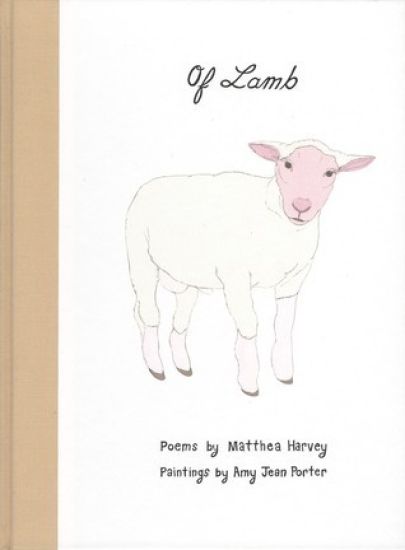
Lamb and Mary were alike. Unbalanced. Flat-footed. High-strung. This is their story like you've never heard it the tale of a loopy shepherdess and a depressive farm animal. In this version of the children's nursery rhyme, Lamb and Mary fall in love. They swoon, they are smitten. Then Mary has second thoughts. Lamb is a lamb, after all, not a man. Lamb, heartbroken, turns to drinking. Lamb goes to a madhouse. Mary buries her feelings. And then somehow, Lamb pulls it together. He leaves the madhouse mature saddened but more dignified, ready for another chance to win Mary's heart. But will Mary let Lamb back into her life?Award-winning poet Matthea Harvey offers a story told in short packets of verse, and artist Amy Jean Porter brings each stanza vividly to life with her eye-popping illustrations. The collaboration yields a beautiful, off-the-wall tale of a lamb who wants only to be human, and a human who wants the love of a lamb.