Kirjojen hintavertailu. Mukana 12 390 323 kirjaa ja 12 kauppaa.

Kirjahaku

Etsi kirjoja tekijän nimen, kirjan nimen tai ISBN:n perusteella.

1000 tulosta hakusanalla Matthew H. Kramer

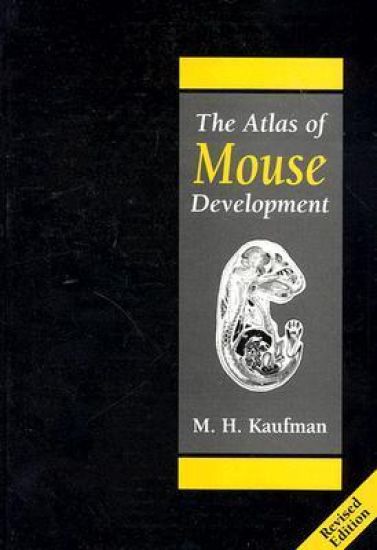
The Atlas of Mouse Development

The Atlas of Mouse Development

Matthew H. Kaufman

Academic Press Inc
1992
sidottu
Not since the early 1970s has there been an attempt to describe and illustrate the anatomy of the developing mouse embryo. More than ever such material is needed by biologists as they begin to unravel the molecular mechanisms underlying development and differentiation. After more than ten years of painstaking work, Matt Kaufman has completed The Atlas of Mouse Development--the definitive account of mouse embryology and development.For all those researching or studying mammalian development, The Atlas of Mouse Development will be the standard reference work for many years to come.
The Anatomical Basis of Mouse Development

The Anatomical Basis of Mouse Development

Matthew H. Kaufman; Jonathan B.L. Bard

Academic Press Inc
1999
sidottu
This book is an essential anatomical resource for developmental biologists who need to know about any aspect of mouse developmental anatomy, as well as for geneticists using the mouse embryo as a model. The book is a companion to Kaufman's The Atlas of Mouse Development, and details the developmental anatomy of the early embryo, the transitional tissues, and all the major organ systems. It also provides extensive comparisons with human developmental anatomy, both normal and abnormal. The book has extensive reference indexes detailing developmental stage criteria. The Anatomical Basis of Mouse Development will be a key reference work for anyone who needs to understand developmental anatomy in normal and mutant mice.
Characters Before Copyright

Characters Before Copyright

Matthew H. Birkhold

Oxford University Press
2019
sidottu
How did authors control the literary fates of fictional characters before the existence of copyright? Could a second author do anything with another author's character? Situated between the decline of the privilege system and the rise of copyright, literary borrowing in eighteenth-century Germany has long been considered unregulated. This book tells a different story. Characters before Copyright documents the surprisingly widespread eighteenth-century practice of writing fan fictionliterary works written by readers who appropriate preexisting characters invented by other authorsand reconstructs the contemporaneous debate about the literary phenomenon. Like fan fiction today, these texts took the form of sequels, prequels, and spinoffs. Analyzing the evolving reading, writing, and consumer habits of late-eighteenth-century Germany, Characters before Copyright identifies the social, economic, and aesthetic changes that fostered the rapid rise of fan fiction after 1750. Based on archival work and an ethnographic approach borrowed from legal anthropology, this book then uncovers the unwritten customary norms that governed the production of these works. Characters before Copyright thus reinterprets the eighteenth-century literary commons, arguing that what may appear to have been the free circulation of characters was actually circumscribed by an exacting set of rules and conditions. These norms translated into a unique type of literature that gave rise to remarkable forms of collaborative authorship and originality. Characters before Copyright provides a new perspective on the eighteenth-century book trade and the rise of intellectual property, reevaluating the concept of literary property, the history of moral rights, and the tradition of free culture.
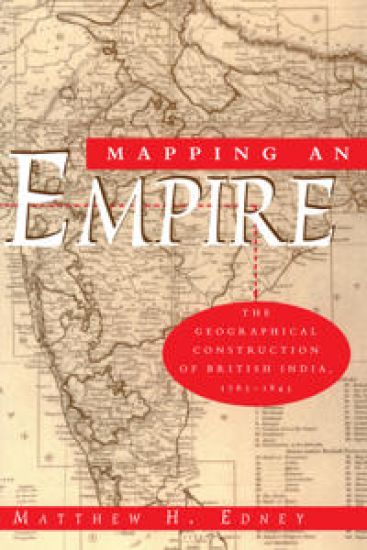
Mapping an Empire

Mapping an Empire

Matthew H. Edney

University of Chicago Press
1999
nidottu
In this history of the British surveys of India, focusing especially on the Great Trigonometrical Survey (GTS) undertaken by the British East India Company, the author relates how imperial Britain employed modern scientific survey techniques not only to create and define the spacial inmage of its Indian empire, but also to legitimate its colonialist activities as triumphs of liberal, rational science bringing "Civilisation" to irrational, mystical and despotic Indians. The reshaping of cartographic technologies in Europe into their modern form played a key role in the use of the GTS as an instrument of British cartographic control over India. In analyzing this reconfiguration, the author undertakes a detailed critical analysis of the foundations of modern cartography.
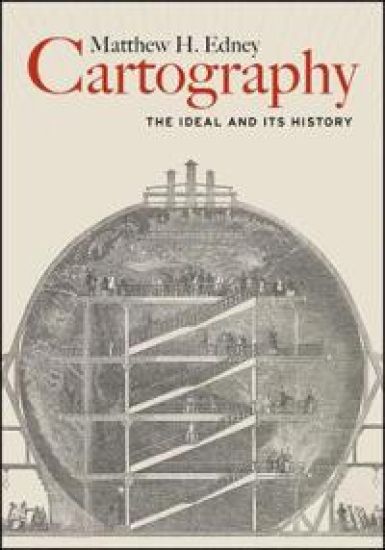
Cartography

Cartography

Matthew H Edney

University of Chicago Press
2019
pokkari
Over the past four decades, the volumes published in the landmark History of Cartography series have both chronicled and encouraged scholarship about maps and mapping practices across time and space. As the current director of the project that has produced these volumes, Matthew H. Edney has a unique vantage point for understanding what “cartography” has come to mean and include. In this book Edney disavows the term cartography, rejecting the notion that maps represent an undifferentiated category of objects for study. Rather than treating maps as a single, unified group, he argues, scholars need to take a processual approach that examines specific types of maps—sea charts versus thematic maps, for example—in the context of the unique circumstances of their production, circulation, and consumption. To illuminate this bold argument, Edney chronicles precisely how the ideal of cartography that has developed in the West since 1800 has gone astray. By exposing the flaws in this ideal, his book challenges everyone who studies maps and mapping practices to reexamine their approach to the topic. The study of cartography will never be the same.
Digital Divisions

Digital Divisions

Matthew H. Rafalow

University of Chicago Press
2020
sidottu
In the digital age, schools are a central part of a nationwide effort to make access to technology more equitable, so that all young people, regardless of identity or background, have the opportunity to engage with the technologies that are essential to modern life. Most students, however, come to school with digital knowledge they’ve already acquired from the range of activities they participate in with peers online. Yet, teachers, as Matthew H. Rafalow reveals in Digital Divisions, interpret these technological skills very differently based on the race and class of their student body. While teachers praise affluent White students for being “innovative” when they bring preexisting and sometimes disruptive tech skills into their classrooms, less affluent students of color do not receive such recognition for the same behavior. Digital skills exhibited by middle class, Asian American students render them “hackers,” while the creative digital skills of working-class, Latinx students are either ignored or earn them labels troublemakers. Rafalow finds in his study of three California middle schools that students of all backgrounds use digital technology with sophistication and creativity, but only the teachers in the school serving predominantly White, affluent students help translate the digital skills students develop through their digital play into educational capital. Digital Divisions provides an in-depth look at how teachers operate as gatekeepers for students’ potential, reacting differently according to the race and class of their student body. As a result, Rafalow shows us that the digital divide is much more than a matter of access: it’s about how schools perceive the value of digital technology and then use them day-to-day.
Digital Divisions

Digital Divisions

Matthew H. Rafalow

University of Chicago Press
2020
nidottu
In the digital age, schools are a central part of a nationwide effort to make access to technology more equitable, so that all young people, regardless of identity or background, have the opportunity to engage with the technologies that are essential to modern life. Most students, however, come to school with digital knowledge they’ve already acquired from the range of activities they participate in with peers online. Yet, teachers, as Matthew H. Rafalow reveals in Digital Divisions, interpret these technological skills very differently based on the race and class of their student body. While teachers praise affluent White students for being “innovative” when they bring preexisting and sometimes disruptive tech skills into their classrooms, less affluent students of color do not receive such recognition for the same behavior. Digital skills exhibited by middle class, Asian American students render them “hackers,” while the creative digital skills of working-class, Latinx students are either ignored or earn them labels troublemakers. Rafalow finds in his study of three California middle schools that students of all backgrounds use digital technology with sophistication and creativity, but only the teachers in the school serving predominantly White, affluent students help translate the digital skills students develop through their digital play into educational capital. Digital Divisions provides an in-depth look at how teachers operate as gatekeepers for students’ potential, reacting differently according to the race and class of their student body. As a result, Rafalow shows us that the digital divide is much more than a matter of access: it’s about how schools perceive the value of digital technology and then use them day-to-day.
Are Species Real?

Are Species Real?

Matthew H. Slater

Palgrave Macmillan
2013
sidottu
What are species? Are they objective features of the world? If so, what sort of features are they? Slater presents a novel approach to these questions, aiming to accommodating the attractions to both realism and antirealism about species.
The Fox Spirit, the Stone Maiden, and Other Transgender Histories from Late Imperial China
Co-winner, 2025 John Boswell Prize, LGBTQ+ History AssociationIn imperial China, people moved away from the gender they were assigned at birth in different ways and for many reasons. Eunuchs, boy actresses, and clergy left behind normative gender roles defined by family and procreation. “Stone maidens”—women deemed physically incapable of vaginal intercourse—might depart from families or marriages to become Buddhist or Daoist nuns. Anatomical males who presented as women sometimes took a conventionally female occupation such as midwife, faith healer, or even medium to a fox spirit. Yet they were often punished harshly for the crime of “masquerading in women’s attire,” suspected of sexual predation, even when they had lived peacefully in their communities for many years.Exploring these histories and many more, this book is a groundbreaking study of transgender lives and practices in late imperial China. Through close readings of court cases, as well as Ming and Qing fiction and nineteenth-century newspaper accounts, Matthew H. Sommer examines the social, legal, and cultural histories of gender crossing. He considers a range of transgender experiences, illuminating how certain forms of gender transgression were sanctioned in particular social contexts and penalized in others. Sommer scrutinizes the ways Qing legal authorities and literati writers represented and understood gender-nonconforming people and practices, contrasting official ideology with popular mentalities. An unprecedented account of China’s transgender histories, this book also sheds new light on a range of themes in Ming and Qing law, religion, medicine, literature, and culture.
The Fox Spirit, the Stone Maiden, and Other Transgender Histories from Late Imperial China
Co-winner, 2025 John Boswell Prize, LGBTQ+ History AssociationIn imperial China, people moved away from the gender they were assigned at birth in different ways and for many reasons. Eunuchs, boy actresses, and clergy left behind normative gender roles defined by family and procreation. “Stone maidens”—women deemed physically incapable of vaginal intercourse—might depart from families or marriages to become Buddhist or Daoist nuns. Anatomical males who presented as women sometimes took a conventionally female occupation such as midwife, faith healer, or even medium to a fox spirit. Yet they were often punished harshly for the crime of “masquerading in women’s attire,” suspected of sexual predation, even when they had lived peacefully in their communities for many years.Exploring these histories and many more, this book is a groundbreaking study of transgender lives and practices in late imperial China. Through close readings of court cases, as well as Ming and Qing fiction and nineteenth-century newspaper accounts, Matthew H. Sommer examines the social, legal, and cultural histories of gender crossing. He considers a range of transgender experiences, illuminating how certain forms of gender transgression were sanctioned in particular social contexts and penalized in others. Sommer scrutinizes the ways Qing legal authorities and literati writers represented and understood gender-nonconforming people and practices, contrasting official ideology with popular mentalities. An unprecedented account of China’s transgender histories, this book also sheds new light on a range of themes in Ming and Qing law, religion, medicine, literature, and culture.
Receptaculitids

Receptaculitids

Matthew H. Nitecki; Harry Mutvei; Doris V. Nitecki

Kluwer Academic/Plenum Publishers
1999
sidottu
Receptaculitids are extinct high-level fossils that provide a window into the history of life. After the discovery and analysis of a deposit of phosphatized receptaculitids on the Baltic Sea island of Öland, the authors conclude that receptaculitids possess an attribute not found in any other group of organisms, living or fossil.
Enlightenment Orientalism in the American Mind, 1770-1807
This study engages with the emerging field of energy humanities to provide close readings of several early American oriental-observer tales. The popular genre of orientalism offered Americans a means to critique new ideas of identity, history, and nationality accompanying protoindustrialization and a growing consumerism. The tales thus express a complex self-reflection during a time when America’s exploitation of its energy resources and its engagement in a Franco-British world-system was transforming the daily life of its citizens. The genre of the oriental observer, this study argues, offers intriguing glimpses of a nation becoming strange in the eyes of its own inhabitants.
An Introduction to Theories of Learning

An Introduction to Theories of Learning

Matthew H. Olson; Julio J. Ramirez

Routledge
2020
nidottu
Since its first edition, An Introduction to Theories of Learning has provided a uniquely sweeping review of the major learning theories from the 20th century that profoundly influenced the field of psychology. In this tenth edition, the authors present further experimental evidence that tests many of the fundamental ideas presented in these classic theories, as well as explore many of the advances in psychological science and neuroscience that have yielded greater insight into the processes that underlie learning in human beings and animals. The four main goals of this text are to define learning and to show how the learning process is studied (Chapters 1 and 2), to place learning theory in historical perspective (Chapter 3), and to present essential features of the major theories of learning with implications for educational practices (Chapters 4 through 16). The authors retained the best features of earlier editions while making revisions that reflect current research and scholarship, including coverage of active learning and the testing effect, information for problem solving in ravens, data illustrating the neurobiological basis of the cognitive map and spatial learning, new research on brain plasticity and its role in learning as well as the impact of poverty on brain and cognitive development, and new evidence that challenges the notion of learning styles.Complete with chapter summaries, discussion questions, and a glossary, this text is essential reading for theories of learning and applied cognitive psychology courses.See "Support Material" below for new online resources. Instructor resources include PowerPoint slides and a testbank containing over 500 questions (in both Microsoft Word and GIFT file formats). Student resources include chapter summaries, discussion questions, and a glossary of key terms.
Rethinking the Politics of Absurdity

Rethinking the Politics of Absurdity

Matthew H. Bowker

Routledge
2013
sidottu
What does it mean to describe something or someone as absurd? Why did absurd philosophy and literature become so popular amidst the violent conflicts and terrors of the mid- to late-twentieth century? Is it possible to understand absurdity not as a feature of events, but as a psychological posture or stance? If so, what are the objectives, dynamics, and repercussions of the absurd stance? And in what ways has the absurd stance continued to shape postmodern thought and contemporary culture? In Rethinking the Politics of Absurdity, Matthew H. Bowker offers a surprising account of absurdity as a widespread endeavor to make parts of our experience meaningless. In the last century, he argues, fears about subjects’ destructive desires have combined with fears about rationality in a way that has made the absurd stance seem attractive. Drawing upon diverse sources from philosophy, literature, politics, psychoanalysis, theology, and contemporary culture, Bowker identifies the absurd effort to make aspects of our histories, our selves, and our public projects meaningless with postmodern revolts against reason and subjectivity. Weaving together analyses of the work of Albert Camus, Georges Bataille, Judith Butler, Emmanuel Levinas, and others with interview data and popular narratives of apocalypse and survival, Bowker shows that the absurd stance and the postmodern revolt invite a kind of bargain, in which meaning is sacrificed in exchange for the survival of innocence. Bowker asks us to consider that the very premise of this bargain is false: that ethical subjects and healthy communities cannot be created in absurdity. Instead, we must make meaningful even the most shocking losses, terrors, and destructive powers with which we live.Bowker's book will be of interest to scholars and practitioners in the fields of political science, philosophy, literature, psychoanalysis, sociology, and cultural studies.