Kirjojen hintavertailu. Mukana 12 390 323 kirjaa ja 12 kauppaa.

Kirjahaku

Etsi kirjoja tekijän nimen, kirjan nimen tai ISBN:n perusteella.

1000 tulosta hakusanalla Matthew L Martin

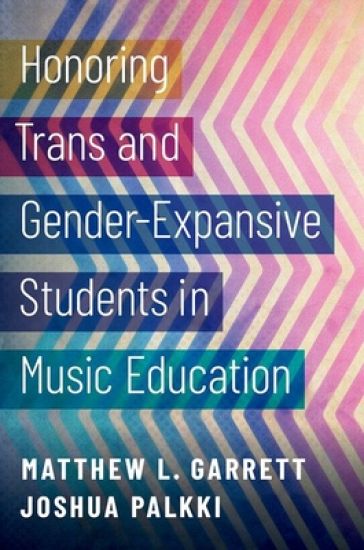
Honoring Trans and Gender-Expansive Students in Music Education

Honoring Trans and Gender-Expansive Students in Music Education

Matthew L. Garrett; Joshua Palkki

Oxford University Press Inc
2021
nidottu
Trans and gender-expansive (TGE) youth deserve a safe and empowering space to engage in high quality school music experiences. Supportive music teachers ensure that all students have access to ethically and pedagogically sound music education. In this practical resource, authors Matthew L. Garrett (he/him) and Joshua Palkki (he/him) encourage music educators to honor gender diversity through ethically and pedagogically sound practices across choral, instrumental, and general music classroom environments by highlighting the narratives and experiences of TGE musicians.

Second-Class Saints

Second-Class Saints

Matthew L. Harris

OXFORD UNIVERSITY PRESS INC
2025
sidottu
An in-depth account--grounded in new archival discoveries--of the most consequential development in Mormon history since the end of polygamy On June 9, 1978, the phones at the headquarters of the Church of Jesus Christ of Latter-day Saints (LDS) were ringing nonstop. Word began to spread that a momentous change in church policy had been announced and everyone wanted to know: was it true? The answer would have profound implications for the church and American society more broadly. On that historic day, LDS church president Spencer W. Kimball announced a revelation lifting the church's 126-year-old ban barring Black people from the priesthood and Mormon temples. It was the most significant change in LDS doctrine since the end of polygamy almost 100 years earlier. Drawing on never-before-seen private papers of LDS apostles and church presidents, including Spencer W. Kimball, Matthew L. Harris probes the plot twists and turns, the near-misses and paths not taken, of this incredible story. While the notion that Kimball received a revelation might imply a sudden command from God, Harris shows that a variety of factors motivated Kimball and other church leaders to reconsider the ban, including the civil rights movement, which placed LDS racial policies and practices under a glaring spotlight, perceptions of racism that dogged the church and its leaders, and Kimball's own growing sense that the ban was morally wrong. Harris also shows that the lifting of the ban was hardly a panacea. The church's failure to confront and condemn its racial theology in the decades after the 1978 revelation stifled their efforts to reach Black communities and made Black members the target of racism in LDS meetinghouses. Vigilant members pestered church leaders to repudiate their anti-Black theology, forcing them to live up to the creed in Mormon scripture that "all are alike unto God." Deeply informed, engagingly written, and grounded in deep archival research, Harris provides a compelling and detailed account of how Mormon leaders lifted the priesthood and temple ban, then came to reckon with the church's controversial racial heritage.
Meet Joe Copper

Meet Joe Copper

Matthew L. Basso

University of Chicago Press
2013
sidottu
"I realize that I am a soldier of production whose duties are as important in this war as those of the man behind the gun." So began the pledge that many home-front men took at the outset of World War II when they went to work in the factories, fields, and mines while their compatriots fought in the battlefields of Europe and on the bloody beaches of the Pacific. The male experience of working and living in wartime America is rarely examined, but the story of these men provides a crucial counter narrative to the national story of Rosie the Riveter and GI Joe that dominates scholarly and popular discussions of World War II. In "Meet Joe Copper", Matthew L. Basso describes the formation of a powerful, white, working-class masculine ideology in the decades prior to the war, and shows how it thrived - on the job, in the community, and through union politics. Basso recalls for us the practices and beliefs of the first- and second-generation immigrant copper workers of Montana while advancing the historical conversation on gender, class, and the formation of a white ethnic racial identity. "Meet Joe Copper" provides a context for our ideas of postwar masculinity and whiteness and finally returns the men of the home front to our reckoning of the Greatest Generation and the New Deal era.
Meet Joe Copper

Meet Joe Copper

Matthew L. Basso

University of Chicago Press
2013
nidottu
"I realize that I am a soldier of production whose duties are as important in this war as those of the man behind the gun." So began the pledge that many home-front men took at the outset of World War II when they went to work in the factories, fields, and mines while their compatriots fought in the battlefields of Europe and on the bloody beaches of the Pacific. The male experience of working and living in wartime America is rarely examined, but the story of these men provides a crucial counter narrative to the national story of Rosie the Riveter and GI Joe that dominates scholarly and popular discussions of World War II. In "Meet Joe Copper", Matthew L. Basso describes the formation of a powerful, white, working-class masculine ideology in the decades prior to the war, and shows how it thrived - on the job, in the community, and through union politics. Basso recalls for us the practices and beliefs of the first- and second-generation immigrant copper workers of Montana while advancing the historical conversation on gender, class, and the formation of a white ethnic racial identity. "Meet Joe Copper" provides a context for our ideas of postwar masculinity and whiteness and finally returns the men of the home front to our reckoning of the Greatest Generation and the New Deal era.
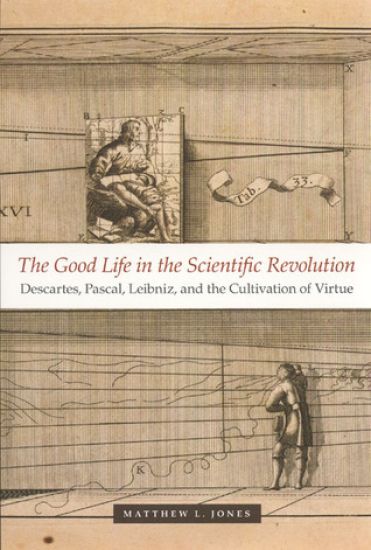
The Good Life in the Scientific Revolution

The Good Life in the Scientific Revolution

Matthew L. Jones

University of Chicago Press
2006
sidottu
Amid the unrest, dislocation, and uncertainty of seventeenth-century Europe, readers seeking consolation and assurance turned to philosophical and scientific books that offered ways of conquering fears and training the mind—guidance for living a good life.The Good Life in the Scientific Revolution presents a triptych showing how three key early modern scientists, René Descartes, Blaise Pascal, and Gottfried Leibniz, envisioned their new work as useful for cultivating virtue and for pursuing a good life. Their scientific and philosophical innovations stemmed in part from their understanding of mathematics and science as cognitive and spiritual exercises that could create a truer mental and spiritual nobility. In portraying the rich contexts surrounding Descartes’ geometry, Pascal’s arithmetical triangle, and Leibniz’s calculus, Matthew L. Jones argues that this drive for moral therapeutics guided important developments of early modern philosophy and the Scientific Revolution.
The Good Life in the Scientific Revolution

The Good Life in the Scientific Revolution

Matthew L. Jones

University of Chicago Press
2006
nidottu
Amid the unrest, dislocation, and uncertainty of seventeenth-century Europe, readers seeking consolation and assurance turned to philosophical and scientific books that offered ways of conquering fears and training the mind—guidance for living a good life.The Good Life in the Scientific Revolution presents a triptych showing how three key early modern scientists, René Descartes, Blaise Pascal, and Gottfried Leibniz, envisioned their new work as useful for cultivating virtue and for pursuing a good life. Their scientific and philosophical innovations stemmed in part from their understanding of mathematics and science as cognitive and spiritual exercises that could create a truer mental and spiritual nobility. In portraying the rich contexts surrounding Descartes’ geometry, Pascal’s arithmetical triangle, and Leibniz’s calculus, Matthew L. Jones argues that this drive for moral therapeutics guided important developments of early modern philosophy and the Scientific Revolution.
Reckoning with Matter

Reckoning with Matter

Matthew L. Jones

University of Chicago Press
2016
sidottu
From Blaise Pascal in the 1600s to Charles Babbage in the first half of the nineteenth century, inventors struggled to create the first calculating machines. All failed but that doesn't mean we can't learn from the trail of ideas, correspondence, machines, and arguments they left behind. In Reckoning with Matter, Matthew Jones draws on the remarkably extensive and well-preserved records of the quest to explore the concrete processes involved in imagining, elaborating, testing, and building calculating machines. He explores the writings of philosophers, engineers, and craftspeople, showing how they thought about technical novelty, their distinctive areas of expertise, and ways they could coordinate their efforts, to argue that the conceptions of creativity and making they exhibited are often more incisive and more honest than those that dominate our current legal, political, and aesthetic culture.
Newcomers

Newcomers

Matthew L Schuerman

University of Chicago Press
2019
sidottu
Gentrification is transforming cities, small and large, across the country. Though it's easy to bemoan the diminished social diversity and transformation of commercial strips that often signify a gentrifying neighborhood, determining who actually benefits and who suffers from this nebulous process can be much harder. The full story of gentrification is rooted in large-scale social and economic forces as well as in extremely local specifics--in short, it's far more complicated than both its supporters and detractors allow. In Newcomers, journalist Matthew Schuerman explains how a phenomenon that began with good intentions has turned into one of the most vexing social problems of our time. He builds a national story using focused histories of northwest Brooklyn, San Francisco's Mission District, and the onetime site of Chicago's Cabrini-Green housing project, revealing both the commonalities among all three and the place-specific drivers of change. Schuerman argues that gentrification has become a too-easy flashpoint for all kinds of quasi-populist rage and pro-growth boosterism. In Newcomers, he doesn't condemn gentrifiers as a whole, but rather articulates what it is they actually do, showing not only how community development can turn foul, but also instances when a "better" neighborhood truly results from changes that are good. Schuerman draws no easy conclusions, using his keen reportorial eye to create sharp, but fair, portraits of the people caught up in gentrification, the people who cause it, and its effects on the lives of everyone who calls a city home.
Macroanalysis

Macroanalysis

Matthew L. Jockers

University of Illinois Press
2013
sidottu
In this volume, Matthew L. Jockers introduces readers to large-scale literary computing and the revolutionary potential of macroanalysis--a new approach to the study of the literary record designed for probing the digital-textual world as it exists today, in digital form and in large quantities. Using computational analysis to retrieve key words, phrases, and linguistic patterns across thousands of texts in digital libraries, researchers can draw conclusions based on quantifiable evidence regarding how literary trends are employed over time, across periods, within regions, or within demographic groups, as well as how cultural, historical, and societal linkages may bind individual authors, texts, and genres into an aggregate literary culture. Moving beyond the limitations of literary interpretation based on the "close-reading" of individual works, Jockers describes how this new method of studying large collections of digital material can help us to better understand and contextualize the individual works within those collections.
Macroanalysis

Macroanalysis

Matthew L. Jockers

University of Illinois Press
2013
nidottu
In this volume, Matthew L. Jockers introduces readers to large-scale literary computing and the revolutionary potential of macroanalysis--a new approach to the study of the literary record designed for probing the digital-textual world as it exists today, in digital form and in large quantities. Using computational analysis to retrieve key words, phrases, and linguistic patterns across thousands of texts in digital libraries, researchers can draw conclusions based on quantifiable evidence regarding how literary trends are employed over time, across periods, within regions, or within demographic groups, as well as how cultural, historical, and societal linkages may bind individual authors, texts, and genres into an aggregate literary culture. Moving beyond the limitations of literary interpretation based on the "close-reading" of individual works, Jockers describes how this new method of studying large collections of digital material can help us to better understand and contextualize the individual works within those collections.
Making Open Development Inclusive

Making Open Development Inclusive

Matthew L. Smith

MIT Press
2020
nidottu
A decade ago, a significant trend toward openness emerged in international development. "Open development" can describe initiatives as disparate as open government, open health data, open science, open education, and open innovation. The theory was that open systems related to data, science, and innovation would enable more inclusive processes of human development. This volume, drawing on ten years of empirical work and research, analyzes how open development has played out in practiceFocusing on development practices in the Global South, the contributors explore the crucial questions of who is allowed to participate when an initiative is "open" and who benefits-or not-from them, finding that processes characterized as open can sometimes be exclusionary in their implementation. Examining a wide range of cases, they consider the governance of open development ecosystems and the implementation of a variety of applications, including open educational resources, collaborative science, and the uses of crowdsourcing.ContributorsDenisse Albornoz, Chris Armstrong, Savita Bailur, Roxana Barrantes, Carla Bonina, Michael Canares, Leslie Chan, Laura Czerniewicz, Jeremy de Beer, Stefano De Sabbata, Shirin Elahi, Alison Gillwald, Mark Graham, Rebecca Hillyer, Cheryl Hodgkinson-Williams, Dick Kawooya, Erika Kramer-Mbula, Paulo Matos, Caroline Ncube, Chidi Oguamanam, Angela Okune, Alejandro Posada, Nagla Rizk, Isaac Rutenberg, Tobias Schonwetter, Fabrizio Scrollini, Ruhiya Kristine Seward, Raed Sharif, Matthew Smith, William Randall Spence, Henry Trotter, Fran ois van Schalkwyk, Sonal Zavaeri
Seven Dirty Words and Six Other Stories

Seven Dirty Words and Six Other Stories

Matthew L. Spitzer

Yale University Press
1987
sidottu
Why does the United States control the content of broadcast more strictly than it controls the content of print? In this provocative book, Matthew L. Spitzer explores the various rationales that support such different treatment and concludes that broadcast media should not be as strictly regulated as it is. Spitzer attacks the three most prevalent arguments in favor of broadcast control, utilizing insights from economics and social psychology and relating them to basic questions of First Amendment law and regulation of broadcasting. First, he shows that arguments centered on economic efficiency—such as those based on the supposed scarcity of the airwaves—can be applied equally to the print media. Next, responding to arguments that exposure to sexually explicit material encourages socially harmful conduct, he demonstrates that sexually explicit printed matter is at least as pernicious as broadcast erotica and that printed violence seems to have the same effects as broadcast violence. The third series of arguments—that broadcasting is more readily available to young children than is print—does have some validity, says Spitzer. However, we can shield children from exposure to broadcast material that may harm them by several methods: “zoning” broadcast violence and sexy by confining such matter to “adult” channels that can be received only by special receivers; allowing sex and violence to be broadcast only during the late night hours; and requiring television locks so that parents can monitor children’s access to programming. According to Spitzer, there is not justification for censorship of indecent programming or for such regulations as the fairness doctrine or equal time for political candidates. His timely and spirited book makes a powerful case for changing national policy in this significant area.
Common Musculoskeletal Problems in the Ambulatory Setting , An Issue of Medical Clinics
This issue of the Medical Clinics of North America, edited by Matthew Silvis, MD, is devoted to Common Musculoskeletal Problems in the Ambulatory Setting. Articles in this issue include: Anterior knee pain; The acutely injured knee; Approach to adult hip pain; Evaluation and management of adult shoulder pain; Acute and chorinc low back pain; Neck pain and cervical radiculopathy; Common adult hand and wrist disorders; Fragility fractures; Elbow tendinopathy; The injured runner; The physical therapy prescription; Durable medical equipment: types and indications; and MSK Imaging: types and indications.
The Genealogy of Terror

The Genealogy of Terror

Matthew L. N. Wilkinson

Routledge
2019
nidottu
In the first two decades of the twenty-first century, the events of 9/11, 7/7, the War on Terror and the Caliphate and atrocities of the so-called Islamic State have dominated Western consciousness and wreaked havoc in parts of the Muslim-majority world. In their wake, a spate of books has been written explaining the phenomenon of Islamist radicalisation and Jihadism.Nevertheless, for normal citizens, as well as scholars of religion and legal professionals, the crucial question remains unanswered: how is mainstream Islam different from both Islamism and the Islamist Extremism that is used to justify terrorist violence? In this highly original book, which draws upon the author’s experience as an expert witness in Islamic theology in 27 counter-terrorism trials, the author uses the idea of the Worldview, as well as traditional Islamic theology, to answer this question.The book explains not only what Mainstream Islam, Ideological Islamism and Islamist Extremism are in their broad philosophical characteristics and theological particulars, but also explains comprehensively how and why they are both superficially related and yet essentially and fundamentally different. In so doing, the book also illuminates the cast of characters and the development of their ideas that constitute Mainstream Islam, Ideological Islamism and the Non-Violent and Violent Islamist Extremists who constitute the Genealogy of Terror.
American Indian Education

American Indian Education

Matthew L. M. Fletcher

Routledge
2008
sidottu
America Indian culture and traditions have survived an unusual amount of oppressive federal and state educational policies intended to assimilate Indian people and destroy their cultures and languages. Yet, Indian culture, traditions, and people often continue to be treated as objects in the classroom and in the curriculum. Using a critical race theory framework and a unique "counternarrative" methodology, American Indian Education explores a host of modern educational issues facing American Indian peoples—from the impact of Indian sports mascots on students and communities, to the uses and abuses of law that often never reach a courtroom, and the intergenerational impacts of American Indian education policy on Indian children today. By interweaving empirical research with accessible composite narratives, Matthew Fletcher breaches the gap between solid educational policy and the on-the-ground reality of Indian students, highlighting the challenges faced by American Indian students and paving the way for an honest discussion about solutions.
American Indian Education

American Indian Education

Matthew L. M. Fletcher

Routledge
2008
nidottu
America Indian culture and traditions have survived an unusual amount of oppressive federal and state educational policies intended to assimilate Indian people and destroy their cultures and languages. Yet, Indian culture, traditions, and people often continue to be treated as objects in the classroom and in the curriculum. Using a critical race theory framework and a unique "counternarrative" methodology, American Indian Education explores a host of modern educational issues facing American Indian peoples—from the impact of Indian sports mascots on students and communities, to the uses and abuses of law that often never reach a courtroom, and the intergenerational impacts of American Indian education policy on Indian children today. By interweaving empirical research with accessible composite narratives, Matthew Fletcher breaches the gap between solid educational policy and the on-the-ground reality of Indian students, highlighting the challenges faced by American Indian students and paving the way for an honest discussion about solutions.
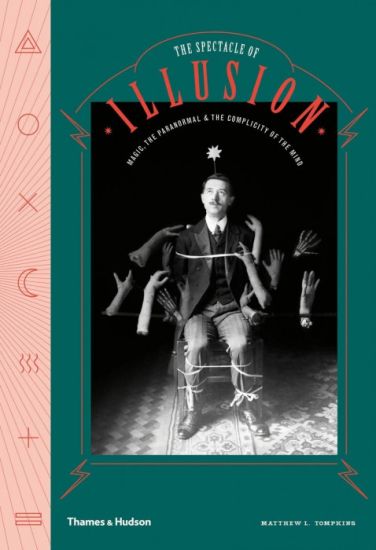
The Spectacle of Illusion

The Spectacle of Illusion

Matthew L. Tompkins; Wellcome Collection

Thames Hudson Ltd
2019
sidottu
'A spectacular treasury of treats. Page after page of utter joy: I can’t tear my eyes away' - Derren BrownIn The Spectacle of Illusion, professional magician-turned experimental psychologist Dr. Matthew L. Tompkins investigates the arts of deception as practised and popularised by mesmerists, magicians and psychics since the early 18th century. Organised thematically within a broadly chronological trajectory, this compelling book explores how illusions perpetuated by magicians and fraudulent mystics can not only deceive our senses but also teach us about the inner workings of our minds. Indeed, modern scientists are increasingly turning to magic tricks to develop new techniques to examine human perception, memory and belief. Beginning by discussing mesmerism and spiritualism, the book moves on to consider how professional magicians such as John Nevil Maskelyne and Harry Houdini engaged with these movements – particularly how they set out to challenge and debunk paranormal claims. It also relates the interactions between magicians, mystics and scientists over the past 200 years, and reveals how the researchers who attempted to investigate magical and paranormal phenomena were themselves deceived, and what this can teach us about deception. Highly illustrated throughout with entertaining and bizarre drawings, double-exposure spirit photographs and photographs of spoon-bending from hitherto inaccessible and un-mined archives, including the Wellcome Collection, the Harry Price Library, the Society for Physical Research, and last but not least, the Magic Circle’s closely guarded collection, the book also features newly commissioned photography of planchettes, rapping boards, tilting tables, ectoplasm, automata and illusion boxes. Concluding with a modern-day analysis of the science of magic and illusion, analysing surprisingly weird phenomena such as ideomotor action, sleep paralysis, choice blindness and the psychology of misdirection, this unnerving volume highlights how unreliable our minds can be, and how complicit they can be in the perpetuation of illusions.
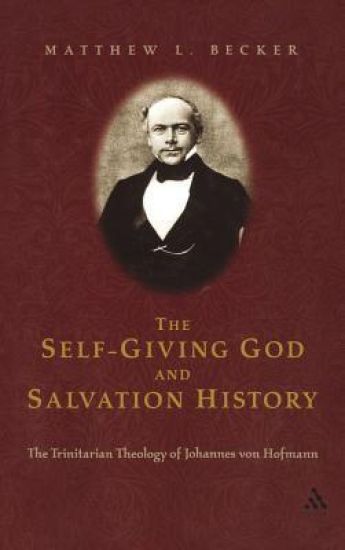
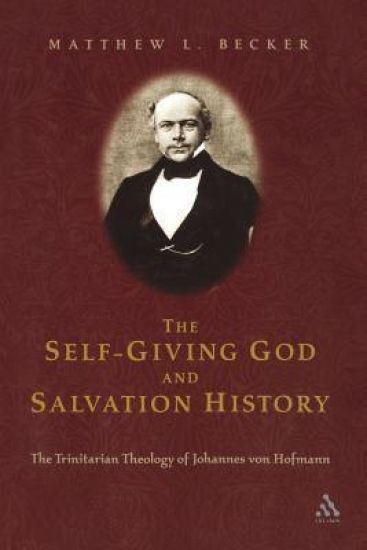
The Self-Giving God and Salvation History

The Self-Giving God and Salvation History

Matthew L. Becker

T. T.Clark Ltd
2004
sidottu
Hofmann (1810-1877) was one of the most significant theologians of the 19th century and perhaps the century's most influential Lutheran theologian. Becker introduces us to Hofmann's trinitarian view of God. According to Hofmann, God freely chose to give himself out of divine love. Becker's book centres on Hofmann's understanding of history. In Hofmann's trinitarian kenosis, the eternal God has become historical by self-emptying God's self into Jesus. For Hofmann, world history can only be understood within the historical self-giving of the triune God who is love. Thus, for Hofmann all of history is salvation-history, a kind of history that embraces and fulfils God's purposes in the world.
The Self-Giving God and Salvation History

The Self-Giving God and Salvation History

Matthew L. Becker

T. T.Clark Ltd
2004
nidottu
Hofmann (1810-1877) was one of the most significant theologians of the 19th century and perhaps the century's most influential Lutheran theologian. Becker introduces us to Hofmann's trinitarian view of God. According to Hofmann, God freely chose to give himself out of divine love. Becker's book centres on Hofmann's understanding of history. In Hofmann's trinitarian kenosis, the eternal God has become historical by self-emptying God's self into Jesus. For Hofmann, world history can only be understood within the historical self-giving of the triune God who is love. Thus, for Hofmann all of history is salvation-history, a kind of history that embraces and fulfils God's purposes in the world.
Fundamental Theology

Fundamental Theology

Matthew L. Becker

T. T.Clark Ltd
2014
sidottu
Introducing university students to the academic discipline of Christian theology, this book serves as an orientation to "fundamental theology" from a Protestant perspective by addressing issues that are preliminary and foundational to the discipline in the context of a liberal arts university. The book also sets forth what has traditionally been called a "theological encyclopedia", that is, a description of the parts of Christian theology that together form the discipline into a unified academic subject. Finally, the book examines the relation of Christian theology to the arts and sciences within the university and underscores the need for critical and positive interaction with these other academic disciplines.