

Kirjahaku
Etsi kirjoja tekijän nimen, kirjan nimen tai ISBN:n perusteella.
1000 tulosta hakusanalla Mattias Timander

Der deus ex machina im Literaturvergleich. Euripides' und Mattias Brauns Medea
Christian Ziesmer
GRIN Verlag
2019
nidottu

Det perfekta skottet : en polismans berättelse om gripandet av Sveriges värsta massmördare Mattias Flink
Olavi Blomfjord; Linus Hugosson
Sjöbergs Förlag AB
2014
sidottu
Det är den 11 juni 1994 i sommaridylliska Falun. Värsta massmordet i Sveriges historia pågår. Yrkesmilitären Mattias Flink, berusad och svartsjuk, har flippat ut totalt. När larmet går har han redan mejat ner flera personer ute på stan med sin Ak-5:a. Nu är det upp till poliserna i Falun att stoppa massmördandet. Olavi Blomfjord och Berndt Bergström beger sig ut i gryningen på ett livsfarligt uppdrag. På järnvägsbron i centrala Falun kommer mördaren gående mot dem. ”Stanna! Polis!” ropar Olavi Blomfjord. Mattias Flink lyfter omedelbart sin Ak-5:a, siktar, skjuter. Också poliserna öppnar eld. Olavi Blomfjords skott fäller massmördaren och sätter stopp för det meningslösa dödandet. ”Jag sköt, men Gud styrde kulan”, säger den troende polisen, som började sitt kusliga uppdrag denna kväll med att be Gud om hjälp. För första gången berättar nu Olavi Blomfjord utförligt och öppet hela sin berättelse om massmordet som skakade Sverige, och gripandet av Flink. Läsaren får också ta del av en troende polismans reflektioner kring sin svåra yrkesroll, som innebär att man kan tvingas ta till dödligt våld. Några år efter tragedin i Falun sköt Olavi Blomfjord en person i självförsvar. Mannen dog. Hur påverkas en polis av sådana extrema händelser? Vad händer med människan bakom polisrollen? Hur tänker mannen som grep en massmördare om förlåtelse och försoning? Det perfekta skottet ger en unik och personlig inblick i en polismans mest dramatiska upplevelser och är även ett viktigt dokument över Sveriges värsta massmord.
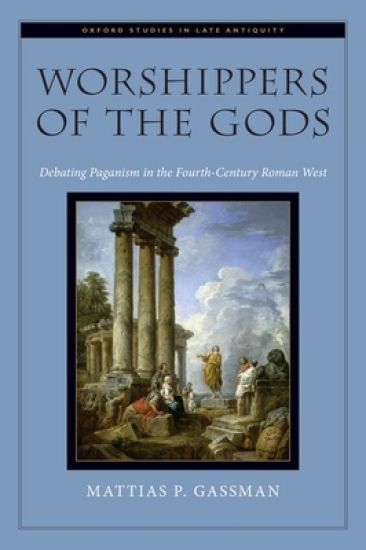
Worshippers of the Gods tells how the Latin writers who witnessed the political and social rise of Christianity rethought the role of traditional religion in the empire and city of Rome. In parallel with the empire's legal Christianisation, it traces changing attitudes toward paganism from the last empire-wide persecution of Christians under the Tetrarchy to the removal of state funds from the Roman cults in the early 380s. Influential recent scholarship has seen Christian polemical literature-a crucial body of evidence for late antique polytheism-as an exercise in Christian identity-making. In response, Worshippers of the Gods argues that Lactantius, Firmicus Maternus, Ambrosiaster, and Ambrose offered substantive critiques of traditional religion shaped to their political circumstances and to the preoccupations of contemporary polytheists. By bringing together this polemical literature with imperial laws, pagan inscriptions, and the letters and papers of the senator Symmachus, Worshippers of the Gods reveals the changing horizons of Roman thought on traditional religion in the fourth century. Through its five interlocking case studies, it shows how key episodes in the Empire's religious history-the Tetrarchic persecution, Constantine's adoption of Christianity, the altar of Victory affair, and the 'disestablishment' of the Roman cults-shaped contemporary conceptions of polytheism. It also argues that the idea of a unified 'paganism', often seen as a capricious invention, actually arose as a Christian response to the eclectic, philosophical polytheism in vogue at Rome.

After the murder of senior generals in the Indonesian army by elements of the country's communist party in 1965, General Suharto orchestrated the mass killing of some half a million leftists and fellow travelers. But his ambitions spanned far beyond perpetrating a politicide. Seeking to ensure that communism could never again take root in the archipelago, he constructed a New Order to reverse Indonesia's descent into political instability and economic crisis. Based on unprecedented access to Indonesian archives and a wealth of international sources, Suharto's Cold War masterfully narrates the first decades of the Suharto regime at the national, regional, and global levels. Suharto mobilized international aid and investment to build his counterrevolutionary dictatorship and ignite processes of economic development. He then aimed to project authoritarianism elsewhere in Southeast Asia by assisting right-wing dictators across the region. International capital made available through the global Cold War enabled Suharto to achieve the dictatorial and developmental ambitions that lay at the heart of his domestic and regional Cold Wars. Material realities at home and abroad disciplined Suharto's political project, while political considerations in Indonesia and around the world shaped his economic programs. Paying close attention to the interrelationship between the domestic and the international, the political and the economic, Suharto's Cold War makes a pathbreaking contribution to understanding Indonesia, Southeast Asia, and the world.

Citizens of the Earth presents the first comprehensive account of Augustine's engagement with traditional Roman religion. A multifaceted case-study in the Christianization of the Roman Empire, it anchors Augustine's works in their intellectual and social context, narrating political and intellectual renegotiation of the public cults of North Africa from the 390s until after Augustine's death in 430. At the same time, it tests modern conceptions of the role of religious conviction and religious difference in late antique society against the ideas of one of the most influential late Roman thinkers. Approaching Augustine simultaneously as thinker, practical preacher, and observer of his North African world, Citizens of the Earth synthesizes Augustine's ideas about religion from sermons and treatises, describes how his polemical approach to the Roman gods developed across his career, and reconstructs competing ideas developed by his interlocutors. It emphasizes pagan conviction and lay religiosity, argues that we should see Augustine's polemics as attempts at practical outreach and persuasion, and stresses the importance of conversion for understanding the pagan-Christian boundary. The book closes with both historical and theoretical conclusions. After proposing that the Vandalic conquest of Carthage (439) marked a final ending point for traditional, public religiosity in North Africa, it considers how Augustine's contributions can still inform modern approaches to late antique religion.

Indigenous Peoples' Status in the International Legal System
Mattias Åhrén
Oxford University Press
2016
sidottu
While many have explored the law governing the rights of indigenous peoples through an examination of relevant instruments and institutions, this book demonstrates that international indigenous rights can be best understood through the study of two questions: What is meant by 'peoples' and 'equality' under international law? Indigenous Peoples' Status in the International Legal System offers a new and profound insight into the international indigenous rights discourse. This volume explains that the understanding of 'peoples' is paramount to the question of whether indigenous peoples are beneficiaries of the right to self-determination and sets out the content and scope of this right. The book additionally explores the contemporary meaning of 'equality', arguing that the understanding of equality fundamentally impacts what rights indigenous peoples possess over territories and natural resources. This book outlines the rights of greatest relevance to indigenous peoples, communities, and individuals, and explains the justification for indigenous rights.

Andean Waterways explores the politics of natural resource use in the Peruvian Andes in the context of climate change and neoliberal expansion. It does so through careful ethnographic analysis of the constitution of waterways, illustrating how water becomes entangled in a variety of political, social, and cultural concerns. Set in the highland town of Recuay in Ancash, the book traces the ways in which water affects political and ecological relations as glaciers recede. By looking at the shared waterways of four villages located in the foothills of Cordillera Blanca, it addresses pertinent questions concerning water governance and rural lives. This case study of water politics will be useful to anthropologists, resource managers, environmental policy makers, and other readers who are interested in the effects of environmental change on rural communities.Watch the book trailer: https://www.youtube.com/watch?v=voiLZkIWNU4

Andean Waterways explores the politics of natural resource use in the Peruvian Andes in the context of climate change and neoliberal expansion. It does so through careful ethnographic analysis of the constitution of waterways, illustrating how water becomes entangled in a variety of political, social, and cultural concerns. Set in the highland town of Recuay in Ancash, the book traces the ways in which water affects political and ecological relations as glaciers recede. By looking at the shared waterways of four villages located in the foothills of Cordillera Blanca, it addresses pertinent questions concerning water governance and rural lives. This case study of water politics will be useful to anthropologists, resource managers, environmental policy makers, and other readers who are interested in the effects of environmental change on rural communities.Watch the book trailer: https://www.youtube.com/watch?v=voiLZkIWNU4
The subject of lynching has spawned a vast body of important research, but this research suffers from important blind spots and disjunctures. By broadening the scope of research problem formulation, staking out new theoretical-analytical tracks, and drawing upon recent innovations in statistical methodology to analzye newer and more detailed data, Doing Violence, Making Race offers an innovative contribution to our understanding of this grim subject matter and its place within the broader history and sociology of US race relations. Indeed, this volume demonstrates how different forms of lynching fed off and into the formation of the racial group boundaries and identities at the foundation of the Jim Crow system. The book also demonstrates that as dominant white racial ideologies and conceptions took an extremist turn, lethal mob violence against African Americans increasingly assumed the form of public lynchings, serving to transform symbolic representations of blacks into social stigma and exclusion. Finally, Smångs also explores how public lynchings were expressive as well as generative of the collective white racial identity mobilized through the southern branch of the Democratic Party, whilst private lynchings were related to whites’ interracial status and social identity concerns on the interpersonal level.The most complete and complex scholarly treatment of this grim subject to date, this enlightening volume will be of interest to undergraduate and graduate students interested in areas such as Sociology, Political Science, History, Criminology/Criminal Justice, Anthropology, American Studies, African-American and Whiteness Studies.
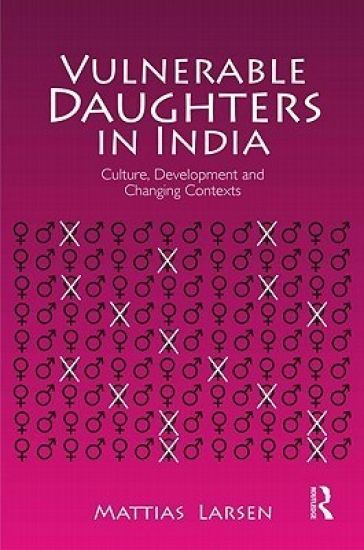
In India, girls are aborted on a massive scale merely because they are girls. Underlying this widespread problem is the puzzling fact that daughters have become vulnerable in a time of general improvement of welfare, female status and deep economic and social changes. The findings centre on a contradiction between the continued importance of the cultural factors which for so long have established that a son is necessary, and socio-economic changes that are challenging the importance of these very same factors. This contradiction entails an uncertainty over sons fulfilling expectations which has, rather than tilt the balance in favour of daughters, instead increased the relative importance of sons and intensified negative consequences for daughters. The original findings are based on set theoretic systematic comparisons of eight villages in Himachal Pradesh that facilitate a reconceptualization and an alternative analysis that takes contextual differences into account. It builds on extensive fieldwork and collection of both qualitative and quantitative data.
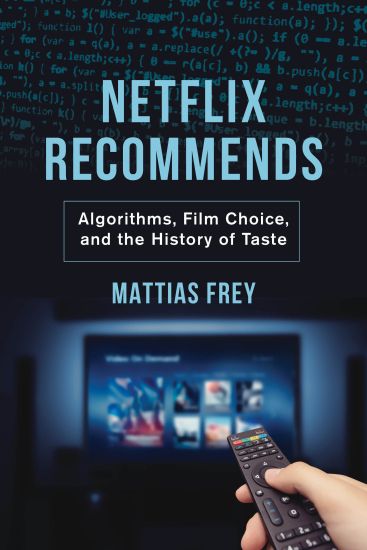
Algorithmic recommender systems, deployed by media companies to suggest content based on users’ viewing histories, have inspired hopes for personalized, curated media but also dire warnings of filter bubbles and media homogeneity. Curiously, both proponents and detractors assume that recommender systems for choosing films and series are novel, effective, and widely used. Scrutinizing the world’s most subscribed streaming service, Netflix, this book challenges that consensus. Investigating real-life users, marketing rhetoric, technical processes, business models, and historical antecedents, Mattias Frey demonstrates that these choice aids are neither as revolutionary nor as alarming as their celebrants and critics maintain—and neither as trusted nor as widely used. Netflix Recommends brings to light the constellations of sources that real viewers use to choose films and series in the digital age and argues that although some lament AI’s hostile takeover of humanistic cultures, the thirst for filters, curators, and critics is stronger than ever.
Algorithmic recommender systems, deployed by media companies to suggest content based on users’ viewing histories, have inspired hopes for personalized, curated media but also dire warnings of filter bubbles and media homogeneity. Curiously, both proponents and detractors assume that recommender systems for choosing films and series are novel, effective, and widely used. Scrutinizing the world’s most subscribed streaming service, Netflix, this book challenges that consensus. Investigating real-life users, marketing rhetoric, technical processes, business models, and historical antecedents, Mattias Frey demonstrates that these choice aids are neither as revolutionary nor as alarming as their celebrants and critics maintain—and neither as trusted nor as widely used. Netflix Recommends brings to light the constellations of sources that real viewers use to choose films and series in the digital age and argues that although some lament AI’s hostile takeover of humanistic cultures, the thirst for filters, curators, and critics is stronger than ever.
In 1912 a young scholar published a slim volume investigating the social structure of the late Roman Republic, which was in due course to transform the study of Roman history. The author, Mattias Gelzer, went on to hold the Chair of Ancient History at Frankfurt and to become the greatest German-speaking historian of the Roman Republic since Mommsen. In 1921 he published his Caesar, which has by now gone through six editions in Germany and is still the standard account, in any language, of Caesar and his age. It amply fulfills the author's intent "to give the educated public a lively picture of the complete political career of one of the great statesmen of the past." Based on a conscientious evaluation of the abundant source materials--primarily the writings of Caesar and his contemporaries--Professor Gelzer's portrait renders Caesar in heroic proportions, destined and determined from the beginning to overthrow a corrupt aristocracy. The sixth edition (1960), brought up to date and provided with full annotations by the author, is the basis of this translation, which for the first time makes the work available in English. With Professor Gelzer's approval, some minor errors have been corrected, both in the text and in the chronological table and the map at the end of the book, and an analytical index of names has been added.

This information-packed book is the complete guide to everything you need to know about the world's oceans, with each conceptOceans cover two thirds of the Earth’s surface and are the driving force behind our weather systems, taking warm and cold water around the globe.Understanding solar radiation, currents, and rising sea levels are vital starting points to understanding and dealing with global warming, and this book covers these and many more essential topics in easily accessible chunks.Join expert authors on a tour of the world’s oceans, taking in waves, continental shelves, icebergs, underwater forests, monsoons, and coral reefs along the way.Learn about the different characteristics of the world’s major oceans, the amazing array of marine life that exists at different depths, how tides work, and what pollution is doing to the seas. There’s never been a more important time to get to grips with how the oceans work.The 30 Second series presents concise, informative guides to the most important topics which shape the world around us, presenting terms which are key to understanding the subject in 30 seconds, 300 words, and one image.

Honorable mention, 2017 Best Monograph Award from the British Association of Film, Television and Screen Studies (BAFTSS)? From Shortbus to Shame and from Oldboy to Irreversible, film festival premieres regularly make international headlines for their shockingly graphic depictions of sex and violence. Film critics and scholars alike often regard these movies as the work of visionary auteurs, hailing directors like Michael Haneke and Lars von Trier as heirs to a tradition of transgressive art. In this provocative new book, Mattias Frey offers a very different perspective on these films, exposing how they are also calculated products, designed to achieve global notoriety in a competitive marketplace. Paying close attention to the discourses employed by film critics, distributors, and filmmakers themselves, Extreme Cinema examines the various tightropes that must be walked when selling transgressive art films to discerning audiences, distinguishing them from generic horror, pornography, and Hollywood product while simultaneously hyping their salacious content. Deftly tracing the links between the local and the global, Frey also shows how the directors and distributors of extreme art house fare from both Europe and East Asia have significant incentives to exaggerate the exotic elements that would differentiate them from Anglo-American product. Extreme Cinema also includes original interviews with the programmers of several leading international film festivals and with niche distributors and exhibitors, giving readers a revealing look at how these institutions enjoy a symbiotic relationship with the “taboo-breakers” of art house cinema. Frey also demonstrates how these apparently transgressive films actually operate within a strict set of codes and conventions, carefully calibrated to perpetuate a media industry that fuels itself on provocation.
Honorable mention, 2017 Best Monograph Award from the British Association of Film, Television and Screen Studies (BAFTSS)? From Shortbus to Shame and from Oldboy to Irreversible, film festival premieres regularly make international headlines for their shockingly graphic depictions of sex and violence. Film critics and scholars alike often regard these movies as the work of visionary auteurs, hailing directors like Michael Haneke and Lars von Trier as heirs to a tradition of transgressive art. In this provocative new book, Mattias Frey offers a very different perspective on these films, exposing how they are also calculated products, designed to achieve global notoriety in a competitive marketplace. Paying close attention to the discourses employed by film critics, distributors, and filmmakers themselves, Extreme Cinema examines the various tightropes that must be walked when selling transgressive art films to discerning audiences, distinguishing them from generic horror, pornography, and Hollywood product while simultaneously hyping their salacious content. Deftly tracing the links between the local and the global, Frey also shows how the directors and distributors of extreme art house fare from both Europe and East Asia have significant incentives to exaggerate the exotic elements that would differentiate them from Anglo-American product. Extreme Cinema also includes original interviews with the programmers of several leading international film festivals and with niche distributors and exhibitors, giving readers a revealing look at how these institutions enjoy a symbiotic relationship with the “taboo-breakers” of art house cinema. Frey also demonstrates how these apparently transgressive films actually operate within a strict set of codes and conventions, carefully calibrated to perpetuate a media industry that fuels itself on provocation.
In the Name of Elijah Muhammad tells the story of the Nation of Islam-its rise in northern inner-city ghettos during the Great Depression through its decline following the death of Elijah Muhammad in 1975 to its rejuvenation under the leadership of Louis Farrakhan. Mattias Gardell sets this story within the context of African American social history, the legacy of black nationalism, and the long but hidden Islamic presence in North America. He presents with insight and balance a detailed view of one of the most controversial yet least explored organizations in the United States-and its current leader. Beginning with Master Farad Muhammad, believed to be God in Person, Gardell examines the origins of the Nation. His research on the period of Elijah Muhammad’s long leadership draws on previously unreleased FBI files that reveal a clear picture of the bureau’s attempts to neutralize the Nation of Islam. In addition, they shed new light on the circumstances surrounding the murder of Malcolm X. With the main part of the book focused on the fortunes of the Nation after Elijah Muhammad’s death, Gardell then turns to the figure of Minister Farrakhan. From his emergence as the dominant voice of the radical black Islamic community to his leadership of the Million Man March, Farrakhan has often been portrayed as a demagogue, bigot, racist, and anti-Semite. Gardell balances the media’s view of the Nation and Farrakhan with the Nation’s own views and with the perspectives of the black community in which the organization actively works. His investigation, based on field research, taped lectures, and interviews, leads to the fullest account yet of the Nation of Islam’s ideology and theology, and its complicated relations with mainstream Islam, the black church, the Jewish community, extremist white nationalists, and the urban culture of black American youth, particularly the hip-hop movement and gangs.

Racist paganism is a thriving but understudied element of the American religious and cultural landscape. Gods of the Blood is the first in-depth survey of the people, ideologies, and practices that make up this fragmented yet increasingly radical and militant milieu. Over a five-year period during the 1990s Mattias Gardell observed and participated in pagan ceremonies and interviewed pagan activists across the United States. His unprecedented entree into this previously obscure realm is the basis for this firsthand account of the proliferating web of organizations and belief systems combining pre-Christian pagan mythologies with Aryan separatism. Gardell outlines the historical development of the different strands of racist paganism-including Wotanism, Odinism and Darkside AsatrÚ-and situates them on the spectrum of pagan belief ranging from Wicca and goddess worship to Satanism. Gods of the Blood details the trends that have converged to fuel militant paganism in the United States: anti-government sentiments inflamed by such events as Ruby Ridge and Waco, the rise of the white power music industry (including whitenoise, dark ambient, and hatecore), the extraordinary reach of modern communications technologies, and feelings of economic and cultural marginalization in the face of globalization and increasing racial and ethnic diversity of the American population. Gardell elucidates how racist pagan beliefs are formed out of various combinations of conspiracy theories, anti-Semitism, warrior ideology, populism, beliefs in racial separatism, Klandom, skinhead culture, and tenets of national socialism. He shows how these convictions are further animated by an array of thought selectively derived from thinkers including Nietzche, historian Oswald Spengler, Carl Jung, and racist mystics. Scrupulously attentive to the complexities of racist paganism as it is lived and practiced, Gods of the Blood is a fascinating, disturbing, and important portrait of the virulent undercurrents of certain kinds of violence in America today.
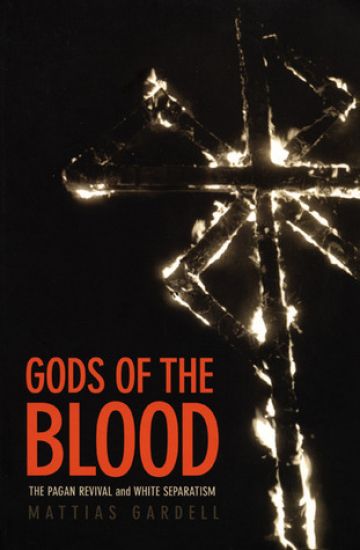
Racist paganism is a thriving but understudied element of the American religious and cultural landscape. Gods of the Blood is the first in-depth survey of the people, ideologies, and practices that make up this fragmented yet increasingly radical and militant milieu. Over a five-year period during the 1990s Mattias Gardell observed and participated in pagan ceremonies and interviewed pagan activists across the United States. His unprecedented entree into this previously obscure realm is the basis for this firsthand account of the proliferating web of organizations and belief systems combining pre-Christian pagan mythologies with Aryan separatism. Gardell outlines the historical development of the different strands of racist paganism-including Wotanism, Odinism and Darkside AsatrÚ-and situates them on the spectrum of pagan belief ranging from Wicca and goddess worship to Satanism. Gods of the Blood details the trends that have converged to fuel militant paganism in the United States: anti-government sentiments inflamed by such events as Ruby Ridge and Waco, the rise of the white power music industry (including whitenoise, dark ambient, and hatecore), the extraordinary reach of modern communications technologies, and feelings of economic and cultural marginalization in the face of globalization and increasing racial and ethnic diversity of the American population. Gardell elucidates how racist pagan beliefs are formed out of various combinations of conspiracy theories, anti-Semitism, warrior ideology, populism, beliefs in racial separatism, Klandom, skinhead culture, and tenets of national socialism. He shows how these convictions are further animated by an array of thought selectively derived from thinkers including Nietzche, historian Oswald Spengler, Carl Jung, and racist mystics. Scrupulously attentive to the complexities of racist paganism as it is lived and practiced, Gods of the Blood is a fascinating, disturbing, and important portrait of the virulent undercurrents of certain kinds of violence in America today.