Kirjahaku
Etsi kirjoja tekijän nimen, kirjan nimen tai ISBN:n perusteella.
1000 tulosta hakusanalla Maximus F. Isla
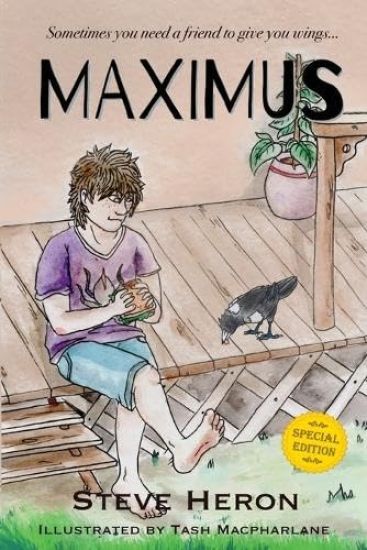
Sometimes you need a special friend to give you wings...Eleven-year-old Mitch is a regular kid who argues about cleaning his room, thinks his younger sister is a pain and enjoys hanging out with his friends. But he's finding life tough going. For one thing, he's being picked on by Jason, both in class and on the football field, and he feels like the spirited Maddy is his only true friend. Even worse, his Fly-in, Fly-Out dad has become increasingly distant and angry, and Mitch misses their father-son time. In Mitch's eyes, 'stuff sucks' An encounter with a bedraggled magpie he names Maximus gives Mitch something to look forward to when he's at home. As their connection grows, so too do other relationships in Mitch's life, as his self-confidence grows, he starts to stand up for himself, and the reason for his dad's moodiness is revealed.Maximus is an engaging, warm-hearted story for nine to eleven-year-olds about family, friendships, self-confidence and reconciliation, with the gentle message that life is like riding a wave.Middle-grade realistic fiction.
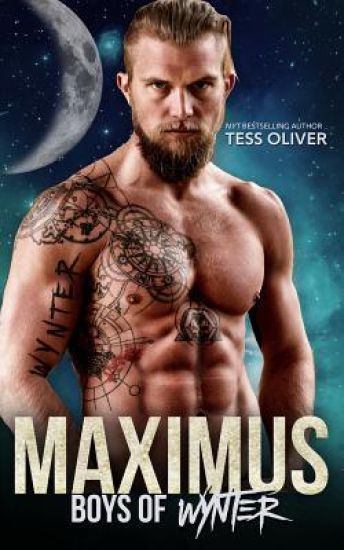
Book two of Tess Oliver's new 'Must-Read' paranormal romance series Boys of Wynter.For thousands of years, Boys of Wynter have guarded the mortal world against the wraiths and demons who lurk aimlessly in the desolate shadows outside the underworld. The Boys have a reputation and they didn't earn that unsavory notoriety by being gentlemen.Maximus: I was Maximus, the asshole the Wynter Fare had nicknamed Ironheart because I rarely woke up without at least two women naked in my bed. Only now I'd found a woman I couldn't even work up the courage to kiss from fear that it would break my iron heart into a million pieces. Rikki: The tough and massive blond warrior had unknowingly captured my full attention. After watching from a distance for months, I finally had him up close and personal, and he stole my breath away. His masculine appeal was irrefutable, but could I trust the man with my family's secret?Reading order:1. Stryker2. Maximus
Maximus of Tyre: The Philosophical Orations
Maximus of Tyre; M. B. Trapp
Oxford University Press
1997
sidottu
Trapp offers a new annotated translation of the philosophical orations of Maximus of Tyre. These orations cover a range of topics from Platonic theology to the proper attitude to pleasure. They open a window onto the second century's world of the Second Sophistic and Christian apologists, as well as on to that of the Florentine Platonists of the later fifteenth century who read, studied, and imitated the orations.
Maximus the Confessor and his Companions
Oxford University Press
2003
sidottu
The seven documents in this book, which appear for the first time in an English translation from Greek and Latin, constitute a unique contemporary witness to the stalwart opposition of the monk Maximus the Confessor to seventh-century imperial edicts enforcing adherence to the doctrines of monoenergism and monothelitism (the doctrines that in Christ there are, respectively, only one energy and one will). The monastic resistance led by Maximus gained the support of Popes John IV, Theodore, and Martin I and found many other followers in the West, as can be judged by the convocation of 150 bishops at the Lateran Synod in Rome in 649 to condemn imperial religious policy. The documents, which have been translated from a recent critical edition, cover events from the time of Maximus' arrival in Constantinople for his first legal trial in 655; the futile attempts to persuade him to accept an imperial compromise; to his final trial in the capital in 662, and his death under appalling conditions in Lazica, on the coast of the Black Sea, in the same year. The contents of these documents provide a rare insight into the difficult period of transition from the decentralized provincial system of government that characterized late antiquity, to a more hierarchical structure centred on the power of the emperor in Constantinople. They also shed light on some lesser-known but significant participants in the monothelite controversy, several of whom followed their master into exile in Lazica; Maximus' two disciples Anastasius the monk and Anastasius the Apocrisiarius, their friends Theodore Spudaeus, Theodosius of Gangra, and the brothers Theodore and Euprepius. The religious controversies of both East and West appear in these documents against a backdrop of political turmoil, and Arab and Persian invasions. The documents will be important for those interested in early Byzantine studies, church history, historical theology, and hagiography.
This study contextualizes the achievement of a strategically crucial figure in Byzantium's turbulent seventh century, the monk and theologian Maximus the Confessor (580-662). Building on newer biographical research and a growing international body of scholarship, as well as on fresh examination of his diverse literary corpus, Paul Blowers develops a profile integrating the two principal initiatives of Maximus's career: first, his reinterpretation of the christocentric economy of creation and salvation as a framework for expounding the spiritual and ascetical life of monastic and non-monastic Christians; and second, his intensifying public involvement in the last phase of the ancient christological debates, the monothelete controversy, wherein Maximus helped lead an East-West coalition against Byzantine imperial attempts doctrinally to limit Jesus Christ to a single (divine) activity and will devoid of properly human volition. Blowers identifies what he terms Maximus's "cosmo-politeian" worldview, a contemplative and ascetical vision of the participation of all created beings in the novel politeia, or reordered existence, inaugurated by Christ's "new theandric energy". Maximus ultimately insinuated his teaching on the christoformity and cruciformity of the human vocation with his rigorous explication of the precise constitution of Christ's own composite person. In outlining this cosmo-politeian theory, Blowers additionally sets forth a "theo-dramatic" reading of Maximus, inspired by Hans Urs von Balthasar, which depicts the motion of creation and history according to the christocentric "plot" or interplay of divine and creaturely freedoms. Blowers also amplifies how Maximus's cumulative achievement challenged imperial ideology in the seventh century--the repercussions of which cost him his life-and how it generated multiple recontextualizations in the later history of theology.
This study contextualizes the achievement of a strategically crucial figure in Byzantium's turbulent seventh century, the monk and theologian Maximus the Confessor (580-662). Building on newer biographical research and a growing international body of scholarship, as well as on fresh examination of his diverse literary corpus, Paul Blowers develops a profile integrating the two principal initiatives of Maximus's career: first, his reinterpretation of the christocentric economy of creation and salvation as a framework for expounding the spiritual and ascetical life of monastic and non-monastic Christians; and second, his intensifying public involvement in the last phase of the ancient christological debates, the monothelete controversy, wherein Maximus helped lead an East-West coalition against Byzantine imperial attempts doctrinally to limit Jesus Christ to a single (divine) activity and will devoid of properly human volition. Blowers identifies what he terms Maximus's "cosmo-politeian" worldview, a contemplative and ascetical vision of the participation of all created beings in the novel politeia, or reordered existence, inaugurated by Christ's "new theandric energy". Maximus ultimately insinuated his teaching on the christoformity and cruciformity of the human vocation with his rigorous explication of the precise constitution of Christ's own composite person. In outlining this cosmo-politeian theory, Blowers additionally sets forth a "theo-dramatic" reading of Maximus, inspired by Hans Urs von Balthasar, which depicts the motion of creation and history according to the christocentric "plot" or interplay of divine and creaturely freedoms. Blowers also amplifies how Maximus's cumulative achievement challenged imperial ideology in the seventh century—the repercussions of which cost him his life-and how it generated multiple recontextualizations in the later history of theology.
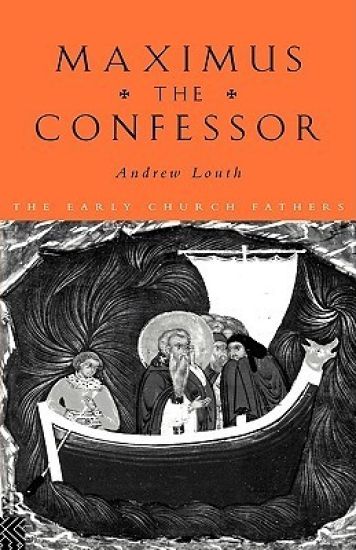
St Maximus the Confessor, the greatest of Byzantine theologians, lived through the most catastrophic period the Byzantine Empire was to experience before the Crusades. This book introduces the reader to the times and upheavals during which Maximus lived. It discusses his cosmic vision of humanity and the role of the church. The study makes available a selection of Maximus' theological treaties many of them translated for the first time. The translations are accompanied by a lucid and informed introduction.
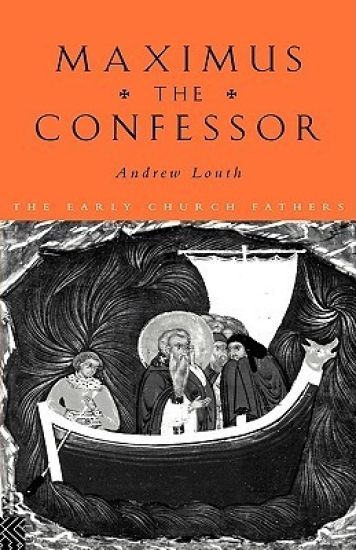
St Maximus the Confessor, the greatest of Byzantine theologians, lived through the most catastrophic period the Byzantine Empire was to experience before the Crusades. This book introduces the reader to the times and upheavals during which Maximus lived. It discusses his cosmic vision of humanity and the role of the church. The study makes available a selection of Maximus' theological treaties many of them translated for the first time. The translations are accompanied by a lucid and informed introduction.
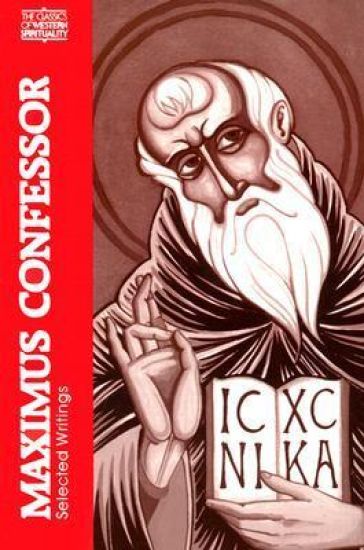
Maximus the Confessor
Paulist Press International,U.S.
1985
nidottu
"indispensable for most libraries." Library Journal Maximus the Confessor: Selected Writings translation and notes by George C. Berthold introduction by Jaroslav Pelikan preface by Irénée-Henri Dalmais, O.P. "The perfect mind is the one that through genuine faith knows in supreme ignorance the supremely unknowable, and in gazing on the universe of his handiwork has received from God comprehensive knowledge of his Providence and judgment in it, as far as allowable to men." Maximus Confessor (c.580-662) Maximus is called the Confessor because of his sufferings and labors for the true faith. During the seventh century when the monothelite heresy (belief that Christ had only one will—a divine one) plagued the Church, Maximus eloquently demonstrated that Christ had both human and divine natures. Writing in the introduction to this volume Jaroslav Pelikan highlights the relevance of Maximus' writings for today: "It was the genius of Maximus Confessor that, in a measure that has been granted only to a few, he was fully bilingual, affirming by means of negation and speaking both the language of spirituality and the language of theology with equal fluency. From the looks of things within both Western and Eastern Christendom—and beyond—that gift of being bilingual is one that people of faith will need more than ever in the years to come." †
This book brings Maximus the Confessor’s logoi doctrine into dialogue with modern-day evolutionary biology. It explores the extent to which the logoi, as described by Maximus, exhibit features that are concordant with evolution before going on to consider more discordant aspects that cannot be ignored. The author addresses the curious resonance between the logoi and evolution in a systematic way through a close reading of primary textual material allied with a deep understanding of both the classical Darwinian and ‘extended’ evolutionary syntheses. The study joins with other Maximian interpreters in attesting to the incarnational and theophanic nature of the logoi, but seeks to extend this distinctively Eastern Christo-cosmology into the problematic territory of biological evolution, a territory historically dominated by Western scholarship. The book will be of interest to scholars of religion and science, as well as Patristics and the Eastern Orthodox theological traditions.
Maximus Finds a Friend: Learning about Autism
Seletha Marie Head-Tucker M. S.
Independently Published
2019
nidottu
Maxwell is a little boy loving life when he learns his has autism but that does not stop him, especially when he meets a new friend.
Maximus Confessor: S. Maximi Scholia In Eos B. Dionysii Libr
Maximus Confessor; Michael Syncellus
KESSINGER PUBLISHING, LLC
2010
nidottu
The Art of Scribling, Address'd to All the Scriblers of the Age. by Scriblerus Maximus.
Maximus Scriblerus Maximus
Gale Ecco, Print Editions
2010
pokkari