Kirjojen hintavertailu. Mukana 12 083 983 kirjaa ja 12 kauppaa.

Kirjahaku

Etsi kirjoja tekijän nimen, kirjan nimen tai ISBN:n perusteella.

1000 tulosta hakusanalla Maxwell Craven

Electrical Researches of the Honorable Henry Cavendish
Henry Cavendish (1731-1810), the grandson of the second duke of Devonshire, wrote papers on electrical topics for the Royal Society, but the majority of his electrical experiments did not become known until they were collected and published by James Clerk Maxwell a century later, in 1879, long after other scientists had been credited with the same results. Among Cavendish's discoveries were the concept of electric potential, which he called the 'degree of electrification'; an early unit of capacitance, that of a sphere one inch in diameter; the formula for the capacitance of a plate capacitor; the concept of the dielectric constant of a material; the relationship between electric potential and current, now called Ohm's Law; laws for the division of current in parallel circuits, now attributed to Charles Wheatstone; and the inverse square law of variation of electric force with distance, now called Coulomb's Law.
Electrical Researches of the Honorable Henry Cavendish
Henry Cavendish (1731-1810), the grandson of the second duke of Devonshire, wrote papers on electrical topics for the Royal Society, but the majority of his electrical experiments did not become known until they were collected and published by James Clerk Maxwell a century later, in 1879, long after other scientists had been credited with the same results. Among Cavendish's discoveries were the concept of electric potential, which he called the 'degree of electrification'; an early unit of capacitance, that of a sphere one inch in diameter; the formula for the capacitance of a plate capacitor; the concept of the dielectric constant of a material; the relationship between electric potential and current, now called Ohm's Law; laws for the division of current in parallel circuits, now attributed to Charles Wheatstone; and the inverse square law of variation of electric force with distance, now called Coulomb's Law.
The Electrical Researches

The Electrical Researches

James Clerk Maxwell; Henry Cavendish

Hansebooks
2017
pokkari
The Electrical Researches is an unchanged, high-quality reprint of the original edition of 1879. Hansebooks is editor of the literature on different topic areas such as research and science, travel and expeditions, cooking and nutrition, medicine, and other genres. As a publisher we focus on the preservation of historical literature. Many works of historical writers and scientists are available today as antiques only. Hansebooks newly publishes these books and contributes to the preservation of literature which has become rare and historical knowledge for the future.
Maxwell

Maxwell

Tom Bower

HARPERCOLLINS PUBLISHERS
2008
pokkari
â??Why did the Maxwells get off? The answers are in Tom Bowerâ??s book. His relentless research has produced something more than an exposé of a single rogueâ?? Spectator The gripping exposé of a tycoonâ??s greed and his shattering self-destruction.
Maxwell Street

Maxwell Street

Tim Cresswell

University of Chicago Press
2019
sidottu
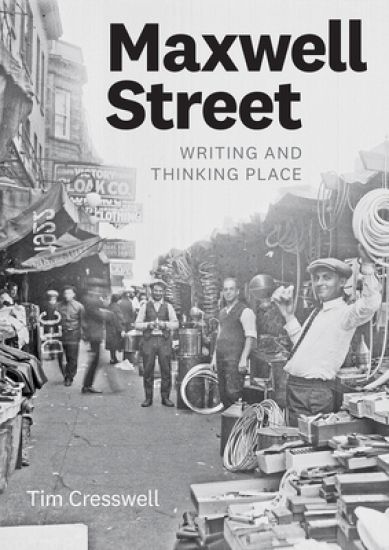
What is the nature of place, and how does one undertake to write about it? To answer these questions, geographer and poet Tim Cresswell looks to Chicago’s iconic Maxwell Street market area. Maxwell Street was for decades a place where people from all corners of the city mingled to buy and sell goods, play and listen to the blues, and encounter new foods and cultures. Now, redeveloped and renamed University Village, it could hardly be more different. In Maxwell Street, Cresswell advocates approaching the study of place as an “assemblage” of things, meanings, and practices. In exploring the neighborhood, he models this innovative approach through a montage format that exposes the different types of texts—primary, secondary, and photographic sources—that have attempted to capture the essence of the area. Cresswell studies his historical sources just as he explores the different elements of Maxwell Street—exposing them layer by layer. Brilliantly interweaving words and images, Maxwell Street sheds light on a historic Chicago neighborhood and offers a new model for how to write about place that will interest anyone in the fields of geography, urban studies, or cultural history.
Maxwell Street

Maxwell Street

Tim Cresswell

University of Chicago Press
2019
pokkari
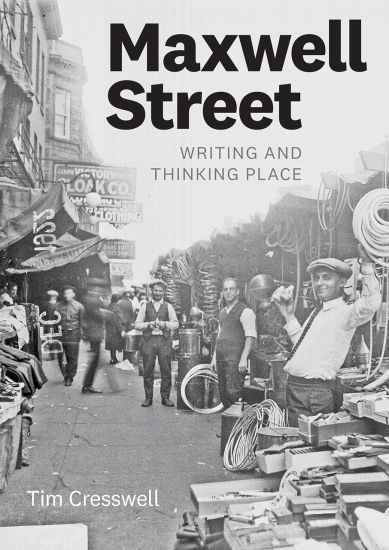
What is the nature of place, and how does one undertake to write about it? To answer these questions, geographer and poet Tim Cresswell looks to Chicago’s iconic Maxwell Street market area. Maxwell Street was for decades a place where people from all corners of the city mingled to buy and sell goods, play and listen to the blues, and encounter new foods and cultures. Now, redeveloped and renamed University Village, it could hardly be more different. In Maxwell Street, Cresswell advocates approaching the study of place as an “assemblage” of things, meanings, and practices. In exploring the neighborhood, he models this innovative approach through a montage format that exposes the different types of texts—primary, secondary, and photographic sources—that have attempted to capture the essence of the area. Cresswell studies his historical sources just as he explores the different elements of Maxwell Street—exposing them layer by layer. Brilliantly interweaving words and images, Maxwell Street sheds light on a historic Chicago neighborhood and offers a new model for how to write about place that will interest anyone in the fields of geography, urban studies, or cultural history.
Maxwell Anderson

Maxwell Anderson

Barbara L. Horn

Greenwood Press
1996
sidottu
One of the most important American playwrights of the 20th century, Maxwell Anderson won a Pulitzer Prize for Both Your Houses (1933), and New York Drama Critics Circle awards for Winterset (1935) and High Tor (1936). Though he believed that poetry was the glory of drama, he also devoted himself to realism. His crowning achievement was Winterset, in which he popularized the use of blank verse in contemporary drama. During a career that spanned more than a quarter century, he wrote 33 plays, many of which were produced in European capitals and were translated into more than a dozen languages.As a comprehensive guide to Anderson's career, this reference book is an indispensable volume for anyone interested in American drama. An introductory essay discusses Anderson's life and work. The bulk of the text provides synopses and critical overviews of his plays, a feature useful to readers unacquainted with his works. Also included is cast information for major productions. Annotated bibliographies cover primary sources, as well as books, chapters, and articles about Anderson. A separate bibliography cites and annotates reviews of performances.
Maxwell's Equations

Maxwell's Equations

Paul G. Huray

John Wiley Sons Inc
2009
sidottu
An authoritative view of Maxwell's Equations that takes theory to practice Maxwell's Equations is a practical guide to one of the most remarkable sets of equations ever devised. Professor Paul Huray presents techniques that show the reader how to obtain analytic solutions for Maxwell's equations for ideal materials and boundary conditions. These solutions are then used as a benchmark for solving real-world problems. Coverage includes: An historical overview of electromagnetic concepts before Maxwell and how we define fundamental units and universal constants today A review of vector analysis and vector operations of scalar, vector, and tensor products Electrostatic fields and the interaction of those fields with dielectric materials and good conductors A method for solving electrostatic problems through the use of Poisson's and Laplace's equations and Green's function Electrical resistance and power dissipation; superconductivity from an experimental perspective; and the equation of continuity An introduction to magnetism from the experimental inverse square of the Biot-Savart law so that Maxwell's magnetic flux equations can be deduced Maxwell's Equations serves as an ideal textbook for undergraduate students in junior/senior electromagnetics courses and graduate students, as well as a resource for electrical engineers.
Maxwell/Tesla

Maxwell/Tesla

Carlo Vitali

Lulu.com
2009
pokkari
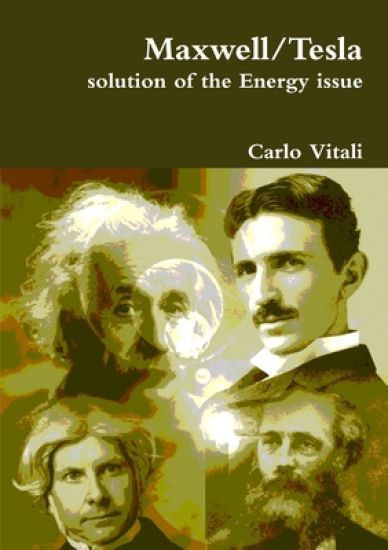
Presentazione in italiano dell'originale lavoro di J.C.Maxwell del 1848 sulla Teoria EM e descrizione della riduzione da parte di Lorenz dall'originaria algebra non-euclidea, non-commutativa dei Quaternoni scelta da Maxwell in algebra euclidea e commutativa dei vettori con relativa semplificazione per l'insegnamento ma perdita di suggestivit applicative. Descrizione delle successive peripezie di Nikola Tesla contrastato dal mondo accademico culminate nel suo rifiuto di ben due Premi Nobel. Presentation of the original Maxwell paper that converted the Faraday's suggestive perception of field of energy into the first historical mathematical model in quaternion-algebra, anticipatory of the Einstein's description of general relativity in tensor-algebra: a non-eucledian, non commutative set of equations.
Maxwell and the Very Big Cookie

Maxwell and the Very Big Cookie

Ginger Nielson

Virginia Nielson
2020
sidottu
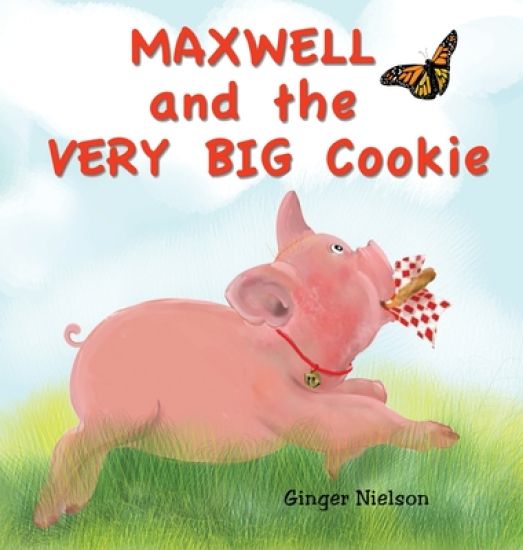
Maxwell lives a happy life on a country farm. His one problem is that he is always hungry and never seems to be on time for breakfast.When the farmer's wife comes to his rescue with a very big cookie, he is not prepared for what happens next.
Maxwell's Demon

Maxwell's Demon

Harvey S. (EDT) Leff; Andrew F. (EDT) Rex

Princeton University Press
2014
pokkari
About 120 years ago, James Clerk Maxwell introduced his now legendary hypothetical "demon" as a challenge to the integrity of the second law of thermodynamics. Fascination with the demon persisted throughout the development of statistical and quantum physics, information theory, and computer science--and linkages have been established between Maxwell's demon and each of these disciplines. The demon's seductive quality makes it appealing to physical scientists, engineers, computer scientists, biologists, psychologists, and historians and philosophers of science. Until now its important source material has been scattered throughout diverse journals.This book brings under one cover twenty-five reprints, including seminal works by Maxwell and William Thomson; historical reviews by Martin Klein, Edward Daub, and Peter Heimann; information theoretic contributions by Leo Szilard, Leon Brillouin, Dennis Gabor, and Jerome Rothstein; and innovations by Rolf Landauer and Charles Bennett illustrating linkages with the limits of computation. An introductory chapter summarizes the demon's life, from Maxwell's illustration of the second law's statistical nature to the most recent "exorcism" of the demon based on a need periodically to erase its memory. An annotated chronological bibliography is included.Originally published in 1990.The Princeton Legacy Library uses the latest print-on-demand technology to again make available previously out-of-print books from the distinguished backlist of Princeton University Press. These editions preserve the original texts of these important books while presenting them in durable paperback and hardcover editions. The goal of the Princeton Legacy Library is to vastly increase access to the rich scholarly heritage found in the thousands of books published by Princeton University Press since its founding in 1905.
Maxwell's Demon

Maxwell's Demon

Harvey S. (EDT) Leff; Andrew F. (EDT) Rex

Princeton University Press
2016
sidottu
About 120 years ago, James Clerk Maxwell introduced his now legendary hypothetical "demon" as a challenge to the integrity of the second law of thermodynamics. Fascination with the demon persisted throughout the development of statistical and quantum physics, information theory, and computer science--and linkages have been established between Maxwell's demon and each of these disciplines. The demon's seductive quality makes it appealing to physical scientists, engineers, computer scientists, biologists, psychologists, and historians and philosophers of science. Until now its important source material has been scattered throughout diverse journals.This book brings under one cover twenty-five reprints, including seminal works by Maxwell and William Thomson; historical reviews by Martin Klein, Edward Daub, and Peter Heimann; information theoretic contributions by Leo Szilard, Leon Brillouin, Dennis Gabor, and Jerome Rothstein; and innovations by Rolf Landauer and Charles Bennett illustrating linkages with the limits of computation. An introductory chapter summarizes the demon's life, from Maxwell's illustration of the second law's statistical nature to the most recent "exorcism" of the demon based on a need periodically to erase its memory. An annotated chronological bibliography is included.Originally published in 1990.The Princeton Legacy Library uses the latest print-on-demand technology to again make available previously out-of-print books from the distinguished backlist of Princeton University Press. These editions preserve the original texts of these important books while presenting them in durable paperback and hardcover editions. The goal of the Princeton Legacy Library is to vastly increase access to the rich scholarly heritage found in the thousands of books published by Princeton University Press since its founding in 1905.
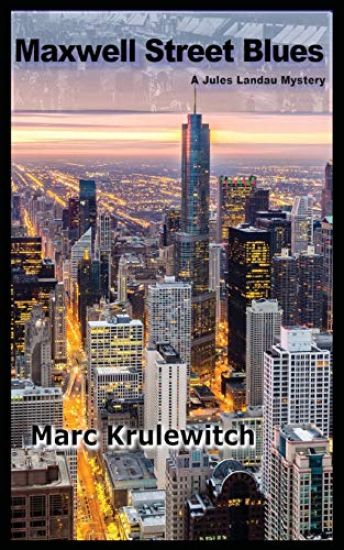
Maxwell Street Blues

Maxwell Street Blues

Marc Krulewitch

Marc Krulewitch
2018
pokkari
Grabbing snapshots of cheating spouses and hunting down bail jumpers provides a comfortable living for Jules Landau--until his estranged father knocks on the door. Second-rate con man Bernie Landau reports Jules's beloved "Uncle Snook" has taken five bullets in the head. The newspapers dismiss the victim as another bean counter for the mob caught skimming off the top. But Jules isn't buying it. Sure, his uncle's accounting practice included shady characters, but the wise-guys loved Snooky and not just for his money-laundering skills. With Snooky you had a devoted friend--a regular hoodlum's therapist. From the start, Bernie criticizes his son's brash approach to the investigation. But despite their conflicts, father and son uncover Snooky's entanglements in a convoluted world of crooked politics, corrupt police, and drug trafficking. And those who stand to benefit from Snooky's death reads like a Who's Who of the Chicago power elite.
Train Your Young Horse with Richard Maxwell

Train Your Young Horse with Richard Maxwell

Maxwell Richard

David Charles
2008
sidottu
Give your young horse the best start by building a solid foundation with this essential training guide, from newborn foal to adult horse. Dip in and out of the four distinct sections to solve specific problems, regardless of your horse's age. Tackle new experiences calmly and with confidence by following the step-by-step sequences with explanatory captions and practical tips. Richard begins the book with Making the Decision, covering all the general areas that you should know when buying or breeding a youngster. Richard explores what has changed with working with horses and why over the years, from using round pens and join-up, focusing on owners as well as horses, to creating a training pyramid plan to follow an organized training regime with a logical progression to help you and your horse achieve your goals. Richard asks the important questions you need to answer before committing to owning a youngster and runs through the 10 training principles. He highlights the importance of repetition, establishing a clear means of communication between you and your horse, and understanding how the horse’s brain works, from the right side to the left side. There are also areas of special mention: orphan foals and keeping entires. The second chapter runs through training your horse from 0–6 months. Maxwell encourages you to develop your foal’s brain from the very beginning. From imprinting and halter training to leading and weaning, the section covers all of the basic techniques for training for your foul at this influential time. The third part of the book looks at preparing your horse for a working life at 6 months–3 years. Maxwell teaches you further halter techniques, tying up, desensitization, techniques for avoiding the challenging year when the horse turns two, tips on preparing for the farrier, bathing, clipping, injections and preparing for loading with a comprehensive step-by-step guide to loading. He also covers preparing for a bridle and circling work. Part 4, Backing and Riding On, focuses on horses aged 3 years+. The chapter explains how to: introduce the first saddle, the first bridle, to teach your young horse to accept the bit, to introduce long-lining, to introduce a rider using a dummy, to back your youngster, and to desensitize on the move. Maxwell goes on to show a day-by-day guide to riding from day one, concluding with an interesting selection of real-life case studies that demonstrate the effectiveness of Maxwell's methods for molding a young horse into a safe, rewarding ride. With valuable checklists, step-by-step instructions, and useful question and answer sections at the end of each chapter, Richard Maxwell really does provide all the essential information you will need to effectively train your young horse.
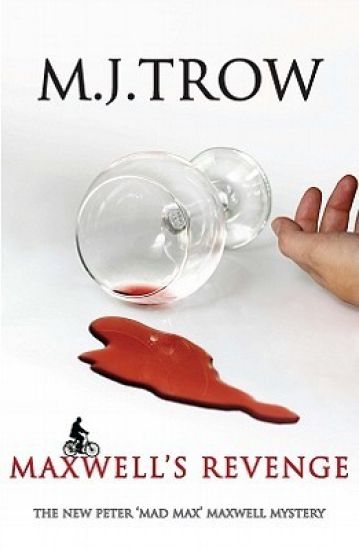
Maxwell's Revenge

Maxwell's Revenge

Trow M. J.

Allison Busby
2011
nidottu
With the beginning of a new school year under way, Peter 'Mad Max' Maxwell prepares to get stuck into his curricular routine and is looking forward to his forthcoming wedding to fiancée DS Jacquie Carpenter. The immediate task in hand for senior staff members is the hiring of a new Assistant Head teacher, for which the school caterers have prepared a private buffet. But during the lunch meeting disaster strikes, as guests and staff alike become seriously ill in a matter of minutes. After being reluctantly thrust into the role of Acting Headmaster, Maxwell works in conjunction with the police, including his lovely Jacquie, to try to unravel the mystery. But with certain fingers pointing at him, and Jacquie worried that the attack has infiltrated his life in a way that could soon get out of control, is Maxwell in more danger than he thinks?