

Kirjahaku
Etsi kirjoja tekijän nimen, kirjan nimen tai ISBN:n perusteella.
1000 tulosta hakusanalla Melanie Klein
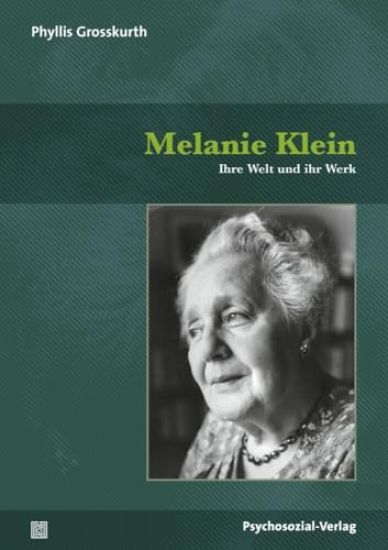


Melanie Klein (1882–1960) pioneered psychoanalytic practice with children and made major contributions to our understanding of both psychosis and autism. Along the way, she introduced a new approach to the theory of the unconscious without abandoning the principles set forth by Freud. In her first biography of a fellow psychoanalyst, Julia Kristeva considers Klein’s life and intellectual development, weaving a narrative that illuminates her own life and work. Kristeva tells the remarkable story of Klein’s life: an unhappy wife and mother who underwent analysis and—without a medical or other advanced degree—became an analyst herself at the age of 40. In Kristeva’s account, Klein was the first person to see the mother as the source of not only creativity but also thought itself and the first to consider the place of matricide in psychic development—making her a crucial figure in the evolution of the provocative ideas about motherhood and the psyche for which Kristeva is renowned.
In this thoughtful and lucid book, C. Fred Alford shows how the psychoanalytic theory of Melanie Klein can be extended to groups and culture and thus can illuminate issues of social theory and moral philosophy of the sort considered by the Frankfurt School. He then applies this expanded theory to the politics of large groups, the appeal of works of art, and the psychological sources of reason.

While much writing has been devoted, predominantly by contemporary Kleinian adult psychoanalysts, to the Kleinian and post Kleinian development of Klein's work, comparatively little has recently been written about the ongoing importance and character of Klein's clinical work for contemporary psychoanalytic psychotherapy or analysis with very small children (2 - 6 year olds). Little attention now seems to be paid to the revolutionary character of her work from the start (in the early 1920s) with this age group and its challenges, still relevant today, or to her recognition of the importance of mother-infant relations in the period long before World War II brought investigation into and understanding of problems of attachment, separation and loss. This book addresses these issues and re-explores Klein's work in these (and other) areas. This book is concerned primarily with Klein's work with pre-latency children and aims to give these small children more of the voice today that Melanie Klein herself discovered.

This book is a bibliography of Melanie Klein's writings together with other books, articles, and papers, dealing with her life, ideas and work. It is of immense potential use for clinicians, students, and researchers.

Melanie Klein Today, Volume 1: Mainly Theory
Routledge
1988
nidottu
Melanie Klein Today, Volume 1 is the first of two volumes of collected essays devoted to developments in psychoanalysis based on the work of Melanie Klein.The papers are arranged into four groups: the analysis of psychotic patients, projective identification, on thinking, and pathalogical organisation.

Melanie Klein Today, Volume 2: Mainly Practice
Routledge
1988
nidottu
This book should be of interest to psychotherapists and psychoanalysts.

In this book Claudia Frank discusses how Melanie Klein began to develop her psychoanalysis of children. Melanie Klein in Berlin: Her First Psychoanalyses of Children offers a detailed comparative analysis of both published and unpublished material from the Melanie Klein Archives.By using previously unpublished studies, Frank demonstrates how Klein enriched the concept of negative transference and laid the basis for the innovations on both technique and theory that eventually led not only to changes in child analysis, but also to changes in the analysis of adults. Frank also uncovers the influence that this had on Klein's later theories of the paranoid-schizoid and depressive positions, and on her understanding of psychotic anxieties.The first seven chapters in the book provide an explanation of the essence of Klein's approach to child psychoanalysis covering topics including:the inevitability and usefulness of negative transferencedevelopment of playearly conscious and unconscious phantasies. Part two provides a translation of Klein's unpublished notes on the treatments of four of the children she analysed in Berlin: 7-year-old Grete, 2-year-old Rita, 7-year-old Inge and 6-year-old Erna.Melanie Klein in Berlin is the first text to make extensive use of Klein's unpublished papers, clinical notes, diaries and manuscripts. It will appeal to anyone involved in child psychoanalysis and the development of Melanie Klein's thinking.

In this book Claudia Frank discusses how Melanie Klein began to develop her psychoanalysis of children. Melanie Klein in Berlin: Her First Psychoanalyses of Children offers a detailed comparative analysis of both published and unpublished material from the Melanie Klein Archives.By using previously unpublished studies, Frank demonstrates how Klein enriched the concept of negative transference and laid the basis for the innovations on both technique and theory that eventually led not only to changes in child analysis, but also to changes in the analysis of adults. Frank also uncovers the influence that this had on Klein's later theories of the paranoid-schizoid and depressive positions, and on her understanding of psychotic anxieties.The first seven chapters in the book provide an explanation of the essence of Klein's approach to child psychoanalysis covering topics including:the inevitability and usefulness of negative transferencedevelopment of playearly conscious and unconscious phantasies. Part two provides a translation of Klein's unpublished notes on the treatments of four of the children she analysed in Berlin: 7-year-old Grete, 2-year-old Rita, 7-year-old Inge and 6-year-old Erna.Melanie Klein in Berlin is the first text to make extensive use of Klein's unpublished papers, clinical notes, diaries and manuscripts. It will appeal to anyone involved in child psychoanalysis and the development of Melanie Klein's thinking.

Melanie Klein and Marcelle Spira: Their correspondence and context
Jean-Michel Quinodoz
Routledge
2014
sidottu
Melanie Klein and Marcelle Spira: Their Correspondence and Context includes 45 letters Melanie Klein wrote to the Swiss psychoanalyst Marcelle Spira between 1955 and 1960, as well as six rough drafts from Spira. They were discovered in Spira’s library after her death in 2006. As only a few of the letters that Klein wrote to her colleagues have been preserved, this moving, historically important correspondence sheds new light upon the last five years of Klein’s creative life.The common theme of the letters is their discussion of the French translation of The Psycho-Analysis of Children by Boulanger in collaboration with Spira. The translation, first undertaken by Lacan, went through many ups and downs until it was published in 1959 by the Presses Universitaires de France. Klein also discusses her current work, in particular Envy and Gratitude (1957). She encourages her pioneering Swiss colleague Spira to be patient in the face of the resistance shown towards Kleinian thinking. Identifying herself to some extent with her younger follower, Klein reveals a very touching autobiographical account of the difficulties that she herself had encountered in her work and how she overcame them.In Melanie Klein and Marcelle Spira: Their Correspondence and Context, Jean-Michel Quinodoz brings together these important letters. This rare collection of their correspondence is a valuable contribution to the history of psychoanalysis and will be essential reading for psychoanalysts, trainee psychoanalysts and lay readers with an interest in the work of Klein and Spira.

Melanie Klein’s Narrative of an Adult Analysis offers the first detailed account of Melanie Klein’s work with an adult patient, Mr B, which spanned the years 1934 to 1949.This volume includes fully edited sessional notes made by Klein about her work with Mr B. Christine English has expertly collated, curated and annotated Klein’s original notes from the Melanie Klein Archive, giving the reader clear insight into this fascinating case for the first time. Throughout, English offers extensive critical commentary, as well as a thorough introduction to the case. She gives the rare opportunity for the reader to be privy to the working practice of one of the most eminent analysts of her time, offering a clear and detailed record of Klein’s interventions and thinking in her work with one patient over a number of years. This unique and vivid record shows Klein’s technical approach in the greatest detail, showing her sensitivity and intuition as a clinician, as well as introducing many of her influential theories.This book will be essential reading for all psychoanalysts, psychoanalytic psychotherapists and other therapists interested in Klein’s work. It will also be of interest to post-graduate clinicians, psychoanalytic theoreticians, academics and researchers concerned with psychoanalytic ideas and the work of Melanie Klein.

Melanie Klein’s Narrative of an Adult Analysis offers the first detailed account of Melanie Klein’s work with an adult patient, Mr B, which spanned the years 1934 to 1949.This volume includes fully edited sessional notes made by Klein about her work with Mr B. Christine English has expertly collated, curated and annotated Klein’s original notes from the Melanie Klein Archive, giving the reader clear insight into this fascinating case for the first time. Throughout, English offers extensive critical commentary, as well as a thorough introduction to the case. She gives the rare opportunity for the reader to be privy to the working practice of one of the most eminent analysts of her time, offering a clear and detailed record of Klein’s interventions and thinking in her work with one patient over a number of years. This unique and vivid record shows Klein’s technical approach in the greatest detail, showing her sensitivity and intuition as a clinician, as well as introducing many of her influential theories.This book will be essential reading for all psychoanalysts, psychoanalytic psychotherapists and other therapists interested in Klein’s work. It will also be of interest to post-graduate clinicians, psychoanalytic theoreticians, academics and researchers concerned with psychoanalytic ideas and the work of Melanie Klein.
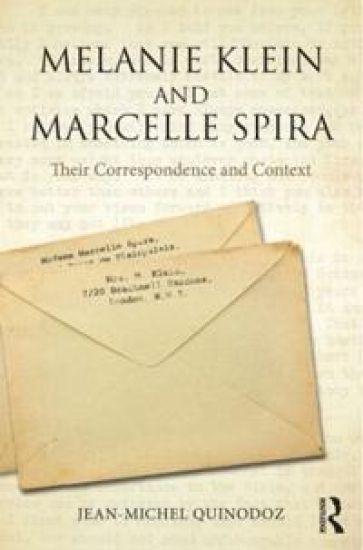
Melanie Klein and Marcelle Spira: Their correspondence and context
Jean-Michel Quinodoz
Routledge
2017
nidottu
Melanie Klein and Marcelle Spira: Their Correspondence and Contextincludes 45 letters Melanie Klein wrote to the Swiss psychoanalyst Marcelle Spira between 1955 and 1960, as well as six rough drafts from Spira. They were discovered in Spira’s library after her death in 2006. As only a few of the letters that Klein wrote to her colleagues have been preserved, this moving, historically important correspondence sheds new light upon the last five years of Klein’s creative life

Melanie Klein Today, Volume 1: Mainly Theory
Routledge
2015
sidottu
Melanie Klein Today, Volume 1 is the first of two volumes of collected essays devoted to developments in psychoanalysis based on the work of Melanie Klein.The papers are arranged into four groups: the analysis of psychotic patients, projective identification, on thinking, and pathalogical organisation.

Melanie Klein Today, Volume 2: Mainly Practice
Routledge
2015
sidottu
Although both Kleinian psychoanalysts and their critics take it for granted that there is a therapeutic technique distinctive to the Kleinian approach, comparatively little has been written about what it is.In Melanie Klein Today, Volume 2, Elizabeth Bott Spillius brings together classic and new papers to make it possible to understand the main elements of the Kleinian therapeutic technique. In recent years there have been important refinements in this technique, notably in regard to the balance to be struck in interpreting destructiveness, the use of the so-called part-object language, and the precise ways to understand and interpret 'acting-in' and the role of the past in the present.This collection draws these developments together and makes clear why an integral part of contemporary Kleinian theory and practice is concerned with the careful scrutiny of the therapeutic process itself. The volume includes detailed accounts of clinical work with both adults and children and takes further the theoretical ideas discussed in Melanie Klein Today, Volume 1.The papers and the editorial commentary in this book together comprise the most illuminating and coherent rationale for the Kleinian technique yet published. The ideas will be of interest to members of many disciplines and a final section includes papers on the application of the Kleinian approach in other fields of work.

While much writing has been devoted, predominantly by contemporary Kleinian adult psychoanalysts, to the Kleinian and post Kleinian development of Klein's work, comparatively little has recently been written about the ongoing importance and character of Klein's clinical work for contemporary psychoanalytic psychotherapy or analysis with very small children (2 - 6 year olds). Little attention now seems to be paid to the revolutionary character of her work from the start (in the early 1920s) with this age group and its challenges, still relevant today, or to her recognition of the importance of mother-infant relations in the period long before World War II brought investigation into and understanding of problems of attachment, separation and loss. This book addresses these issues and re-explores Klein's work in these (and other) areas. This book is concerned primarily with Klein's work with pre-latency children and aims to give these small children more of the voice today that Melanie Klein herself discovered.

This book is a bibliography of Melanie Klein's writings together with other books, articles, and papers, dealing with her life, ideas and work. It is of immense potential use for clinicians, students, and researchers.

Melanie Klein Heute. Entwicklungen in Theorie und Praxis
Klett-Cotta Verlag
2020
nidottu