The 5th edition of this successful Glossary has been completely revised, updated and supplemented by up-to-date terms used in genetic engineering and molecular genetics. Where necessary a short essay explaining an entry in more detail is added to the stated definition. Wherever possible, the author of an entry is mentioned and the respective publication cited. Cross references ease the orientation within the glossary."This excellent textbook should serve seasoned scientists as a feast for the mind and as a valuable work for graduate students. It is a true bargain..."(Quarterly Review of Biology) "By the very fact that this Glossary is now in its fifth edition, one can be assured of its usefulness... Highly recommended." (Australasian)
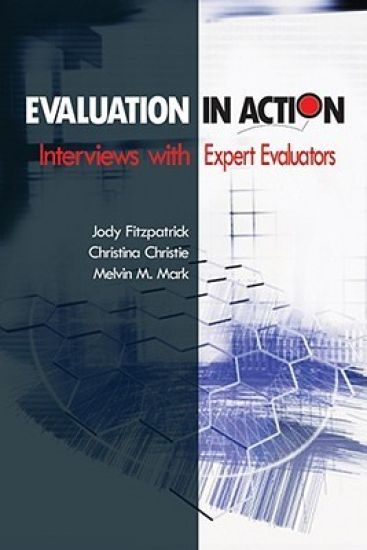
Evaluation in Action: Interviews With Expert Evaluators is the first book to go behind the scenes of real evaluations to explore the issues faced—and the decisions made—by notable evaluators in the field. Drawing from the popular "Exemplars" section in the American Journal of Evaluation (AJE), the book's twelve interviews with evaluators illustrate a variety of evaluation practices in different settings and include commentary and analysis on what the interviews teach about evaluation practice. Praise for Evaluation in Action"Evaluation in Action: Interviews With Expert Evaluators is a "must" read for those who want to know how evaluations really take place."—Marvin C. Alkin, University of California, Los Angeles"This book offers a rare opportunity to glimpse the assumptions, values, logic, and reasoning behind evaluator choices. It models the reflection required of good practice. The interviews are accessible and engaging, like being invited to a conversation over coffee—a tribute to the power of storytelling. They drew me in and made me want to join the discussion and ask even more questions. The section on cultural competence in evaluation is a particularly significant contribution to the knowledge base of our field. —Karen Kirkhart, Syracuse University, former President of American Evaluation Association "This book is unique in the breadth of evaluation types and settings covered and the interview format provides a personal, in-depth picture of the evaluator's thinking. I'm excited about using it with my students." —Katye M. Perry, Oklahoma State University, former Chair of the Topical Interest Group on Teaching of EvaluationThis book fills a major gap in evaluation literature. In addition to the cases, the introductory chapter is a masterful distillation of key issues in evaluation, while the last two chapters provide a concise analysis of the interaction of evaluation theory and practice.—Leslie Cooksy, University of Delaware "A fresh and insightful glimpse into the deliberations and choices made by practicing evaluators. The questions asked of the evaluators are right on target and give students of evaluation, whether they are in the classroom or on the job, solid guidance on navigating around the dilemmas that arise when dealing with stakeholders and with sticky ethical challenges. This text fills a need in training evaluators not met by current textboooks." —Kathryn E. Newcomer, George Washington University
When a butterfly keeper captures a group of moths on accident, Melvin the Moth sets out on an adventure though the thick forest to save his mother. Melvin meets many wacky creatures on his way and not all of them have his best interests at heart.
Melvin J. Maas spent a lifetime serving others. Whether as a member of the armed forces, a congressman, or a private businessman, Maas lived by an unbending set of leadership principles. Maas began his career in the Marine Corps during World War I. Afterward, he entered private enterprise, surviving a failed business and interference from alcohol-distilling gangsters. Following his venture in the business world, Maas turned his attention to politics, using his position in Congress to achieve much-needed reforms in the ROTC, the US Naval Academy, and the US Marine Corps reserve forces. War returned to Maas's life in 1945, seeing him serving in an active duty military unit in Okinawa, where he sustained injuries that cost him his sight. For many people, such disaster would end their service to their fellow citizens, but Maas remained an active servant leader, pushing for the rights and employment of the disabled. Biographer and leadership expert John M. Haran's story of Maas's life makes for a provocative, engaging read with practical applications. Anyone who believes in serving others can benefit from Maas's embodiment of servant leadership.
This volume brings together Melvin B. Tolson's three book of poetry - ""Rendezvouz with America"", ""Libretto for the Republic of Liberia"", and ""Harlem Gallery"" - as well as fugitive poems after 1944.
A lucid, elegant, and complete survey of set theory, this volume is drawn from the authors' substantial teaching experience. The first of three parts focuses on axiomatic set theory. The second part explores the consistency of the continuum hypothesis, and the final section examines forcing and independence results.Part One's focus on axiomatic set theory features nine chapters that examine problems related to size comparisons between infinite sets, basics of class theory, and natural numbers. Additional topics include author Raymond Smullyan's double induction principle, super induction, ordinal numbers, order isomorphism and transfinite recursion, and the axiom of foundation and cardinals. The six chapters of Part Two address Mostowski-Shepherdson mappings, reflection principles, constructible sets and constructibility, and the continuum hypothesis. The text concludes with a seven-chapter exploration of forcing and independence results. This treatment is noteworthy for its clear explanations of highly technical proofs and its discussions of countability, uncountability, and mathematical induction, which are simultaneously charming for experts and understandable to graduate students of mathematics.