Kirjojen hintavertailu. Mukana 12 362 595 kirjaa ja 12 kauppaa.

Kirjahaku

Etsi kirjoja tekijän nimen, kirjan nimen tai ISBN:n perusteella.

344 tulosta hakusanalla Meriwether Lewis; Nicholas Biddle; Thomas Reus

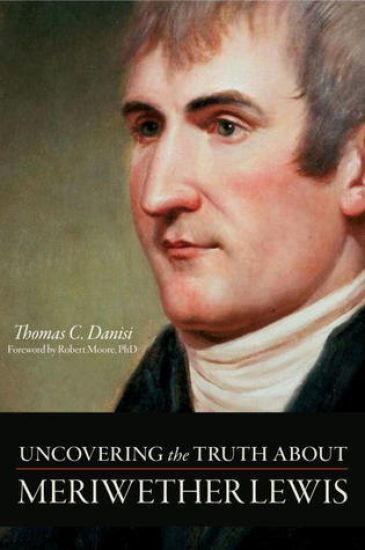
Uncovering the Truth About Meriwether Lewis

Uncovering the Truth About Meriwether Lewis

Thomas C. Danisi; Robert J. Moore

Prometheus Books
2012
sidottu
The critically acclaimed biography Meriwether Lewis, coauthored by Thomas C. Danisi, was praised for its meticulous research and for shedding new light on the adventurous life and controversial death of the great explorer who became famous through the Lewis and Clark Expedition. Now, the author, with some help from contributors, extends his groundbreaking studies of Meriwether Lewis with this compilation of historical essays that offers new findings based on recently discovered docu­ments, tackling such intriguing subjects as: -The court-martial of Meriwether Lewis: Danisi's discovery of the astonishing never-before published transcript of the entire court-martial proceedings affords him the distinction of being the first historian to mine the document for the many insights it offers into the then-untested twenty-one-year-old officer, who eloquently defended himself and won his case. -Documentation straight from the medical ledgers of Dr. Antoine Saugrain, the physician who treated Governor Lewis, which helps to confirm that Lewis suffered from malaria prior to his celebrated trek to the Pacific Ocean with the Corps of Discovery and continuing through his service as governor of the Louisiana Ter­ritory. Was Lewis's death, as reported, the result of suicide, or was he merely a victim of this episodic and incurable disease? -Documentation that proves the true nature of the much-discussed Gilbert Russell State­ment given at the court-martial of General James Wilkinson. Some historians have argued that Wilkinson orchestrated Lewis's murder, but Danisi's research sets the record straight. -The role of Major James Neelly in Lewis's last days. This subject has gained much prominence through the History Channel, according to which Neelly supposedly lied to President Thomas Jefferson about his presence at Meriwether Lewis's burial, but Danisi has evidence to the contrary. The author presents an abundance of additional material to fill in previous historical gaps regarding the mysteries and controversies surrounding Lewis's life and death. In doing so, he paints a vivid picture of the brilliant rise of an ambitious young man by virtue of courage, talent, and political connections, and the tragic fall of a conscientious public servant under the weight of chronic illness, bureaucratic pettiness, and the political intrigue that was ram­pant throughout America's Wild West. This superb contribution to Meriwether Lewis research is a must-read for students and scholars of American history and anyone with an interest in one of our nation's most important explorers and public servants.
Lewis and Clark; Meriwether Lewis and William Clark
Lewis and Clark; Meriwether Lewis and William Clark, has been regarded as significant work throughout human history, and in order to ensure that this work is never lost, we have taken steps to ensure its preservation by republishing this book in a contemporary format for both current and future generations. This entire book has been retyped, redesigned, and reformatted. Since these books are not made from scanned copies, the text is readable and clear.
Sacagawea, Meriwether Lewis, and William Clark

Sacagawea, Meriwether Lewis, and William Clark

Sheila Llanas

Enslow Publishing
2018
nidottu
Lewis and Clark first explored the North American West more than two hundred years ago. A number of Native Americans helped the duo and their crew survive their travels from 1804 to 1806. In fact, one of them, Sacagawea, is now a legend. The Shoshone teen was married to a French Trader and became mother to a baby son. Because she spoke two Native languages, Sacagawea joined the Lewis and Clark expedition as a translator. Together, they traveled eight thousand miles to the Pacific Ocean and back, no easy feat during the early nineteenth century. Ever since, their story has been told and retold. Readers will learn how fate brought them together in life and in death.
The Journals of Lewis and Clark

The Journals of Lewis and Clark

Meriwether Lewis; William Clark

PENGUIN BOOKS AUSTRALIA
2002
pokkari
In 1803, when the United States purchased Louisiana from France, the great expanse of this new American territory was a blank--not only on the map but in our knowledge. President Thomas Jefferson keenly understood that the course of the nation's destiny lay westward and that a national Voyage of Discovery must be mounted to determine the nature and accessibility of the frontier. He commissioned his young secretary, Meriwether Lewis, to lead an intelligence-gathering expedition from the Missouri River to the northern Pacific coast and back. From 1804 to 1806, Lewis, accompanied by co-captain William Clark, the Shoshone guide Sacajawea, and thirty-two men, made the first trek across the Louisiana Purchase, mapping the rivers as he went, tracing the principal waterways to the sea, and establishing the American claim to the territories of Idaho, Washington, and Oregon. Together the captains kept a journal, a richly detailed record of the flora and fauna they sighted, the Indian tribes they encountered, and the awe-inspiring landscape they traversed, from their base camp near present-day St. Louis to the mouth of the Columbia River. In keeping this record they made an incomparable contribution to the literature of exploration and the writing of natural history.
The Journals of the Lewis and Clark Expedition, Volume 1

The Journals of the Lewis and Clark Expedition, Volume 1

Meriwether Lewis; William Clark

University of Nebraska Press
1983
sidottu
When the Corps of Discovery left the vicinity of St. Louis in 1804 to explore the American West, they had only sketchy knowledge of the terrain that they were to cross—existing maps often contained large blank spaces and wild inaccuracies. William Clark painstakingly mapped every mile of the journey, drawing from both direct observation and from the reports of Indians and a few fur traders. On their return Lewis and Clark directed the execution of new maps detailing with remarkable accuracy the features of the country that they had traversed.
The Journals of the Lewis and Clark Expedition, 13-volume set

The Journals of the Lewis and Clark Expedition, 13-volume set

Meriwether Lewis; William Clark

University of Nebraska Press
2002
sidottu
Since the time of Columbus, explorers dreamed of a water passage across the North American continent. President Thomas Jefferson shared this dream. He conceived the Corps of Discovery to travel up the Missouri River to the Rocky Mountains and westward along possible river routes to the Pacific Ocean. Meriwether Lewis and William Clark led this expedition of 1804–6. Along the way they filled hundreds of notebook pages with observations of the geography, Indian tribes, and natural history of the trans-Mississippi West.This complete set of the celebrated Nebraska edition incorporates the journals along with a wide range of new scholarship dealing with all aspects of the expedition, including geography, Indian languages, plants, and animals, in order to recreate the expedition within its historical context.
The Lewis and Clark Journals

The Lewis and Clark Journals

Meriwether Lewis; William Clark

University of Nebraska Press
2003
sidottu
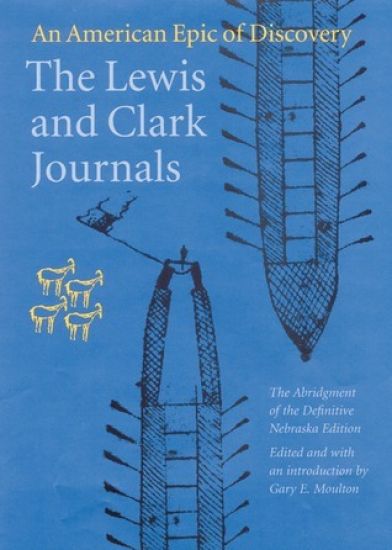
Two centuries ago, an American epic unfolded as Lewis and Clark's Corps of Discovery mapped the lands, described the natural wonders, and encountered the peoples of western North America. Following orders from President Thomas Jefferson, Captains Meriwether Lewis and William Clark set out from Saint Louis in 1804 to search for a river passage to the Pacific Ocean. In their own words, recorded in the famous journals of Lewis and Clark, the members of the Corps of Discovery tell their story with an immediacy and power missing from second-hand accounts. All their triumphs and terrors are here - the thrill of seeing the vast herds of bison on the plains, the tensions and admiration in the first meetings with Indian peoples, Lewis's rapture at the stunning beauty of the Great Falls, the fear the captains felt when a devastating illness befell Shoshone interpreter Sacagawea, the ordeal of crossing the Continental Divide, Clark's joy at seeing the Pacific, miserable days of cold and hunger, and the kidnapping and rescue of Lewis's dog, Seaman. The natural wonders of an unspoiled America are captured in these pages.The lives and customs of its Native peoples also come vividly to life: Lewis and Clark's friendship with the Mandans and the Nez Perces, a deadly fight with the Blackfeet, and a series of intricate interactions and negotiations with numerous northwestern tribes. The cultural differences between the corps and the Indians make for living drama that is sometimes comic but more often poignant and, at least once, tragic. In this riveting account, editor Gary E. Moulton blends the narrative highlights of his definitive Nebraska edition of the "Lewis and Clark" journals. For the first time, the voices of the enlisted men and of the Native Americans are heard alongside the words of the captains. New maps and illustrations enrich this American epic of discovery. Gary E. Moulton is Thomas C. Sorensen Professor of American History at the University of Nebraska. He is the recipient of the J. Franklin Jameson Award of the American Historical Association for the editing of the "Lewis and Clark" journals, and he won the Outstanding Research and Creative Activity Award from the University of Nebraska.
The Definitive Journals of Lewis and Clark, Vol 2

The Definitive Journals of Lewis and Clark, Vol 2

Meriwether Lewis; William Clark

Bison Books
2002
pokkari
Since the time of Columbus, explorers dreamed of a water passage across the North American continent. President Thomas Jefferson shared this dream. He conceived the Corps of Discovery to travel up the Missouri River to the Rocky Mountains and westward along possible river routes to the Pacific Ocean. Meriwether Lewis and William Clark led this expedition of 1804–6. Along the way they filled hundreds of notebook pages with observations of the geography, Indian tribes, and natural history of the trans-Mississippi West. This volume includes Lewis's and Clark's journals beginning in August 1803, when Lewis left Pittsburgh to join Clark farther down the Ohio River. The two men and several recruits camped near the mouth of the Missouri River for five months of training, acquiring supplies and equipment, and gathering information from travelers about the trip upriver. They started up the Missouri in May 1804. This volume ends in August, when the Corps of Discovery camped near the Vermillion River in present-day South Dakota.
The Definitive Journals of Lewis and Clark, Vol 3

The Definitive Journals of Lewis and Clark, Vol 3

Meriwether Lewis; William Clark

Bison Books
2002
pokkari
Since the time of Columbus, explorers dreamed of a water passage across the North American continent. President Thomas Jefferson shared this dream. He conceived the Corps of Discovery to travel up the Missouri River to the Rocky Mountains and westward along possible river routes to the Pacific Ocean. Meriwether Lewis and William Clark led this expedition of 1804–6. Along the way they filled hundreds of notebook pages with observations of the geography, Indian tribes, and natural history of the trans-Mississippi West. This volume consists of journals, primarily by Clark, that cover the expedition's route up the Missouri River to Fort Mandan in present-day North Dakota and its frigid winter encampment there. It describes the party's encounters with and observations of area Indian tribes. Lewis and Clark collected critical information about traveling westward from Native Americans during this winter. This volume also includes miscellaneous material from the Corps of Discovery's first year.
The Definitive Journals of Lewis and Clark, Vol 4

The Definitive Journals of Lewis and Clark, Vol 4

Meriwether Lewis; William Clark

Bison Books
2002
pokkari
Since the time of Columbus, explorers dreamed of a water passage across the North American continent. President Thomas Jefferson shared this dream. He conceived the Corps of Discovery to travel up the Missouri River to the Rocky Mountains and westward along possible river routes to the Pacific Ocean. Meriwether Lewis and William Clark led this expedition of 1804–6. Along the way they filled hundreds of notebook pages with observations of the geography, Indian tribes, and natural history of the trans-Mississippi West. In April 1805 Lewis and Clark and their party set out from Fort Mandan following the Missouri River westward. This volume recounts their travels through country never before explored by white people. With new personnel, including the Shoshone Indian woman Sacagawea, her husband Toussaint Charbonneau, and their baby, nicknamed Pomp, the party spent the rest of the spring and early summer toiling up the Missouri. Along the way they portaged the difficult Great Falls, encountered grizzly bears, cataloged new species of plants and animals, and mapped rivers and streams.
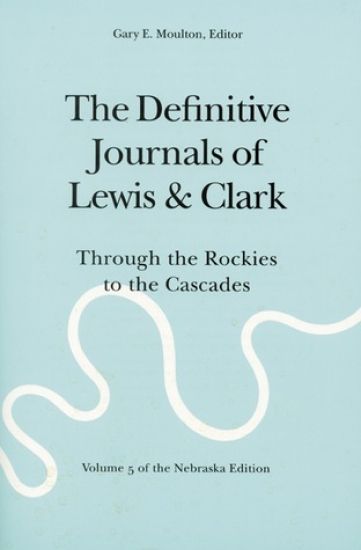
The Definitive Journals of Lewis and Clark, Vol 5

The Definitive Journals of Lewis and Clark, Vol 5

Meriwether Lewis; William Clark

Bison Books
2002
pokkari
Since the time of Columbus, explorers dreamed of a water passage across the North American continent. President Thomas Jefferson shared this dream. He conceived the Corps of Discovery to travel up the Missouri River to the Rocky Mountains and westward along possible river routes to the Pacific Ocean. Meriwether Lewis and William Clark led this expedition of 1804–6. Along the way they filled hundreds of notebook pages with observations of the geography, Indian tribes, and natural history of the trans-Mississippi West. The late-summer and fall months of 1805 were the most difficult period of Lewis and Clark's journey. This volume documents their travels from the Three Forks of the Missouri River in present-day Montana to the Cascades of the Columbia River on today's Washington-Oregon border, including the expedition's progress over the rugged Bitterroot Mountains, along the nearly impenetrable Lolo Trail. Along the way, the explorers encounter Shoshones, Flatheads, Nez Perces, and other Indian tribes, some of whom had never before met white people.
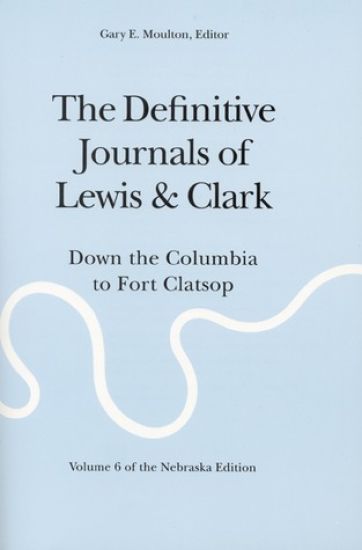
The Definitive Journals of Lewis and Clark, Vol 6

The Definitive Journals of Lewis and Clark, Vol 6

Meriwether Lewis; William Clark

Bison Books
2002
pokkari
Since the time of Columbus, explorers dreamed of a water passage across the North American continent. President Thomas Jefferson shared this dream. He conceived the Corps of Discovery to travel up the Missouri River to the Rocky Mountains and westward along possible river routes to the Pacific Ocean. Meriwether Lewis and William Clark led this expedition of 1804–6. Along the way they filled hundreds of notebook pages with observations of the geography, Indian tribes, and natural history of the trans-Mississippi West. This volume covers the last leg of the party's route from the Cascades of the Columbia River to the Pacific Coast, and their stay at Fort Clatsop, near the river's mouth, until the spring of 1806. Travel and exploration were hampered by miserable weather. While in winter quarters, Lewis wrote detailed reports on natural phenomena and Indian life. These descriptions were accompanied by sketches of plants and animals as well as of Indians and their canoes, tools, and clothing.
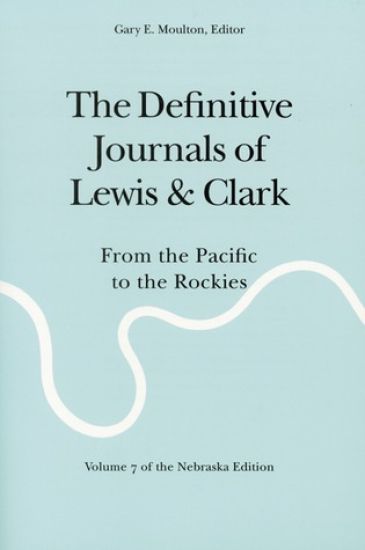
The Definitive Journals of Lewis and Clark, Vol 7

The Definitive Journals of Lewis and Clark, Vol 7

Meriwether Lewis; William Clark

Bison Books
2002
pokkari
Since the time of Columbus, explorers dreamed of a water passage across the North American continent. President Thomas Jefferson shared this dream. He conceived the Corps of Discovery to travel up the Missouri River to the Rocky Mountains and westward along possible river routes to the Pacific Ocean. Meriwether Lewis and William Clark led this expedition of 1804–6. Along the way they filled hundreds of notebook pages with observations of the geography, Indian tribes, and natural history of the trans-Mississippi West. After a rainy winter, the Corps of Discovery turned homeward in March 1806 from Fort Clatsop on the mouth of the Columbia River. Detained by winter snows, they camped among the friendly Nez Perces in modern west-central Idaho. Lewis and Clark attended to sick Indians and continued their scientific observations while others in the party hunted and socialized with Native peoples.