
Kirjahaku
Etsi kirjoja tekijän nimen, kirjan nimen tai ISBN:n perusteella.
1000 tulosta hakusanalla Messiah Marty


Messiah
Charles Jennens; George Frideric Handel
Createspace Independent Publishing Platform
2014
nidottu
Title: Messiah, HWV 56 Composer: George Frideric Handel Original Publisher: Deutsche H ndelgesellschaft The complete 1741 manuscript of Handel's Messiah, HWV 56, as originally published as part of the Deutsche H ndelgesellschaft, Band 45a, in 1892, with German introduction and English text. Performer's Reprints are produced in conjunction with the International Music Score Library Project. These are out of print or historical editions, which we clean, straighten, touch up, and digitally reprint. Due to the age of original documents, you may find occasional blemishes, damage, or skewing of print. While we do extensive cleaning and editing to improve the image quality, some items are not able to be repaired. A portion of each book sold is donated to small performing arts organizations to create jobs for performers and to encourage audience growth.
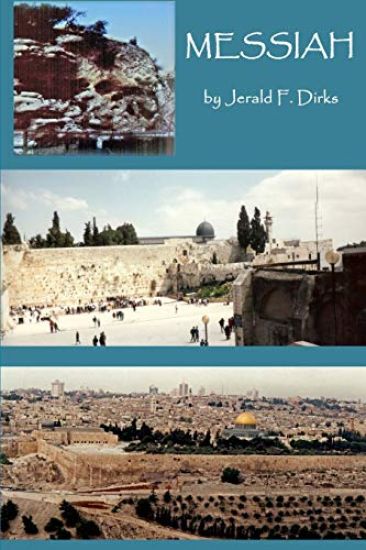
In this his latest book, Dr. Dirks begins by exploring the linguistic meaning and historical evolution of the messiah concept. In tracing the messiah concept among the Israelites, Dr. Dirks makes use of numerous Biblical passages and ancient Jewish writings to illustrate the earliest messiah concept and how that concept evolved into the three-messiah and two-messiah concepts that were so prevalent following the Babylonian captivity of the Israelites of the Southern Kingdom of Judah. Dr. Dirks then turns the readers' attention to the myriad of messiah figures that emerged in Palestine between 4 BCE and 135 CE. In closing, making use of extensive New Testament passages, he presents a provocative and daring thesis that there were two messiah figures named Jesus who operated during the same time in first-century CE Palestine and who were simultaneously tried by Pontius Pilate. One presented as a king messiah for which he was crucified, and one presented as a prophet messiah and was freed. It is posited that the identities and biographies of these two messiah figures were inadvertently fused by the New Testament gospel writers, thus accounting for some of the seeming inconsistencies in how Jesus is presented in the canonical gospels.

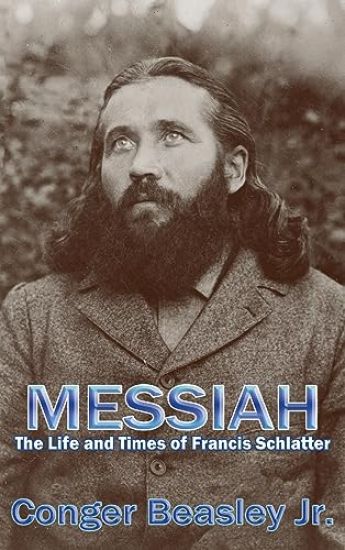
While living in Denver in the early 1890s, Francis Schlatter, a poor immigrant cobbler from Alsace-Lorraine, heard a voice inside his head that told him to put down his tools and go outside and walk east. For several years Schlatter, a deeply pious man, had been aware that he possessed the potential to cure people of their afflictions if he could only muster enough faith; the time to test that faith had arrived. So began a grueling two-year journey on foot that took him as far east as Hot Springs, Arkansas, then back across the Southwest to San Diego, north to San Francisco, then east to Arizona and New Mexico. In the summer and fall of 1895, first in Albuquerque then in Denver, he began to treat hundreds of people a day. Word of his miraculous power ran like wildfire all over the Southwest. Appalled by the carnival atmosphere he encountered in Denver, Schlatter slipped away into the wilds of New Mexico, finally into Old Mexico, where he died under mysterious circumstances in the spring of 1897. Charlatan or saint? Healer or fraud? The question remains. Even his detractors acknowledged the genuine compassion that people felt in his presence. Most telling was the fact that he never took a dime for the therapies he performed. A hundred years ago Francis Schlatter was one of the best-known figures in the Southwest; since then he has literally fallen off the map. In this gripping and powerful narrative, based on contemporary newspaper accounts and a memoir that Schlatter dictated to a friend before he died in Mexico, Conger Beasley, Jr. reconstructs the life and times of this remarkable man.
Tyce Greyson is a journalist who investigates the paranormal and the supernatural. Being a man of destiny, commissioned to carry forward Heaven's countervailing measures, he is constantly caught up in apocalyptic visions in which dangers confront him at every juncture. His latest fixation is a Middle Eastern scene from antiquity where a man with a star-shaped scar, who he believes to be Judas Iscariot, is seen taking instruction from Jesus and then disappearing at the Last Supper. Now married to Essie-a Jew whose father is head of Maglan, the most clandestine of Israel's Mossad-Tyce is called on to find Israel's Messiah by a rabbinic council. But as it becomes clear that would-be world masters have catatonic plans to bring everyone on the planet under their control, he receives additional, supernatural messages from God. Will Tyce be successful on his mission to forewarn Israelites of the one who will deceive them?

Messiah is a book intended to glorify the Lord Jesus and to draw people closer to God in whatever situation. The poem "Messiah" came without any effort on the author's part in the year 1988.
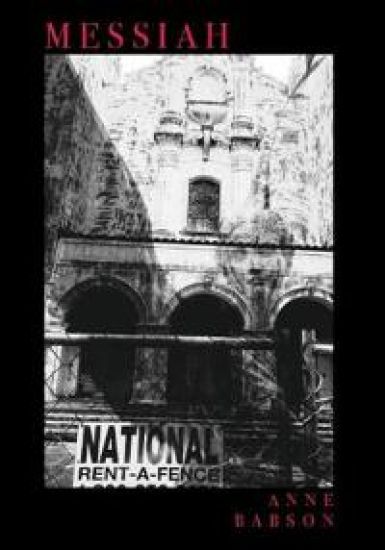
MESSIAH, a post-modern bop through our culture set in diverse elements of the American landscape-- from a Manhattan subway station, to mills of rural Louisiana, to the mean streets of Detroit, to the wilds of the American Northwest, to Yankee Stadium, to the hills of Bellaire -- writes back to the Bible passages with which Handel composed his Messiah Oratorio without challenging their theological meaning but setting them, as most sacred art does, in the contemporary. Anne Babson's poetry isn't "churchy," but it is replete with passionate exhortation, delighting in Americans in their imperfections and calling for a subversive conspiracy of love and a new era of compassion. The book is set to a soundtrack of American music, where the rapture trumpet is blown by Louis Armstrong, where the angels sing in doo-wop chorus, and where Handel's "Chorus: Hallelujah" turns into a Southern Rock anthem. The work is about us and our needs, our playlist, our delights, and the possibility of radical forgiveness and a return to hope.
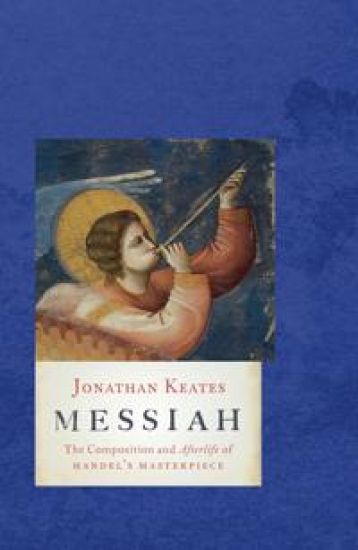
In 1741, in just 24 days, the German-born, British-naturalized composer George Frideric Handel wrote an oratorio rich in tuneful arias and choruses of robust grandeur. Coolly received in London at first, after Handel's death Messiah enjoyed an extraordinary surge in popularity: it was performed at festivals across England; other composers rushed to rearrange it; it would be commercially recorded on more than 100 occasions. Jonathan Keates tells the story of the composition and musical afterlife of Handel's masterpiece: he considers the first performances and its place in Handel's output; he looks at the oratorio itself and its relationship with spirituality in the age of the Enlightenment; and he examines why Messiah became such an essential element in the national culture of Britain. Illustrated with beautiful images, including the original score of the work, Messiah is a richly informative and affectionate celebration of a high-point of Britain's Georgian golden age.
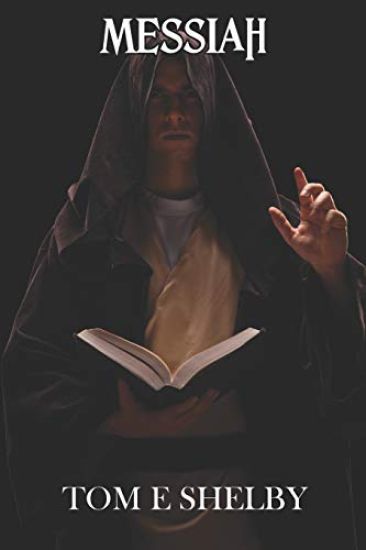

Since Jesus lived so long ago, we assume that we know little about his life story. In fact, we know more about him than many famous people closer to our own time. We have twenty-seven New Testament texts focused on him written by nine different authors; and, although hostile to him, non-Christian writers from the same era corroborate the basic facts about Jesus and the character of early Christianity. The first Christians worshipped Jesus the exalted Messiah as a divinity, as witnessed by Pliny's observation that they sang hymns to Christ 'as if to a god' - and yet many dismiss the pre-crucifixion Jesus as something infinitely less, a mere rabbi or prophet. In response, Paul Barnett offers this accessible exploration of Jesus as Messiah, beginning with a survey of Old Testament prophecies and then working through Messiah's birth, mission, message, miracles, resurrection, etc. in the New Testament. Barnett demonstrates that, as Messiah, Jesus is the centre of the Bible's story, which is the story of God's salvation of the human race. As the fulfilment of the promises in the Old Testament, the Messiah is the end of the beginning. At the same time, as the herald and inaugurator of the kingdom of God, he is the beginning of the end. So Messiah is the centre of all things that matter, both for humanity and for individuals.
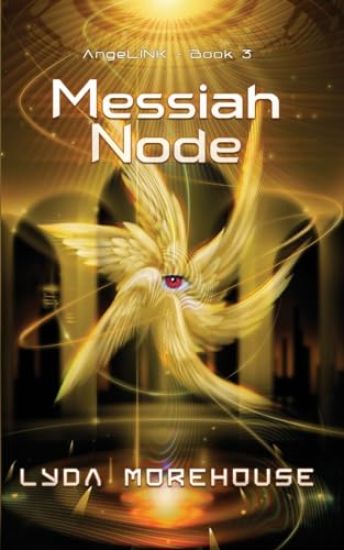
The signWhen a meteorite falls from the sky, the destruction left in its wake lights a political fuse that could bring on Armageddon.The prophetJust when the world could use a savior, the prophet Elijah appears. His search for a messiah leads him to the daughter of the archangel Michael.The saviorMeanwhile other messiah hopefuls spring up around the world - including Page, an AI already tangled in webs of religion and deception. Yet as false shepherds lead the lambs to their doom, it may be up to Page's creator, the criminal mastermind known as Mouse, to save them all...
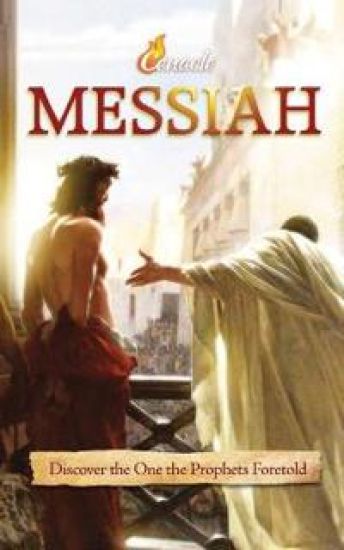
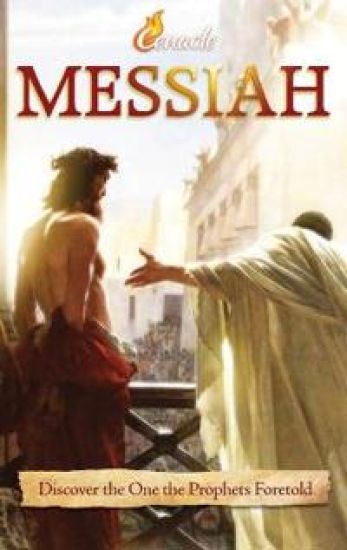
Discover the One the Prophets Foretold For a thousand years they waited for him. The one who would gather his people; build a Temple; enlighten the nations; and put all enemies under his feet. But when one among them claims the title Messiah, all must decide: Can this captive really be king? Messiah is an exploration of the messianic prophecies of the Bible. It is a journey through the centuries, from the Exodus, to the Passion, to the fall of pagan Rome. And it is an unforgettable encounter with Jesus--as Savior, as Shepherd, as King.

The nations are trembling. The peoples of our planet are terrified. Nothing seems certain, except chaos. The lust for power and petroleum has catapulted the planet to the precipice of a chasm so sheer as to shake the confidence of the most courageous. Is there a ray of hope amid the enveloping darkness? Indeed there is MESSIAH unveils the haunting "Mystery of the Ages" before an expectant world as messianic fervor grows exponentially throughout the globe, among both Jew and Gentile. The emerging picture will leave you either awash in unprecedented hope or in unfathomable horror.
