Kirjojen hintavertailu. Mukana 11 213 693 kirjaa ja 12 kauppaa.

Kirjahaku

Etsi kirjoja tekijän nimen, kirjan nimen tai ISBN:n perusteella.

1000 tulosta hakusanalla Meta Lander

Meta

Meta

Carl Sternheim

ALPHA EDITION
2023
pokkari
Meta: Eine Erz hlung, wurde w hrend der gesamten Menschheitsgeschichte als bedeutendes Werk angesehen, und um sicherzustellen, dass dieses Werk niemals verloren geht, haben wir Schritte unternommen, um seine Erhaltung zu gew hrleisten, indem wir dieses Buch in einem zeitgem en Format f r aktuelle und zuk nftige Generationen neu herausgeben. Dieses gesamte Buch wurde neu abgetippt, neu gestaltet und neu formatiert. Da diese B cher nicht aus gescannten Kopien bestehen, ist der Text lesbar und klar.
Meta-Analytics

Meta-Analytics

Steven Simske

Morgan Kaufmann Publishers In
2019
nidottu
Meta-Analytics: Consensus Approaches and System Patterns for Data Analysis presents an exhaustive set of patterns for data science to use on any machine learning based data analysis task. The book virtually ensures that at least one pattern will lead to better overall system behavior than the use of traditional analytics approaches. The book is ‘meta’ to analytics, covering general analytics in sufficient detail for readers to engage with, and understand, hybrid or meta- approaches. The book has relevance to machine translation, robotics, biological and social sciences, medical and healthcare informatics, economics, business and finance. Inn addition, the analytics within can be applied to predictive algorithms for everyone from police departments to sports analysts.
Meta-Analysis, Decision Analysis, and Cost-Effectiveness Analysis

Meta-Analysis, Decision Analysis, and Cost-Effectiveness Analysis

Diana B. Petitti

Oxford University Press Inc
1999
sidottu
This is a lucid, comprehensive introduction to meta-analysis, decision analysis, and cost-effectiveness analysis. These three closely related methods have become even more important for synthesizing research since the first edition was published in 1994. And they have gained legitimacy as tools for guiding health policy. In the Second Edition, Petitti has added new material on cumlative meta-analysis and the exploration of heterogeneity, incorporated recommendations for standardizing the conduct of cost-effectiveness analysis, and updated the rest of the text.
Meta-Luxury

Meta-Luxury

M. Ricca; R. Robins

Palgrave Macmillan
2012
sidottu
Meta-Luxury sets out to define the ultimate meaning of true luxury, exploring it as both a culture and business model. Through the concept of Unique Achievement and the drivers of Craftsmanship, Focus, History and Rarity, the authors examine what is at the heart of true luxury through a unique series of conversations.
Meta-Geopolitics of Outer Space

Meta-Geopolitics of Outer Space

N. Al-Rodhan

Palgrave Macmillan
2012
sidottu
Al-Rodhan sheds new light on the debate about the geopolitics of outer space, going beyond applying traditional International Relations approaches to space power and security by introducing a multidimensional spatial framework. The meta-geopolitics framework includes space and expands classical power considerations to cover seven state capacities.
Meta-Programming in Logic Programming
A comprehensive survey of the theory and applications of meta-programming, covering problems of representation and of soundness and correctness of interpreters, analysis and evaluation of meta-logic programs, and applications to sophisticated knowledge-based systems.Meta-programs, which treat other computer programs as data, include compilers, editors, simulators, debuggers, and program transformers. Because of the wide ranging applications, meta-programming has become a subject of considerable practical and theoretical interest. This book provides the first comprehensive view of topics in the theory and application of meta-programming, covering problems of representation and of soundness and correctness of interpreters, analysis and evaluation of meta-logic programs, and applications to sophisticated knowledge-based systems.Meta-Programming in Logic Programming is in the series Logic Programming Research Reports and Notes, edited by Ehud Shapiro.
Meta-Logics and Logic Programming
Investigating meta-programming within the logic programming paradigm, Meta-Logics and Logic Programming presents original research on an important extension of logic programming that makes it more amenable for knowledge representation and programming in general. The 12 contributions, many written especially for this book, explore the foundations, language design issues, and applications of meta-programming in logic programming. Meta-programming-the process of writing computer programs that can manipulate representations of other programs-has been key both in the foundations of computer science and in its practical developments. Examples of meta-programs include compilers, interpreters, program analyzers, and partial evaluators. The choice of logic programming as a basis for meta-programming offers several practical and theoretical advantages: among them, the possibility of tackling critical foundational problems of meta-programming within a strong theoretical framework, and the surprising ease of programming. The usual framework of logic programming (and more generally first-order logic), however, has to be modified and extended to formally deal with meta-programs, extensions the editors call "meta-logics." Along with an exploration of meta-programming in logic programming, the definitions, formal properties, and use of these extensions constitute one of the book's main themes. The first part of the book, Foundations, focuses on the representation problem-how object programs are represented within meta-programs. The second part, Language Support for Meta-Logics, is concerned with language extensions that make meta-programming easier and more elegant. The third part, Meta-Logics for Knowledge Management, deals with the use of meta-logic for advanced knowledge representation purposes.
Meta-Physician on Call for Better Health

Meta-Physician on Call for Better Health

Steven E. Hodes M.D.

Praeger Publishers Inc
2007
sidottu
Steven E. Hodes, M.D., initially trained in traditional, high-caliber medical programs that led him through graduation at the Albert Einstein Medical School and to a fellowship at Mount Sinai Hospital. But many years later, he saw something vital missing in his approach to healthcare. I was trained as a physician, not a healer…taught to view the patient as a machine suffering from some mechanical failure. My purpose was to be the best diagnostician possible, he explains. Then events occurred that opened the eyes of this now veteran physician to deep insights about the mind-body-spirit connection. That awakening moved him to a metaphysical view of health—a view more spiritual than religious, but still firmly grounded in science. Embracing his role as a metaphysician, he also began to see himself as a meta-physician, or doctor transformed (meta) by this new awareness. In this book, Hodes describes his journey to becoming a metaphysician on call. He points out profound, yet simple, observations and beliefs that affect our perception of the nature of reality—metaphysics—which, in turn, can largely affect our well-being in all senses—body, mind, and spirit. We all can and should take responsibility for our own well-being on all levels, he explains. This book is designed to inspire us to ask our own questions, and gather our own evidence to enhance all areas of our lives and well-being, and so find healing and peace.
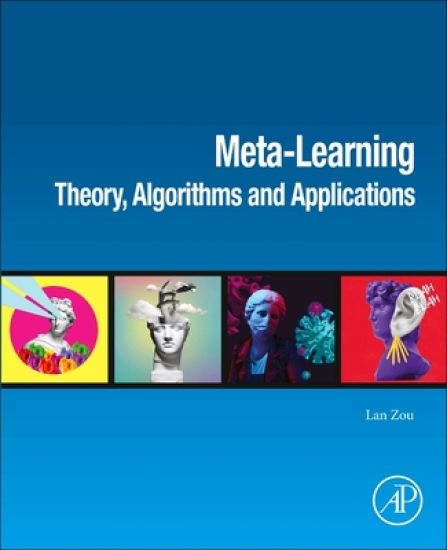
Meta-Learning

Meta-Learning

Lan Zou

ELSEVIER SCIENCE TECHNOLOGY
2022
nidottu
Deep neural networks (DNNs) with their dense and complex algorithms provide real possibilities for Artificial General Intelligence (AGI). Meta-learning with DNNs brings AGI much closer: artificial agents solving intelligent tasks that human beings can achieve, even transcending what they can achieve. Meta-Learning: Theory, Algorithms and Applications shows how meta-learning in combination with DNNs advances towards AGI. Meta-Learning: Theory, Algorithms and Applications explains the fundamentals of meta-learning by providing answers to these questions: What is meta-learning?; why do we need meta-learning?; how are self-improved meta-learning mechanisms heading for AGI ?; how can we use meta-learning in our approach to specific scenarios? The book presents the background of seven mainstream paradigms: meta-learning, few-shot learning, deep learning, transfer learning, machine learning, probabilistic modeling, and Bayesian inference. It then explains important state-of-the-art mechanisms and their variants for meta-learning, including memory-augmented neural networks, meta-networks, convolutional Siamese neural networks, matching networks, prototypical networks, relation networks, LSTM meta-learning, model-agnostic meta-learning, and the Reptile algorithm. The book takes a deep dive into nearly 200 state-of-the-art meta-learning algorithms from top tier conferences (e.g. NeurIPS, ICML, CVPR, ACL, ICLR, KDD). It systematically investigates 39 categories of tasks from 11 real-world application fields: Computer Vision, Natural Language Processing, Meta-Reinforcement Learning, Healthcare, Finance and Economy, Construction Materials, Graphic Neural Networks, Program Synthesis, Smart City, Recommended Systems, and Climate Science. Each application field concludes by looking at future trends or by giving a summary of available resources. Meta-Learning: Theory, Algorithms and Applications is a great resource to understand the principles of meta-learning and to learn state-of-the-art meta-learning algorithms, giving the student, researcher and industry professional the ability to apply meta-learning for various novel applications.
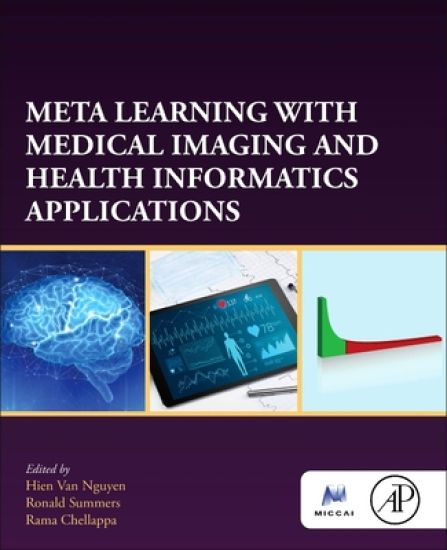
Meta Learning With Medical Imaging and Health Informatics Applications
Meta-Learning, or learning to learn, has become increasingly popular in recent years. Instead of building AI systems from scratch for each machine learning task, Meta-Learning constructs computational mechanisms to systematically and efficiently adapt to new tasks. The meta-learning paradigm has great potential to address deep neural networks’ fundamental challenges such as intensive data requirement, computationally expensive training, and limited capacity for transfer among tasks. This book provides a concise summary of Meta-Learning theories and their diverse applications in medical imaging and health informatics. It covers the unifying theory of meta-learning and its popular variants such as model-agnostic learning, memory augmentation, prototypical networks, and learning to optimize. The book brings together thought leaders from both machine learning and health informatics fields to discuss the current state of Meta-Learning, its relevance to medical imaging and health informatics, and future directions.
Meta-Formation

Meta-Formation

Rachel David

Lulu.com
2019
pokkari
Catalogue of contemporary artistic Ironwork accompanying the 2019 exhibition Meta-Formation: Experiments and Rituals. Curated, compiled and edited by Rachel David. Contributors and artists include Andy Cooperman, Sarah Darro, Hoss Haley, Daniel Miller, Jeffrey Funk, Monica Coyne, and Patrick Quinn. 30 North American and International artists represented.
Meta-Regulation in Practice

Meta-Regulation in Practice

F.C. Simon

Routledge
2019
nidottu
Meta-regulation presents itself as a progressive policy approach that can manage complexity and conflicting objectives better than traditional command and control regulation. It does this by ‘harnessing’ markets and enlisting a broad range of stakeholders to reach a more inclusive view of the public interest that a self-regulating business can then respond to.Based on a seventeen year study of the Australian energy industry, and via the lens of Niklas Luhmann’s systems theory, Meta-Regulation in Practice argues that normative meta-regulatory theory relies on questionable assumptions of stakeholder morality and rationality. Meta-regulation in practice appears to be most challenged in a complex and contested environment; the very environment it is supposed to serve best. Contending that scholarship must prioritise an understanding of communicative possibilities in practice, this book will be of interest to undergraduate and postgraduate students, as well as postdoctoral researchers interested in subjects such as business regulation, systems theory and corporate social responsibility.Please visit meta-regulation.com for more insightful information on meta-regulation and Meta-Regulation in Practice.
Meta-analysis of Binary Data Using Profile Likelihood

Meta-analysis of Binary Data Using Profile Likelihood

Dankmar Bohning; Sasivimol Rattanasiri; Ronny Kuhnert

CRC Press
2019
nidottu
Providing reliable information on an intervention effect, meta-analysis is a powerful statistical tool for analyzing and combining results from individual studies. Meta-Analysis of Binary Data Using Profile Likelihood focuses on the analysis and modeling of a meta-analysis with individually pooled data (MAIPD). It presents a unifying approach to modeling a treatment effect in a meta-analysis of clinical trials with binary outcomes.After illustrating the meta-analytic situation of an MAIPD with several examples, the authors introduce the profile likelihood model and extend it to cope with unobserved heterogeneity. They describe elements of log-linear modeling, ways for finding the profile maximum likelihood estimator, and alternative approaches to the profile likelihood method. The authors also discuss how to model covariate information and unobserved heterogeneity simultaneously and use the profile likelihood method to estimate odds ratios. The final chapters look at quantifying heterogeneity in an MAIPD and show how meta-analysis can be applied to the surveillance of scrapie. Containing new developments not available in the current literature, along with easy-to-follow inferences and algorithms, this book enables clinicians to efficiently analyze MAIPDs.
Meta-Analysis in Medicine and Health Policy
This remarkable text raises the analysis of data in health sciences and policy to new heights of refinement and applicability by introducing cutting-edge meta-analysis strategies while reviewing more commonly used techniques. Each chapter builds on sound principles, develops methodologies to solve statistical problems, and presents concrete applications used by experienced medical practitioners and health policymakers. Written by more than 30 celebrated international experts, Meta-Analysis in Medicine and Health Policy employs copious examples and pictorial presentations to teach and reinforce biostatistical techniques more effectively and poses numerous open questions of medical and health policy research.
Meta-Ethnographic Synthesis in Education
Calls for “deparochialization of educational research” (Lingard 2006) have directed educational ethnography from the conventional research designs and from the study of single sites and local situations to the study of “the circulation of cultural meanings, objects and identities in diffuse time-spaces” (Marcus 1995: 96). In response to this call and following the already established tradition of use of meta-ethnography in health studies this volume explores the potentials of this method (Noblit & Hare, 1988) to unpick the interconnectedness of different educational sites which have been and are being studied ethnographically. Besides, metaethnographic analyses may also offer a credible response to the lessening of opportunities for original educational ethnographic research at times of limited resources.The volume examines the forms of translocal and transtemporal ethnographic synthesis currently in use by educational ethnographers as well as the challenges and the possibilities that the method offers. It also addresses and attempts to respond to the question if meta-ethnography might be a means to sharpen ethnographers’ sensitivity for each other’s work and achievements in the past.This book was originally published as a special issue of Ethnography and Education.
Meta-Reality

Meta-Reality

Roy Bhaskar

Routledge
2026
sidottu
Meta-Reality emerged from the use of critical realist philosophy to address the fundamental philosophical questions; The nature of the self, The limits of thought, The possibility of personal freedom, The role of religion and spirituality in our lives.In this comprehensive introductory text, the originator of meta-Reality Roy Bhaskar talks the reader through the step by step emergence of his philosophy of meta-Reality, from his earlier philosophy of critical realism. The definition of this theory, and its potential to shed new light on issues is then explored in the book’s next eight chapters: Identity and the Self Transcendental Identification, Self-Realization and Freedom The Axial Revolution and Modernity Comparative Religion and Spirituality Unfolding the Enfolded: Creativity, Learning and Education Unconditional Love, Peace and Conflict Resolution ‘Unthinking’ and the Limits of Thought, Spontaneous Right Action and Re-enchanting Reality Conclusion and Summary: Being BeingThroughout this book, the examination of classical philosophical problems helps the reader to fully understand the author’s philosophy of meta-Reality, while at the same time exposing the reader to its implications for philosophical inquiry and the wider world. Frequent references are made to the philosophies that it is in conflict with (Descartes, Hobbes and Hume), and their differences are subjected to close scrutiny, helping to situate this new approach in the field. Here Roy Bhaskar has produced an essential text for all students of modern philosophy with an interest in critical realism. The book’s comprehensive approach, depth of analysis, and exploration of a wide range of philosophical problems make it crucial and compelling reading for the postgraduate and undergraduate alike.
Meta-Reality

Meta-Reality

Roy Bhaskar

Routledge
2026
nidottu
Meta-Reality emerged from the use of critical realist philosophy to address the fundamental philosophical questions; The nature of the self, The limits of thought, The possibility of personal freedom, The role of religion and spirituality in our lives.In this comprehensive introductory text, the originator of meta-Reality Roy Bhaskar talks the reader through the step by step emergence of his philosophy of meta-Reality, from his earlier philosophy of critical realism. The definition of this theory, and its potential to shed new light on issues is then explored in the book’s next eight chapters: Identity and the Self Transcendental Identification, Self-Realization and Freedom The Axial Revolution and Modernity Comparative Religion and Spirituality Unfolding the Enfolded: Creativity, Learning and Education Unconditional Love, Peace and Conflict Resolution ‘Unthinking’ and the Limits of Thought, Spontaneous Right Action and Re-enchanting Reality Conclusion and Summary: Being BeingThroughout this book, the examination of classical philosophical problems helps the reader to fully understand the author’s philosophy of meta-Reality, while at the same time exposing the reader to its implications for philosophical inquiry and the wider world. Frequent references are made to the philosophies that it is in conflict with (Descartes, Hobbes and Hume), and their differences are subjected to close scrutiny, helping to situate this new approach in the field. Here Roy Bhaskar has produced an essential text for all students of modern philosophy with an interest in critical realism. The book’s comprehensive approach, depth of analysis, and exploration of a wide range of philosophical problems make it crucial and compelling reading for the postgraduate and undergraduate alike.
Meta-Regression Analysis in Economics and Business

Meta-Regression Analysis in Economics and Business

T.D. Stanley; Hristos Doucouliagos

Routledge
2012
sidottu
The purpose of this book is to introduce novice researchers to the tools of meta-analysis and meta-regression analysis and to summarize the state of the art for existing practitioners. Meta-regression analysis addresses the rising "Tower of Babel" that current economics and business research has become. Meta-analysis is the statistical analysis of previously published, or reported, research findings on a given hypothesis, empirical effect, phenomenon, or policy intervention. It is a systematic review of all the relevant scientific knowledge on a specific subject and is an essential part of the evidence-based practice movement in medicine, education and the social sciences. However, research in economics and business is often fundamentally different from what is found in the sciences and thereby requires different methods for its synthesis—meta-regression analysis. This book develops, summarizes, and applies these meta-analytic methods.
Meta Analysis

Meta Analysis

Elena Kulinskaya; Stephan Morgenthaler; Robert G. Staudte

John Wiley Sons Inc
2008
nidottu
Meta Analysis: A Guide to Calibrating and Combining Statistical Evidence acts as a source of basic methods for scientists wanting to combine evidence from different experiments. The authors aim to promote a deeper understanding of the notion of statistical evidence. The book is comprised of two parts – The Handbook, and The Theory. The Handbook is a guide for combining and interpreting experimental evidence to solve standard statistical problems. This section allows someone with a rudimentary knowledge in general statistics to apply the methods. The Theory provides the motivation, theory and results of simulation experiments to justify the methodology. This is a coherent introduction to the statistical concepts required to understand the authors’ thesis that evidence in a test statistic can often be calibrated when transformed to the right scale.