Kirjojen hintavertailu. Mukana 12 390 323 kirjaa ja 12 kauppaa.

Kirjahaku

Etsi kirjoja tekijän nimen, kirjan nimen tai ISBN:n perusteella.

1000 tulosta hakusanalla Michael Lowry

Fire Alarm

Fire Alarm

Michael Löwy

Verso Books
2016
nidottu
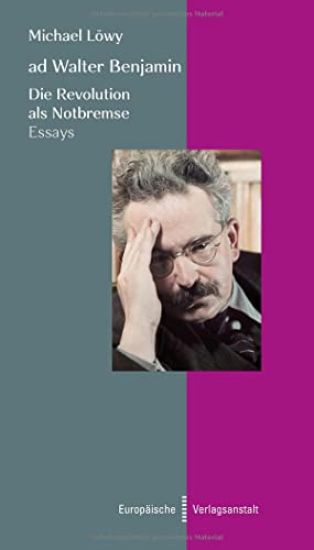
Revolutionary critic of the philosophy of progress, nostalgic of the past yet dreaming of the future, romantic partisan of materialism - Walter Benjamin is in every sense of the word an "unclassifiable" philosopher. His essay "On the Concept of History" was written in a state of urgency, as he attempted to escape the Gestapo in 1940, before finally committing suicide. In this scrupulous, clear and fascinating examination of this essay, Michael Löwy argues that it remains one of the most important philosophical and political writings of the twentieth century. Looking in detail at Benjamin's celebrated but often mysterious text, and restoring the philosophical, theological and political context, Löwy highlights the complex relationship between redemption and revolution in Benjamin's philosophy of history.
Redemption and Utopia

Redemption and Utopia

Michael Löwy

Verso Books
2017
nidottu
Towards the end of the nineteenth century, there appeared in Central Europe a generation of Jewish intellectuals whose work was to transform modern culture. Drawing at once on the traditions of German Romanticism and Jewish messianism, their thought was organized around the cabalistic idea of the "tikkoun": redemption. Redemption and Utopia uses the concept of "elective affinity" to explain the surprising community of spirit that existed between redemptive messianic religious thought and the wide variety of radical secular utopian beliefs held by this important group of intellectuals. The author outlines the circumstances that produced this unusual combination of religious and non-religious thought and illuminates the common assumptions that united such seemingly disparate figures as Martin Buber, Franz Kafka, Walter Benjamin and Georg Lukács.
Georg Lukàcs

Georg Lukàcs

Michael Löwy

Verso Books
2023
nidottu
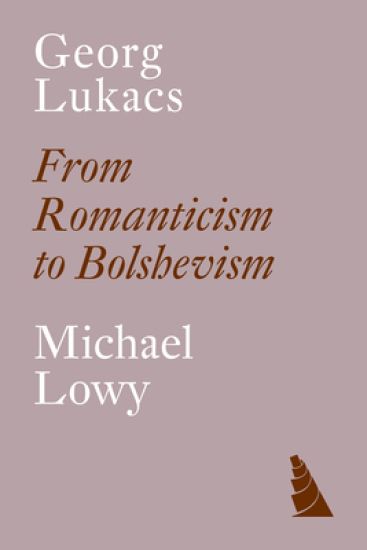
The philosophical and political development that converted Georg Lukács from a distinguished representative of Central European aesthetic vitalism into a major Marxist theorist and Communist militant has long remained an enigma. In this this now classic study, Michael Löwy for the first time traced and explained the extraordinary mutation that occurred in Lukács's thought between 1909 and 1929. Utilizing many as yet unpublished sources, Löwy meticulously reconstructed the complex itinerary of Lukács's thinking as he gradually moved towards his decisive encounter with Bolshevism. The religious convictions of the early Lukács, the peculiar spell exercised on him and on Max Weber by Dostoyevskyan images of pre-revolutionary Russia, the nature of his friendships with Ernst Bloch and Thomas Mann, were amongst the discoveries of the book. Then, in a fascinating case-study in the sociology of ideas, Löwy showed how the same philosophical problematic of Lebensphilosophie dominated the intelligentsias of both Germany and Hungary in the pre-war period, yet how the different configurations of social forces in each country bent its political destiny into opposite directions. The famous works produced by Lukács during and after the Hungarian Commune-Tactics and Ethics, History and Class Consciousness and Lenin-were analysed and assessed. A concluding chapter discussed Lukács's eventual ambiguous settlement with Stalinism in the thirties, and its coda of renewed radicalism in the final years of his life.In this new edition, Löwy has added a substantial new introduction which reassess the nature of Lukács's thought in the light of newly published texts and debates.
The War of Gods

The War of Gods

Michael Löwy

Verso Books
1996
nidottu
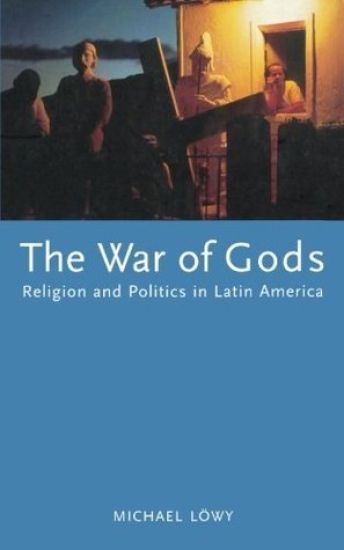
The War of Gods traces the intimate relationship between religion, politics and social issues in Latin America over the last three decades, as liberation theology has reinterpreted the vocation of the Catholic Church and as Protestantism has made inroads on traditional Catholic strongholds.In the 1960s liberation theology addressed itself to the problems of a continent racked by poverty and oppression. Comprising a network of localized communities and pastoral organizations, it soon became something much more than a doctrinal current. Liberationist Christianity defined itself in a multitude of social struggles, particularly in Brazil and Central America. Many of the most momentous events in the continent's recent history-the Nicaraguan revolution, the development of the PT (Workers' Party) in Brazil, the tortuous ascent of President Aristide in Haiti and the uprising in Chiapas-have borne witness to the influence of a distinctive liberationist Christianity. Michael Löwy proposes here a new interpretation-inspired by the sociology of culture-both of liberation theology and of the rival religious projects in Latin America.
The Theory Of Revolution In The Young Marx
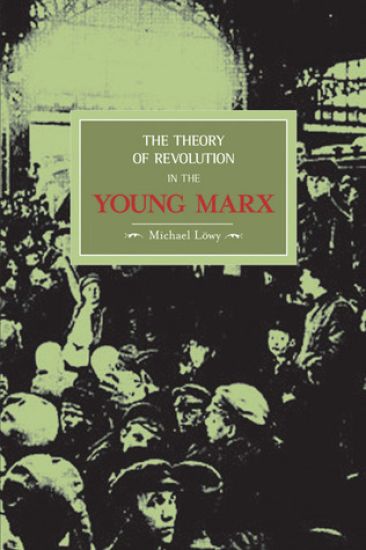
In the 1840s, the young journalist Karl Marx developed ideas about modern society that remain as relevant today as when they were first developed. Here, Lowy shows the lasting force of Marx's early writings on alienation and emancipation. This book is brilliant, incisive, honest and deserves to be read with attention. It is an important event in Marxist theoretical production.' - Politique Hebdo'
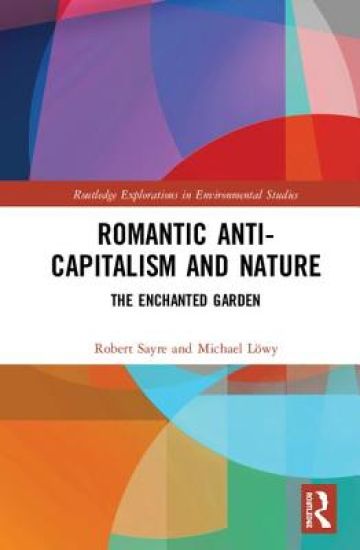
Romantic Anti-capitalism and Nature

Romantic Anti-capitalism and Nature

Robert Sayre; Michael Löwy

Routledge
2019
sidottu
Romantic Anti-capitalism and Nature examines the deep connections between the romantic rebellion against modernity and ecological concern with modern threats to nature. The chapters deal with expressions of romantic culture from a wide variety of different areas: travel writing, painting, utopian vision, cultural studies, political philosophy, and activist socio-political writing. The authors discuss a highly diverse group of figures - William Bartram, Thomas Cole, William Morris, Walter Benjamin, Raymond Williams, and Naomi Klein - from the late eighteenth to the early twenty-first century. They are rooted individually in English, American, and German cultures, but share a common perspective: the romantic protest against modern bourgeois civilisation and its destruction of the natural environment.Although a rich ecocritical literature has developed since the 1990s, particularly in the United States and Britain, that addresses many aspects of ecology and its intersection with romanticism, they almost exclusively focus on literature, and define romanticism as a limited literary period of the late eighteenth and early nineteenth centuries. This study is one of the first to suggest a much broader view of the romantic relation to ecological discourse and representation, covering a range of cultural creations and viewing romanticism as a cultural critique, or protest against capitalist-industrialist modernity in the name of past, pre-modern, or pre-capitalist values.This book will be of great interest to students and scholars of ecology, romanticism, and the history of capitalism.
Romantic Anti-capitalism and Nature

Romantic Anti-capitalism and Nature

Robert Sayre; Michael Löwy

Taylor Francis Ltd
2021
nidottu
Romantic Anti-capitalism and Nature examines the deep connections between the romantic rebellion against modernity and ecological concern with modern threats to nature. The chapters deal with expressions of romantic culture from a wide variety of different areas: travel writing, painting, utopian vision, cultural studies, political philosophy, and activist socio-political writing. The authors discuss a highly diverse group of figures - William Bartram, Thomas Cole, William Morris, Walter Benjamin, Raymond Williams, and Naomi Klein - from the late eighteenth to the early twenty-first century. They are rooted individually in English, American, and German cultures, but share a common perspective: the romantic protest against modern bourgeois civilisation and its destruction of the natural environment.Although a rich ecocritical literature has developed since the 1990s, particularly in the United States and Britain, that addresses many aspects of ecology and its intersection with romanticism, they almost exclusively focus on literature, and define romanticism as a limited literary period of the late eighteenth and early nineteenth centuries. This study is one of the first to suggest a much broader view of the romantic relation to ecological discourse and representation, covering a range of cultural creations and viewing romanticism as a cultural critique, or protest against capitalist-industrialist modernity in the name of past, pre-modern, or pre-capitalist values.This book will be of great interest to students and scholars of ecology, romanticism, and the history of capitalism.
Che Guevara

Che Guevara

Olivier Besancenot; Michael Lowy

Monthly Review Press,U.S.
2009
sidottu
"Deep inside that T-shirt where we have tried to trap him," notes the celebrated Chilean novelist Ariel Dorfman, "the eyes of Che Guevara are still burning with impatience." Olivier Besancenot and Michael Loewy deftly capture this burning impatience, revealing Guevara as a powerful political and ethical thinker still capable of speaking directly to the challenges of our time.In this masterful new study, Besancenot and Loewy explore and situate Guevara's ethical, revolutionary, and humanist legacy. They explicate Guevara's emphasis on the import of the individual coming to understand and accept socialism at a personal level. For Guevara, Besancenot and Loewy show, the revolutionary project demands more than a transformation of the mode of production; it demands a profound transformation of the individual, the birth of what Guevara termed the "new man." Besancenot and Loewy also explore Guevara's pragmatic approach to the question of state power and unique theoretical contributions to the question of the transition to socialism.In Guevara, Besancenot and Loewy find a life that was lived as an example of revolutionary potential. Guevara's ethical and political sensibilities, unwavering anti-imperialism, and firm commitment to revolutionary social transformation still ignite hope in all who struggle for a better world.
Che Guevara

Che Guevara

Olivier Besancenot; Michael Lowy

Monthly Review Press,U.S.
2009
nidottu
"Deep inside that T-shirt where we have tried to trap him," notes the celebrated Chilean novelist Ariel Dorfman, "the eyes of Che Guevara are still burning with impatience." Olivier Besancenot and Michael Loewy deftly capture this burning impatience, revealing Guevara as a powerful political and ethical thinker still capable of speaking directly to the challenges of our time.In this masterful new study, Besancenot and Loewy explore and situate Guevara's ethical, revolutionary, and humanist legacy. They explicate Guevara's emphasis on the import of the individual coming to understand and accept socialism at a personal level. For Guevara, Besancenot and Loewy show, the revolutionary project demands more than a transformation of the mode of production; it demands a profound transformation of the individual, the birth of what Guevara termed the "new man." Besancenot and Loewy also explore Guevara's pragmatic approach to the question of state power and unique theoretical contributions to the question of the transition to socialism.In Guevara, Besancenot and Loewy find a life that was lived as an example of revolutionary potential. Guevara's ethical and political sensibilities, unwavering anti-imperialism, and firm commitment to revolutionary social transformation still ignite hope in all who struggle for a better world.