Kirjojen hintavertailu. Mukana 11 699 587 kirjaa ja 12 kauppaa.

Kirjahaku

Etsi kirjoja tekijän nimen, kirjan nimen tai ISBN:n perusteella.

1000 tulosta hakusanalla Michael Nest

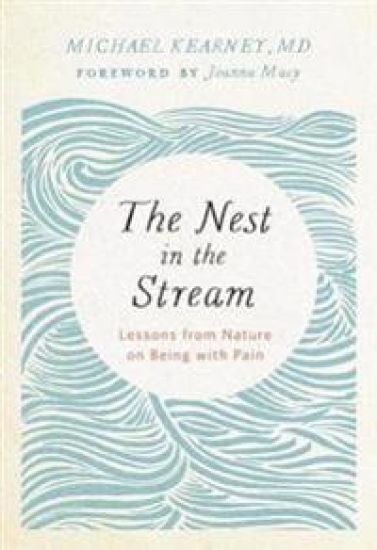
Nest in the Stream

Nest in the Stream

Michael Kearney M.D.

Parallax Press
2018
nidottu
A concise and inspirational book for anyone dealing with pain by a long time palliative care doctor who is greatly inspired by Native American wisdom and the natural world. This book is a celebration of impermanence and what it means to be awake, alive, and connected to the world. The Nest in the Stream is an encouraging and inspiring book for the times we live in. Michael Kearney, a physician whose day job is alleviating the pain and suffering of others, shows that how we live with our pain matters hugely, as it affects our quality of living and our capacity to find healing for ourselves, for others, and for our world. Drawing on engaged Buddhism, the indigenous wisdom of Native American and Celtic spirituality, and the powerful teachings he gained by observing nature, Kearney presents a new model for resilience and self-care. Traditional models of self-care emphasize the importance of professional boundaries to protect us from stress, and time out to rest and recover. The Nest in the Stream offers a way of being with pain that is infused with mindfulness, openness, compassion, and deep nature connection that encourages us to act for the freedom and welfare of all. It will appeal to those whose everyday occupation involves dealing with pain, such as healthcare workers, environmental activists, or those working on the front lines of trauma, but it will also be of interest to everyone who longs to live in our wounded world with an open heart.
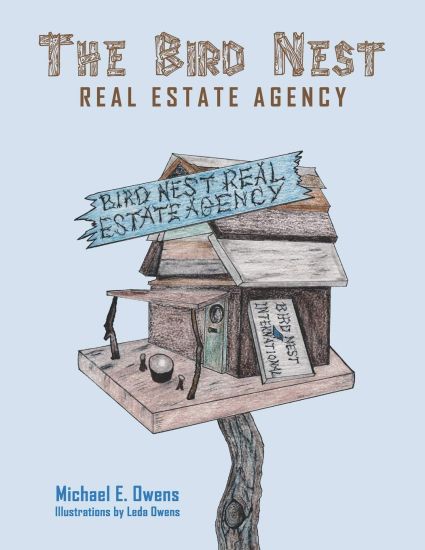
The Bird Nest Real Estate Agency

The Bird Nest Real Estate Agency

Michael E. Owens

Scribblers Press
2021
nidottu
Mr. Bernard Mocking is an agent for the Bird Nest Real Estate Agency to help birds find appropriate nesting sites and breeding homes for a wide selection of feathered clients. In the process, students are learning the nesting habits and other interesting facts about the dozen different kinds of birds in the book.
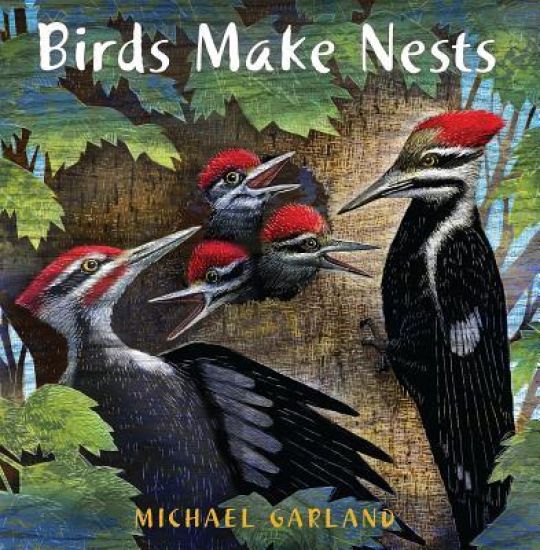
Birds Make Nests

Birds Make Nests

Michael Garland

Holiday House Inc
2019
pokkari
Birds make many kinds of nests in many kinds of places--to keep their eggs safe and to keep chicks safe. In this exquisitely illustrated picture book, created with both traditional woodcut and digital tools, acclaimed artist Michael Garland celebrates animals that are both beautiful and resourceful. This text is accessible to new readers and the birds are labeled with their American English common names. A 2018 NSTA-CBC Outstanding Science Trade Book for Students K-12
Nestorius oder

Nestorius oder

Michael Dahnke

Grin Verlag
2012
pokkari
Studienarbeit aus dem Jahr 2000 im Fachbereich Theologie - Historische Theologie, Kirchengeschichte, Note: 1, Universitt Hamburg (Institut fr Kirchengeschichte), Veranstaltung: Die Entwicklung des christologischen Dogma bis Chalcedon 451, Sprache: Deutsch, Abstract: Das folgende Referat versucht berblicksartig, die Person des Bischofs Nestorius, seine Christologie und den sich daran entzndenden Nestorianischen Streit zwischen 429-431 darzustellen. Dazu werden in vier Teilen 1. chronologische Daten ber Nestorius gegeben. 2. wird sein christologischer Entwurf im Gegensatz zu Apollinaris' Monophysitismus vorgestellt. Die Kenntnis der Christologie Nestorius ist unabdingbar zum Verstndnis der Ursachen und des Verlaufes des Nestorianischen Streites, der zum 3. beschrieben wird. 4. werden einige entscheidende Kritikpunkte errtert. 5. wird anhand derselben eine Bewertung des nestorianischen Lsungsansatzes christologischer Probleme versucht.
Meanwhile Back at the Nest

Meanwhile Back at the Nest

Michael Deegan McGurk

Austin Macauley Publishers
2023
pokkari
Only through dialogue with nature and the animal kingdom can we hope to fathom the human condition. Such conversation enables us to establish a fresh benchmark by which to gauge the significance of what it takes to be human in a truer sense of the word. This collection of poems represents the findings of a man who is still very much a work in progress beyond observer's books and climbing boys there nests a bird that only takes to wing to prey on feeble-minded men designed for toil and useful days but who stand too long and gaze gathering sunlight at its tail it swoops unseen and strikes with song caresses ear and mind while talons grip the heart and choke all talk this bird part nightingale part hawk
Defense of the Nest

Defense of the Nest

Michael Anderle; Ramy Vance

Lmbpn Publishing
2020
pokkari
Few dragon riders remain. Even fewer manage to survive training. With each passing day, the Dark One grows more and more bold. The cadets are working as hard as they can to prepare for the coming war. Few harder that Alex.Alex just got her eyesight, but will it be enough to help her become a dragon rider?As the final test approaches, Alex is finding herself more and more isolated. She is, after all, the first human rider and the other races still haven't warmed up to having a homo sapien in their midst.But with the Dark One so close, failure isn't an option.Alex is determined to pass no matter what... but no one can pass dragon school alone. She needs to find a way to prove herself before it's too late.Join Alex Bound as she traverses the unseen world of Dragon Riders' school. Scroll up and join this thrilling ride today Go up and click Read Now or Download for Free and find out what happens when you cross a desperate wizard, and a willing fighter accepting the call to be the best when she is needed the most.
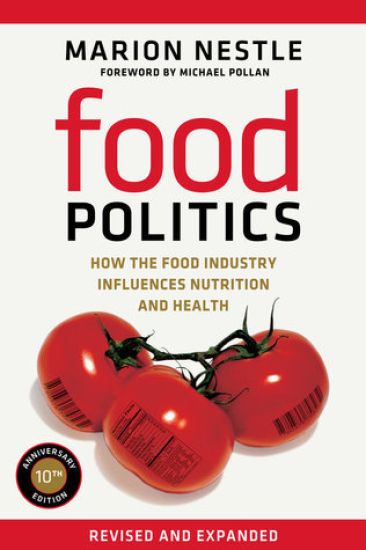
Food Politics

Food Politics

Marion Nestle; Michael Pollan

University of California Press
2013
pokkari
We all witness, in advertising and on supermarket shelves, the fierce competition for our food dollars. In this engrossing expose, Marion Nestle goes behind the scenes to reveal how the competition really works and how it affects our health. The abundance of food in the United States - enough calories to meet the needs of every man, woman, and child twice over - has a downside. Our over-efficient food industry must do everything possible to persuade people to eat more - more food, more often, and in larger portions - no matter what it does to waistlines or well-being. Like manufacturing cigarettes or building weapons, making food is big business. Food companies in 2000 generated nearly $900 billion in sales. They have stakeholders to please, shareholders to satisfy, and government regulations to deal with. It is nevertheless shocking to learn precisely how food companies lobby officials, co-opt experts, and expand sales by marketing to children, members of minority groups, and people in developing countries. We learn that the food industry plays politics as well as or better than other industries, not least because so much of its activity takes place outside the public view. Editor of the 1988 "Surgeon General's Report on Nutrition and Health", Nestle is uniquely qualified to lead us through the maze of food industry interests and influences. She vividly illustrates food politics in action: watered-down government dietary advice, schools pushing soft drinks, diet supplements promoted as if they were First Amendment rights. When it comes to the mass production and consumption of food, strategic decisions are driven by economics - not science, not common sense, and certainly not health. No wonder most of us are thoroughly confused about what to eat to stay healthy. An accessible and balanced account, "Food Politics" will forever change the way we respond to food industry marketing practices. By explaining how much the food industry influences government nutrition policies and how cleverly it links its interests to those of nutrition experts, this path-breaking book helps us understand more clearly than ever before what we eat and why.
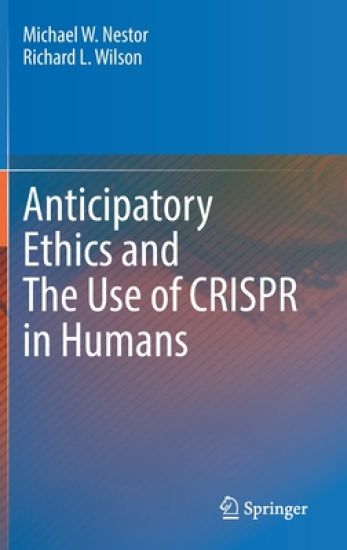
Anticipatory Ethics and The Use of CRISPR in Humans

Anticipatory Ethics and The Use of CRISPR in Humans

Michael W. Nestor; Richard L. Wilson

Springer Nature Switzerland AG
2022
sidottu
The future of gene editing in humans will involve the use of CRISPR. How we think about the combination of the scientific, ethical, and moral aspects of this technology is paramount to the success or failure of CRISPR in humans. Unfortunately, the current scientific discussion around CRISPR in humans has left ethics trailing behind due to the rapid pace of innovation. New modes of ethics and stakeholder participation are needed to keep pace with rapid scientific advances and provide the necessary policy and ethical frameworks necessary to help CRISPR flourish as an important health care tool to treat human disease. This requires intense interdisciplinary collaboration and discussion between scientists and philosophers, policymakers and legal scholars, and the public.Dr. Michael W. Nestor (a neuroscientist who actively uses CRISPR in pre-clinical research) and Professor Richard Wilson (a philosopher who focuses on anticipatory ethics) set out to develop a new ethical approachconsidering the use of CRISPR in human targeted therapies. The field of anticipatory ethics is uniquely poised to tackle questions in fast-evolving technical areas where the pace of innovation outstrips traditional philosophical approaches. Furthermore, because of its “anticipatory” nature, this type of analysis provides the opportunity to look ahead and into the future concerning potential uses of CRISPR in humans, uses that are not currently possible. Nestor and Wilson collaborate both scientifically and philosophically in this book to forecast potential outcomes as the scientific and medical community goes beyond using CRISPR to correct genes that underlie diseases where a single gene is involved. Instead, Nestor and Wilson envision CRISPR in complex, multigenic disorders with a specific focus on the use of CRISPR to edit genes involved in mental traits like IQ or other cognitive characteristics. They argue that the use of CRISPR to modify genes that are potentially important for mental traits represents a particular category for special consideration from scientists, policymakers, the public, and other stakeholders. Nestor and Wilson explain why using CRISPR to alter mental states is very different from treating a disease like cancer by combining the latest scientific advancements with anticipatory ethics and philosophical phenomenology. Their analysis considers the role that mental states play in personhood and the lived experience-as genes that can change mental/cognitive attributes like IQ have wide-ranging effects on the lived experience in ways that are categorically different from other attributes. This book was written to set a non-exhaustive framework for shared understanding and discussion across disciplines and appeal to scientists and non-scientists alike. This appeal is made inclusively, inviting all stakeholders to engage in active dialogue about the appropriate context for using CRISPRand other gene-editing technologies in humans. It provides policy analysis and recommendations for assuring the most inclusive, equitable, and ethically sound use of CRISPR in humans, concerning its positive potential to treat mental conditions like depression, schizophrenia, Alzheimer’s disease, autism, and the potential to induce other cognitive enhancements.
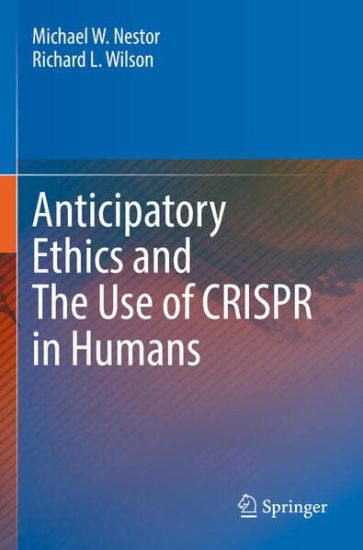
Anticipatory Ethics and The Use of CRISPR in Humans

Anticipatory Ethics and The Use of CRISPR in Humans

Michael W. Nestor; Richard L. Wilson

Springer Nature Switzerland AG
2023
nidottu
The future of gene editing in humans will involve the use of CRISPR. How we think about the combination of the scientific, ethical, and moral aspects of this technology is paramount to the success or failure of CRISPR in humans. Unfortunately, the current scientific discussion around CRISPR in humans has left ethics trailing behind due to the rapid pace of innovation. New modes of ethics and stakeholder participation are needed to keep pace with rapid scientific advances and provide the necessary policy and ethical frameworks necessary to help CRISPR flourish as an important health care tool to treat human disease. This requires intense interdisciplinary collaboration and discussion between scientists and philosophers, policymakers and legal scholars, and the public.Dr. Michael W. Nestor (a neuroscientist who actively uses CRISPR in pre-clinical research) and Professor Richard Wilson (a philosopher who focuses on anticipatory ethics) set out to develop a new ethical approachconsidering the use of CRISPR in human targeted therapies. The field of anticipatory ethics is uniquely poised to tackle questions in fast-evolving technical areas where the pace of innovation outstrips traditional philosophical approaches. Furthermore, because of its “anticipatory” nature, this type of analysis provides the opportunity to look ahead and into the future concerning potential uses of CRISPR in humans, uses that are not currently possible. Nestor and Wilson collaborate both scientifically and philosophically in this book to forecast potential outcomes as the scientific and medical community goes beyond using CRISPR to correct genes that underlie diseases where a single gene is involved. Instead, Nestor and Wilson envision CRISPR in complex, multigenic disorders with a specific focus on the use of CRISPR to edit genes involved in mental traits like IQ or other cognitive characteristics. They argue that the use of CRISPR to modify genes that are potentially important for mental traits represents a particular category for special consideration from scientists, policymakers, the public, and other stakeholders. Nestor and Wilson explain why using CRISPR to alter mental states is very different from treating a disease like cancer by combining the latest scientific advancements with anticipatory ethics and philosophical phenomenology. Their analysis considers the role that mental states play in personhood and the lived experience-as genes that can change mental/cognitive attributes like IQ have wide-ranging effects on the lived experience in ways that are categorically different from other attributes. This book was written to set a non-exhaustive framework for shared understanding and discussion across disciplines and appeal to scientists and non-scientists alike. This appeal is made inclusively, inviting all stakeholders to engage in active dialogue about the appropriate context for using CRISPRand other gene-editing technologies in humans. It provides policy analysis and recommendations for assuring the most inclusive, equitable, and ethically sound use of CRISPR in humans, concerning its positive potential to treat mental conditions like depression, schizophrenia, Alzheimer’s disease, autism, and the potential to induce other cognitive enhancements.