Kirjojen hintavertailu. Mukana 11 244 527 kirjaa ja 12 kauppaa.

Kirjahaku

Etsi kirjoja tekijän nimen, kirjan nimen tai ISBN:n perusteella.

1000 tulosta hakusanalla Michael Ruse

The Evolution-Creation Struggle

The Evolution-Creation Struggle

Michael Ruse

Harvard University Press
2006
nidottu
Creation versus evolution: What seems like a cultural crisis of our day, played out in courtrooms and classrooms across the county, is in fact part of a larger story reaching back through the centuries. The views of both evolutionists and creationists originated as inventions of the Enlightenment--two opposed but closely related responses to a loss of religious faith in the Western world.In his latest book, Michael Ruse, a preeminent authority on Darwinian evolutionary thought and a leading participant in the ongoing debate, uncovers surprising similarities between evolutionist and creationist thinking. Exploring the underlying philosophical commitments of evolutionists, he reveals that those most hostile to religion are just as evangelical as their fundamentalist opponents. But more crucially, and reaching beyond the biblical issues at stake, he demonstrates that these two diametrically opposed ideologies have, since the Enlightenment, engaged in a struggle for the privilege of defining human origins, moral values, and the nature of reality.Highlighting modern-day partisans as divergent as Richard Dawkins and Left Behind authors Tim LaHaye and Jerry B. Jenkins, Ruse's bracing book takes on the assumptions of controversialists of every stripe and belief and offers to all a new and productive way of understanding this unifying, if often bitter, quest.
Monad to Man

Monad to Man

Michael Ruse

Harvard University Press
2009
nidottu
The idea of evolution: it fascinates some of us, disturbs others, and leaves only a very few people indifferent. In a major new interpretation of evolutionary theory, Michael Ruse pinpoints the common source of this attraction and discomfort. A renowned writer on evolutionary theory and its history, Ruse has long been sensitive to the fact that many people--and not simply religious enthusiasts--find something deeply troubling about much of what passes for science in evolutionary circles. What causes this tension, he finds in his search of evolutionism's 250-year history, is the intimate relationship between evolution and the secular ideology of progress.Ubiquitous in Darwin's time, the idea of an unceasing improvement in life insinuated its way into evolutionary theory from the first. In interviews with today's major figures in evolutionary biology--including Stephen Jay Gould, Edward O. Wilson, Ernst Mayr, and John Maynard Smith--and in an intimate look at the discoveries and advances in the history and philosophy of science, Ruse finds this belief just as prevalent today--however it might be denied or obscured. His book traces the delicate line between those who argue that science is and must be objective and those who deem science a "social construction" in the fashion of religion or the rest of culture. It offers an unparalleled account of evolutionary theory, from popular books to museums to the most complex theorizing, at a time when its status as science is under greater scrutiny than ever before.
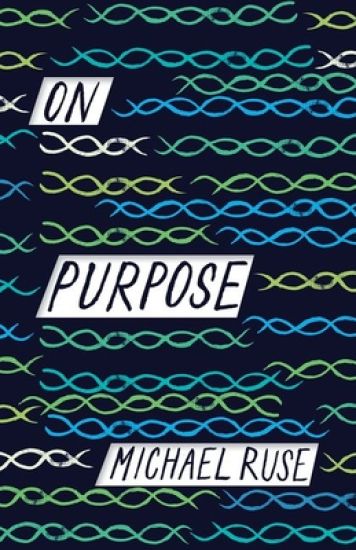
On Purpose

On Purpose

Michael Ruse

PRINCETON UNIVERSITY PRESS
2017
sidottu
A brief, accessible history of the idea of purpose in Western thought, from ancient Greece to the present Can we live without the idea of purpose? Should we even try to? Kant thought we were stuck with purpose, and even Darwin's theory of natural selection, which profoundly shook the idea, was unable to kill it. Indeed, teleological explanation--what Aristotle called understanding in terms of "final causes"--seems to be making a comeback today, as both religious proponents of intelligent design and some prominent secular philosophers argue that any explanation of life without the idea of purpose is missing something essential. In On Purpose, Michael Ruse explores the history of the idea of purpose in philosophical, religious, scientific, and historical thought, from ancient Greece to the present. Accessibly written and filled with literary and other examples, the book examines "purpose" thinking in the natural and human world. It shows how three ideas about purpose have been at the heart of Western thought for more than two thousand years. In the Platonic view, purpose results from the planning of a human or divine being; in the Aristotelian, purpose stems from a tendency or principle of order in the natural world; and in the Kantian, purpose is essentially heuristic, or something to be discovered, an idea given substance by Darwin's theory of evolution through natural selection. On Purpose traces the profound and fascinating implications of these ways of thinking about purpose. Along the way, it takes up tough questions about the purpose of life and whether it's possible to have meaning without purpose, revealing that purpose is still a vital and pressing issue.
On Purpose

On Purpose

Michael Ruse

Princeton University Press
2019
pokkari
An accessible history of the idea of purpose in Western thought, from ancient Greece to the presentCan we live without the idea of purpose? Should we even try to? Kant thought we were stuck with it, and even Darwin, who profoundly shook the idea, was unable to kill it. Indeed, purpose seems to be making a comeback today, as both religious advocates of intelligent design and some prominent secular philosophers argue that any explanation of life without the idea of purpose is missing something essential. On Purpose explores the history of purpose in philosophical, religious, scientific, and historical thought, from ancient Greece to the present. Accessibly written and filled with literary and other examples, the book traces how Platonic, Aristotelian, and Kantian ideas of purpose continue to shape Western thought. Along the way, it also takes up tough questions about the purpose of life—and whether it’s possible to have meaning without purpose.
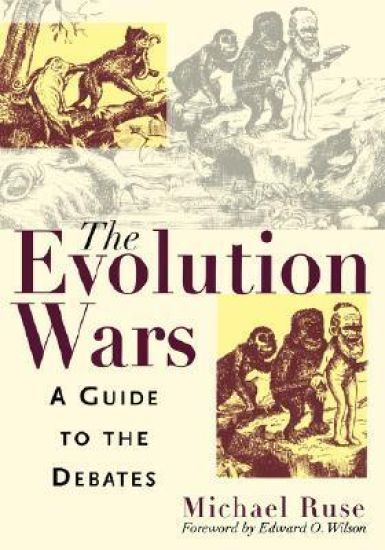
The Evolution Wars

The Evolution Wars

Michael Ruse

Rutgers University Press
2001
nidottu
The Evolution Wars draws on history, science, and philosophy to examine the development of evolutionary thought through the past two and a half centuries. It focuses on the debates that have engaged, divided, and ultimately provoked scientists to ponder the origins of organisms—including humankind—paying regard to the nineteenth-century clash over the nature of classification and debates about the fossil record, genetics, and human nature. Much attention is paid to external factors and the underlying motives of scientists.In these pages you will meet Charles Darwin’s ebullient grandfather Erasmus, the contentious Frenchmen Georges Cuvier and Etienne Geoffroy Stain-Hillaire, new creationist Phillip Johnson, the brilliant J. B. S. Haldane, outspoken Richard Dawkins, and many other stars of the debates. The Evolution Wars explores the ten greatest controversies surrounding evolution in world history, with emphasis on recent times, including the infamous Scopes trial of the 1920s: the search for human origins and speculation about the “missing link,” spurred by the discovery of “Lucy;” the debate surrounding the new theory of paleontology proposed by Stephen Jay Gould; and the rise of teaching “creation science” in public school as a subject on par with evolution.Although the author takes a strong stand on the side of evolution, he also shows respect for dissenting viewpoints. Thus, the book is intellectually rewarding not only for evolutionists but also for opponents of evolution theory, especially those who want to see how one of the great ideas of Western civilization resonates through time, both within and beyond the scientific community.
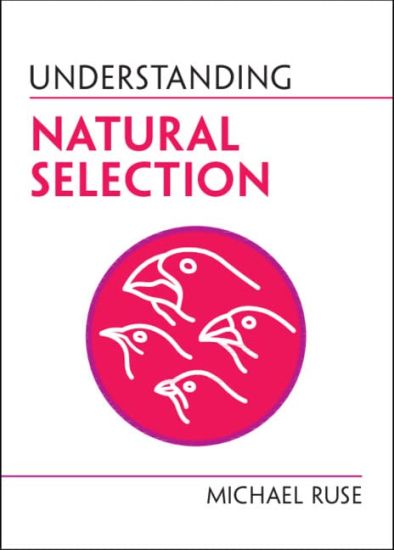
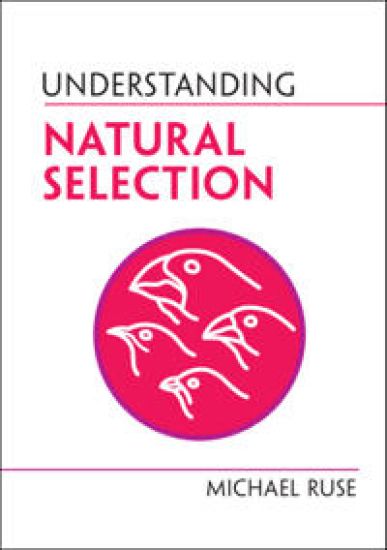
Understanding Natural Selection

Understanding Natural Selection

Michael Ruse

Cambridge University Press
2022
pokkari
Natural selection, as introduced by Charles Darwin in the Origin of Species (1859), has always been a topic of great conceptual and empirical interest. This book puts Darwin's theory of evolution in historical context showing that, in important respects, his central mechanism of natural selection gives the clue to understanding the nature of organisms. Natural selection has important implications, not just for the understanding of life's history – single-celled organism to man – but also for our understanding of contemporary social norms, as well as the nature of religious belief. The book is written in clear, non-technical language, appealing not just to philosophers, historians, and biologists, but also to general readers who find thinking about important issues both challenging and exciting.
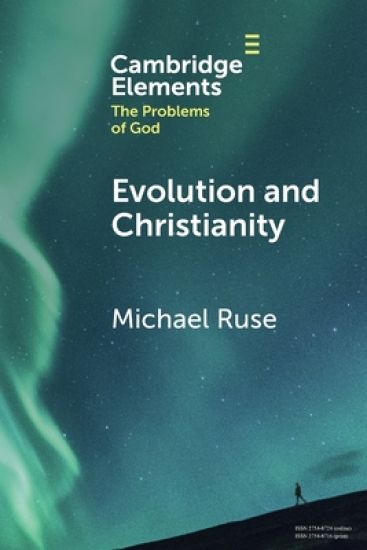
Evolution and Christianity

Evolution and Christianity

Michael Ruse

Cambridge University Press
2023
pokkari
This Element discusses the relationship between Christianity and evolutionary theory, with special emphasis on Darwinian evolutionary theory (Darwinism). The Creationists argue that the two are incompatible and it is religion that is the truth and Darwinism the falsity. The New Atheists argue that the two are incompatible and it is religion that is the falsity and Darwinism the truth. Through a careful examination of both Darwinian theory and Christianity, it is shown that both extremes are mistaken. It is accepted that there are difficult issues to be solved, for example the problem of evil - which some think is exacerbated by Darwinism - and the necessarily appearance of Homo sapiens - which is problematic if evolutionary theory does not guarantee progress and the evolution of humans as the apotheosis. It is argued that there are ways forward, and Christianity and evolutionary thinking can be shown compatible.
Understanding the Christianity–Evolution Relationship

Understanding the Christianity–Evolution Relationship

Michael Ruse

Cambridge University Press
2023
pokkari
The relationship between science and religion is a topic that runs rife with misconceptions, misunderstandings and debates. Are science and religion always in conflict? Is Darwin's theory of evolution through natural selection atheistic? How does history shape current debates around science and religion? This book explores these questions in a neutral and balanced way, focusing on the Christianity-evolution relationship. It shows that two paradigms – the world as an organism and the world as a machine – have critically informed and guided the discussions. The author uses his deep understanding of the history and philosophy of science, particularly Darwinian evolutionary theory and its controversies through the past 150 years, to bring fresh ideas to the debate and to wider discussions such as environmental issues and hate. Understanding the Christianity-Evolution Relationship provides a lively and informative analysis and lays out multiple views so that readers can make their own judgements to increase their understanding.
Charles Darwin

Charles Darwin

Michael Ruse

Cambridge University Press
2024
pokkari
Charles Darwin's theory of evolution was one of the most significant revolutions in the history of science. Widely debated after the publication of the Origin of Species in 1859, it continues to be controversial. In this volume, Michael Ruse offers the definitive history of the theory of evolution through natural selection. Tracing Darwin's intellectual journey and experiences that lead him to his novel insights, Ruse explores his scientific contributions as well as their relationship to philosophical issues and religious implications, as well as being both inspiration and challenge to novelists and poets. He also shows how the Darwin's ideas continue to have contemporary relevance, as they shed light on social issues and problems, such as race, sexual orientation and the connections between Darwin's thinking to that of Sigmund Freud, and the status of women, including the possibility and desirability of social change. Written in an engaging, non-technical style, Ruse's volume serves as an ideal introduction to the ideas of one of the key figures in the history of modern science.
Charles Darwin

Charles Darwin

Michael Ruse

Cambridge University Press
2024
sidottu
Charles Darwin's theory of evolution was one of the most significant revolutions in the history of science. Widely debated after the publication of the Origin of Species in 1859, it continues to be controversial. In this volume, Michael Ruse offers the definitive history of the theory of evolution through natural selection. Tracing Darwin's intellectual journey and experiences that lead him to his novel insights, Ruse explores his scientific contributions as well as their relationship to philosophical issues and religious implications, as well as being both inspiration and challenge to novelists and poets. He also shows how the Darwin's ideas continue to have contemporary relevance, as they shed light on social issues and problems, such as race, sexual orientation and the connections between Darwin's thinking to that of Sigmund Freud, and the status of women, including the possibility and desirability of social change. Written in an engaging, non-technical style, Ruse's volume serves as an ideal introduction to the ideas of one of the key figures in the history of modern science.
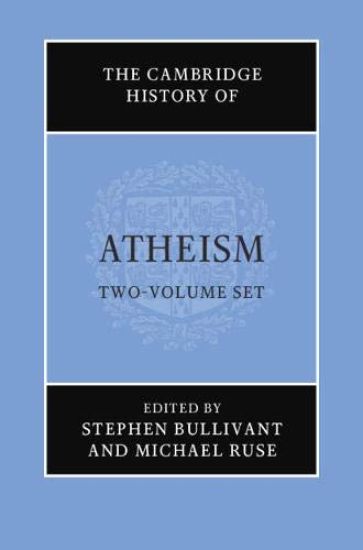
The Cambridge History of Atheism 2 Volume Hardback Set
The two-volume Cambridge History of Atheism offers an authoritative and up to date account of a subject of contemporary interest. Comprised of sixty essays by an international team of scholars, this History is comprehensive in scope. The essays are written from a variety of disciplinary perspectives, including religious studies, philosophy, sociology, and classics. Offering a global overview of the subject, from antiquity to the present, the volumes examine the phenomenon of unbelief in the context of Christian, Islamic, Buddhist, Hindu, and Jewish societies. They explore atheism and the early modern Scientific Revolution, as well as the development of Charles Darwin's theory of evolution and its continuing implications. The History also includes general survey essays on the impact of scepticism, agnosticism and atheism, as well as contemporary assessments of thinking. Providing essential information on the nature and history of atheism, The Cambridge History of Atheism will be indispensable for both scholarship and teaching, at all levels.
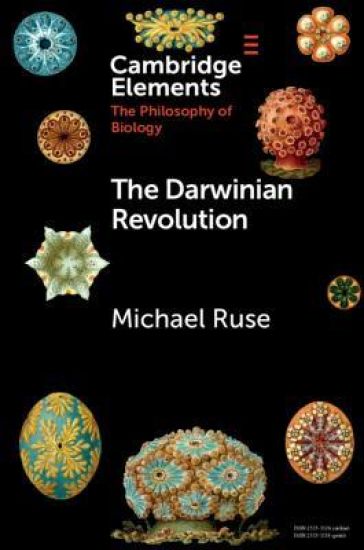
The Darwinian Revolution

The Darwinian Revolution

Michael Ruse

Cambridge University Press
2019
pokkari
What is the Darwinian Revolution and why is it important for philosophers? These are the questions tackled in this Element. In four sections, the topics covered are the story of the revolution, the question of whether it really was a revolution, the nature of the revolution, and the implications for philosophy, both epistemology and ethics.
Monotheism and Contemporary Atheism

Monotheism and Contemporary Atheism

Michael Ruse

Cambridge University Press
2019
pokkari
In this Element, Michael Ruse offers a critical analysis of contemporary atheism. He puts special emphasis on the work of so-called 'New Atheists': Richard Dawkins, Sam Harris, Daniel Dennett, and Christopher Hitchins, whose views are contrasted with those of Edward O. Wilson. Ruse also provides a full exposition of his own position, which he labels 'Darwinian Existentialism'.
A Philosopher Looks at Human Beings

A Philosopher Looks at Human Beings

Michael Ruse

Cambridge University Press
2021
pokkari
Why do we think ourselves superior to all other animals? Are we right to think so? In this book, Michael Ruse explores these questions in religion, science and philosophy. Some people think that the world is an organism - and that humans, as its highest part, have a natural value (this view appeals particularly to people of religion). Others think that the world is a machine - and that we therefore have responsibility for making our own value judgements (including judgements about ourselves). Ruse provides a compelling analysis of these two rival views and the age-old conflict between them. In a wide-ranging and fascinating discussion, he draws on Darwinism and existentialism to argue that only the view that the world is a machine does justice to our humanity. This new series offers short and personal perspectives by expert thinkers on topics that we all encounter in our everyday lives.
Understanding Natural Selection

Understanding Natural Selection

Michael Ruse

Cambridge University Press
2022
sidottu
Natural selection, as introduced by Charles Darwin in the Origin of Species (1859), has always been a topic of great conceptual and empirical interest. This book puts Darwin's theory of evolution in historical context showing that, in important respects, his central mechanism of natural selection gives the clue to understanding the nature of organisms. Natural selection has important implications, not just for the understanding of life's history – single-celled organism to man – but also for our understanding of contemporary social norms, as well as the nature of religious belief. The book is written in clear, non-technical language, appealing not just to philosophers, historians, and biologists, but also to general readers who find thinking about important issues both challenging and exciting.
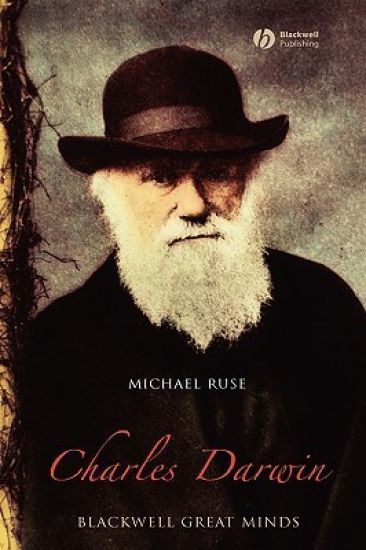
Charles Darwin

Charles Darwin

Michael Ruse

Wiley-Blackwell (an imprint of John Wiley Sons Ltd)
2008
sidottu
The definitive work on the philosophical nature and impact of the theories of Charles Darwin, written by a well-known authority on the history and philosophy of Darwinism. Broadly explores the theories of Charles Darwin and Darwin studiesIncorporates much information about modern BiologyOffers a comprehensive discussion of Darwinism and Christianity – including Creationism – by one of the leading authorities in the fieldWritten in clear, concise, user-friendly language supplemented with quality illustrationsExamines the status of evolutionary theory as a genuine theory and its implications for philosophy, epistemology and ethicsProvides a strong understanding of the philosophical nature and impact of Darwin's thoughtHolds wide appeal for general audiences outside the world of academic philosophyStrongly supports Darwinism and fully explores modern naturalistic explanations of religion
Evolution and Religion

Evolution and Religion

Michael Ruse

Rowman Littlefield
2016
sidottu
Michael Ruse, a leading expert on Charles Darwin, presents a fictional dialogue among characters with sharply contrasting positions regarding the tensions between science and religious belief. Ruse's main characters—an atheist scientist, a skeptical historian and philosopher of science, a relatively liberal female Episcopalian priest, and a Southern Baptist pastor who denies evolution—passionately argue about pressing issues, in a context framed within a television show: "Science versus God— Who is Winning?" These characters represent the different positions concerning science and religion often held today: evolution versus creation, the implications of Christian beliefs upon technological advances in medicine, and the everlasting debate over free will. The second edition of this innovative text incorporates the influence of Eastern religions and philosophies on the debate on human origins, broadening the contextual reach of the dialogue into comparative philosophy and religious studies.
Evolution and Religion

Evolution and Religion

Michael Ruse

Rowman Littlefield
2016
nidottu
Michael Ruse, a leading expert on Charles Darwin, presents a fictional dialogue among characters with sharply contrasting positions regarding the tensions between science and religious belief. Ruse's main characters—an atheist scientist, a skeptical historian and philosopher of science, a relatively liberal female Episcopalian priest, and a Southern Baptist pastor who denies evolution—passionately argue about pressing issues, in a context framed within a television show: "Science versus God— Who is Winning?" These characters represent the different positions concerning science and religion often held today: evolution versus creation, the implications of Christian beliefs upon technological advances in medicine, and the everlasting debate over free will. The second edition of this innovative text incorporates the influence of Eastern religions and philosophies on the debate on human origins, broadening the contextual reach of the dialogue into comparative philosophy and religious studies.
Sociobiology: Sense or Nonsense?

Sociobiology: Sense or Nonsense?

Michael Ruse

Kluwer Academic Publishers
1979
nidottu
In June 1975, the distinguished Harvard entomologist Edward O. Wilson published a truly huge book entitled, Sociobiology: The New Synthesis. In this book, drawing on both fact and theory, Wilson tried to present a com­ prehensive overview of the rapidly growing subject of 'sociobiology', the study of the biological nature and foundations of animal behaviour, more precisely animal social behaviour. Although, as the title rather implies, Wilson was more surveying and synthesising than developing new material, he com­ pensated by giving the most thorough and inclusive treatment possible, beginning in the animal world with the most simple of forms, and progressing via insects, lower invertebrates, mammals and primates, right up to and in­ cluding our own species, Homo sapiens. Initial reaction to the book was very favourable, but before the year was out it came under withering attack from a group of radical scientists in the Boston area, who styled themselves 'The Science for the People Sociobiology Study Group'. Criticism, of course, is what every academic gets (and needs!); but, for two reasons, this attack was particularly unpleasant. First, not only were Wilson's ideas attacked, but he himself was smeared by being linked with the most reactionary of political thinkers, including the Nazis.