Kirjojen hintavertailu. Mukana 11 244 527 kirjaa ja 12 kauppaa.

Kirjahaku

Etsi kirjoja tekijän nimen, kirjan nimen tai ISBN:n perusteella.

876 tulosta hakusanalla Michaelangelo Rodriguez

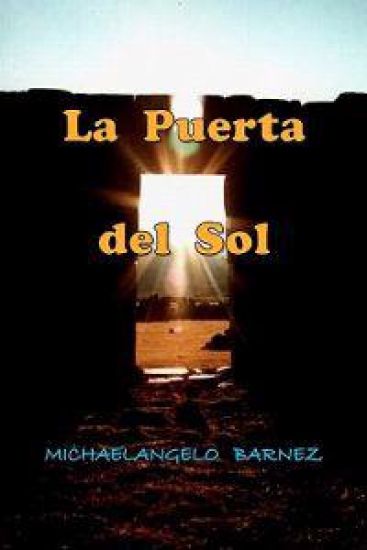
La Puerta del Sol: El Poder del Amor

La Puerta del Sol: El Poder del Amor

Michaelangelo Barnez

Createspace Independent Publishing Platform
2010
nidottu
Los personajes de "Te Ver en Sue os", Rose, John y Pen lope, vuelven a cobrar vida en la novela "LA PUERTA DEL SOL" en donde las manifestaciones de los poderes mentales y fen menos extra sensoriales, tan misteriosos pero cotidianos en nuestras vidas, son el eje de esta historia. Rose y Pen lope, madre y esposa respectivamente de John, son atacadas por un terrible mal. La ciencia, con todos sus avances y limitaciones, descarta la posibilidad de una recuperaci n, y John como m dico buscar salvarlas recurriendo no s lo a la medicina no convencional, sino que inclusive a la inveros mil alternativa de una Curaci n Milagrosa... Pero, c mo lograrlo? "LA PUERTA DEL SOL" es una novela de acci n y aventura, pero por sobre todo, de un gran contenido espiritual en donde las esperanzas de los personajes y sus poderes mentales los transportar m s all de los l mites imaginados que nos plantean la vida. S , Michaelangelo Barnez nos trae con "LA PUERTA DEL SOL" un mensaje de amor y esperanza ante un terrible mal que aqueja a la humanidad toda, mal de aparente y cotidiana creencia sin soluci n. Pero... Lo lograr John? Lograr n Rose y Pen lope salir de las garras de la oscuridad del mal? Si?... C mo? L anla, les fascinar lo inesperado de su trama.
Tales of the Lightworkers: The Seven Eyed Raven

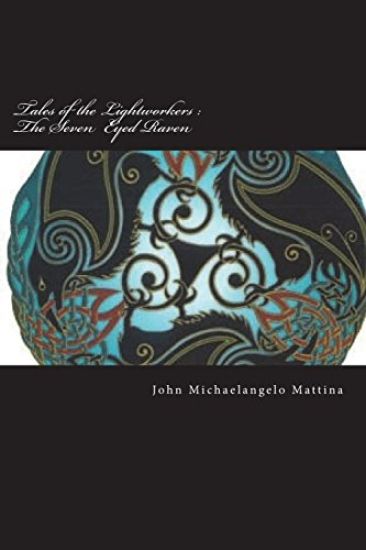
Tales of the Lightworkers: The Seven Eyed Raven

John Michaelangelo Mattina

Createspace Independent Publishing Platform
2018
nidottu
This work of fiction, entitled Tales of the Lightworkers: The Seven-Eyed Raven, tells the story of two rivals turned lovers as they battle through a perilous, deserted, wasteland. In this wasteland, there are three separate factions aptly named Lightworkers, Ravenhunters, and Cursed Vessels with two rogue characters residing within both the Lightworkers and the Ravenhunters. These rogue characters are somewhat omnipotent in their attempts to manipulate the flow of events. One of the rogue characters seeks to restore the shattered timelines as he utilizes mastery over time bestowed upon him by the literal god of their world. The other rogue character seeks only freedom from his curse while bound within the confines of the main character's body, soul, and mind. In this War-stricken land, only the children of the Raven Hunters exist after the catastrophic loss caused by the first Host of Baal. The only person safeguarding the children and providing training, both mental and physical, would be the elderly master who goes by the name of Rin. Rin forces the four aspiring pupils to reach new heights and metaphysical being with a set of rigorous training that tests both the mind and the body. But, he only has a strict time limit to complete his training before the new Host of Baal unleashes another deadly rampage.
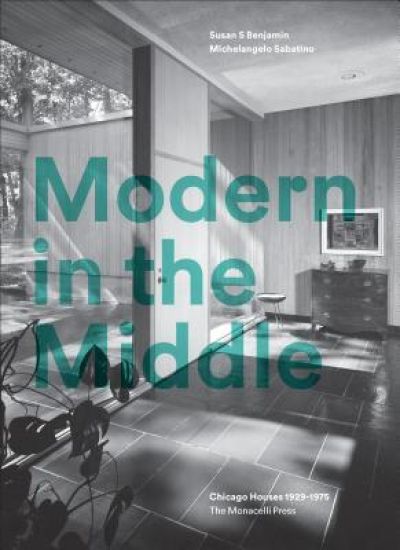
Modern in the Middle

Modern in the Middle

Susan Benjamin; Michaelangelo Sabatino

Monacelli Press
2020
sidottu
The first survey of the classic twentieth-century houses that defined American Midwestern modernism.Famed as the birthplace of that icon of twentieth-century architecture, the skyscraper, Chicago also cultivated a more humble but no less consequential form of modernism--the private residence. Modern in the Middle: Chicago Houses 1929-75 explores the substantial yet overlooked role that Chicago and its suburbs played in the development of the modern single-family house in the twentieth century. In a city often associated with the outsize reputations of Frank Lloyd Wright and Ludwig Mies van der Rohe, the examples discussed in this generously illustrated book expand and enrich the story of the region's built environment. Authors Susan Benjamin and Michelangelo Sabatino survey dozens of influential houses by architects whose contributions are ripe for reappraisal, such as Paul Schweikher, Harry Weese, Keck & Keck, and William Pereira. From the bold, early example of the "Battledeck House" by Henry Dubin (1930) to John Vinci and Lawrence Kenny's gem the Freeark House (1975), the generation-spanning residences discussed here reveal how these architects contended with climate and natural setting while negotiating the dominant influences of Wright and Mies. They also reveal how residential clients--typically middle-class professionals, progressive in their thinking--helped to trailblaze modern architecture in America. Though reflecting different approaches to site, space, structure, and materials, the examples in Modern in the Middle reveal an abundance of astonishing houses that have never been collected into one study--until now.
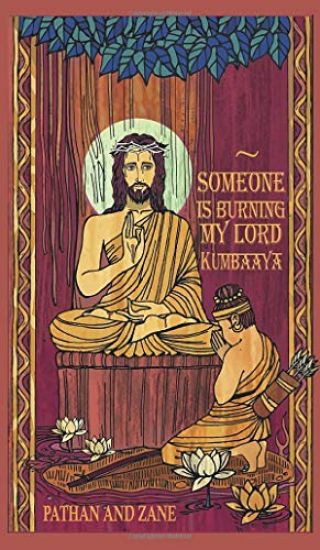
Someone Is Burning My Lord, Kumbaaya

Someone Is Burning My Lord, Kumbaaya

Fiza Pathan; Michaelangelo Zane

Freedom with Pluralism
2020
sidottu
Kumbaaya, a nine-year-old boy, keeps asking himself and the other students, "who is Guruji and how does he do those impossible things " They attend an exclusive school for boys, taught by Guruji, where they learn to control special powers.A twelve-year-old child bride is almost burned alive on the funeral pyre with her ninety-nine-year-old, deceased husband. Kumbaaya and his fellow student warriors needed Guruji's help to save the girl and defeat a giant, even with their supernatural weapons and skills.Their schooling and skills are put to the test again in other deadly situations. Will Kumbaaya survive transformative discipline when he goes against Guruji? Will Guruji's school for boys fracture with the presence of the girl-bride?Will Kumbaaya be killed or kidnapped by the travelers from the future?
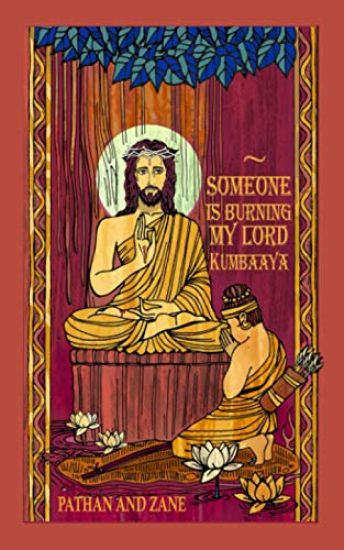
Someone Is Burning My Lord, Kumbaaya

Someone Is Burning My Lord, Kumbaaya

Fiza Pathan; Michaelangelo Zane

Freedom with Pluralism
2020
pokkari
Kumbaaya, a nine-year-old boy, keeps asking himself and the other students, "who is Guruji and how does he do those impossible things " They attend an exclusive school for boys, taught by Guruji, where they learn to control special powers. A twelve-year-old child bride is almost burned alive on the funeral pyre with her ninety-nine-year-old, deceased husband. Kumbaaya and his fellow student warriors needed Guruji's help to save the girl and defeat a giant, even with their supernatural weapons and skills.Their schooling and skills are put to the test again in other deadly situations. Will Kumbaaya survive transformative discipline when he goes against Guruji? Will Guruji's school for boys fracture with the presence of the girl-bride?Will Kumbaaya be killed or kidnapped by the travelers from the future?
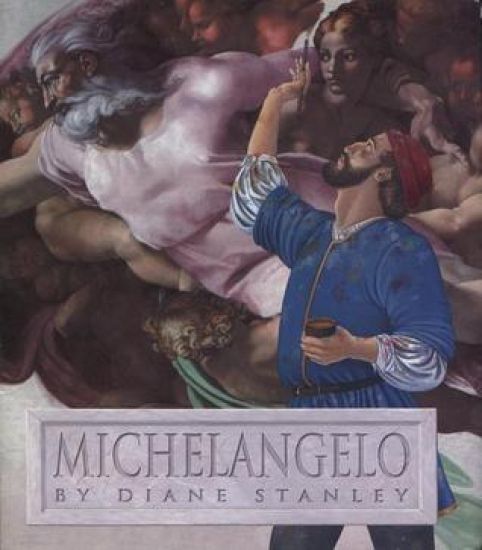
Michelangelo

Michelangelo

Diane Stanley

Harpercollins
2003
nidottu
With her thoroughly researched, lively narrative and superbly detailed illustrations, Diane Stanley has captured the life of the artist Michelangelo, who towered above the late Renaissance--and whose brilliance in architecture, painting, and sculpture amazes and moves us to this day. Michelangelo had a turbulent, quarrelsome life. He was obsessed with perfection and felt that everyone--from family members to his demanding patrons--took advantage and let him down. His long and difficult association with Pope Julius II yielded his greatest masterpiece, the radiant paintings in the Sistine Chapel, and his most disastrous undertaking, the monumental tomb that caused the artist frustration and heartache for forty years. Children's Books 2000-NY Public Lib., Books for Youth Editor's Choice 2000 (Booklist), Lasting Connections 2000 (Book Links), Best Books 2000 (School Library Journal), Top 10 Youth Art Books 2000 (Booklist), and Notable Children's Trade Books in the Field of Social Studies 2001, National Council for SS & Child. Book Council
Michelangelo

Michelangelo

Howard Hibbard; Shirley G. Hibbard

Westview Press Inc
1985
nidottu
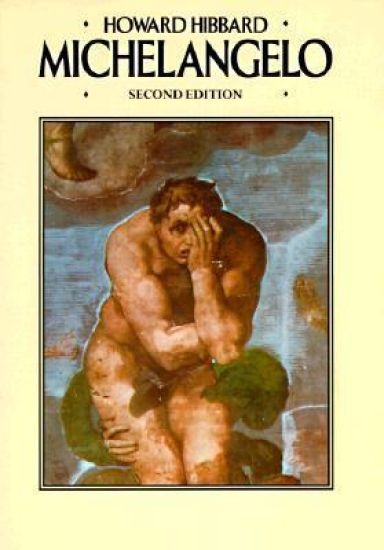
In this masterly, Howard Hibbard relates Michelangelo's art to his life and to the times in which he lived, relying on the earliest biographies and the latest scholarly research as well as on Michelangelo's own letters and poems. What emerges is both a perspective appraisal of his work and a revealing life history of the man who was arguably the greatest artist of all time.
The Complete Poems of Michelangelo

The Complete Poems of Michelangelo

Michelangelo

University of Chicago Press
2000
nidottu
Michelangelo studied and wrote poetry throughout his life, and his finest literary efforts are allied with the masterwoks of his visual art, and this translation captures the pathos, complexity, and ardor of both Michelangelo's language and his poetic temperament. The text gives a glimpse into one of the most fascinating minds in the history of art, as Michelangelo laboured in the Sistine Chapel he composed a series of passionate love sonnets and while struggling, near the end of his life, to complete his final "Pieta" he worked at religious poems anguished in their fervour.
The Complete Poems of Michelangelo

The Complete Poems of Michelangelo

Michelangelo

University of Chicago Press
1998
sidottu
Michelangelo studied and wrote poetry throughout his life, his finest literary efforts are allied with the masterwoks of his visual art, and this translation captures the pathos, complexity, and ardor of both Michelangelo's language and his poetic temperament. The text gives a glimpse into one of the most fascinating minds in the history of art, as Michelangelo laboured in the Sistine Chapel he composed a series of passionate love sonnets and while struggling, near the end of his life, to complete his final "Pieta" he worked at religious poems anguished in their fervour.
Michelangelo's Painting

Michelangelo's Painting

Leo Steinberg

University of Chicago Press
2019
sidottu
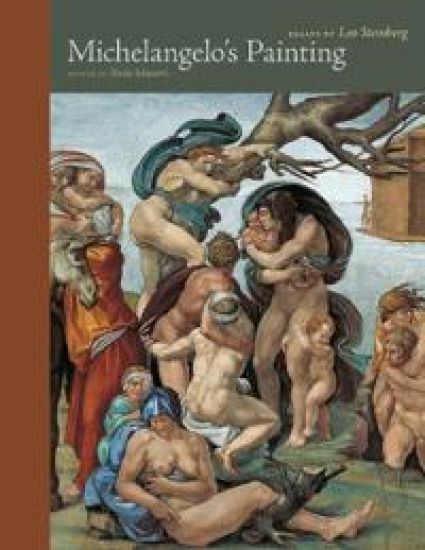
Leo Steinberg was one of the most original art historians of the twentieth century, known for taking interpretive risks that challenged the profession by overturning reigning orthodoxies. In essays and lectures that ranged from old masters to contemporary art, he combined scholarly erudition with an eloquent prose that illuminated his subject and a credo that privileged the visual evidence of the image over the literature written about it. His writings, sometimes provocative and controversial, remain vital reading. For half a century, Steinberg delved into Michelangelo's work, revealing the symbolic structures underlying the artist's highly charged idiom. This volume of essays and unpublished lectures elucidates many of Michelangelo's paintings, from frescoes in the Sistine Chapel to the Conversion of St. Paul and the Crucifixion of St. Peter, the artist's lesser-known works in the Vatican's Pauline Chapel; also included is a study of the relationship of the Doni Madonna to Leonardo. Steinberg's perceptions evolved from long, hard looking. Almost everything he wrote included passages of old-fashioned formal analysis, but always put into the service of interpretation. He understood that Michelangelo's rendering of figures, as well as their gestures and interrelations, conveys an emblematic significance masquerading under the guise of naturalism. Michelangelo pushed Renaissance naturalism into the furthest reaches of metaphor, using the language of the body to express fundamental Christian tenets once expressible only by poets and preachers. Michelangelo's Paintings is the second volume in a series that presents Steinberg's writings, selected and edited by his longtime associate Sheila Schwartz.
Michelangelo's Sculpture

Michelangelo's Sculpture

Leo Steinberg

University of Chicago Press
2018
sidottu
Leo Steinberg was one of the most original and daring art historians of the twentieth century, known for taking interpretative risks that challenged the profession by overturning reigning orthodoxies. In essays and lectures that ranged from old masters to contemporary art, he combined scholarly erudition with an eloquent prose that illuminated his subject and a credo that privileged the visual evidence of the image over the literature written about it. His works, sometimes provocative and controversial, remain vital and influential reading. For half a century, Steinberg delved into Michelangelo's work, revealing the symbolic structures underlying the artist's highly charged idiom. This volume of essays and unpublished lectures explicates many of Michelangelo's most celebrated sculptures, applying principles gleaned from long, hard looking. Almost everything Steinberg wrote included passages of old-fashioned formal analysis, but here put to the service of interpretation. He understood that Michelangelo's rendering of figures as well as their gestures and interrelations conveys an emblematic significance masquerading under the guise of naturalism. Michelangelo pushed Renaissance naturalism into the furthest reaches of metaphor, using the language of the body and its actions to express fundamental Christian tenets once expressible only by poets and preachers--or, as Steinberg put it, in Michelangelo's art, "anatomy becomes theology." Michelangelo's Sculpture is the first in a series of volumes of Steinberg's selected writings and unpublished lectures, edited by his longtime associate Sheila Schwartz. The volume also includes a book review debunking psychoanalytic interpretation of the master's work, a lighthearted look at Michelangelo and the medical profession and, finally, the shortest piece Steinberg ever published.
The Madrigals of Michelangelo Rossi

The Madrigals of Michelangelo Rossi

Michelangelo Rossi

University of Chicago Press
2003
sidottu
Michelangelo Rossi's two books of five-voice polyphonic madrigals are among the most expressive works of their kind ever composed. Showing the influence of Gesualdo, the madrigals were probably written in Rome betwen 1624 and 1629, when Rossi was in the service of Cardinal Maurizio of Savoy. They were apparently never published, and there is only one complete manuscript source, which once belonged to Queen Christina of Sweden and now forms the principal source for Brian Mann's critical edition. In his extensive introduction, Mann considers in detail the biographical, cultural and stylistic milieu in which the madrigals were written. The scholarly edition of the music, based on a thorough examination of all the known sources, includes a complete critical commentary. Mann's work on Rossi's madrigals has already helped revive interest in them. In 1998 a CD recording of Book I appeared on the Virgin label, performed by Il Complesso Barocco under the direction of Alan Curtis, based on this critical edition.
Michelangelo

Michelangelo

Martin Gayford

Fig Tree
2017
pokkari
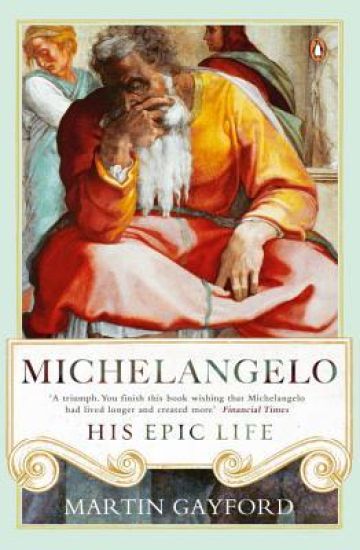
'An absorbing book, beautifully told and with the writer fully in command of a huge body of research' Philip Hensher, Mail on Sunday There was an epic sweep to Michelangelo's life. At 31 he was considered the finest artist in Italy, perhaps the world; long before he died at almost 90 he was widely believed to be the greatest sculptor or painter who had ever lived (and, by his enemies, to be an arrogant, uncouth, swindling miser). For decade after decade, he worked near the dynamic centre of events: the vortex at which European history was changing from Renaissance to Counter Reformation. Few of his works - including the huge frescoes of the Sistine Chapel Ceiling, the marble giant David and The Last Judgment - were small or easy to accomplish. Like a hero of classical mythology - such as Hercules, whose statue Michelangelo carved in his youth - he was subject to constant trials and labours. In Michelangelo Martin Gayford describes what it felt like to be Michelangelo Buonarroti, and how he transformed forever our notion of what an artist could be.'It is a measure of [Michelangelo's] magnitude, and Gayford's skill in capturing it, that you finish this book wishing that Michelangelo had lived longer and created more' Rachel Spence, FT 'One of our most distinguished writers on what makes modern artists tick . . . It is very difficult to cut through the thicket of generations of scholarship and say anything new about David, the Sistine Chapel, The Last Judgement, the Basilica of St Peter's or many of Michelangelo's other masterpieces, but Gayford manages to do so by encouraging us to think - and look - at both the obvious and the overlooked' Sunday Telegraph'Only the most ambitious biographer can take on the talent of Michelangelo Buonarroti' The Times
Michelangelo's Seizure

Michelangelo's Seizure

Steve Gehrke

University of Illinois Press
2007
nidottu
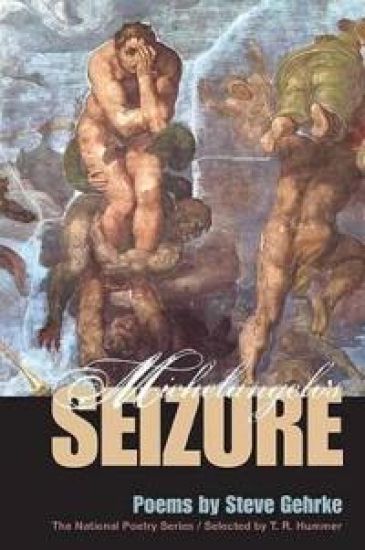
Providing poetic entry into the visual artsIn Michelangelo's Seizure, Steve Gehrke seizes the lives of several classic and contemporary painters--from Caravaggio and Magritte to Francis Bacon and Jackson Pollock--to demonstrate how these artists transformed physical, psychological, and political suffering into art. Mirroring the brushstrokes in long, metaphor-laden sentences, Gehrke moves freely through the canvas, into and out of the artists' lives, into the public realm, into history, to capture the way the creative mind can transform even the most violent surroundings--a prison cell, a battlefield, a madhouse--into a masterpiece
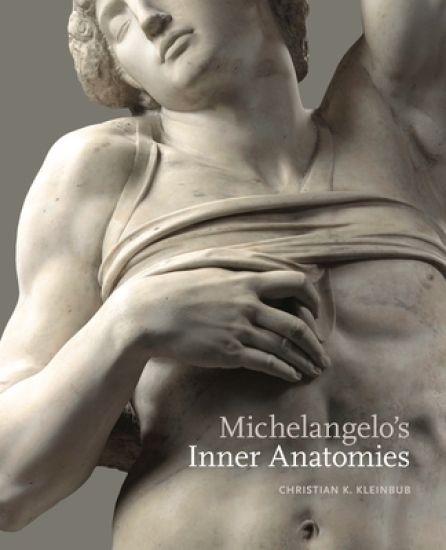
Michelangelo’s Inner Anatomies

Michelangelo’s Inner Anatomies

Christian K. Kleinbub

Pennsylvania State University Press
2020
sidottu
This book challenges the notion that Michelangelo, renowned for his magnificent portrayals of the human body, was merely concerned with “superficial” anatomy—that is, the parts of the body that can be seen from the outside. Christian K. Kleinbub provides a fresh perspective on Michelangelo’s art of the human figure by investigating what he calls the artist’s “inner anatomical poetics,” revealing these beautiful bodies as objects of profound intellectual and spiritual significance.Michelangelo’s Inner Anatomies illuminates how Renaissance discourses on anatomical organs and organ systems informed Michelangelo's figures, linking the interior experiences of his subjects to physiological processes associated with sex, love, devotion, and contemplation, among other thoughts and feelings. Kleinbub presents new and compelling interpretations of some of Michelangelo’s most significant works of painting, sculpture, poetry, and architecture. The book’s case studies cover the full range of Michelangelo’s prodigious output—including such iconic works as the Sistine Ceiling, Dying Slave, and Last Judgment—and reconstructs what Michelangelo knew of internal anatomy and how he projected that knowledge into his most important works. Drawing upon theological, poetic, philosophical, and scientific texts, Michelangelo created a context-dependent, adaptable practice that could be adjusted according to the needs of an individual situation or commission and manipulated to embody, literally and figuratively, a variety of meanings.Deeply researched and convincingly argued, this study heralds a significant shift in thinking about the Italian Renaissance body as it pertains not only to the work of Michelangelo but also to the era as a whole.
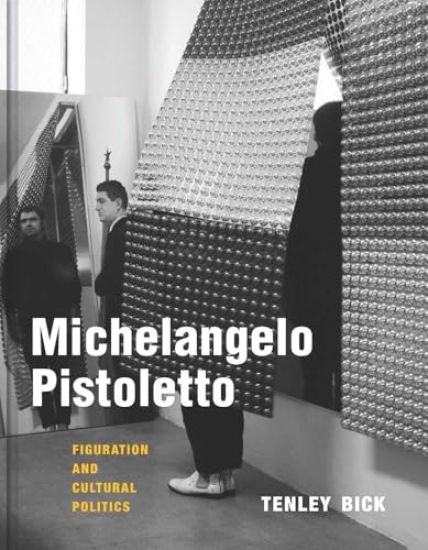
Michelangelo Pistoletto

Michelangelo Pistoletto

Tenley Bick

YALE UNIVERSITY PRESS
2025
sidottu
Examining the Italian artist’s career-long exploration of the human figure, this book offers new perspectives on the history of postwar and contemporary art Widely regarded as the central protagonist of Arte Povera, the twentieth-century Italian art movement characterized by its rejection of representation, Michelangelo Pistoletto (b. 1933) is known for his movement-defining Minus Objects and iconic mirror paintings, as well as his recent social practice addressing migration and climate change. What has unified Pistoletto’s work over six decades, argues author Tenley Bick, is his persistent, and seemingly paradoxical, investigation of figuration, most often as a system of representation of the human body. Michelangelo Pistoletto: Figuration and Cultural Politics traces the figure as a throughline across the artist’s painting, photomontage, sculpture, installation, performance, and social practice, from the formative years of his career in the 1950s to today. It situates Pistoletto’s exploration of the figure within the culture and leftist politics of Italy and beyond in the 1960s and 1970s to examine why, in an era that was defined, for many, by the end of humanism, Pistoletto held on to the figure as an embattled platform for rethinking art and the world. Featuring previously unseen early drawings and design work, newly discovered exhibition histories, and insights gleaned from interviews with the artist, this book reframes our understanding of a prolific artist and of artmaking in the postwar era.