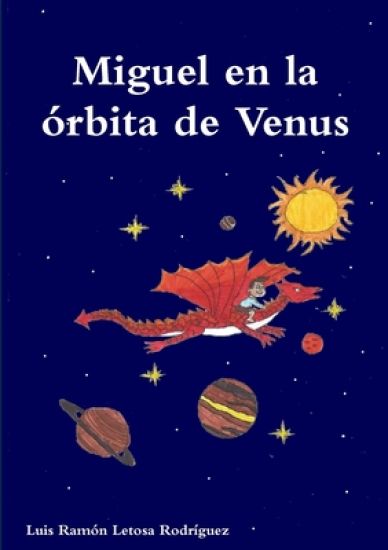
Tras su anterior aventura, en la que aprendio a ser marinero, el pequeno Miguel emprende un nuevo viaje a lo desconocido, empujado por sus ansias de libertad. Y ese impulso lo llevara a descubrir algo que siempre llevaba consigo mismo. Y volara para encontrar su libertad, guiado por el amor.
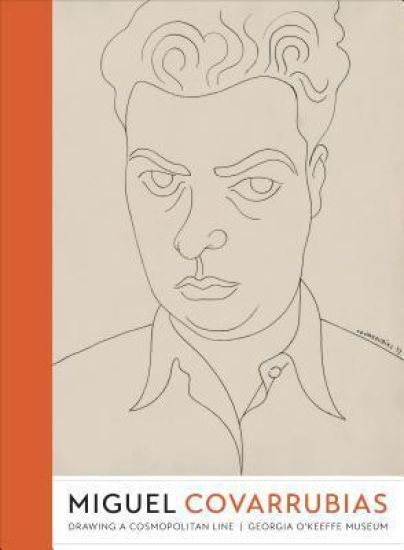
Miguel Covarrubias enjoyed transcultural encounters and exchanges in the cosmopolitan centers of Mexico City, New York, and Europe, where he met and exchanged ideas in a global network of modernists such as Georgia O’Keeffe. Famous for his caricature studies, he was also an accomplished painter, set designer, and book illustrator. Less well known are his consummate skills as an art historian, curator, cartographer, ethnographer, and documentary filmmaker, as well as his direction of programs in museum studies, dance, and the excavation of cultural sites in Mexico.Miguel Covarrubias: Drawing a Cosmopolitan Line, the catalogue of an exhibition at the Georgia O’Keeffe Museum, establishes the importance of Covarrubias’s broad-ranging and significant contributions to modern art. The book includes an extensive selection of this prolific artist’s compositions in graphite, watercolor, and oil paint, as well as illustrations from his scholarly publications. Four accompanying essays consider Covarrubias’s artistic practice and contributions to the richness of modern art. They discuss his lifelong habit of moving between modern cities and remote sites of ancient cultures, which engendered a strong cosmopolitanism in his work; his role in promoting the art of the Americas, from ancient Olmec works to contemporary pieces, through curatorial efforts in New York and Mexico City; the large-scale mural maps Covarrubias made for the 1939 San Francisco World’s Fair that bring his anthropological, ethnographic, and geographic interests together with cartography and blur lines between landscape and culture; and his substantial scholarship on the indigenous arts of North America.
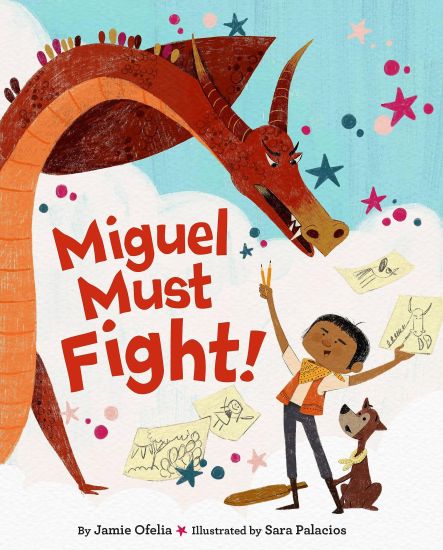
A charming Spanish language story about a young artist in a family of sword fighters, whose passions are put to the test when a dragon attacks his village.Miguel was like a paintbrush in a family of steely swords ...All his life, Miguel's familia told him he must fight! But his family's art of sword fighting never captivated him as much as the sway of his colored pencils did. When his village is threatened by El Dragón, Miguel must make a choice: will he stand with his familia and fight, or can he prove that the pencil is mightier than the sword? With vibrant illustrations from award-winning artist Sara Palacios, this charming story of family tradition and self-discovery will inspire young readers to always follow their passions.
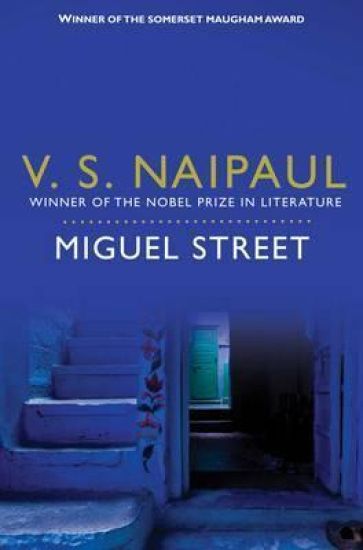
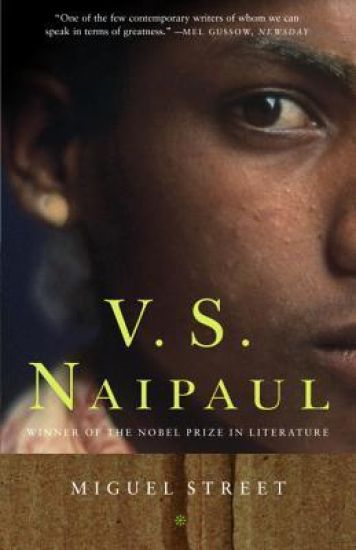
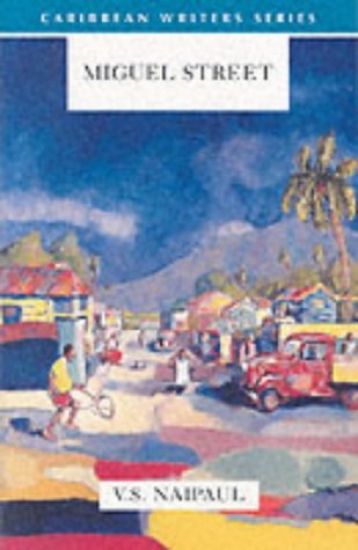
Miguel Street, V. S. Naipaul’s first written work of fiction, is set in a derelict corner of Port of Spain, Trinidad, during World War Two and is narrated by an unnamed, precociously observant neighbourhood boy. We are introduced to a galaxy of characters, from Popo the carpenter, who neglects his livelihood to build ‘the wild thing without a name’, to Man-man, who goes from running for public office to staging his own crucifixion, and the dreaded Big-Foot, the bully with glass tear ducts. As well as the lovely Mrs Hereira, in thrall to her monstrous husband. V. S. Naipaul writes with prescient wisdom and crackling wit about the lives and legends that make up Miguel Street: a living theatre, a world in microcosm, a cacophony of sights, sounds and smells – all seen through the eyes of a fatherless boy. The language, the idioms and the observations are priceless and timeless and Miguel Street overflows with life on every page. This is an astonishing novel about hope, despair, poverty and laughter; and an enchanting and exuberant tribute to V. S. Naipaul’s childhood home.
Bogart the bigamist, B. Wordsworth the poet, and Morgan the pyrotechnist are among the poor inhabitants of Miguel Street seen through the eyes of a fatherless boy growing up in Port of Spain, Trinidad, during World War II. Reprint. 12,500 first printing.
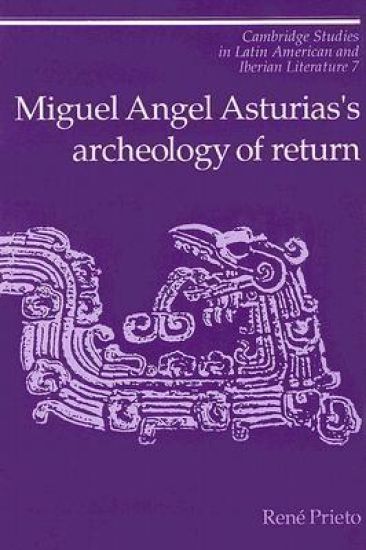
Miguel Angel Asturias (1899–1974) is one of the notable literary figures in Latin America who in the 1920s contrived both to explore and to define Latin literature within the mainstream of Western history. He managed to be poetic, political and mythological at the same time, and with a degree of synthesis rarely achieved then or since. As is the case with many Latin American writers, his work is inextricably linked with politics, and he lived in exile for many years. He was influenced by Indian mythology, fantasy and Surrealism and was the first Latin American novelist to understand the implications of anthropology and structural linguistics for culture and for fiction. René Prieto examines how Miguel Angel Asturias turns to the cultural traditions of the ancient Maya and combines them with the rhetoric of surrealism in order to produce three highly complex and widely misunderstood masterpieces; the Leyendas de Guatemala (1930), Hombres de maiz (1949) and Mulata de tal (1963). Asturias is the first American author to succeed in portraying an indigenous world vision that is blatantly non-Western.
Miguel Angel Asturias (1899–1974) is one of the notable literary figures in Latin America who in the 1920s contrived both to explore and to define Latin literature within the mainstream of Western history. He managed to be poetic, political and mythological at the same time, and with a degree of synthesis rarely achieved then or since. As is the case with many Latin American writers, his work is inextricably linked with politics, and he lived in exile for many years. He was influenced by Indian mythology, fantasy and Surrealism and was the first Latin American novelist to understand the implications of anthropology and structural linguistics for culture and for fiction. René Prieto examines how Miguel Angel Asturias turns to the cultural traditions of the ancient Maya and combines them with the rhetoric of surrealism in order to produce three highly complex and widely misunderstood masterpieces; the Leyendas de Guatemala (1930), Hombres de maiz (1949) and Mulata de tal (1963). Asturias is the first American author to succeed in portraying an indigenous world vision that is blatantly non-Western.
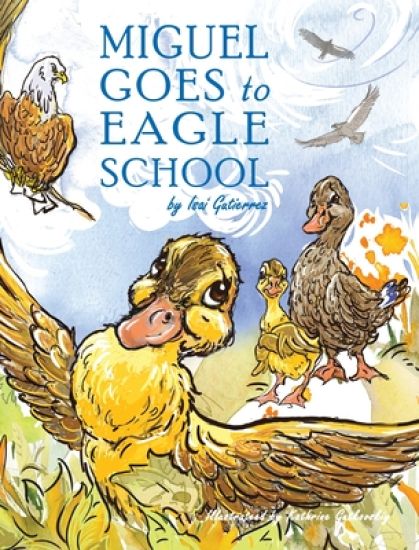
Miguel was very happy being a duck but as hard as he tried to fit in with the other ducks, Miguel needed something more. Miguel wanted to go to Eagle School Miguel has a hard time trying to find out who he is meant to be. He learns that even though following his dream is hard, once achieved, there is a pride and joy that no one can take away. His is a story of daring to be different. Miguel suffers the trials and fears that go along with chasing your dreams. But beyond the challenges and heartbreak, he also learns some fundamental life lessons and experiences the pride and joy of coming into his own.
The acknowledged masterpiece of Unamuno expresses the anguish of modern man as he is caught up in the struggle between the dictates of reason and the demands of his own heart.
Unwilling to be bound by the categories of religion, Unamuno rejected the laws that distinguish one literary genre from another. Thus, some of Unamuno's finest essays are short stories, and vice versa. Included in this volume are four stories: Tia Tula; The Novel of Don Sandalio, Chess Player; The Madness of Doctor Montarco; Saint Manuel Bueno, Martyr and the play The Other. Originally published in 1987. The Princeton Legacy Library uses the latest print-on-demand technology to again make available previously out-of-print books from the distinguished backlist of Princeton University Press. These editions preserve the original texts of these important books while presenting them in durable paperback and hardcover editions. The goal of the Princeton Legacy Library is to vastly increase access to the rich scholarly heritage found in the thousands of books published by Princeton University Press since its founding in 1905.
The three remarkable pieces of fiction included in this volume are not so much novelets, novels, as nivolas, a form invented by Unamuno. Originally published in 1987. The Princeton Legacy Library uses the latest print-on-demand technology to again make available previously out-of-print books from the distinguished backlist of Princeton University Press. These editions preserve the original texts of these important books while presenting them in durable paperback and hardcover editions. The goal of the Princeton Legacy Library is to vastly increase access to the rich scholarly heritage found in the thousands of books published by Princeton University Press since its founding in 1905.
The first English translation of the Diario Intimo and a selection of letters. Originally published in 1985. The Princeton Legacy Library uses the latest print-on-demand technology to again make available previously out-of-print books from the distinguished backlist of Princeton University Press. These editions preserve the original texts of these important books while presenting them in durable paperback and hardcover editions. The goal of the Princeton Legacy Library is to vastly increase access to the rich scholarly heritage found in the thousands of books published by Princeton University Press since its founding in 1905.
The first English translation of Unamuno's first novel, published in 1897, when he was 33. Its setting is the Basque country of northern Spain during the Second Carlist War (1874--1876), a conflict he lived through as a child. Originally published in 1983. The Princeton Legacy Library uses the latest print-on-demand technology to again make available previously out-of-print books from the distinguished backlist of Princeton University Press. These editions preserve the original texts of these important books while presenting them in durable paperback and hardcover editions. The goal of the Princeton Legacy Library is to vastly increase access to the rich scholarly heritage found in the thousands of books published by Princeton University Press since its founding in 1905.
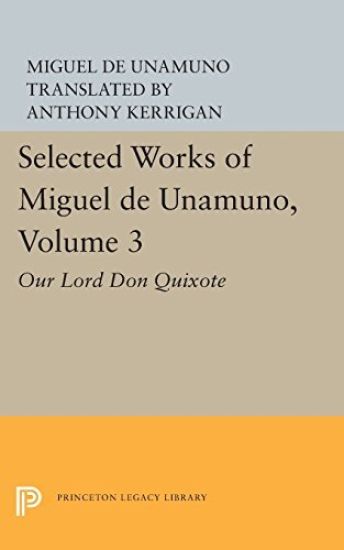
This comprehensive edition in English begins with a volume on the theme of Don Quixote, the greater part of which is devoted to The Life of Don Quixote and Sancho, followed by sixteen essays on diverse aspects of the Quixote motif. Originally published in 1968. The Princeton Legacy Library uses the latest print-on-demand technology to again make available previously out-of-print books from the distinguished backlist of Princeton University Press. These editions preserve the original texts of these important books while presenting them in durable paperback and hardcover editions. The goal of the Princeton Legacy Library is to vastly increase access to the rich scholarly heritage found in the thousands of books published by Princeton University Press since its founding in 1905.
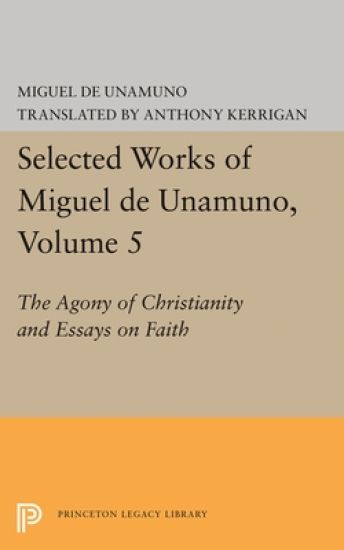
Unamuno's long essay on Christianity as a state of agony is followed by nine essays including "Nicodemus the Pharisee," "Faith," and "What is Truth?" Originally published in 1974. The Princeton Legacy Library uses the latest print-on-demand technology to again make available previously out-of-print books from the distinguished backlist of Princeton University Press. These editions preserve the original texts of these important books while presenting them in durable paperback and hardcover editions. The goal of the Princeton Legacy Library is to vastly increase access to the rich scholarly heritage found in the thousands of books published by Princeton University Press since its founding in 1905.