Kirjojen hintavertailu. Mukana 11 342 296 kirjaa ja 12 kauppaa.

Kirjahaku

Etsi kirjoja tekijän nimen, kirjan nimen tai ISBN:n perusteella.

1000 tulosta hakusanalla Mikhail Gorbachev

Conversations with Gorbachev

Conversations with Gorbachev

Mikhail Gorbachev; Zdenek Mlynar; Archie Brown

Columbia University Press
2002
sidottu
Mikhail Gorbachev and Zdenek Mlynar were friends for half a century, since they first crossed paths as students in 1950. Although one was a Russian and the other a Czech, they were both ardent supporters of communism and socialism. One took part in laying the groundwork for and carrying out the Prague spring; the other opened a new political era in Soviet world politics. In 1993 they decided that their conversations might be of interest to others and so they began to tape-record them. This book is the product of that "thinking out loud" process. It is an absorbing record of two friends trying to explain to one another their views on the problems and events that determined their destinies. From reminiscences of their starry-eyed university days to reflections on the use of force to "save socialism" to contemplation of the end of the cold war, here is a far more candid picture of Gorbachev than we have ever seen before.
Conversations with Gorbachev

Conversations with Gorbachev

Mikhail Gorbachev; Zdenek Mlynar; Archie Brown

Columbia University Press
2003
pokkari
Mikhail Gorbachev and Zdenek Mlynar were friends for half a century, since they first crossed paths as students in 1950. Although one was a Russian and the other a Czech, they were both ardent supporters of communism and socialism. One took part in laying the groundwork for and carrying out the Prague spring; the other opened a new political era in Soviet world politics. In 1993 they decided that their conversations might be of interest to others and so they began to tape-record them. This book is the product of that "thinking out loud" process. It is an absorbing record of two friends trying to explain to one another their views on the problems and events that determined their destinies. From reminiscences of their starry-eyed university days to reflections on the use of force to "save socialism" to contemplation of the end of the cold war, here is a far more candid picture of Gorbachev than we have ever seen before.
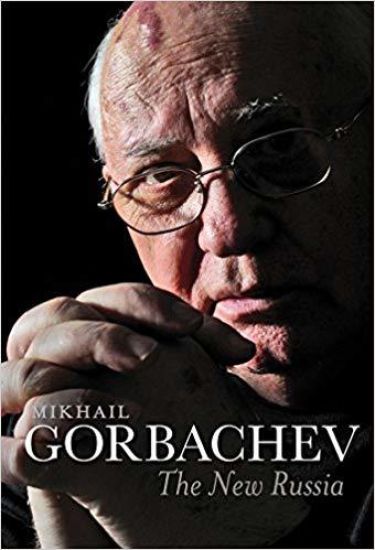
The New Russia

The New Russia

Mikhail Gorbachev

Polity Press
2016
sidottu
After years of rapprochement, the relationship between Russia and the West is more strained now than it has been in the past 25 years. Putin’s motives, his reasons for seeking confrontation with the West, remain for many a mystery. Not for Mikhail Gorbachev. In this new work, Russia’s elder statesman draws on his wealth of knowledge and experience to reveal the development of Putin’s regime and the intentions behind it. He argues that Putin has significantly diminished the achievements of perestroika and is part of an over-centralized system that presents a precarious future for Russia. Faced with this, Gorbachev advocates a radical reform of politics and a new fostering of pluralism and social democracy.Gorbachev’s insightful analysis moves beyond internal politics to address wider problems in the region, including the Ukraine conflict, as well as the global challenges of poverty and climate change. Above all else, he insists that solutions are to be found by returning to the atmosphere of dialogue and cooperation which was so instrumental in ending the Cold War. This book represents the summation of Gorbachev’s thinking on the course that Russia has taken since 1991 and stands as a testament to one of the greatest and most influential statesmen of the twentieth century.
The New Russia

The New Russia

Mikhail Gorbachev

Polity Press
2017
nidottu
After years of rapprochement, the relationship between Russia and the West is more strained now than it has been in the past 25 years. Putin’s motives, his reasons for seeking confrontation with the West, remain for many a mystery. Not for Mikhail Gorbachev. In this new work, Russia’s elder statesman draws on his wealth of knowledge and experience to reveal the development of Putin’s regime and the intentions behind it. He argues that Putin has significantly diminished the achievements of perestroika and is part of an over-centralized system that presents a precarious future for Russia. Faced with this, Gorbachev advocates a radical reform of politics and a new fostering of pluralism and social democracy.Gorbachev’s insightful analysis moves beyond internal politics to address wider problems in the region, including the Ukraine conflict, as well as the global challenges of poverty and climate change. Above all else, he insists that solutions are to be found by returning to the atmosphere of dialogue and cooperation which was so instrumental in ending the Cold War. This book represents the summation of Gorbachev’s thinking on the course that Russia has taken since 1991 and stands as a testament to one of the greatest and most influential statesmen of the twentieth century.
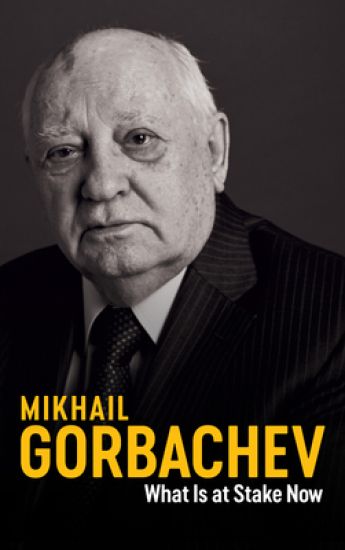
What Is at Stake Now

What Is at Stake Now

Mikhail Gorbachev

Polity Press
2020
sidottu
Thirty years after the end of the Cold War, world peace is at risk again. The United States has withdrawn from the disarmament treaty with Russia, Europe is disintegrating, China is surging forward and a wave of nationalism and populism is destabilizing established political institutions and endangering hard-won liberties. Moreover, the coronavirus pandemic has brought into sharp relief the fragility of the global order and the speed with which it can slide into chaos. In view of this dangerous and unpredictable state of affairs, Mikhail Gorbachev, the last great statesman of the 1989 revolution, has written this short book to warn us of the grave risks we now face and to urge us all, political leaders and citizens alike, to take action to address them. He focuses on the big challenges of our time, such as the renewal of the arms race and the growing risks of nuclear war, the new tension between Russia and the West, the global environmental crisis, the global threat of diseases and epidemics, the rise of populism and the decline of democracy. He argues that self-serving policies and narrow-minded politics aimed at the pursuit of national interests are taking the place of political principles and overshadowing the vision of a free and just world for all peoples. He offers his view of where Russia is heading and he urges political leaders in the West to recognize that re-establishing trust between Russia and the West requires the courage of true leadership and a commitment to genuine dialogue and understanding on both sides. Now more than ever, the responses to the great challenges we face cannot be purely national in character but must be based on a collaborative effort in which political leaders put aside their differences and work together to advance the human security of all.
What Is at Stake Now

What Is at Stake Now

Mikhail Gorbachev

Polity Press
2021
nidottu
Thirty years after the end of the Cold War, world peace is at risk again. The United States has withdrawn from the disarmament treaty with Russia, Europe is disintegrating, China is surging forward and a wave of nationalism and populism is destabilizing established political institutions and endangering hard-won liberties. Moreover, the coronavirus pandemic has brought into sharp relief the fragility of the global order and the speed with which it can slide into chaos. In view of this dangerous and unpredictable state of affairs, Mikhail Gorbachev, the last great statesman of the 1989 revolution, has written this short book to warn us of the grave risks we now face and to urge us all, political leaders and citizens alike, to take action to address them. He focuses on the big challenges of our time, such as the renewal of the arms race and the growing risks of nuclear war, the new tension between Russia and the West, the global environmental crisis, the global threat of diseases and epidemics, the rise of populism and the decline of democracy. He argues that self-serving policies and narrow-minded politics aimed at the pursuit of national interests are taking the place of political principles and overshadowing the vision of a free and just world for all peoples. He offers his view of where Russia is heading and he urges political leaders in the West to recognize that re-establishing trust between Russia and the West requires the courage of true leadership and a commitment to genuine dialogue and understanding on both sides. Now more than ever, the responses to the great challenges we face cannot be purely national in character but must be based on a collaborative effort in which political leaders put aside their differences and work together to advance the human security of all.
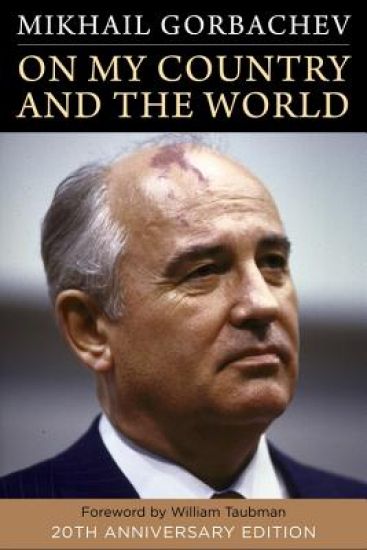
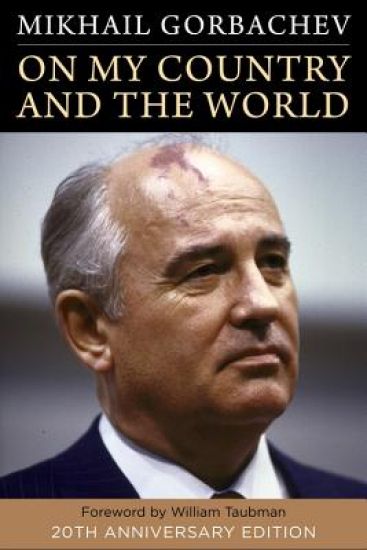
On My Country and the World

On My Country and the World

Mikhail Gorbachev; William Taubman

Columbia University Press
2019
sidottu
Here is the whole sweep of the Soviet experiment and experience as told by its last steward. Drawing on his own experience, rich archival material, and a keen sense of history and politics, Mikhail Gorbachev speaks his mind on a range of subjects concerning Russia's past, present, and future place in the world. Here is Gorbachev on the October Revolution, Gorbachev on the Cold War, and Gorbachev on key figures such as Lenin, Stalin, and Yeltsin. The book begins with a look back at 1917. While noting that tsarist Russia was not as backward as it is often portrayed, Gorbachev argues that the Bolshevik Revolution was inevitable and that it did much to modernize Russia. He strongly argues that the Soviet Union had a positive influence on social policy in the West, while maintaining that the development of socialism was cut short by Stalinist totalitarianism. In the next section, Gorbachev considers the fall of the USSR. What were the goals of perestroika? How did such a vast superpower disintegrate so quickly? From the awakening of ethnic tensions, to the inability of democrats to unite, to his own attempts to reform but preserve the union, Gorbachev retraces those fateful days and explains the origins of Russia's present crises. But Gorbachev does not just train his critical eye on the past. He lays out a blueprint for where Russia needs to go in the twenty-first century, suggesting ways to strengthen the federation and achieve meaningful economic and political reforms. In the final section of the book, Gorbachev examines the "new thinking" in foreign policy that helped to end the Cold War and shows how such approaches could help resolve a range of crises, including NATO expansion, the role of the UN, the fate of nuclear weapons, and environmental problems. On My Country and the World reveals the unique vision of a man who was a powerful actor on the world stage and remains a keen observer of Russia's experience in the twentieth century.This anniversary edition features a new foreword by William Taubman, award-winning biographer of Khrushchev and Gorbachev.
On My Country and the World

On My Country and the World

Mikhail Gorbachev; William Taubman

Columbia University Press
2019
pokkari
Here is the whole sweep of the Soviet experiment and experience as told by its last steward. Drawing on his own experience, rich archival material, and a keen sense of history and politics, Mikhail Gorbachev speaks his mind on a range of subjects concerning Russia's past, present, and future place in the world. Here is Gorbachev on the October Revolution, Gorbachev on the Cold War, and Gorbachev on key figures such as Lenin, Stalin, and Yeltsin. The book begins with a look back at 1917. While noting that tsarist Russia was not as backward as it is often portrayed, Gorbachev argues that the Bolshevik Revolution was inevitable and that it did much to modernize Russia. He strongly argues that the Soviet Union had a positive influence on social policy in the West, while maintaining that the development of socialism was cut short by Stalinist totalitarianism. In the next section, Gorbachev considers the fall of the USSR. What were the goals of perestroika? How did such a vast superpower disintegrate so quickly? From the awakening of ethnic tensions, to the inability of democrats to unite, to his own attempts to reform but preserve the union, Gorbachev retraces those fateful days and explains the origins of Russia's present crises. But Gorbachev does not just train his critical eye on the past. He lays out a blueprint for where Russia needs to go in the twenty-first century, suggesting ways to strengthen the federation and achieve meaningful economic and political reforms. In the final section of the book, Gorbachev examines the "new thinking" in foreign policy that helped to end the Cold War and shows how such approaches could help resolve a range of crises, including NATO expansion, the role of the UN, the fate of nuclear weapons, and environmental problems. On My Country and the World reveals the unique vision of a man who was a powerful actor on the world stage and remains a keen observer of Russia's experience in the twentieth century.This anniversary edition features a new foreword by William Taubman, award-winning biographer of Khrushchev and Gorbachev.
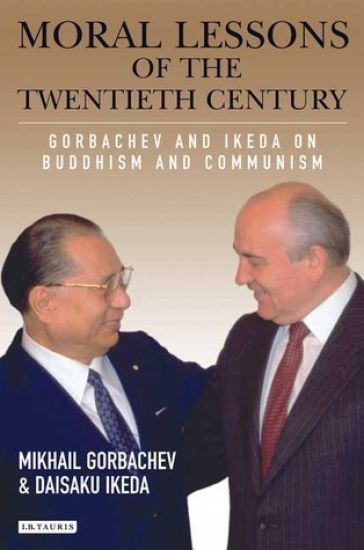
Moral Lessons of the Twentieth Century

Moral Lessons of the Twentieth Century

Mikhail Gorbachev; Daisaku Ikeda

I.B. Tauris
2005
nidottu
Mikhail Gorbachev and Daisaku Ikeda are contemporaries raised in different cultures: Gorbachev is a statesman whose origins are the Marx-inspired world of communism while Ikeda is Buddhist inspired by the thirteenth century Japanese sage, Nichiren. Moral Lessons of the Twentieth Century emerged from a series of conversations between these two men. Together they explore their experiences of life amidst the turmoil of the twentieth century and together they search for a common ethical basis for future development. They conclude that values are born of culture and that peace, progress and social justice can only be achieved through sincere communication and cultural exchange. As the new century begins, they have sought to turn the spotlight on the challenges which face humanity. The book is a call for dialogue in pursuit of values that bridge culture and time.
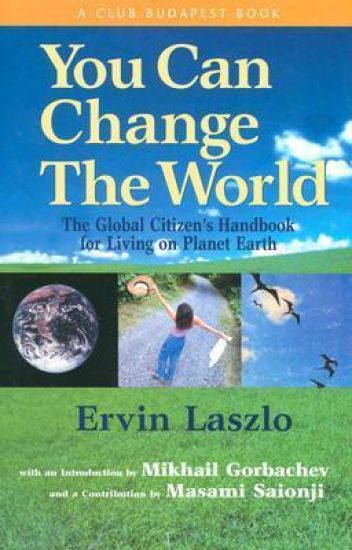
You Can Change the World

You Can Change the World

Ervin Laszlo; Paulo Coelho; Masami Saionji; Mikhail Gorbachev

Select Books Inc
2010
sidottu
You Can Change the World: The Global Citizen's Handbook for Living on Planet Earth should be required reading for anyone who cares about the future of the planet. Written by renowned scientist, futurist and Club of Budapest founder Ervin Laszlo, You Can Change the World answers two pertinent questions-first, what is at the root of all the conflict and crisis in today's world? And second, what can actually be done to move toward a world where we can live in peace, without marginalizing and killing each other and destroying the environment?A handbook that urges readers to become global citizens who aspire to live responsibly on this precious but highly exploited and crisis-prone planet, You Can Change the World provides a simple and basic message: in today's world it is neither wealth nor power, nor the control of territory and technology that make the crucial difference. How we think and act shapes our present and decides our future.
Mikhail Sergeevich Gorbachev. Sobranie sochinenij. Tom 29. Oktjabr-nojabr 1991
Mirovaja istorija XX veka, ravno kak i istorija sovremennoj Rossii, ne mogut byt v polnoj mere ponjaty bez znanija politicheskikh vzgljadov i prakticheskoj dejatelnosti Mikhaila Sergeevicha Gorbacheva. Vystupiv initsiatorom Perestrojki v Sovetskom Sojuze, vnesja ogromnyj vklad v zavershenie "kholodnoj vojny", on voshel v chislo vidnejshikh politicheskikh liderov XX veka. No i slozhiv s sebja polnomochija glavy gosudarstva, M. S. Gorbachev prodolzhaet igrat aktivnuju rol v obschestvennoj zhizni Rossii i mira.
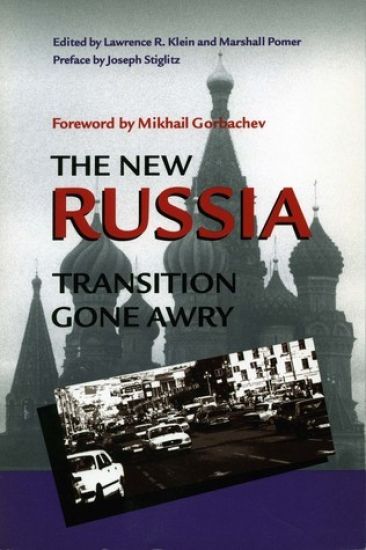
The New Russia

The New Russia

Gorbachev Mikhail

Stanford University Press
2002
sidottu
This book delivers an unpopular message: the West has played a pivotal role in the Russian economic disaster of the 1990s. Western advisors, including the International Monetary Fund and the U.S. Treasury, applied a narrow conception of economics that pushed Russia, after more than seventy years of communism, toward another failed utopia. The twenty-six contributions to this book are divided into three parts: theory, evidence, and policy. Part One directly challenges orthodox economic theory for obscuring the necessary role of government in creating and sustaining a market system and features essays by three Nobel laureates in economics—Kenneth J. Arrow, Lawrence R. Klein, and James Tobin. Part Two describes the dimensions of the economic crisis in Russia and presents a Russian perspective on the failure of shock therapy. Part Three presents policy recommendations, with special attention given to improving the integrity and administrative competence of the Russian government.
Sonia Gandhi

Sonia Gandhi

Singh Rani; Gorbachev Mikhail

Palgrave Macmillan
2011
sidottu
Sonia Gandhi'sstory represents the greatest transformational journey made by any world leader in the last four decades. Circumstance and tragedy, rather than ambition, paved her path to power.Born into a traditional,middle-classItalian family, Sonia met and fell in love with Rajiv Gandhi, son offuture Indian prime ministerIndira Gandhi and grandson of Jawaharlal Nehru, while studying English inCambridge. Cruelly tested by the assassinations of her mother-in-law and of her husband,Sonia grew into a strong, authoritative but always private figure, now president of a coalition rulingover a billion people in the world's largest democracy. Through exclusive interviews with members of Sonia's party, political opponents and family friends, Rani Singh casts new light on Sonia.Inthe first mainstream biography of thisinspirationalfigure,the author'scompelling narrative retraces the path of the brave and beautiful Sonia Gandhi, examining what her lifeand legacy mean for India.
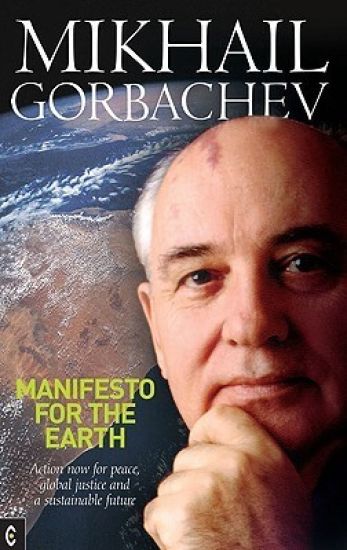
Manifesto for the Earth

Manifesto for the Earth

Mikhail S. Gorbachev

Clairview Books
2006
nidottu
For more than a decade Mikhail Gorbachev has been engaged in working to protect the earth and its inhabitants via the organization he founded in 1992, Green Cross International. In an age when ecological crises, poverty and military conflicts are humanity's chief challenges, Gorbachev urges us to stop regarding these problems in isolation. The man who changed the destiny of Russia, Europe and the world is now calling for a global perestroika (reform) of the twenty-first century. Based on many years' experience in international politics, Gorbachev appeals for urgent action based on a broad vision, including a strengthening of the UN and reforms to the World Bank, the World Trade Organization and the International Monetary Fund. To complement the Declaration on Human Rights and the Charter of the UN he has co-authored the remarkable Earth Charter that is based on four key principles: Respect and Care for the Community of Life; Ecological Integrity; Social and Economic Justice; and Democracy, Nonviolence, and Peace. "Manifesto for the Earth" is a courageous and thought-provoking work by a respected elder statesman. In a partisan and polar world, this is a 'manifesto' that does not compromise its integrity to political, ideological or national sympathies.
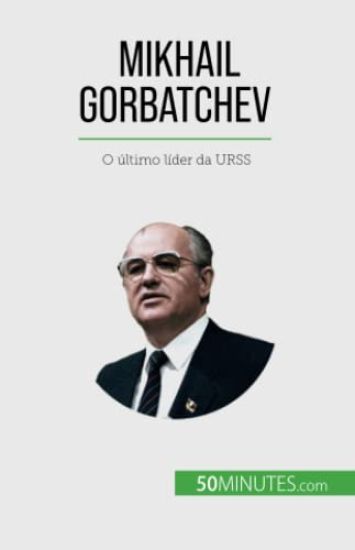
Mikhail Gorbatchev

Mikhail Gorbatchev

Véronique Van Driessche

50Minutes.com (PT)
2023
pokkari
Mikhail Gorbachev foi o ltimo l der da URSS e teve uma grande influ ncia no caminho que a R ssia tomou no final do s culo XX. Era uma figura algo controversa, conhecida no Ocidente como o homem que terminou a Guerra Fria, mas ao mesmo tempo um dos l deres menos populares do s culo XX na R ssia. Isto compreens vel, uma vez que Gorbachev aproximou a R ssia do Ocidente, tornou o comunismo mais democr tico e concedeu a independ ncia aos pa ses do Bloco de Leste. Em apenas 50 minutos, descobrir como as suas ac es, incluindo as suas pol ticas de glasnost e perestroika, influenciaram os acontecimentos no seu pa s durante d cadas e compreender a sua grande influ ncia na R ssia contempor nea. Este livro simples e informativo oferece uma discuss o aprofundada dos momentos-chave da ilustre carreira pol tica de Gorbachev, incluindo o fim da Guerra Fria, o fim dos regimes comunistas na Europa de Leste e o colapso da Uni o Sovi tica. Inclui tamb m uma biografia completa, uma introdu o valiosa ao contexto pol tico, social e econ mico e uma avalia o do impacto do reinado de Gorbachev, dando-lhe toda a informa o essencial sobre o ltimo l der da URSS.
Tajny russkoj vodki. Epokha Mikhaila Gorbacheva
Eta kniga o shesti godakh iz pjatisotletnej istorii russkoj vodki, kotorye prishlis na gody pravlenija v SSSR M.S. Gorbacheva. Etot kratkij otrezok byl nasyschen epokhalnymi sobytijami. Sredi nikh vvedenie v 1985 godu "sukhogo zakona". Schitaetsja, chto imenno on privel k narodnomu buntu 1991 goda, za kotorym posledovali razval SSSR, prikhod k vlasti B.N. Eltsina, sozdanie mafioznoj "semi", a takzhe byl zalozhen fundament segodnjashnej umopomrachitelnoj korruptsii.No pravilno li schitat, chto imenno "sukhoj zakon" Gorbacheva podrubil korni nekogda moschnoj i protsvetajuschej strany? A ne byl li etot shag dlja SSSR blagom? Ob etom rassuzhdaet istorik Aleksandr Nikishin.Kniga prednaznachena dlja shirokogo kruga chitatelej.Redaktor: Sheludjakova Nina