Kirjojen hintavertailu. Mukana 12 390 323 kirjaa ja 12 kauppaa.

Kirjahaku

Etsi kirjoja tekijän nimen, kirjan nimen tai ISBN:n perusteella.

1000 tulosta hakusanalla Moeller

Bauelemente der Halbleiterelektronik
Die Elektronik hat sich in den letzten zwei Jahrzehnten so stürmisch entwickelt wie wohl kaum ein anderer Bereich der Elektrotechnik. Dabei waren es vor allem die Fortschritte der Festkörper- und Halbleiterphysik, die diese Entwicklung vorantrieben. Während in den fünfziger Jahren die Schaltungstechnik in zunehmendem Maße den übergang von Röhren- zu Transistorschaltungen vollzog, wurde in den sechziger Jahren als weiterer Fortschritt der Einsatz von integrierten Schaltkreisen erreicht. Im Bereich der integrierten Schaltkreise ist jetzt eine Entwicklung zu beobachten, die - bedingt durch eine verbesserte Halbleitertechnologie - zur Herstellung immer komplexerer integrierter Halbleiter­ schaltungen führt. Dies hat eine weitgehende Verringerung des Raumbedarfs elektroni­ scher Schaltungen zur Folge und führt gleichzeitig zur Steigerung ihrer Leistungsfähig­ keit. Sowohl elektronische Großrechner als auch besonders kleine elektronische Tisch­ rechner zeugen vom hohen Stand dieser Schaltungstechnik. Neben dieser Entwicklung hochintegrierter Halbleiterschaltungen wurde in den letzten zehn Jahren eine Vielzahl von Halbleiterbauelementen mit speziellen Eigenschaften ent­ wickelt, die es erst ermöglichten, für viele Schaltungsprobleme besonders einfache und deshalb effektive Lösungen zu finden. Obwohl sich einerseits bei der Entwicklung neuer Halbleiterbauelemente bereits eine gewisse Sättigung abzeichnet, sind jedoch anderer­ seits viele dieser Bauelemente noch nicht in die Lehrbücher der Technischen Universi­ täten und Fachhochschulen eingegangen. Ziel dieses Buches ist es deshalb, eine Übersicht über die derzeit zur Verfügung stehenden Halbleiterbauelemente zu geben und ihren physikalischen Aufbau, ihre Wirkungsweise und ihreAnwendungsmöglichkeiten darzustellen.
German Peasants and Agrarian Politics, 1914-1924

German Peasants and Agrarian Politics, 1914-1924

Moeller Robert G.

The University of North Carolina Press
2010
nidottu
Robert Moeller investigates the German peasantry's rejection of the Weimar Republic in the 1920s and provides a new interpretation of Catholic peasant conservatism in western Germany. According to Moeller, rural support for conservative political solutions to the troubled Weimar Republic was the result of a series of severe economic jolts that began in 1914 and continued unabated until 1933.During the late nineteenth century, peasant farmers in the Rhineland and Wesphalia adjusted their production to a capitalist market and enjoyed an unprecedented period of prosperity that lasted until the outbreak of World War I. After August 1914 peasant producers confronted state intervention in the agricultural sector, regulation of prices and markets, and the subordination of agrarian interests to the demands of urban consumers. A controlled economy for many agricultural products continued into the postwar period.Focusing on the Catholic peasantry, Moeller shows that peasant rejection of the Weimar Republic was firmly grounded in the immediate circumstances of the war economy and the uneven process of postwar recovery. He challenges the dominant view that rural support for conservative political solutions was primarily the product of the peasantry's hostility toward industrial capitalism and of long-term social and political affinities dating from the nineteenth century. Moeller's findings show that conservative agrarian ideology was carefully formulated in response to the specific peasant grievances that originated in this period of continuing economic and political crisis.A UNC Press Enduring Edition -- UNC Press Enduring Editions use the latest in digital technology to make available again books from our distinguished backlist that were previously out of print. These editions are published unaltered from the original, and are presented in affordable paperback formats, bringing readers both historical and cultural value.
Math for All Participant Book (K–2)

Math for All Participant Book (K–2)

Moeller Babette; Dubitsky Barbara; Marvin Cohen; Marschke-Tobier Karen; Melnick Hal R.; Metnetsky Linda

SAGE Publications Inc
2013
nidottu
This program will emphasize how the neurodevelopmental demands of a math lesson interact with individual students' strengths and needs. The authors will provide step-by-step guidance for adapting materials, activities, and instructional strategies to make lessons accessible to all students. This participant book includes the handouts and reproducibles for the program. The forthcoming kit will include a facilitator's guide and a corresponding DVD.
Math for All Participant Book (3–5)

Math for All Participant Book (3–5)

Moeller Babette; Dubitsky Barbara; Cohen Marvin; Marschke-Tobier Karen; Melnick Hal R.; Metnetsky Linda

SAGE Publications Inc
2011
nidottu
A mathematics professional development program for inclusive classrooms developed by the Education Development Center and Bank Street College, this professional development program shows general and special education teachers how to provide a high-quality, standards-based mathematics education to all students, including those with disabilities. The kits Math for All learning experiences provide tools that help teachers:Assess students strengths and needs Use multiple instructional strategies to teach specific math concepts Tailor lessons to individual students strengths and needs Includes: Facilitators guide, a participant handbook, and a corresponding DVD.
RV Electrical Systems: A Basic Guide to Troubleshooting, Repairing and Improvement
For RVers who remain mystified by their RV's electrical systems - 120-volt alternating current (AC) and 12-volt direct current (DC) - this book is a godsend. It provides a better understanding of what electricity is and what it does. This problem-solving reference answers questions such as: "why do interior lights dim or burn out rapidly?" and, "why won't the batteries recharge after a night without electricity?"It tells you: how to repair and improve electrical systems; how to troubleshoot faulty brakes, taillights, and "house" circuits; how to detect dangerous shorts, faulty grounds, inadequate connections, malfunctioning switches, dead battery cells, or current leakage; and much more. This book could save your vacation, or even your life. All you need to know about RV electricity, including: how to safely use a campground hookup; how to increase battery charging efficiency; how to take the pulse of your AC and DC electrical systems; how to recognize and correct dangerous wiring practices; how to troubleshoot electrical problems of all types; how to upgrade your RV from fuses to circuit breakers; how to calculate your electrical needs and upgrade your system to meet them; how to select the most effective components - batteries, alternator, regulator, coverter, charger, generator, solar panels; and how to recognize phantom electrical loads that can drain your batteries.
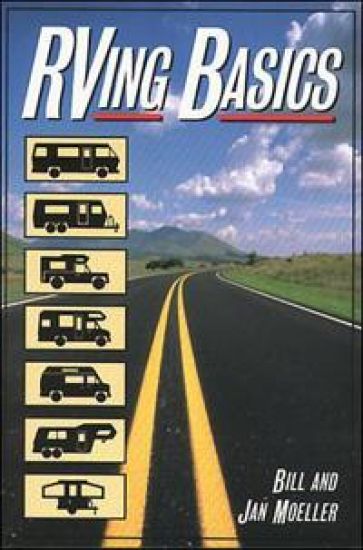
RVing Basics

RVing Basics

Bill Moeller; Jan Moeller

Ragged Mountain Press
1995
nidottu
Imagine yourself shopping for an RV. The variety is bewildering, and the costs can be substantial. What size do you need? What features are you looking for? What are the pros and cons of certain accommodations and accessories? "RVing Basics" answers all these questions and more. Veteran RVers Bill and Jan Moeller offer tips on trip planning, readying the RV for the road, and finding your way to RV parks and campgrounds across the country.Detailed, illustrated chapters explain the fundamentals of driving and handling an RV rig, manoeuvring your rig into campsites, and using campground hookups. The Moellers demystify the intricacies of the RV's electrical, water, and propane systems, and offer advice on how to use them. The sections on maintaining and winterizing an RV will protect your investment. And if you'd like information on when and where to camp or how to hook up with other RVers, "RVing Basics" tells you that too. This long-overdue guide, valuable for experienced and novice RVers alike, explains all the basic skills needed for safe, troublefree, and enjoyable RVing."...offers a comprehensive guide to the fundamentals of RVs and life on the road." - "RV Times". "Even those who count themselves among the legions of RV veterans...can benefit from the information and insight inside this handy, economical guide." - "Camping Today". "If you are one of those folks who has periodically thought about getting into RVing, this book is certainly for you...those who already own and regularly use an RV will find answers...for most any question...perfect reading for late winter or early spring as thoughts of camping trips to come lie ahead." - "Tennessee Valley Outdoors"."RVing Basics" has the answers to your most important questions, including: which would suit me better - a motorhome or a trailer? Is it true that trailers are difficult to back and that they sway a lot? How much will I have to pay for an RV? Does it take special skills to handle an RV rig? Is RVing roughing it? How can I locate campgrounds? Is it true that RV vacations are among the most economical and are there places I can camp for free? If I have a disability, can I still participate in RVing? How do I use the hookups at a campground? How do RV systems differ from those in my home?
Winter Sports Medicine Handbook

Winter Sports Medicine Handbook

James Moeller; Sami Rifat

McGraw-Hill
2004
nidottu
The perfect on-site reference for the entire spectrum of winter sports Emphasizing treatment and prevention, this quick reference for clinicians involved in all aspects of winter sports medicine including the history, biomechanics and physiology of each sport. Features a comprehensive table in the beginning of the book, which includes all the pertinent information needed to quickly evaluate a patient.
The Complete Book of Boondock RVing

The Complete Book of Boondock RVing

Bill Moeller

McGraw-Hill Contemporary
2007
nidottu
Here’s Your Guide to Camping Off the Beaten PathEver feel frustrated by crowded RV parks? Yearn to camp out in the wild beside a babbling mountain brook or before a remote panoramic vista? Bill and Jan Moeller have been doing just that for more than thirty years, and The Complete Book of Boondock RVing is their complete guide to camping without hookups (aka "dry camping"). Whether you’re planning to spend an occasional overnight in a parking lot or an extended stay in the wilderness, you’ll learn how to equip your rig for boondocking, find great campsites, manage and conserve electricity and water, and camp in complete RV comfort and convenience.Increase your independence by learning how to camp "off the grid"Save money by finding cheap or free campsites anywhere--even in large citiesEnsure your comfort, convenience, and safety when camping in the booniesLearn how to conserve and manage electricity, water, and waste, and to establish reliable communicationsEnjoy the quiet, solitude, and beauty of nature by getting away from crowded RV campgrounds
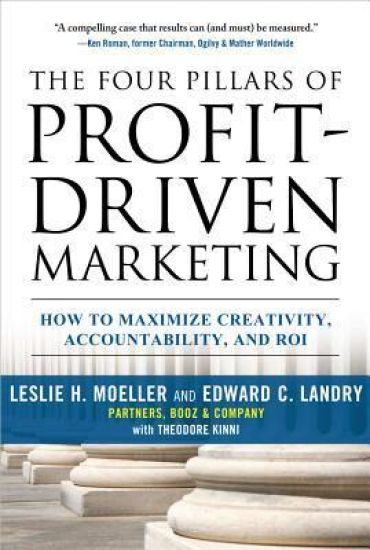
The Four Pillars of Profit-Driven Marketing:  How to Maximize Creativity, Accountability, and ROI
Each year, billions of dollars are spent on marketing endeavors. Unfortunately, the vast majority of the money disappears into thin air, and marketing executives are left wondering if any of it came back in the form of ROI. Why? Because until now there has been no proven system for measuring marketing ROI. But as budgets tighten, marketing managers are feeling the pressure to come up with quantifiable results for every dollar spent. The ability to determine marketing ROI has long been desirable; now, it is critical. The Four Pillars of Profit-Driven Marketing is the first book to offer a practical, proven framework that helps marketers capture the metrics essential to determining ROI and use them to develop an overall marketing strategy based on accurate ROI figures. Inside, two marketing strategy executives at Booz & Company, Leslie Moeller and Edward Landry, reveal the “4 pillars of marketing," which help track ROI at every point in the ever-expanding and increasingly complex world of media platforms. You'll learn how to: Understand, classify, and choose AnalyticsPut the analytics to work with the right decision-support Systems & ToolsEstablish Processes that integrate the analytics and tools into operations Use Organizational Alignment to assure company-wide acceptance and execution of the system To help get your marketing ROI initiative off to a strong start, the authors provide a simple six-step process you can follow, which is illustrated with a case study of the Kellogg Company.By successfully integrating analytic firepower, decision support, processes, and people development, you will optimize your marketing dollars, better connect with customers, and watch your returns grow dramatically. Finally, the mystery of marketing ROI is solved.
The Intracoastal Waterway, Norfolk to Miami

The Intracoastal Waterway, Norfolk to Miami

Bill Moeller; John Kettlewell

International Marine Publishing Co
2010
nidottu
"Indispensable . . . Don’t do the ICWwithout it."--Powerboat ReportsSince 1979, this book has been the piloting guide ofchoice for the tens of thousands of boaters traversingthe 1,094-mile Intracoastal Waterway between Virginiaand Florida each year. This sixth edition is double thesize of its predecessor and includes greatly enhancedcoverage of anchorages, pilotage, and facilities. With theaddition of John Kettlewell, editor of The IntracoastalWaterway Chartbook, to the author team, the Moellers’long-established mile-by-mile navigation guide is betterthan ever.
Removal of the Property Qualification for Voting in the United States
In Colonial America, democracy was centered in provincial assemblies and based on the collection of neighbors whose freehold ownership made them permanent stakeholders in the community. The removal of the property qualification for voting in the United States occurred over three-quarters of a century and was among the more important events in the history of democratization, functioning to shift voting from a corporate privilege toward a human right.Moving beyond the standard histories of property standard histories of property qualification removal, Justin Moeller and Ronald F. King adopt the theories and methods of social science to discover underlying patterns and regularities, attempting a more systematic understanding of subject. While no historical event has a single cause, party consolidation and party competition provided a necessary mechanism, making background factors politically relevant. No change in franchise rules could occur without the explicit consent of incumbent politicians, always sensitive to the anticipated impact. Moeller and King argue that political parties acted strategically, accepting or rejecting removal of the property qualification as a means of advancing their electoral position. The authors identify four different variants of the strategic calculation variable, significantly helping to explain both the temporal differences across states and the pattern of contestation with each state individually.
The Gender Effect

The Gender Effect

Kathryn Moeller

University of California Press
2018
sidottu
How and why are U.S. transnational corporations investing in the lives, educations, and futures of poor, racialized girls and women in the Global South? Is it a solution to ending poverty? Or is it a pursuit of economic growth and corporate profit? Drawing on more than a decade of research in the United States and Brazil, this book focuses on how the philanthropic, social responsibility, and business practices of various corporations use a logic of development that positions girls and women as instruments of poverty alleviation and new frontiers for capitalist accumulation. Using the Girl Effect, the philanthropic brand of Nike, Inc., as a central case study, the book examines how these corporations seek to address the problems of gendered poverty and inequality, yet do so using an instrumental logic that shifts the burden of development onto girls and women without transforming the structural conditions that produce poverty. These practices, in turn, enable corporations to expand their legitimacy, authority, and reach while sidestepping contradictions in their business practices that often exacerbate conditions of vulnerability for girls and women. With a keen eye towards justice, author Kathryn Moeller concludes that these corporatized development practices de-politicize girls' and women's demands for fair labor practices and a just global economy.
The Gender Effect

The Gender Effect

Kathryn Moeller

University of California Press
2018
pokkari
How and why are U.S. transnational corporations investing in the lives, educations, and futures of poor, racialized girls and women in the Global South? Is it a solution to ending poverty? Or is it a pursuit of economic growth and corporate profit? Drawing on more than a decade of research in the United States and Brazil, this book focuses on how the philanthropic, social responsibility, and business practices of various corporations use a logic of development that positions girls and women as instruments of poverty alleviation and new frontiers for capitalist accumulation. Using the Girl Effect, the philanthropic brand of Nike, Inc., as a central case study, the book examines how these corporations seek to address the problems of gendered poverty and inequality, yet do so using an instrumental logic that shifts the burden of development onto girls and women without transforming the structural conditions that produce poverty. These practices, in turn, enable corporations to expand their legitimacy, authority, and reach while sidestepping contradictions in their business practices that often exacerbate conditions of vulnerability for girls and women. With a keen eye towards justice, author Kathryn Moeller concludes that these corporatized development practices de-politicize girls' and women's demands for fair labor practices and a just global economy.