AMorinda citrifolia uma planta terrestre pertencente fam lia RUBIACEAE. Este trabalho contribui para a valoriza o desta planta ao fazer um estudo fitoqu mico, biol gico e bioqu mico das polpas de Morinda citrifolia de Antsiranana. Para o estudo fitoqu mico, o rastreio fitoqu mico e a cromatografia em camada fina revelaram a presen a de v rios compostos fen licos (taninos, leucoantocianinas, flavon ides, triterpenos e ester ides) e a cares (ossos, hol sidos, compostos redutores, deoxyoses e polissacar deos). O conte do total de flavon ides e a composi o de polissacar deos foram determinados. Relativamente aos testes biol gicos, as polpas s o n o t xicas e apresentam uma actividade antioxidante significativa. Relativamente composi o bioqu mica, foram avaliados os teores de gua, mat ria seca, cinzas, prote nas, l pidos e hidratos de carbono. De acordo com o valor energ tico calculado, os hidratos de carbono fornecem a maior parte da energia.
Morinda citrifolia ist eine Landpflanze, die zur Familie der RUBIACEAE geh rt. Diese Arbeit tr gt zur Aufwertung dieser Pflanze bei, indem sie eine phytochemische, biologische und biochemische Studie des Fruchtfleisches von Morinda citrifolia aus Antsiranana durchf hrt. F r die phytochemische Studie ergaben ein phytochemisches Screening und eine D nnschichtchromatographie das Vorhandensein mehrerer phenolischer Verbindungen (Tannine, Leukoanthocyane, Flavonoide, Triterpene und Steroide) und Zucker (Osen, Holoside, reduzierende Verbindungen, Desoxyosen und Polysaccharide). Der Gesamtflavonoidgehalt und die Zusammensetzung der Polysaccharide wurden bestimmt. Zu den biologischen Tests ist zu sagen, dass das Fruchtfleisch nicht toxisch ist und eine hohe antioxidative Aktivit t aufweist. Bez glich der biochemischen Zusammensetzung wurden der Wasser-, Trockenmasse-, Asche-, Protein-, Lipid- und Kohlenhydratgehalt bewertet. Dem berechneten Energiewert zufolge liefert Kohlenhydrat den Gro teil der Energie.
Morinda citrifolia is a terrestrial plant belonging to the family RUBIACEAE. This work contributes to the valorization of this plant by making a phytochemical, biological and biochemical study of the pulps of Morinda citrifolia from Antsiranana. For the phytochemical study, phytochemical screening and thin layer chromatography revealed the presence of several phenolic compounds (tannins, leucoanthocyanins, flavonoids, triterpenes and steroids) and sugars (bones, holosides, reducing compounds, deoxyoses and polysaccharides). The total flavonoid content and polysaccharide composition were determined. Concerning the biological tests, the pulps are not toxic and present an important antioxidant activity. Concerning the biochemical composition, the water, dry matter, ash, protein, lipid and carbohydrate contents were evaluated. According to the calculated energy value, carbohydrate provides most of the energy.
LaMorinda citrifolia una pianta terrestre appartenente alla famiglia delle RUBIACEAE. Questo lavoro contribuisce alla valorizzazione di questa pianta effettuando uno studio fitochimico, biologico e biochimico della polpa di Morinda citrifolia di Antsiranana. Per lo studio fitochimico, lo screening fitochimico e la cromatografia su strato sottile hanno rivelato la presenza di diversi composti fenolici (tannini, leucoantocianine, flavonoidi, triterpeni e steroidi) e zuccheri (ossi, olosidi, composti riducenti, desossi e polisaccaridi). Sono stati determinati il contenuto totale di flavonoidi e la composizione polisaccaridica. Per quanto riguarda i test biologici, le polpe non sono tossiche e mostrano una significativa attivit antiossidante. Per quanto riguarda la composizione biochimica, sono stati valutati i contenuti di acqua, sostanza secca, ceneri, proteine, lipidi e carboidrati. Secondo il valore energetico calcolato, i carboidrati forniscono la maggior parte dell'energia.
A Nigerian girl is born in Chicago on a leap year day: February 29th, just two months after the sudden death of her father. Life altered for good, with only the love and care of her mother. Now a fatherless child, Ola, and her mom moves back to Nigeria. But when unforeseen circumstances develop, Ola must return to her birthplace. Upon her return to the United States, she discovers the disheartening truth: bias stems not only from outside of the home but within her community. GET YOUR FOOT OFF MY NECK is an 'eye-opening' memoir of a Nigerian-American who overcomes oppression. It is about a resilient little girl who grew up to become an architect and successful creative entrepreneur despite abuse, betrayal, and internalized racism. Told in two-folds: part memoir and part societal lessons, her book is in infused with colorful multicultural anecdotes, quotes, and stories, Ola's message is clear: Stepping on necks is undoubtedly consequential.
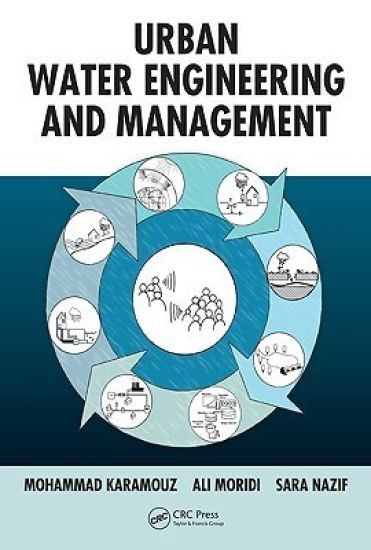
Integrating the latest developments in urban water hydrology and management, Urban Water Engineering and Management takes a system approach to urban water hydrology, engineering, planning, and management, supplying examples and case studies, and highlighting pressing issues such as urban water governance, disaster management, and climate change impacts on urban areas. This expanded and updated edition draws attention to climate change how it impacts the water cycle. Time-series analysis is simplified in a practical manner, and hydro-informatics principles and applications in urban water are also added as unique features of this edition. Written and designed especially for intermediate and advanced courses/modules in water resources in civil and environmental engineering, and in urban planning, this book can be used as a textbook for civil engineering, urban and regional planning, geography, environmental science, and in courses dealing with the urban water cycle.Features:Is updated throughout and adds numerous new examples and case studies, addressing critical issues such as urban water governance, asset and disaster management, and the impacts of climate change on urban areas.Integrates the latest developments in urban water hydrology and management, providing a holistic system perspective on urban water engineering, and planning.Includes numerous examples, case studies, and technological and IT tools addressing critical issues such as urban water governance, asset and disaster management, and the impacts of climate change on urban areas.Offers new insights for engineers, policy-makers, and decision-makers, emphasizing the importance of integrated water management and planning solutions for sustainable urban development.
In past decades, urban water management practices focused on optimizing the design and operation of water distribution networks, wastewater collection systems, and water and wastewater treatment plants. However, municipalities are now faced with aging urban water infrastructures whose operation must be improved and expanded to maintain current high standards of living as well as new challenges such as climate change, systems sustainability and water quality issues. Integrating the latest developments in urban water hydrology and management, Urban Water Engineering and Management takes a system approach to urban water hydrology, engineering, planning and management, supplying examples and case studies and highlighting pressing issues such as urban water governance, disaster management, and climate change impacts on urban areas. The book draws attention to climate change as a main concern of this century by focusing on its impact the components of water cycle.The book covers modeling of urban water cycle components, urban water supply, and distribution systems demand forecasting. It also presents classical issues, such as design of water distribution networks and wastewater and storm collection in urban settings, from a system's perspective. The text also includes a discussion of water governance and disaster management in urban areas and the urbanization effects on the environment and the needed water infrastructure development in urban areas. Against this background, the authors discuss the importance of understanding the principles of simulation, optimization, multiple-criterion decision making, and conflict resolution for successful, integrated urban water management. They explore integrated water management and planning solutions for incorporating structural and nonstructural means to achieve the best operational schemes at affordable costs, going beyond using the existing structures and physical limitations on water availability to include technical, social, political, and economic aspects of better water and wastewater management in urban areas. Written and designed especially for intermediate and advanced courses/modules in water resources in civil and environmental engineering, and in urban planning, the book can be used as a textbook for civil engineering, urban and regional planning, geography, environmental science, and in courses dealing with urban water cycle. It also introduces new horizons for engineers as well as policy and decision makers who plan for future urban water and regional sustainability. Engineers and planners, especially those who work on design, planning, and management of urban systems and/or community development, can use this book in practice because it deals with a broad range of real world urban water problems.
The goal of this book is to present the new trend of Computational Fluid Dynamics (CFD) for the 21 st Century. It consists of papers presented at a symposium honoring Prof. No buyuki Satofuka on the occasion of his 60th birthday. The symposium entitled Computational Fluid Dynamics fOT the 21st Century was held at Kyoto Institute of Technology (KIT) in Kyoto, Japan on July 15-17,2000. The symposium was hosted by KIT as a memorial event celebrating the 100 year anniversary of this establishment. The invited speakers were from Ja pan as weil as from the international community in Asia, Europe and North America. It is a great pleasure to dedicate this book to Prof. Satofuka in appreciation ofhis contributions to this field. During the last 30 years, Prof. Satofuka made many important contributions to CFD ad vancing the numerics and our understanding of flow physics in different regimes. The details of his contributions are discussed in the first chapter. The book contains chapters covering re lated topics with emphasis on new promising directions for the 21 st Century. The chapters of the book reflect the 10 sessions of the symposium on both the numerics and the applications including grid generation and adaptation, new numerical schemes, optimi zation techniques and parallel computations as weil as applications to multi-sc ale and multi physics problems, design and flow control and new topics beyond aeronautics. In the follow ing, the chapters of the book are introduced.
The goal of this book is to present the new trend of Computational Fluid Dynamics (CFD) for the 21 st Century. It consists of papers presented at a symposium honoring Prof. No buyuki Satofuka on the occasion of his 60th birthday. The symposium entitled Computational Fluid Dynamics fOT the 21st Century was held at Kyoto Institute of Technology (KIT) in Kyoto, Japan on July 15-17,2000. The symposium was hosted by KIT as a memorial event celebrating the 100 year anniversary of this establishment. The invited speakers were from Ja pan as weil as from the international community in Asia, Europe and North America. It is a great pleasure to dedicate this book to Prof. Satofuka in appreciation ofhis contributions to this field. During the last 30 years, Prof. Satofuka made many important contributions to CFD ad vancing the numerics and our understanding of flow physics in different regimes. The details of his contributions are discussed in the first chapter. The book contains chapters covering re lated topics with emphasis on new promising directions for the 21 st Century. The chapters of the book reflect the 10 sessions of the symposium on both the numerics and the applications including grid generation and adaptation, new numerical schemes, optimi zation techniques and parallel computations as weil as applications to multi-sc ale and multi physics problems, design and flow control and new topics beyond aeronautics. In the follow ing, the chapters of the book are introduced.
Originally published in 1936. This volume discusses the Islamic faith in the perspective of the ancient Arabian monotheism and its similarities with Christianity and Judaism. The similarities not only in dogma, but also in the ritual of Nestorian Christianity are discussed as well as an interpretation of Mohammed’s religious personality.