
Kirjahaku
Etsi kirjoja tekijän nimen, kirjan nimen tai ISBN:n perusteella.
85 tulosta hakusanalla Mountstuart E. G. Duff


Out of the Past, Some Biographical Essays, in Two Vols, Vol. I
Sir Mountstuart E Grant Duff
Trieste Publishing
2018
nidottu

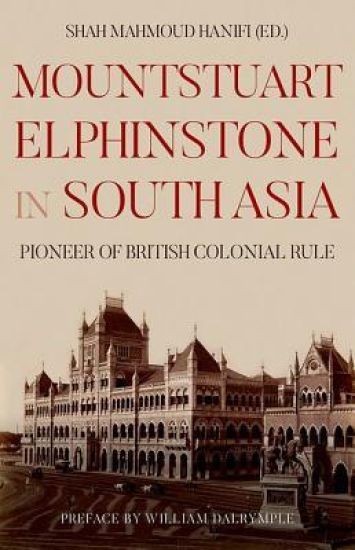
Mountstuart Elphinstone in South Asia: Pioneer of British Colonial Rule
Shah Mahmoud Hanifi
Oxford University Press, USA
2019
sidottu
Mountstuart Elphinstone (1779-1859), Lowland Scottish traveller, East India Company civil servant and educator, was one of the principal intellectual architects of British colonial rule in South Asia. Imbued with liberal views, such that Bombay's wealthy founded Elphinstone College in his memory, he pioneered the scholarly, scientific and administrative foundations of imperialism in India. Elphinstone's career was launched when he was picked to lead the inaugural British diplomatic mission to the Afghan court. His Account of the Kingdom of Caubul (1815) became the main source of British information about Afghanistan. He is best known for his periods as Resident at Poona and Governor of Bombay in the 1810s and 1820s, when he instituted innovative and lasting policies in administration and education while also conducting research for his extremely influential History of India (1841). This volume examines Mountstuart Elphinstone's intellectual contributions and administrative career in their own right, in relation to prominent contemporaries including Charles Metcalfe and William Moorcroft, and in the context of later historical study of India, Afghanistan, British imperialism and its imperial frontiers.
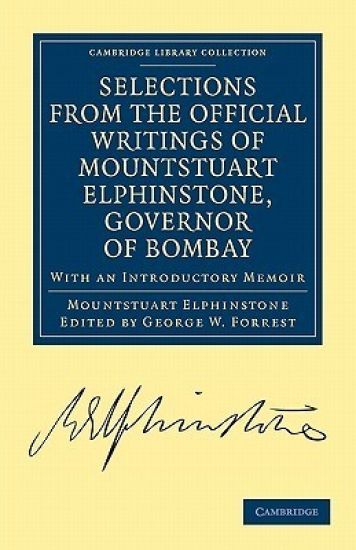
Selections from the Minutes and Other Official Writings of the Honourable Mountstuart Elphinstone, Governor of Bombay
Mountstuart Elphinstone
Cambridge University Press
2011
pokkari
The historian George W. Forrest (1846–1926) pays tribute to the legacy of Mountstuart Elphinstone (1779–1859) by bringing his writings together in this 1884 publication, which begins with a account of Elphinstone's life and the historical events connected with his career, providing important background information and context for the reader. Forrest provides a fascinating insight into Elphinstone's opinions on some of the leading questions connected with the government of British India. The statesman played a pivotal role in founding the system of state education in India, strongly supporting native education and the local administration of laws. As Forrest describes, he brought 'a liberal and highly cultivated mind' to discussions of Indian problems, and he saw the British task in India as equipping Indians for self-government as quickly as possible. This collection documents his challenges and achievements, and is an important historical record of a turning point in Indian history.
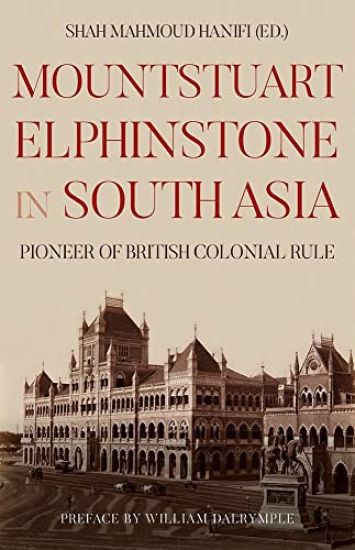
Mountstuart Elphinstone in South Asia
C Hurst Co Publishers Ltd
2019
sidottu
Mountstuart Elphinstone (1779-1859), Lowland Scottish traveller, East India Company civil servant and educator, was one of the principal intellectual architects of British colonial rule in South Asia. Imbued with liberal views, such that Bombay's wealthy founded Elphinstone College in his memory, he pioneered the scholarly, scientific and administrative foundations of imperialism in India. Elphinstone's career was launched when he was picked to lead the inaugural British diplomatic mission to the Afghan court. His Account of the Kingdom of Caubul (1815) became the main source of British information about Afghanistan. He is best known for his periods as Resident at Poona and Governor of Bombay in the 1810s and 1820s, when he instituted innovative and lasting policies in administration and education while also conducting research for his extremely influential History of India (1841). This volume examines Mountstuart Elphinstone's intellectual contributions and administrative career in their own right, in relation to prominent contemporaries including Charles Metcalfe and William Moorcroft, and in the context of later historical study of India, Afghanistan, British imperialism and its imperial frontiers.
Mountstuart Elphinstone, and the Making of Southwestern India
James Sutherland Cotton
Hansebooks
2017
pokkari
Mountstuart Elphinstone, and the Making of Southwestern India
James Sutherland Cotton
Hansebooks
2017
pokkari
Mountstuart Elphinstone, and the Making of Southwestern India is an unchanged, high-quality reprint of the original edition of 1896. Hansebooks is editor of the literature on different topic areas such as research and science, travel and expeditions, cooking and nutrition, medicine, and other genres. As a publisher we focus on the preservation of historical literature. Many works of historical writers and scientists are available today as antiques only. Hansebooks newly publishes these books and contributes to the preservation of literature which has become rare and historical knowledge for the future.
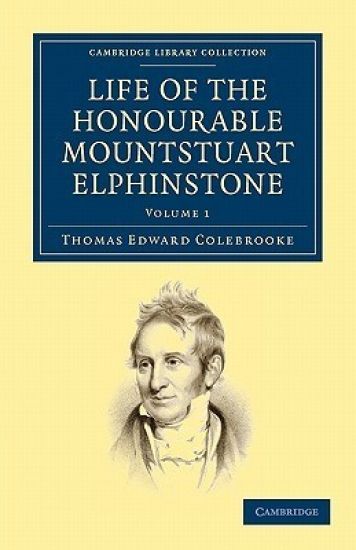
Life of the Honourable Mountstuart Elphinstone
Thomas Edward Colebrooke
Cambridge University Press
2011
pokkari
Mountstuart Elphinstone (1779–1859) was appointed through family influence to the East India Company, and arrived in India in 1796. He learnt Persian, and developed an interest in Indian literature and politics. After postings in Afghanistan and Poona he became Governor in 1819 of the recently acquired territory that became known as the Bombay Presidency. His biographer also had connections to India. Thomas Edward Colebrooke (1813–1890) was the son of British administrator and Sanskrit scholar Henry Thomas Colebrooke (1765–1837), and although he lived in England and served as an M. P., Colebrooke remained interested in colonial affairs. He had written about Elphinstone's life in 1861 for the Journal of the Royal Asiatic Society and subsequently expanded his work into these two volumes, published in 1884. Volume 1 examines Elphinstone's childhood, education and early career, covering the period up to 1817.
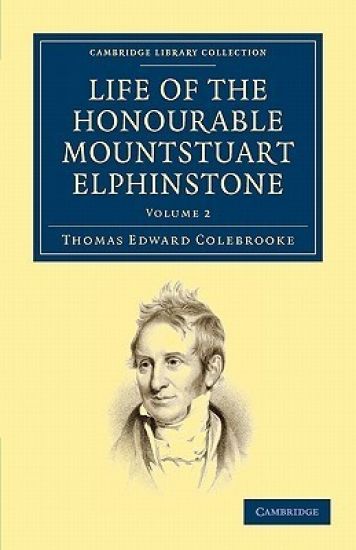
Life of the Honourable Mountstuart Elphinstone
Thomas Edward Colebrooke
Cambridge University Press
2011
pokkari
Mountstuart Elphinstone (1779–1859) was appointed through family influence to the East India Company, and arrived in India in 1796. He learnt Persian, and developed an interest in Indian literature and politics. After postings in Afghanistan and Poona he became Governor in 1819 of the recently acquired territory that became known as the Bombay Presidency. His biographer also had connections to India. Thomas Edward Colebrooke (1813–1890) was the son of British administrator and Sanskrit scholar Henry Thomas Colebrooke (1765–1837), and although he lived in England and served as an M. P., Colebrooke remained interested in colonial affairs. He had written about Elphinstone's life in 1861 for the Journal of the Royal Asiatic Society and subsequently expanded his work into these two volumes, published in 1884. Volume 2 covers his years in Poona and Bombay, and his eventual return to England.
The Rise of the British Power in the East
Mountstuart Elphinstone; Edward Colebrooke
Kessinger Pub
2007
pokkari

The Rise of the British Power in the East
Mountstuart 1779-1859 Elphinstone
Hutson Street Press
2025
sidottu
The Rise of the British Power in the East
Mountstuart 1779-1859 Elphinstone
Hutson Street Press
2025
pokkari
Gems from the Victorian Anthology
Mountstuart Elphinstone Grant (EDT) Duff
Kessinger Pub
2009
pokkari