Kirjojen hintavertailu. Mukana 11 627 362 kirjaa ja 12 kauppaa.

Kirjahaku

Etsi kirjoja tekijän nimen, kirjan nimen tai ISBN:n perusteella.

1000 tulosta hakusanalla Muhammad Ibn Al-Habib

Al-Fawa'id at-Tusiya

Al-Fawa'id at-Tusiya

Muhammad Ibn Hasan Al-Hurr Al-Amili

Makatabat ahya ahadith al-Imamia
2024
pokkari
The author gathered in these issues what no other works have compiled. Whoever contemplates them will find in them subtle points, insights, rare findings, precise explanations, answers to doubts, clarification of ambiguities, removal of deceptions and fallacies, refutation of the well-known falsifications and distortions, and the invalidation of the falsehoods that have appeared in some of the books of the Imamiyyah scholars influenced by the embellished fabrications of the Ahl al-Sunnah. It also awakens the heedless to some of the widespread beliefs that contradict the recurrent narrations. This cannot be found in any other books. I ask the reader to correct any errors and to pardon any slips or mistakes. I have entitled it: Al-Fawaʾid at-Tusiya, and Allah is the ultimate guide to success.
Al-Fawa'id at-Tusiya

Al-Fawa'id at-Tusiya

Muhammad Ibn Hasan Al-Hurr Al-Amili

Makatabat ahya ahadith al-Imamia
2024
sidottu
The author gathered in these issues what no other works have compiled. Whoever contemplates them will find in them subtle points, insights, rare findings, precise explanations, answers to doubts, clarification of ambiguities, removal of deceptions and fallacies, refutation of the well-known falsifications and distortions, and the invalidation of the falsehoods that have appeared in some of the books of the Imamiyyah scholars influenced by the embellished fabrications of the Ahl al-Sunnah. It also awakens the heedless to some of the widespread beliefs that contradict the recurrent narrations. This cannot be found in any other books. I ask the reader to correct any errors and to pardon any slips or mistakes. I have entitled it: Al-Fawaʾid at-Tusiya, and Allah is the ultimate guide to success.
The Summa Philosophiae of Al Shahrastani Nihayatul Iqdam Fi Ilmil Kalam (Edition1)
The Summa Philosophiae of Al-Shahrastānī Kitāb Nihāyatu 'l-Iqdām Fi 'Ilmi 'l-Kalām, translated by Alfred Guillaume, explores the depths of Islamic theology through Kalam, the rational investigation of Islamic doctrine. A foundational text for understanding the intellectual roots of Islam, it examines key theological debates and figures.Al-Shahrastānī's work begins with Kalam, providing a historical overview of its development, setting the stage for a deeper dive into core theological issues. One key focus is the nature and attributes of God, including omniscience, omnipotence, and benevolence. His analysis of Tawhid (God's unity) addresses challenges such as anthropomorphism and the Mu'tazilite views on monotheism, offering a nuanced understanding of Islamic thought.The doctrine of creation ex nihilo is contrasted with the philosophical view of the world's eternity. Al-Shahrastānī also discusses the nature of the universe, time, space, and matter, inviting readers to reflect on divine creation.The book also delves into the role of prophets, the interaction of revelation and reason, and the theological debate between determinism and free will, with implications for moral responsibility.Islamic eschatology is another major theme, with discussions on the afterlife, resurrection, Day of Judgment, heaven, hell, and the criteria for salvation. Al-Shahrastānī also surveys Sunni and Shi'a perspectives and contrasts the Mu'tazilite and Ash'arite schools.He emphasizes the compatibility of faith and reason, showing how rational inquiry supports religious beliefs. The work also tackles God's attributes, free will, and predestination while exploring the function of prophets in guiding human understanding.Kitāb Nihāyatu 'l-Iqdām Fi 'Ilmi 'l-Kalām is a core text for those studying Islamic theology and philosophy, with its comparative approach making it essential for comparative religion studies. Its philosophical rigor addresses complex theological issues with clarity.This masterpiece is available in Arabic and English editions, with annotations and scholarly studies making it accessible to modern readers. Alfred Guillaume's translation preserves the original idiom while ensuring clarity.Embark on an intellectual journey through Islamic theology with Kitāb Nihāyatu 'l-Iqdām Fi 'Ilmi 'l-Kalām, a work that continues to enrich the understanding of Islamic philosophy and invites readers to explore its rational and spiritual dimensions.
The Faith and Practice of Al-Ghazali

The Faith and Practice of Al-Ghazali

W. Montgomery Watt; Abu Hamid Muhammad ibn Muhammad al- Ghazali

Oneworld Publications
1995
pokkari
Al-Ghazali was one of the great Muslim theologians. In this book the author provides a translation of some of his works, including his spiritual autobiography. Al-Ghazali's description of his own emergence from scepticism anticipates the philosophical method of systematic doubt employed by Descartes. Another work translated here sets out Al-Ghazali's ideal of how a religious person should order his life from hour to hour and day to day.
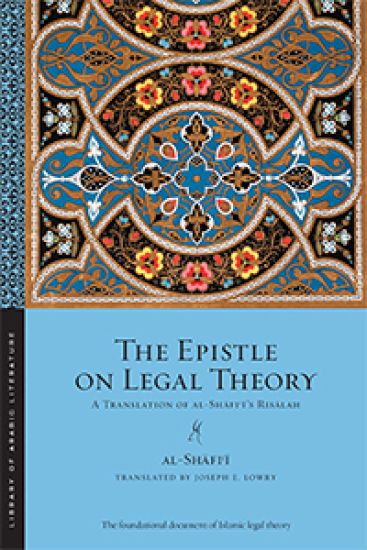
The Epistle on Legal Theory

The Epistle on Legal Theory

Muhammad ibn Idris al-Shafi'i

New York University Press
2013
sidottu
A modern translation of a foundational document of Islamic jurisprudence The Epistle on Legal Theory is the oldest surviving Arabic work on Islamic legal theory and the foundational document of Islamic jurisprudence. Its author, Muhammad ibn Idris al-Shafi'i (d. 204/820), was the eponym of the Shafi'i school of legal thought, one of the four rites in Sunni Islam. This fascinating work offers the first systematic treatment in Arabic of key issues in Islamic legal thought. These include a survey of the importance of Arabic as the language of revelation, principles of textual interpretation to be applied to the Qur'an and prophetic Traditions, techniques for harmonizing apparently contradictory precedents, legal epistemology, rules of inference, and discussions of when legal interpretation is required. The author illustrates his theoretical claims with numerous examples drawn from nearly all areas of Islamic law, including ritual law, commercial law, tort law, and criminal law. The text thus provides an important window into both Islamic law and legal thought in particular and early Islamic intellectual history in general. The Arabic text has been established on the basis of the two most important critical editions and includes variants in the notes, while the English text is a new translation by a leading scholar of Shafi'i and his thought. The Epistle on Legal Theory represents one of the earliest complete works on Islamic law, one that is centrally important for the formation of Islamic legal thought and the Islamic legal tradition. A bilingual Arabic-English edition.
The Mahomedan law of Succession to the Property of Intestates, in Arabick, Engraved on Copper Plates From an Ancient Manuscript, With a Verbal Translation and Explanatory Notes, by William Jones,
The 18th century was a wealth of knowledge, exploration and rapidly growing technology and expanding record-keeping made possible by advances in the printing press. In its determination to preserve the century of revolution, Gale initiated a revolution of its own: digitization of epic proportions to preserve these invaluable works in the largest archive of its kind. Now for the first time these high-quality digital copies of original 18th century manuscripts are available in print, making them highly accessible to libraries, undergraduate students, and independent scholars.Rich in titles on English life and social history, this collection spans the world as it was known to eighteenth-century historians and explorers. Titles include a wealth of travel accounts and diaries, histories of nations from throughout the world, and maps and charts of a world that was still being discovered. Students of the War of American Independence will find fascinating accounts from the British side of conflict. ++++The below data was compiled from various identification fields in the bibliographic record of this title. This data is provided as an additional tool in helping to insure edition identification: ++++John Rylands University Library of ManchesterT057055With six plates containing engraved arabic text.London: printed by J. Nichols, for C. Dilly, 1782. 40]p., plates; 4
The Improvement of Humane Reason, Exhibited in the Life of Hai Ebn Yokdhan Written in Arabick Above 500 Years ago, by Abu Jaafar Tophail. In Which is Demonstrated, by What Methods a Person, by the Meer Light of Nature
The 18th century was a wealth of knowledge, exploration and rapidly growing technology and expanding record-keeping made possible by advances in the printing press. In its determination to preserve the century of revolution, Gale initiated a revolution of its own: digitization of epic proportions to preserve these invaluable works in the largest archive of its kind. Now for the first time these high-quality digital copies of original 18th century manuscripts are available in print, making them highly accessible to libraries, undergraduate students, and independent scholars.The Age of Enlightenment profoundly enriched religious and philosophical understanding and continues to influence present-day thinking. Works collected here include masterpieces by David Hume, Immanuel Kant, and Jean-Jacques Rousseau, as well as religious sermons and moral debates on the issues of the day, such as the slave trade. The Age of Reason saw conflict between Protestantism and Catholicism transformed into one between faith and logic -- a debate that continues in the twenty-first century.++++The below data was compiled from various identification fields in the bibliographic record of this title. This data is provided as an additional tool in helping to insure edition identification: ++++Cambridge University LibraryT186756 London?, 1708?]. 12],195, 1]p., plates; 8
The Epistle on Legal Theory

The Epistle on Legal Theory

Muhammad ibn Idris al-Shafi'i

New York University Press
2015
pokkari
A modern translation of a foundational document of Islamic jurisprudence The Epistle on Legal Theory is the oldest surviving Arabic work on Islamic legal theory and the foundational document of Islamic jurisprudence. Its author, Muhammad ibn Idris al-Shafi'i (d. 204/820), was the eponym of the Shafi'i school of legal thought, one of the four rites in Sunni Islam. This fascinating work offers the first systematic treatment in Arabic of key issues in Islamic legal thought. These include a survey of the importance of Arabic as the language of revelation, principles of textual interpretation to be applied to the Qur'an and prophetic Traditions, techniques for harmonizing apparently contradictory precedents, legal epistemology, rules of inference, and discussions of when legal interpretation is required. The author illustrates his theoretical claims with numerous examples drawn from nearly all areas of Islamic law, including ritual law, commercial law, tort law, and criminal law. The text thus provides an important window into both Islamic law and legal thought in particular and early Islamic intellectual history in general. The Arabic text has been established on the basis of the two most important critical editions and includes variants in the notes, while the English text is a new translation by a leading scholar of Shafi'i and his thought. The Epistle on Legal Theory represents one of the earliest complete works on Islamic law, one that is centrally important for the formation of Islamic legal thought and the Islamic legal tradition. A bilingual Arabic-English edition.
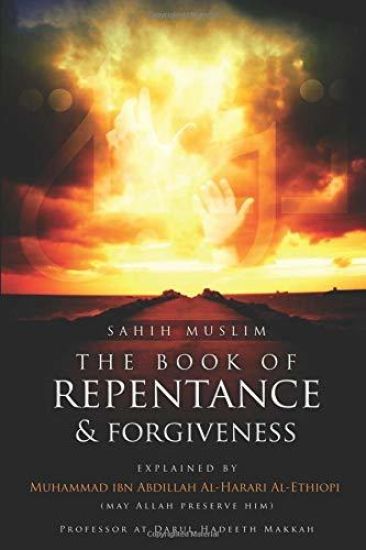
Sahih Muslim: The Book of Repentance and Forgiveness

Sahih Muslim: The Book of Repentance and Forgiveness

Muhammad Ibn Abdil Al-Harari Al-Ethiopi

Independently Published
2018
nidottu
In the name of Allah the Most High, the Most Forgiving and All-Wise. May Allah's Peace and Blessings be upon His Messenger, his companions and those who follow their footsteps until the Last Day. To begin: I'm Sorry. I wish I had not done that. I wish I could turn back time. Give me another chance. Please forgive me. Although these are different words, they all carry the same meaning: regret. During our personal journeys through life, we do and say things we regret later. Sometimes we look for excuses or transfer blame elsewhere. Nonetheless, the deeds were done and the words were said.The desire and resolve to do better next time is important, but the re-moval of past faults and sins is also necessary. Regret is halfway to a clean slate. Then it is immediately necessary to seek forgiveness. No matter what was said or done, Allah is Ar-Rahman, Ar-Rahim, Al-Ghafur. He forgives all sins, except joining partners with Him, so be cautious of coming near this.In this book, you will learn about the vast forgiveness of Allah and the wisdom behind our sins. You will learn about the man who killed ninety-nine men, how to remove sins, and the value of good deeds and dhikr. By the end of this book you will value life because of its potential for repent-ance, which is only accepted from the living until the soul reaches the throat. These ahadeeth will teach the proper way to repent to Allah, so that the breaths of every day can be ones of repentance and forgiveness.I have taken these ahadeeth from the third most authentic book on earth: Sahih Muslim. Every hadeeth has an explanation for it from Shaykh Muhammad Al-Ameen ibn 'Abdillah Al-Harraree Al-Ethiopi (May Allah preserve him) and other scholarly sources. I ask Allah to allow you to benefit from these explanations of the words of the Prophet (may peace be upon him). I ask Allah to allow this deed to be placed on my scale of good deeds in the Hereafter, and I beg Allah for His Mercy and Forgiveness in this life and the Hereafter. Abu Aaliyah Abdullah ibn Dwight Lamont Battle, Sr.Doha, Qata