Kirjojen hintavertailu. Mukana 11 244 527 kirjaa ja 12 kauppaa.

Kirjahaku

Etsi kirjoja tekijän nimen, kirjan nimen tai ISBN:n perusteella.

1000 tulosta hakusanalla Muhammad Vandestra

The Soul Healing and Inner Peace In Islam Faith
The topic of inner peace addresses a universal need. There is nobody on this planet that does not desire inner peace. It is not a desire that is new to our time; rather, it is something that everybody has been searching for throughout the ages, regardless of color, creed, religion, race, nationality, age, sex, wealth, ability or technological advancement. People have taken a variety of different paths in trying to achieve inner peace, some through accumulating material possessions and wealth, others through drugs; some through music, others through meditation; some through their husbands and wives, others through their careers and some through their children's achievements. And the list goes on. Yet the search also goes on. In our time we have been led to believe that technological advancement and modernization will produce for us physical comforts and through these we will attain inner peace. However, if we were to take the most technologically advanced and most industrialized nation in the world, America, then we would see that what we have been led to believe is not factual. The statistics show that in America some 20 million adults suffer from depression yearly; and what is depression but a total lack of inner peace? Furthermore in the year 2000 death rate due to suicide was double the rate of those who died from Aids. However, the news media being what it is, we hear more about those who die from Aids than we do about those who die by committing suicide. Also more people die from suicide in America than from homicide, and the homicide rates themselves are massive. So the reality is that technological advancement and modernization have not bought inner peace and tranquility. Rather in spite of the comforts that modernization has brought us, we are further away from inner peace than our ancestors were. Inner peace is for the most part of our lives very elusive; we never seem to get our hands on it.
How to Deal With Anger, Stress, Depression, Grief and Sadness from Islamic Perspective
The average human being in the developed world battles sadness, anger, stress, depression and worry on a daily basis. While the majority of the world's population confront extreme poverty, famine, conflict and despair those of us privileged to lead relatively easy lives must tackle fear, stress, and anxiety. Why are those of us blessed with riches beyond compare immersed in loneliness and desperation? We are living in a time of confusion, we try as we might, yet gathering material possessions can do nothing to mend broken hearts, and shattered souls. Now, more than at any other time in human kind's history, stress, anxiety, and psychological problems are taking a tremendous toll on the human condition. Religious beliefs should afford a sense of comfort however; it seems that 21st century man has lost the ability to connect to God. Pondering the meaning of life no longer overcomes a feeling of abandonment. This desire to acquire material possessions, which in some way validates our reason for being, has become the balm that soothes our troubled souls. Why is this so? We have the best of everything readily available, yet the reality is we have nothing. Nothing that comforts the soul. Beautiful furnishings do not hold our hand in the darkest night. The latest entertainment centre does not wipe our tears or soothe our furrowed brow. Those of us living with pain and grief, or afflicted with hardship feel abandoned. We feel rudderless on an open sea. Huge waves threaten to engulf us at any given moment. Our desires and debts stand at the apex and loom over us, like great avenging angels, and we search for comfort in addictions and self-destructive behaviour. How do we step away from the precipice? In Islam, the answer is remarkably simple. We turn back to our Creator. God knows what is best for His creation. He has complete knowledge of the human psyche. He knows of the pain, the despair, and the sadness. God is whom we are reaching for in the darkness.
Juz Amma from the Noble Quran Bilingual Edition English & Arabic
Juz Amma from The Noble Quran bilingual edition with english and arabic languange edition. The Noble Quran literally meaning "the recitation"; also romanized Qur'an or Koran is the central religious text of Islam, which Muslims believe to be a revelation from Allah SWT (God). It is widely regarded as the finest work in classical Arabic literature. The Quran is divided into chapters (surah in Arabic), which are then divided into verses (ayah). Muslims believe that the Quran was verbally revealed by God to Prophet Muhammad SAW through the angel Gabriel (Jibril), gradually over a period of approximately 23 years, beginning on 22 December 609 CE, when Prophet Muhammad SAW was 40, and concluding in 632, the year of his death. Muslims regard the Quran as the most important miracle of Prophet Muhammad SAW, a proof of his prophethood, and the culmination of a series of divine messages that started with the messages revealed to Prophet Adam (Pbuh) and ended with Prophet Muhammad SAW. The word "Quran" occurs some 70 times in the text of the Quran, although different names and words are also said to be references to the Quran. According to the traditional narrative, several companions of Prophet Muhammad SAW served as scribes and were responsible for writing down the revelations. Shortly after Prophet Muhammad SAW passed away, the Quran was compiled by his companions who wrote down and memorized parts of it. These codices had differences that motivated the Caliph Uthman to establish a standard version now known as Uthman's codex, which is generally considered the archetype of the Quran known today. There are, however, variant readings, with mostly minor differences in meaning. The Noble Quran assumes familiarity with major narratives recounted in the Biblical scriptures. It summarizes some, dwells at length on others and, in some cases, presents alternative accounts and interpretations of events. The Noble Quran describes itself as a book of guidance for mankind.
Asia Folklore Tales of Prince Yamato Take Bilingual Edition English and Spanish
The insignia of the great Japanese Empire is composed of three treasures which have been considered sacred, and guarded with jealous care from time immemorial. These are the Yatano-no-Kagami or the Mirror of Yata, the Yasakami-no-Magatama or the Jewel of Yasakami, and the Murakumo-no-Tsurugi or the Sword of Murakumo. Of these three treasures of the Empire, the sword of Murakumo, afterwards known as Kusanagi-no-Tsrugugi, or the grass-cleaving sword, is considered the most precious and most highly to be honored, for it is the symbol of strength to this nation of warriors and the talisman of invincibility for the Emperor, while he holds it sacred in the shrine of his ancestors. Nearly two thousand years ago this sword was kept at the shrines of Ite, the temples dedicated to the worship of Amaterasu, the great and beautiful Sun Goddess from whom the Japanese Emperors are said to be descended. There is a story of knightly adventure and daring which explains why the name of the sword was changed from that of Murakumo to Kasanagi, which means grass clearing. Once, many, many years ago, there was born a son to the Emperor Keiko, the twelfth in descent from the great Jimmu, the founder of the Japanese dynasty. This Prince was the second son of the Emperor Keiko, and he was named Yamato. From his childhood he proved himself to be of remarkable strength, wisdom and courage, and his father noticed with pride that he gave promise of great things, and he loved him even more than he did his elder son. Now when Prince Yamato had grown to manhood (in the olden days of Japanese history, a boy was considered to have reached man's estate at the early age of sixteen) the realm was much troubled by a band of outlaws whose chiefs were two brothers, Kumaso and Takeru. These rebels seemed to delight in rebelling against the King, in breaking the laws and defying all authority.
Juz Amma From Holy Quran For Kids

Juz Amma From Holy Quran For Kids

Muhammad Vandestra

Blurb
2024
pokkari
Juz Amma from The Noble Quran with english and arabic languange for children.The Quran Holy literally meaning "the recitation"; also romanized Qur'an or Koran is the central religious text of Islam, which Muslims believe to be a revelation from Allah SWT (God) It is widely regarded as the finest work in classical Arabic literature. The Quran is divided into chapters (surah in Arabic), which are then divided into verses (ayah). Muslims believe that the Quran was verbally revealed by God to Muhammad through the angel Gabriel (Jibril), gradually over a period of approximately 23 years, beginning on 22 December 609 CE, when Prophet Muhammad SAW was 40, and concluding in 632, the year of his death. Muslims regard the Quran as the most important miracle of Prophet Muhammad SAW, a proof of his prophethood, and the culmination of a series of divine messages that started with the messages revealed to Prophet Adam (Pbuh) and ended with Prophet Muhammad SAW.
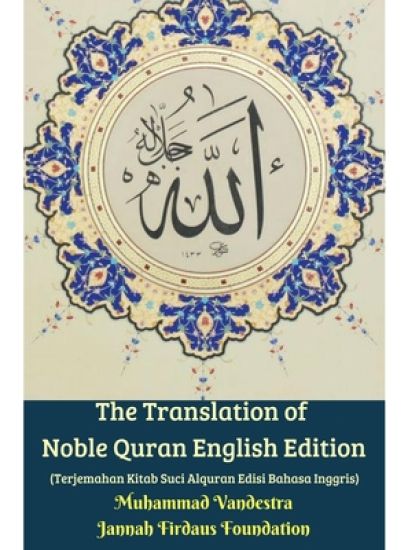
Kitab Suci Al-Quran Edisi Bahasa Indonesia Surat Al-Fatihah Dan Al-Baqarah
Terjemahan Surat Al-Fatihah & Al-Baqarah Dari Kitab Suci Al-Quran Dalam Bahasa Indonesia (Translation of Holy Quran in Indonesia Languange). Al-Quran adalah kitab suci agama Islam, Umat Islam percaya bahwa Al-Qur'an merupakan puncak dan penutup wahyu Allah SWT yang diperuntukkan bagi seluruh umat manusia dan bangsa jin, serta menjadi bagian dari rukun iman, yang disampaikan kepada Nabi Muhammad SAW, melalui perantaraan Malaikat Jibril.
The Etiquette of Eating and Personal Hygiene from Islamic Perspective
The religion of Islam is a holistic way of life. It is not separated into physical, emotional and spiritual areas; rather it teaches that all aspects of life combine to fulfil one purpose. What is that purpose and is it possible to understand the meaning of life? Yes it is Islam makes it very clear that the purpose of life is to worship our Creator, the One True God. What gives meaning to our existence is understanding that all our actions, no matter how grand or how trivial, can be turned easily into worship. All actions performed in the daily course of life can be raised to the status of worship simply by remembering to praise God and seek His pleasure. Islam makes remembrance easy by giving us guidelines. It teaches us in a gentle and moderate way that life is worship, and worship is the meaning of life. To this end, even eating has an etiquette that raises its status from the mundane to worship. Food plays a significant role in our everyday lives. We spend a lot of time, effort and money in shopping, cooking and eating so it makes sense to turn these worldly acts into worship worthy of reward. The sayings of Prophet Muhammad are filled with guidelines and recommendations that make eating a rewardable action. Cleanliness is an important part of Islam. Not only should a Muslim purify himself before turning to God in prayer but they must pay attention to the cleanliness of their bodies and their surroundings at all times. Prophet Muhammad, may the mercy and blessings of God be upon him, reminded us that our body has certain rights and one of those rights is that it should be maintained with cleanliness.
Scientology from Islamic Perspective
Scientology has been called the world's most significant new religion, and Scientologists themselves claim to draw on 50,000 years of wisdom. However apostates from Scientology claim it is a vicious, dangerous cult masquerading as a religion. No matter which description we choose, the fact remains that Scientology is a controversial, mysterious religious movement, with more than 10 million members in around 160 countries across the globe. In this series of articles, we hope to delve into this puzzling movement, and find the answer to several intriguing questions. Is Scientology a religion or an evil cult? What exactly does a scientologist believe, and how do these beliefs compare to the religion of Islam? The official scientology web site states that "Scientology is a religion that offers a precise path leading to a complete and certain understanding of one's true spiritual nature and one's relationship to self, family, groups, mankind, all life forms, the material universe, the spiritual universe and the Supreme Being." From this we can easily deduce that scientology does acknowledge God, or what they refer to as the Supreme Being. "Scientology comprises a body of knowledge which extends from certain fundamental truths. Prime among these are, that man is an immortal spiritual being, his experience extends well beyond a single lifetime and his capabilities are unlimited, even if not presently realised." In this statement we can see that scientologists believe in some form of reincarnation perhaps not dissimilar to the Eastern religions such as Hinduism or Buddhism.
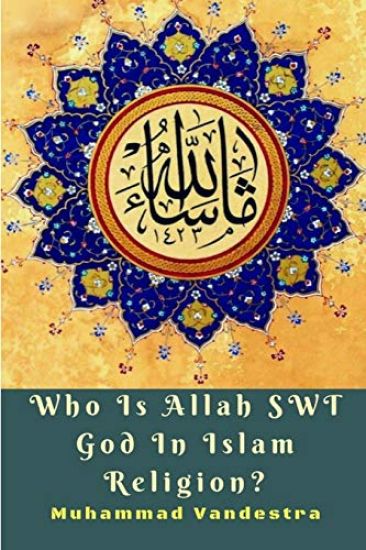
Who Is Allah SWT God In Islam Religion?
Some of the biggest misconceptions that many non-Muslims have about Islam have to do with the word "Allah." For various reasons, many people have come to believe that Muslims worship a different God than Christians and Jews. This is totally false, since "Allah" is simply the Arabic word for "God" - and there is only One God. Let there be no doubt - Muslims worship the God of Adam, Noah, Abraham, Moses, David and Jesus - peace be upon them all. However, it is certainly true that Jews, Christians and Muslims all have different concepts of Almighty God. For example, Muslims - like Jews - reject the Christian beliefs of the Trinity and the Divine Incarnation. This, however, does not mean that each of these three religions worships a different God - because, as we have already said, there is only One True God. Judaism, Christianity and Islam all claim to be "Abrahamic Faiths," and all of them are also classified as "monotheistic." However, Islam teaches that other religions have, in one way or another, distorted and nullified a pure and proper belief in Almighty God by neglecting His true teachings and mixing them with man-made ideas. First of all, it is important to note that "Allah" is the same word that Arabic-speaking Christians and Jews use for God. If you pick up an Arabic Bible, you will see the word "Allah" being used where "God" is used in English. This is because "Allah" is a word in the Arabic language equivalent to the English word "God" with a capital "G." Additionally, the word "Allah" cannot be made plural, a fact which goes hand-in-hand with the Islamic concept of God. It is interesting to note that the Aramaic word "El," which is the word for God in the language that Jesus spoke, is certainly more similar in sound to the word "Allah" than the English word "God." This also holds true for the various Hebrew words for God, which are "El" and "Elah," and the plural or glorified form "Elohim." The reason for these similarities is that Aramaic,
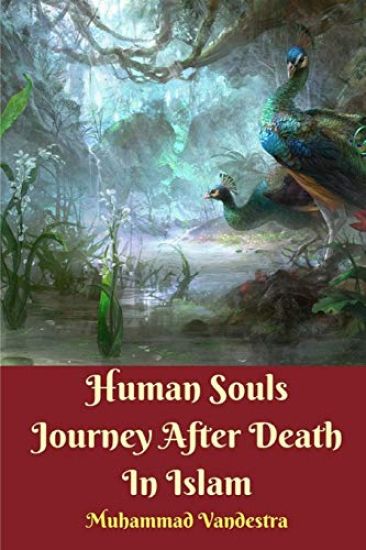
Human Souls Journey After Death In Islam
Imagine yourself at the moment of your death. What thoughts cross your mind? Memories of family and friends? Panic? Regrets? Remembrance of Allah? What is death? What happens to us after we die? What is life in the Hereafter like, this new and strange world after death? Do we lose consciousness of this life? Where does our soul go? Do we feel and think the same? The ineffable feeling of crossing the boundary between this world and the next cannot be described in words, nor imagined in the mind, but can be understood only through divine revealation and inspiration. Let us for the next few moments seek an understanding of this, death, the only certainty in life. Sometimes we may not want to know about the processes that occur after we die because we are afraid or don't want to think about it. However, this is not the attitude of a Muslim. We should be foremost in learning and understanding death, so we can live our lives accordingly. The prophet (saw) said, "Live in this world as though you are a stranger or a traveler (passing through it)." Muslim] We are on a journey and should know about the whole journey's itinerary, not just one part. Death is inevitable. It is the one thing that we can be certain about in life. We are born to die. Every soul shall have a taste of death no matter who they are. This is confirmed for us many times in the Quran: "Every soul shall have a taste of death: and only on the Day of Judgement shall you be paid your full recompense." (Quran 3:185) "Every soul shall have a taste of death: and We test you by evil and by good, by way of trial. To Us must you return." (21:35) "Every soul shall have a taste of death: In the end to Us shall you be brought back." (29:57) Death is not pure annihilation, but rather both the living and dead are aware, but there is a difference that can't be compared. Death is merely movement from one world to another. It can be described as a journey through a wormhole to a separate dimension of existence.
Muhammad

Muhammad

Deepak Chopra

HarperOne
2011
nidottu
Born into the factious world of war-torn Arabia, Muhammad's life is a gripping and inspiring story of one man's tireless fight for unity and peace. In a world where greed and injustice ruled, Muhammad created change by affecting hearts and minds. Just as the story of Jesus embodies the message of Christianity, Muhammad's life reveals the core of Islam. Deepak Chopra shares the life of Muhammad as never before, putting his teachings in a new light. Following the historical record but offering a unique perspective, Chopra's "Muhammad" captures the historical prophet but more importantly show us why his teachings are more important now than ever before.
Muhammad

Muhammad

Deepak Chopra

HarperCollins
2010
nidottu
"Compassionate and clear...a courageous undertaking." --Greg Mortenson, New York Times bestselling author of Three Cups of Tea and Stones into Schools"As a scholar and storyteller extraordinaire, Deepak Chopra portrays a morally courageous yet highly human messenger of God." --Irshad Manji, Director, Moral Courage Project, New York UniversityFrom the New York Times bestselling author of Buddha and Jesus comes the page-turning and soul-stirring story of Muhammad. Deepak Chopra--easily one of the most influential spiritual leaders in the world today--delivers this stunning, sincere, and highly accessible portrait of the Prophet of Islam. Chopra's Muhammad is an outstanding resource for everyone who thinks they should know more about the man who inspired the world's fastest-growing religion.
Muhammad

Muhammad

Michael Cook

Oxford University Press
1983
nidottu
Just over a sixth of the world's population subscribes to the Muslim belief that `there is no god but God, and Muhammad is his Messenger'. Michael Cook gives an incisive account of the man who inspired this faith, drawing on the traditional Muslim sources to describe Muhammad's life and teaching. He also attempts to stand back from this traditional picture to question how far it is historically justified.
Muhammad

Muhammad

Jonathan A.C. Brown

Oxford University Press
2011
nidottu
As the founder of Islam Muhammad is one of the most influential figures in history. The furor surrounding the Satanic Verses and the Danish cartoon crisis reminded the world of the tremendous importance of the prophet of Islam, Muhammad. Learning about his life and understanding its importance, however, has always proven difficult. Our knowledge of Muhammad comes from the biography of him written by his followers, but Western historians have questioned the reliability of this story in their quest to uncover the 'historical Muhammad'. As modern controversies have shown, whatever the truth about Muhammad's life, his persona has taken on numerous shapes and played a crucial role in Muslim life and civilization. This Very Short Introduction provides an introduction to the major aspects of Muhammad's life and its importance, providing both the Muslim and Western historical perspectives. It also explains the prominent roles that Muhammad's persona has played in the Islamic world, from the medieval to the modern period. ABOUT THE SERIES: The Very Short Introductions series from Oxford University Press contains hundreds of titles in almost every subject area. These pocket-sized books are the perfect way to get ahead in a new subject quickly. Our expert authors combine facts, analysis, perspective, new ideas, and enthusiasm to make interesting and challenging topics highly readable.