Kirjojen hintavertailu. Mukana 11 451 949 kirjaa ja 12 kauppaa.

Kirjahaku

Etsi kirjoja tekijän nimen, kirjan nimen tai ISBN:n perusteella.

1000 tulosta hakusanalla Nancy Lang

The Language of History in the Renaissance

The Language of History in the Renaissance

Nancy S. Struever

Princeton University Press
2016
sidottu
At any time, basic assumptions about language have a direct effect on the writing of history. The structure of language is related to the structure of knowledge and thus to the definition of historical reality, while linguistic competence gives insights into the relation of ideas and action. Within the framework of these ideas, and drawing on recent work in linguistic theory, including that of the French structuralists. Professor Struever studies the major shift in attitudes toward language and history which the Renaissance represents. One of the essential innovations of Renaissance Humanism is the substitution of rhetoric for dialectic as the dominant language discipline; rhetoric gives the Humanists their cohesion as a lay intellectual elite, as well as the force and direction of their thought. The author accepts the current trend in classical studies, the rehabilitation of the Sophists which finds its source in Nietzsche and includes the work of Rostagni, Untersteiner, and Buccellato, to reinstate rhetoric as the historical vehicle of Sophistic insight. Originally published in 1970. The Princeton Legacy Library uses the latest print-on-demand technology to again make available previously out-of-print books from the distinguished backlist of Princeton University Press. These editions preserve the original texts of these important books while presenting them in durable paperback and hardcover editions. The goal of the Princeton Legacy Library is to vastly increase access to the rich scholarly heritage found in the thousands of books published by Princeton University Press since its founding in 1905.
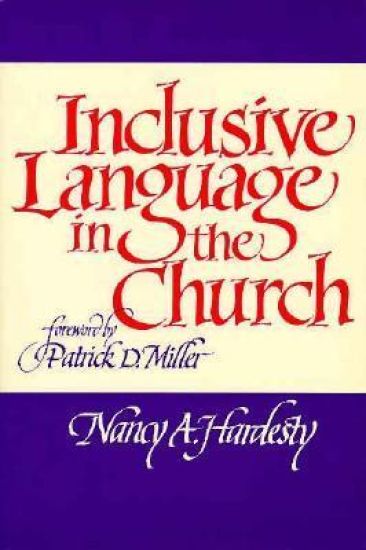
Inclusive Language in the Church

Inclusive Language in the Church

Nancy A. Hardesty

Westminster/John Knox Press,U.S.
1988
nidottu
Inclusive Language in the Church is a good introduction to questions about language use today that fairly addresses the issues of the language debate. Nancy Hardesty sets out to convince us that inclusive language is appropriate in Christian theology and worship.
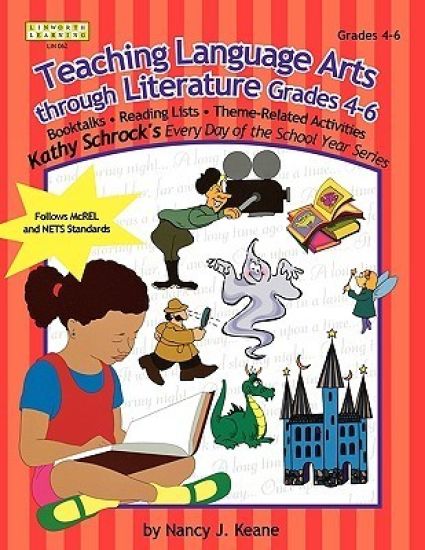
Teaching Language Arts Through Literature, Grades 4-6

Teaching Language Arts Through Literature, Grades 4-6

Nancy J. Keane; Corinne Wait

Linworth Publishing, Incorporated
2002
nidottu
Six exciting titles use well-known works of children’s literature as a springboard for learning! Activities, booktalks, and recommended book titles help students connect reading for pleasure with reading for information. Includes relevant McREL, Information Power II, and NETS standards.
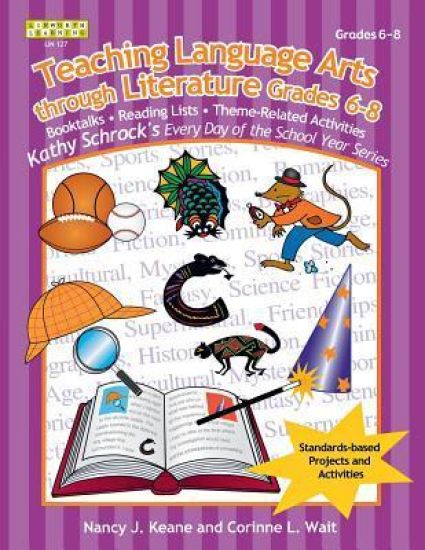
Teaching Language Arts Through Literature, Grades 6-8

Teaching Language Arts Through Literature, Grades 6-8

Nancy J. Keane; Corinne Wait

Linworth Publishing, Incorporated
2002
nidottu
Six exciting titles use well-known works of children’s literature as a springboard for learning! Activities, booktalks, and recommended book titles help students connect reading for pleasure with reading for information. Includes relevant McREL, Information Power II, and NETS standards.
The Language of Light

The Language of Light

Nancy Thomas

Fernwood Press
2024
pokkari
Nancy Thomas celebrates language-its sounds, grammar, quirks, and all that words can and can't do. In these poems, she plays with common figures of speech in the English language, celebrates relationships with peculiar people, and attempts to approach growing older with courage and humor. You'll want to smile, laugh, and sometimes groan. You may also find grace hiding in the silences between the words.
The Language of Love and Other Stories

The Language of Love and Other Stories

Nancy Christie

Unsolicited Press
2025
pokkari
The Language of Love and Other Stories is a diverse collection that delves into the many facets of love. From the tender bonds between parent and child ("Claire Juliana," "The Ferris Wheel") to the deep connections between adult children and their elderly relatives ("Mama," "Listen to Me," "Remember Mama"), the stories explore love in its many forms. Romantic love takes center stage in tales like "Charley and the Cupid Caper," "With Any Luck," "Bingo," "Henry, Hortense and the Halloween Party," "For the First Time-Again," and "Love Dancing." Some stories, such as "Doors and Windows," "The Message is Understood," "The Equation of Love," and the title story, "The Language of Love," examine the struggles love faces when tested by life's challenges.The collection also poignantly addresses love intertwined with grief and loss in stories like "Earth to Moon," "Goodbyes," "Seeing Jim," "Thinking About Melanie," and "Love Letters." Across 20 stories, the collection captures every stage of love, from the exhilarating beginnings to the quiet, routine phases, the uncertain times, and the heartbreaking endings-whether anticipated or shockingly sudden. It's a journey through whom we love, how we love, and how we cope when love is returned, unrequited, or lost.Praised as "a unique collection of short fiction about the various types of love that hits the sweet spot between quirky and heart-rending" (Dawn Reno Langley), "a tribute to the many forms of love" (Ann Henry), and "poignant, compelling, and clear-eyed" (Deborah Kalb), The Language of Love and Other Stories masterfully illustrates the complexity of love and its enduring power, even in the face of loss. Each story stands alone, yet together, they weave a rich tapestry of the ways love shapes our lives.
A New Language, A New World

A New Language, A New World

Nancy C. Carnevale

University of Illinois Press
2009
sidottu
An examination of Italian immigrants and their children in the early twentieth century, A New Language, A New World is the first full-length historical case study of one immigrant group's experience with language in America. Incorporating the interdisciplinary literature on language within a historical framework, Nancy C. Carnevale illustrates the complexity of the topic of language in American immigrant life. By looking at language from the perspectives of both immigrants and the dominant culture as well as their interaction, this book reveals the role of language in the formation of ethnic identity and the often coercive context within which immigrants must negotiate this process.
A New Language, A New World

A New Language, A New World

Nancy C. Carnevale

University of Illinois Press
2012
nidottu
An examination of Italian immigrants and their children in the early twentieth century, A New Language, A New World is the first full-length historical case study of one immigrant group's experience with language in America. Incorporating the interdisciplinary literature on language within a historical framework, Nancy C. Carnevale illustrates the complexity of the topic of language in American immigrant life. By looking at language from the perspectives of both immigrants and the dominant culture as well as their interaction, this book reveals the role of language in the formation of ethnic identity and the often coercive context within which immigrants must negotiate this process.
Language Impairment and Psychopathology in Infants, Children, and Adolescents
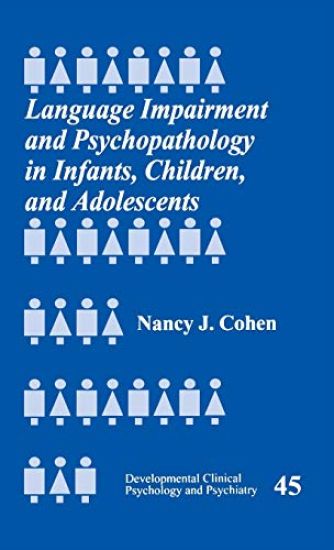
Language Impairment and Psychopathology in Infants, Children and Adolescents examines the remarkably high correlation between language impairment and a range of psychopathologic disorders in children and adolescence Nancy J. Cohen provides an authoritative account of the types and range of language and communications impairments, including how language and communication relate to neurological functioning, attachment patterns, emotional regulation, academic achievement, and cognitive development. From a clinical perspective, this book covers impairment definitions and terminology, conditions associated with language impairment, developmental processes affected by language, assessment, and treatment interventions. Throughout, case studies illustrate the contribution of language and communication impairments to transactions, adaptations, and maladaptations that can occur during development. Findings from the literature, including the author's own research program, highlight the consequences of having problems with language and communication on interactions with the family, with peers, in school, and in the clinic.
Language Impairment and Psychopathology in Infants, Children, and Adolescents
Language Impairment and Psychopathology in Infants, Children and Adolescents examines the remarkably high correlation between language impairment and a range of psychopathologic disorders in children and adolescence Nancy J. Cohen provides an authoritative account of the types and range of language and communications impairments, including how language and communication relate to neurological functioning, attachment patterns, emotional regulation, academic achievement, and cognitive development. From a clinical perspective, this book covers impairment definitions and terminology, conditions associated with language impairment, developmental processes affected by language, assessment, and treatment interventions. Throughout, case studies illustrate the contribution of language and communication impairments to transactions, adaptations, and maladaptations that can occur during development. Findings from the literature, including the author's own research program, highlight the consequences of having problems with language and communication on interactions with the family, with peers, in school, and in the clinic.
Languages in the International Perspective

Languages in the International Perspective

Nancy Schweda-Nicholson

Praeger Publishers Inc
1986
sidottu
This collection makes a significant contribution to international awareness and the promotion of intercultural understanding. Due to sophisticated advances in technology, the communication networks of the world are expanding at a rapid rate. Paradoxically, expansion has brought an information gap in international understanding that cannot be bridged by technology alone. Information often does not flow freely from one society to another creating isolation for many groups for reasons other than technological ones. These papers shed light on the linguistic, socioeconomic, and political reasons for this isolation. This book offers information to those specialists who are concerned with problems of language planning and related areas and brings us a step closer to the knowledge required for dealing with international communication problems.
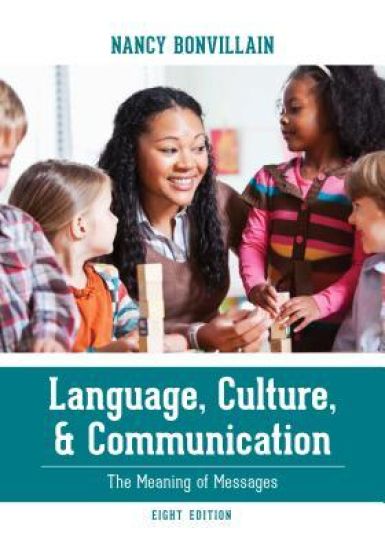
Language, Culture, and Communication

Language, Culture, and Communication

Nancy Bonvillain

Rowman Littlefield
2019
nidottu
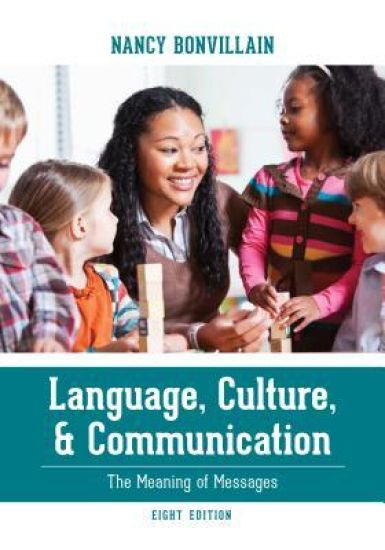
Language, Culture and Communication, Eight Edition, introduces students to the topics and theories of the board field of linguistic anthropology by examining the multifaceted meanings and uses of language. It emphasizes the ways in which language encapsulates speakers' meanings and intentions. Through language structure and language use, speakers convey messages about their own identities, their understandings of the world and their place in it. The book includes discussion of cultural and symbolic meanings conveyed by language and the social and political dimensions of language use. By using data, this book documents both similarities and differences in human language. New to this Edition: ?Introduction of the theme of intersectionalities, and the theme of discourse and texts ?Chapter 3: expansion of discussion on the re-examination of linguistic relativity. ?Chapter 5: expansion of discussion of how social stratification and racial differences can influence the way politeness is interpreted and the contextual expression of politeness. ?Chapter 6: oNew section on digital telephone technologies and innovative literacy practices using cell phones. oNew section on use of social media platforms with national and international statistics and practices. oExpansion of Deaf communities and controversy over cochlear implants. ?Chapter 8: New section on the inclusions and exclusions of Moroccan immigrant children in Spain through communicative interactions and norms. ?Chapter 9: oExpansion of section on race. oNew section on the covert expression of racist meanings. ?Chapter 10: oNew section on gendered speech in Lakhota oNew section on men's and women's speech in Yanyuwa, Australia oNew section on conversational style and the gendering of work places oNew section on language and sexuality ?Chapter 11: oUpdates on the distribution of languages worldwide oNew section on the development of the "American standard." ?Chapter 12: oExpansion of discussion of language and nation building. oExpansion of discussion of language shift and language revitalization programs. ?Chapter 13: expansion of social ideologies and prejudices expressed in public media.
Translating the Language of the Newborn: Explaining those first few days of life
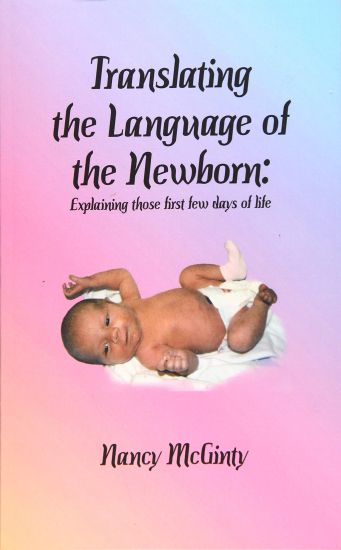
Most babies have predictable behavior. Parents who have a head start with some advance knowledge of what to expect in their baby's first few days of life will have more confidence when they meet their baby. Babies and mothers change remarkably from day one, to day two, to day three. The goal of the lactation consultant who has written Translating the Language of the Newborn is to instill common sense care into the first three days of a baby's life outside the womb. Parents' questions on formula feeding, breastfeeding, lactation, latching on, burping, hunger signals, crying, sleep patterns, and more are answered from the newborn's perspective and in the voice of the baby. This little book is very short, easy to read, and is an excellent reference for any new mommy or daddy.
Language, Culture, and Communication

Language, Culture, and Communication

Nancy Bonvillain

Rowman Littlefield
2019
sidottu
Language, Culture and Communication, Eight Edition, introduces students to the topics and theories of the board field of linguistic anthropology by examining the multifaceted meanings and uses of language. It emphasizes the ways in which language encapsulates speakers' meanings and intentions. Through language structure and language use, speakers convey messages about their own identities, their understandings of the world and their place in it. The book includes discussion of cultural and symbolic meanings conveyed by language and the social and political dimensions of language use. By using data, this book documents both similarities and differences in human language. New to this Edition: Introduction of the theme of intersectionalities, and the theme of discourse and texts Chapter 3: expansion of discussion on the re-examination of linguistic relativity.Chapter 5: expansion of discussion of how social stratification and racial differences can influence the way politeness is interpreted and the contextual expression of politeness.Chapter 6: New section on digital telephone technologies and innovative literacy practices using cell phones. New section on use of social media platforms with national and international statistics and practices.Expansion of Deaf communities and controversy over cochlear implants. Chapter 8: New section on the inclusions and exclusions of Moroccan immigrant children in Spain through communicative interactions and norms. Chapter 9: Expansion of section on race.New section on the covert expression of racist meanings. Chapter 10: New section on gendered speech in Lakhota New section on men's and women's speech in Yanyuwa, Australia New section on conversational style and the gendering of work places New section on language and sexuality Chapter 11:Updates on the distribution of languages worldwideNew section on the development of the "American standard." Chapter 12: Expansion of discussion of language and nation building.Expansion of discussion of language shift and language revitalization programs. Chapter 13: expansion of social ideologies and prejudices expressed in public media.
International Folktales for English Language Learners

International Folktales for English Language Learners

Nancy Warnock Harmon

Global Awareness Publishing
2013
nidottu
Ideal for the ESL classroom, International Folktales provides an opportunity for students to learn about the folktales told by different cultures around the world. The folktales in this volume span the globe and are both educational and entertaining. Readers will enjoy following the adventures of the Laotian trickster XiengMieng, discovering the profound lesson in the Pashtun tale "The Walnut and the Pumpkin," and appreciating the frights inspired by Latin American ghost La Llorona. Author and educator Nancy Harmon, co-founder of the nonprofit Center for Global Awareness, has collected these stories during years of teaching around the world. Stories are arranged by linguistic complexity, starting with simpler sentence structures and moving on to more challenging syntax and vocabulary. Language awareness activities, comprehension questions, and vocabulary exercises allow students to test their learning and consider the stories in realms beyond the written page. Stories can be used for different levels, from beginning to high intermediate students. Regardless of the classroom, readers will discover newfound appreciation for human commonalities, and for intriguing cultural differences. "Small school students just enjoy reading these stories. Older university students found them philosophic and life true. As a teacher I was glad to find the variety of activities that Nancy offers. Thus, all are happy." - Urunsa, a teacher in Kyrgyzstan. This book is for adult learners, educators, and students. Illustrated. Table of Contents "The Dog and the Meat" "The Boy Who Cried Wolf" "The Tiger and the Mouse" "The King and His Daughters" "The Cobra" "The Walnut and the Pumpkin" "The Sound of Money" "XiengMieng Tricks the King" "The Great Rain" "La Llorona" "Stone Soup"
Retailing and the Language of Goods, 1550-1820
In this book the author explores the various meanings assigned to goods sold retail from 1550 to 1820 and how their labels were understood. The first half of the book focuses on these labels and on mercantile language more broadly; how it was used in trade and how lexicographers and others approached what, for them, were new vocabularies. In the second half, the author turns to the goods themselves, and their relationships with terms such as ’luxury’, ’choice’ and ’love’; terms that were used as descriptors in marketing goods. The language of objects is a subject of ongoing interest and the study of consumables opens up new ways of looking at the everyday language of the early modern period as well as the experiences of trade and consumption for both merchant and consumer.
Documentation and Reimbursement for Speech-Language Pathologists
Although it is the least noticed by patients, effective documentation is one of the most critical skills that speech-language pathologists must learn. With that in mind, Documentation and Reimbursement for Speech-Language Pathologists: Principles and Practiceprovides a comprehensive guide to documentation, coding, and reimbursement across all work settings.The text begins with section 1 covering the importance of documentation and the basic rules, both ethical and legal, followed by an exploration of the various documentation forms and formats. Also included are tips on how to use electronic health records, as well as different coding systems for diagnosis and for procedures, with an emphasis on the link between coding, reimbursement, and the documentation to support reimbursement.Section 2 explains the importance of focusing on function in patient-centered care with the ICF as the conceptual model, then goes on to cover each of the types of services speech-language pathologists provide: evaluation, treatment planning, therapy, and discharge planning. Multiple examples of forms and formats are given for each.In section 3, Nancy Swigert and her expert team of contributors dedicate each chapter to a work setting in which speech-language pathologists might work, whether adult or pediatric, because each setting has its own set of documentation and reimbursement challenges. And since client documentation is not the only kind of writing done by speech-language pathologists, a separate chapter on “other professional writing” includes information on how to write correspondence, avoid common mistakes, and even prepare effective PowerPoint presentations.Each chapter in Documentation and Reimbursement for Speech-Language Pathologists contains activities to apply information learned in that chapter as well as review questions for students to test their knowledge. Customizable samples of many types of forms and reports are also available.Included with the text are online supplemental materials for faculty use in the classroom.Documentation and Reimbursement for Speech-Language Pathologists: Principles and Practice is the perfect text for speech-language pathology students to learn these vital skills, but it will also provide clinical supervisors, new clinicians, and speech-language pathologists starting a private practice or managing a department with essential information about documentation, coding, and reimbursement.