Kirjojen hintavertailu. Mukana 11 717 486 kirjaa ja 12 kauppaa.

Kirjahaku

Etsi kirjoja tekijän nimen, kirjan nimen tai ISBN:n perusteella.

1000 tulosta hakusanalla Nathan Olson

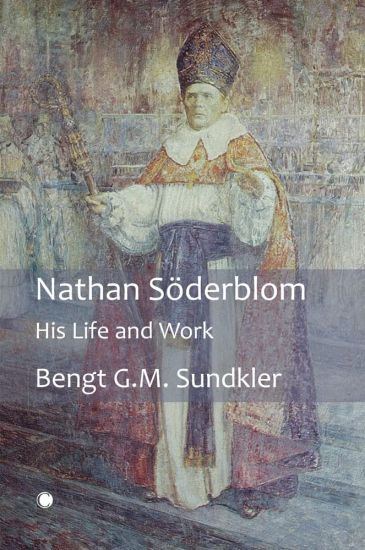
Nathan Söderblom

Nathan Söderblom

Bengt Sundkler

JAMES CLARKE CO LTD
2023
nidottu
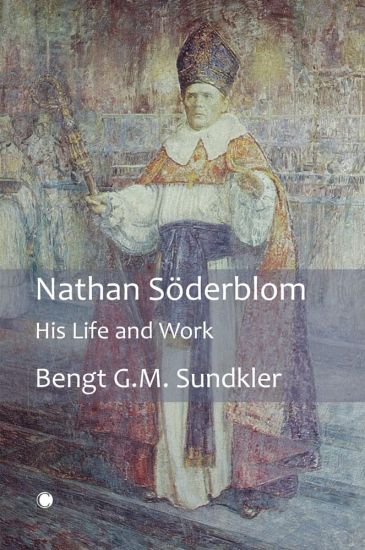
Nathan Söderblom (1866-1931), was not only a profoundly influential figure in Swedish church history, but also one of the great pioneers of the modern ecumenical movement. Elected Archbishop of Uppsala, the head of the Lutheran church in Sweden, in 1914, he was a ceaseless advocate for peace during the first world war. His collaboration with George Bell laid the foundations for intercommunion between the Church of Sweden and the Church of England. Finally, in the year before he died, he was awarded the Nobel Peace Prize. Despite this, until this landmark biography he was largely neglected by historians, the subject of only a few partial studies. In Nathan Söderblom: His Life and Work, Bengt Sundkler corrects this, with new analysis of Söderblom's meticulously preserved correspondence and interviews with his family, friends and former students. The resulting image is of a man deeply committed to his leadership of ecumenical projects, most significantly his movement of 'Life and Work', but also of a complex and fascinating personality.
Nathan Söderblom

Nathan Söderblom

Bengt Sundkler

JAMES CLARKE CO LTD
2023
sidottu
Nathan Söderblom (1866-1931), was not only a profoundly influential figure in Swedish church history, but also one of the great pioneers of the modern ecumenical movement. Elected Archbishop of Uppsala, the head of the Lutheran church in Sweden, in 1914, he was a ceaseless advocate for peace during the first world war. His collaboration with George Bell laid the foundations for intercommunion between the Church of Sweden and the Church of England. Finally, in the year before he died, he was awarded the Nobel Peace Prize. Despite this, until this landmark biography he was largely neglected by historians, the subject of only a few partial studies. In Nathan Söderblom: His Life and Work, Bengt Sundkler corrects this, with new analysis of Söderblom's meticulously preserved correspondence and interviews with his family, friends and former students. The resulting image is of a man deeply committed to his leadership of ecumenical projects, most significantly his movement of 'Life and Work', but also of a complex and fascinating personality.
Nathan Lyons

Nathan Lyons

University of Texas Press
2012
sidottu
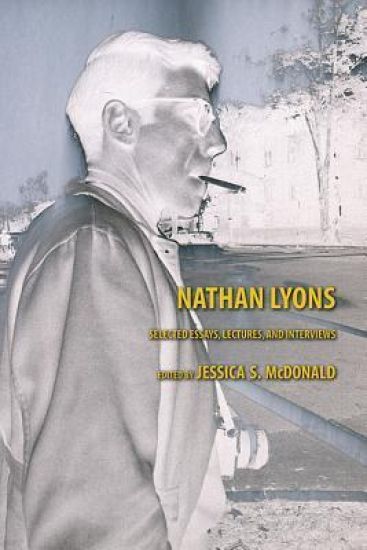
As a curator, theorist, educator, artist, and powerful advocate, Nathan Lyons has played a central role in the expansion of photography over the last five decades. After producing seminal exhibitions and publications as curator at George Eastman House in Rochester, New York, in the 1960s, he founded the Visual Studies Workshop, an independent arts organization where his innovative programs trained a new generation of photographers, critics, curators, and historians. Nathan Lyons: Selected Essays, Lectures, and Interviews provides the first comprehensive overview of Lyons’s career as one of the most important voices in American photography. Of primary importance in this volume are Lyons’s own writings, gathered here for the first time. These include essays and articles formulated while Lyons was a young curator, as well as early statements about his own artistic practice and his emerging philosophy of photographic education. Important unpublished lectures are presented here, most significantly “Photography and the Picture Experience,” Lyons’s groundbreaking lecture on the snapshot, and “Sequential Considerations,” addressing photographic sequence and visual books. Lyons’s recent projects bring this volume up to the present. Contributions from other scholars include essays by James Borcoman, Joel Eisinger, Vicki Goldberg, Keith Smith, Anne Wilkes Tucker, and Adam D. Weinberg. Also featured are interviews with Lyons by Maria Antonella Pelizzari, Thomas Dugan, Bob Rogers, and Robert Hirsch, and a newly translated interview by Joan Fontcuberta. Two selections in this volume are drawn from rare unpublished audio recordings made by Lyons in the 1960s: the first, a 1965 interview with Paul Strand on the subject of photographic books, and the second, an extensive discussion with photographers Simpson Kalisher and Garry Winogrand recorded in 1966.
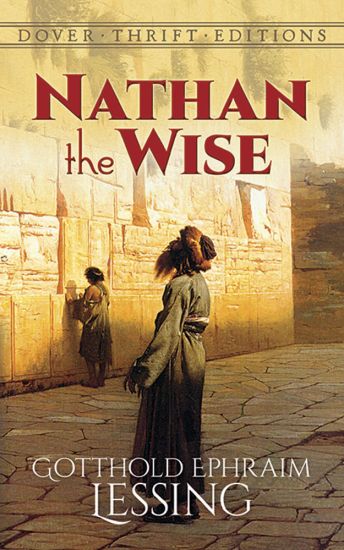
Nathan the Wise

Nathan the Wise

Bettina Aptheker; Gotthold Lessing

Dover Publications Inc.
2015
nidottu
A Jewish merchant, a Muslim sultan, and a young Templar knight transcend the differences in their faiths in this play's moving plea for religious tolerance and cooperation amongst Christians, Jews, and Muslims. Set in Jerusalem during the Third Crusade, the Enlightenment-era drama explores timeless considerations that range from the nature of God to the conflict between love and duty and the importance of unity amid division and diversity.Nathan the Wise (Nathan der Weise) was published in Germany in 1779, although its performance was forbidden by the church during the lifetime of author Gotthold Ephraim Lessing. The highly influential play had its 1783 premiere in Berlin and has since been translated into many languages and adapted for performances around the world.
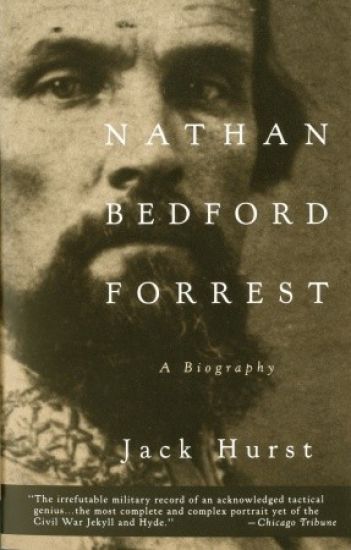
Nathan Bedford Forrest: A Biography
Amid the aristocratic ranks of the Confederate cavalry, Nathan Bedford Forrest was untutored, all but unlettered, and regarded as no more than a guerrilla. His tactic was the headlong charge, mounted with such swiftness and ferocity that General Sherman called him a "devil" who should "be hunted down and killed if it costs 10,000 lives and bankrupts the treasury." And in a war in which officers prided themselves on their decorum, Forrest habitually issued surrender-or-die ultimatums to the enemy and often intimidated his own superiors. After being in command at the notorious Fort Pillow Massacre, he went on to haunt the South as the first grand wizard of the Ku Klux Klan. Now this epic figure is restored to human dimensions in an exemplary biography that puts both Forrest's genius and his savagery into the context of his time, chronicling his rise from frontiersman to slave trader, private to lieutenant general, Klansman to--eventually--New South businessman and racial moderate. Unflinching in its analysis and with extensive new research, Nathan Bedford Forrest is an invaluable and immensely readable addition to the literature of the Civil War.
Nathan Stark, Army Scout

Nathan Stark, Army Scout

William W. Johnstone

Pinnacle Books,U.S.
2021
nidottu
In this blazing new series, William W. and J.A. Johnstone tell the tale of a man who became a myth--and a myth that became a legend. This is the epic story of Nathan Stark, Army Scout... They slaughtered his family. Killed his young bride. And ever since that tragic day, Nathan Stark has devoted his life to fighting the hostile tribes who massacred those he loved. As a civilian scout for the Army, he's served with such famous commanders as Custer and Crook. He's battled against such notorious war chiefs as Crazy Horse and Sitting Bull. Among the fiercest natives of the untamed west, Nathan Stark is a living legend--one that must be destroyed... Against his better judgment, Nathan agrees to be teamed up with a rival Crow scout named Moses Red Buffalo. Their mission: to forge a trail deep into Indian territory under the command of a bloodthirsty army colonel. But the mission is not what it seems. If Stark and Red Buffalo want to stay alive, they'll have to work together as a team--if they don't kill each other first...
Nathan Terriberry (1815-86) of Hunterdon County, New Jersey
David Joseph Riley became intrigued about the onomastics of Terriberry when he came across the names of Drs. Calvin and George Terriberry on several birth and death records of his wife's ancestors. He started to research that family and learned that the earlier surname Durrenberger began changing to Terriberry about 1840-50. A more pragmatic reason for choosing Terriberry was to expedite research on the family using a manageable search term. When the author began in the early 1990s, there were fewer than fifty "hits" for Terriberry on Google(R) -- by 2017 there were over 133,000. A parallel explosion of information took place on genealogical websites. The wealth of information greatly enriched the narrative.This work describes the changing lifestyles of the descendants of Nathan Terriberry as they evolved from nineteenth-century rural Americans to middle class urban dwellers. The author has included as much information as possible about spouses who often affect ancestors' lives as much as direct ancestors.Family members in this genealogy are numbered using the National Genealogical Society Quarterly system. Appendices, a timeline of Nathan Terriberry and his children, and an index to full-names, places and subjects add to the value of this work. Appendices include: Map of Junction, New Jersey, and Nearby Communities in 1873; Nathan Terriberry Homestead, Branchburg, Somerset County, New Jersey; Terriberry Lots; and, Pictures of George Hitchings Terriberry and Mardi Gras Float.
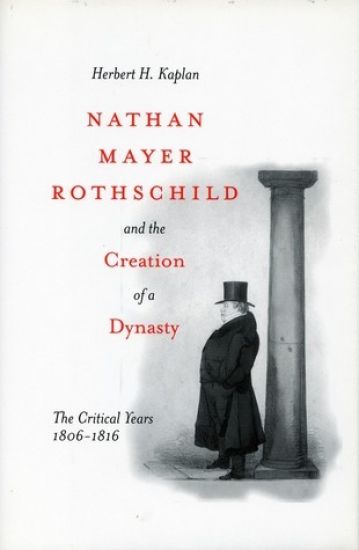
Nathan Mayer Rothschild and the Creation of a Dynasty

Nathan Mayer Rothschild and the Creation of a Dynasty

Herbert H. Kaplan

Stanford University Press
2005
sidottu
This groundbreaking history explains how Nathan Mayer Rothschild rose from comparatively humble circumstances to become the founder of an extraordinary banking and financial empire—an empire that remained preeminent in Europe for more than a century. The book focuses on the critical years of Great Britain's war against Napoleon, when Rothschild became in effect Britain's banker and paymaster on the Continent, contributing to Wellington's defeat of Napoleon and consolidating the basis of the Rothschild financial dynasty. Although the basic outline of Rothschild's remarkable rise in the world of European high finance is well known, the details of how this actually took place, at the transaction-by-transaction level, have never before been studied. On the basis of painstaking archival examination of all of Rothschild's extant financial records, Kaplan is able to explain for the first time exactly how this transformation occurred.